2027 MLIS Programs for Data Quality and Information Governance

Co-Founder and Chief Data Scientist
A program can advertise data-focused electives without preparing students to set retention rules, improve metadata, or govern sensitive information. That distinction matters if you are choosing an MLIS for work beyond a traditional library role.
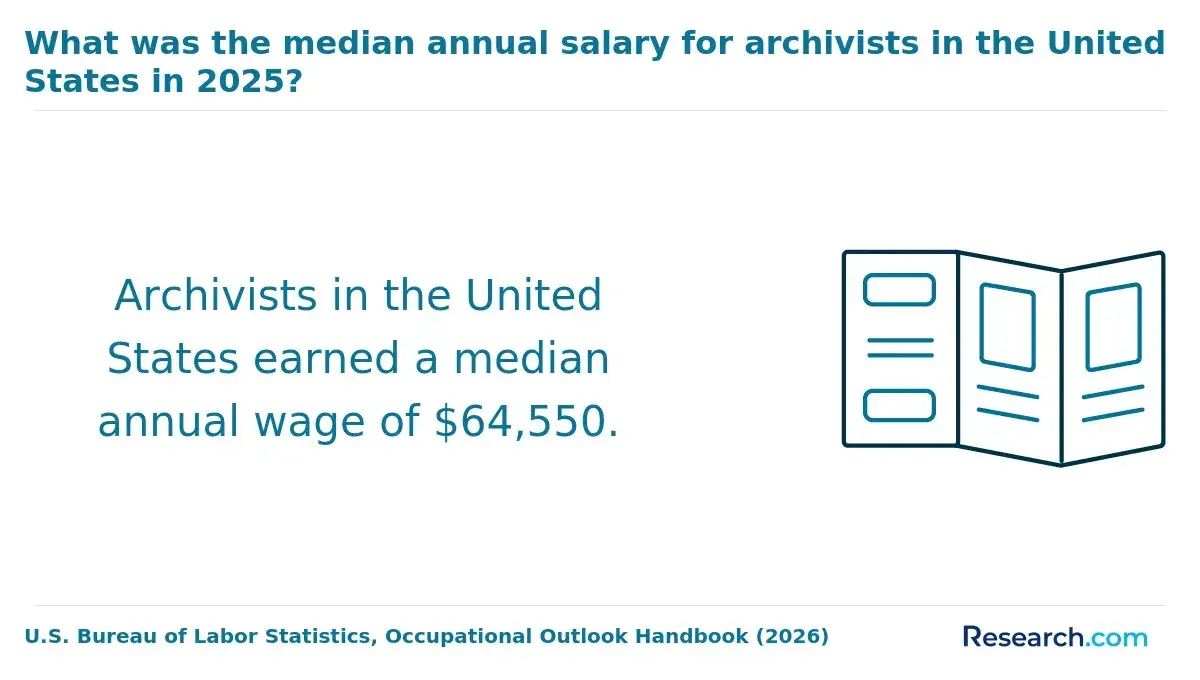
The U.S. Bureau of Labor Statistics reports a May 2025 median annual salary of $64,550 for archivists, one occupation that intersects with records governance - but it is not a salary forecast for MLIS graduates. This guide shows prospective students and career changers how to assess curricula, applied experience, costs, and career fit before enrolling.
Key Things You Should Know
- Look for documented coursework and applied work in metadata, records retention, privacy, and data stewardship; a relevant elective is not proof of a formal governance concentration.
- ALA accreditation matters for many librarian positions, but it does not certify a program's data-governance curriculum or guarantee an elective will run when you need it.
- The BLS projects 2.6% employment growth for librarians and media collections specialists from 2025 to 2035; use that occupational figure as context, not as a forecast for governance jobs or a particular MLIS.
What are MLIS programs for data quality and information governance?
These are Master of Library and Information Science programs whose courses and projects can help students manage information so it remains accurate, findable, appropriately accessible, and usable over time. Data quality concerns problems such as inconsistent descriptions, missing values, and duplicate records. Information governance concerns the policies and responsibilities that determine how information is classified, retained, protected, shared, and disposed of.
The fit is strongest where an MLIS connects information organization with policy and practice: for example, designing a metadata standard for a digital collection, documenting who can change records, and establishing how corrections are reviewed. A school may offer a formal named specialization, a set of relevant electives, an applied project, or only a broadly aligned core curriculum. Those are different levels of preparation; check the current catalog rather than relying on a program label or search result.
An MLIS is especially plausible for work involving collections, records, repositories, and information access. If your primary goal is building statistical models or engineering large-scale data systems, compare it with a data science or computer science degree instead.
Why does ALA accreditation matter for data-focused MLIS programs?
Accreditation by the American Library Association applies to a specific master's program, not automatically to every graduate degree at its university. It can be important when a professional librarian job specifies a degree from an ALA-accredited program. Confirm the exact degree and current status in the ALA directory before applying, including when a university offers multiple information-related master's degrees.
Accreditation evaluates the program as a whole. It does not establish that the school has a formal data-governance track, teaches a particular technology, offers remote internships, or schedules a desired elective regularly. For governance roles outside libraries, employers may accept several educational backgrounds, so weigh accreditation against the actual curriculum, experience opportunities, and requirements in jobs you would pursue.
What careers can an MLIS support in data quality and information governance?
An MLIS can support careers centered on describing, controlling, preserving, and making information usable. Job titles vary widely, and a title alone does not reveal whether the employer requires an MLIS. The following pathways differ in their emphasis and in the evidence of skill an applicant should be ready to show.
| Pathway | Typical work | Preparation to prioritize |
| Metadata or digital collections specialist | Improve descriptive records, controlled vocabularies, and consistency across systems | Metadata standards, quality audits, and a documented cleanup project |
| Records or information governance analyst | Support classification, retention schedules, access rules, and defensible disposal | Records management, privacy principles, and policy documentation |
| Research data or repository specialist | Help researchers describe, deposit, share, and preserve datasets | Data documentation, repository workflows, and stakeholder support |
| Archivist | Appraise, describe, preserve, and provide access to archival records | Archival coursework and hands-on collections experience |
A librarian appointment may explicitly require an ALA-accredited master's, while an analyst opening may favor records, compliance, technical, or industry experience instead. Review several target job postings for professional librarian eligibility requirements and other stated qualifications before treating the MLIS as essential. If you already work in compliance or data operations, a focused credential plus relevant projects may be a less costly route into governance.
Which courses do MLIS programs offer in data quality and governance?
No single course title proves career readiness. Look for a sequence that combines the rules governing information with practice applying those rules to real collections or datasets. Course descriptions should tell you more than a concentration name.
The most useful subjects to look for are:
- Metadata and knowledge organization: schemas, controlled vocabularies, authority control, and methods for detecting inconsistent descriptions.
- Records management and archives: appraisal, retention, disposition, provenance, and documentation of decisions.
- Information policy and privacy: access restrictions, responsible sharing, and the effects of policy on users and organizations.
- Research data management or digital preservation: documentation, repository deposit, file stewardship, and long-term usability.
- Applied methods: data-cleaning techniques, basic querying or scripting where offered, workflow assessment, and communicating findings to stakeholders.
For a portfolio, an anonymized metadata audit can be more informative than a transcript alone: show the initial problem, your rules for identifying errors, the corrections proposed, and how you checked the result. Ask whether relevant courses are required or elective, how often they have recently run, and whether a practicum or independent project can involve governance work. A catalog listing does not guarantee a seat or a placement.
Are online MLIS programs effective for information governance careers?
They can be, if the program provides substantive work with data, records, policies, and collaborators - not merely convenient access to lectures. Online delivery does not change the need to verify accreditation, curriculum, or employer expectations. It also does not establish that every course is asynchronous or that a practicum can be completed remotely.
For working students, scheduling may be the deciding factor. Ask about live meeting times, group-project expectations, elective rotations, and whether your workplace could host an approved applied project. A student seeking a fast route should check course sequencing before assuming an accelerated calendar is feasible; a comparison of one year MLIS tuition and outcomes is most useful alongside the program's current timetable and workload requirements.
Remote students can still build credible evidence of skill through an approved workplace project, a supervised placement, or a course assignment using appropriately shareable data. Confirm access and confidentiality rules before putting any work sample in a public portfolio.
What are the admission requirements for data-focused MLIS programs?
Requirements vary by institution. Applicants should expect to check the program's current policy for an eligible bachelor's degree, transcripts, application statements, recommendations, and any language-proficiency or other requirements that apply to them. A library science bachelor's degree is not necessarily required; guidance on an online library degree no related bachelors may help career changers frame their search, but each school decides eligibility.
Use the statement of purpose to connect your experience to specific work: perhaps reconciling inconsistent records, documenting a process, supporting privacy reviews, or helping people find trustworthy information. Relevant work can strengthen an application, but it does not automatically waive formal requirements. If your background or transcripts are unusual, request an individual review from admissions before assuming you qualify or are ineligible.
How long do MLIS programs take, and what do they cost?
Completion time depends on required credits, enrollment pace, course rotation, and any practicum or capstone. A full-time plan may be much shorter than a part-time plan, but the published minimum is useful only if required and desired courses fit that schedule. Ask the program to map a realistic term-by-term route for the electives you want.
For a comparable cost estimate, multiply the tuition rate that actually applies to you by required credits, then add mandatory fees, materials, and any travel or placement expenses. Check whether an extra term would add fees. Published tuition is not the same as total attendance cost, and an online program does not necessarily charge every student the same rate. A list of short affordable library science masters can provide starting points, but verify each school's current price and course sequence directly.
Separate gross program cost from what you would pay after confirmed employer support or other funding, and from what you would borrow. Compare that financial commitment with your current earnings and the qualifications in target jobs. Neither an occupational median salary nor an accelerated schedule establishes that a degree will pay for itself.
What salaries can data quality and information governance professionals earn?
There is no single reliable salary figure for all data quality and information governance roles: employers use different titles, industries, and qualification requirements. For one relevant benchmark, the BLS reports a May 2025 median annual salary of $68,270 for librarians and media collections specialists. That figure describes an occupation across employers and experience levels - not governance specialists, entry-level hires, or graduates of a particular MLIS.
Archivist positions provide another possible pathway, but neither occupational category captures every corporate records or data-quality job. For a personal salary decision, compare current postings in your location, noting required experience, technical skills, and whether the position actually asks for an MLIS. The strongest case for the degree is a match between those requirements and the training you can obtain at a cost you can sustain.
What certifications complement an MLIS in information governance?
Certifications can signal focused knowledge, but they do not replace work experience or prove that a graduate program is accredited. Choose one only after identifying the roles you want and checking the credential's current eligibility, examination, renewal, and cost requirements.
For example, an International Association of Privacy Professionals credential such as CIPP/US may be relevant to U.S. privacy-focused work, while its CIPM credential emphasizes privacy-program management. DAMA's Certified Data Management Professional credential may be more closely aligned with data management. These address different responsibilities; none is a universal requirement for information governance jobs. If target postings instead emphasize records retention or archives, prioritize direct practice in those areas before paying for an unrelated exam.
How should you choose a reputable MLIS program for data governance?
Start with the job you want, then test whether a program offers a credible route to the work. ALA accreditation is an important first check for prospective librarians, but the deciding evidence for a governance-focused student lies in current course descriptions, scheduling, supervised practice, and cost.
Use this sequence to compare programs on the same terms:
- Collect target job postings and mark which qualifications are required, preferred, or learnable through experience.
- Confirm the exact master's program's accreditation status and distinguish any formal specialization from individual electives.
- Ask when relevant courses last ran and whether you can complete an approved governance project or placement.
- Request a feasible course plan and compare total tuition, mandatory fees, and likely placement-related expenses.
- Choose the program whose verified training fits your target role, schedule, and budget - or defer the degree if a narrower credential or work experience addresses your gap.
A regional online librarian degree comparison can help narrow a search, but location or a low advertised rate should not substitute for checking your applicable tuition and access to the courses you need. A reputable choice is not necessarily the program with the most data-related terms on its website; it is one that lets you complete relevant, demonstrable work on a realistic timeline.
Other Things You Should Know About Library Science
MLS, MLIS, and other LIS degree titles reflect institution-specific naming. Compare the actual curriculum and any employer requirement for ALA accreditation rather than assuming the letters alone establish a meaningful difference.
Not automatically. School librarian licensure, certification, or endorsement requirements vary by state and are separate from simply earning an online MLIS. Check the relevant state education authority and the program's preparation pathway.
No. Curation emphasizes documenting, organizing, preserving, and enabling appropriate reuse of data. Governance establishes broader responsibilities and rules for information across its lifecycle. A role may involve both.
Only with appropriate employer and instructor approval. Remove or protect confidential information as required, and confirm whether the project can be shared publicly before adding it to a portfolio.
References
- Stewardship | U.S. Geological Survey https://www.usgs.gov/data-management/stewardship
- Summary of the HIPAA Security Rule | hhs.gov https://www.hhs.gov/hipaa/for-professionals/security/laws-regulations/index.html
- Data Governance and Stewardship - PMC - NIH https://pmc.ncbi.nlm.nih.gov/articles/PMC2965885/
- Master of Library and Information Science (MLIS) | umd.edu https://info.umd.edu/academics/masters-programs/master-of-library-and-information-science/
- Program: Library and Information Science, MLIS - Pitt Catalog https://catalog.upp.pitt.edu/preview_program.php
- Records Management Specialization | St. John's University Programs https://online.stjohns.edu/online-programs/mslis/records-management-specialization
- MS Information Science | University at Albany https://www.albany.edu/cehc/programs/ms-information-science
- Library and Information Science, MLIS (Online) | Southern Connecticut State University https://www.southernct.edu/academics/programs/library-and-information-science-mlis
- Applied Learning Experiences - UW Information School https://ischool.uw.edu/programs/msim/curriculum/applied-learning-experiences
- Master of Library and Information Science (MLIS) | du.edu https://morgridge.du.edu/academics-advising/programs-gr/mlis-library-and-information-science