
2027 MLIS Programs for Adult Services Librarians: Courses That Matter at Public Libraries

Co-Founder and Chief Data Scientist
Choosing an MLIS for adult services means looking beyond a program's public-library label. Readers' advisory, reference help, community programming, and digital inclusion call for different skills - and not every catalog offers the same opportunities to practice them. The U.S. Bureau of Labor Statistics reports a May 2025 median annual wage of $68,270 for librarians and media collections specialists, a broad category rather than an adult-services salary.
This guide helps prospective students and career changers identify the courses, field experience, credentials, and costs worth checking before they enroll.
Key Things You Should Know
- Prioritize courses in reference, readers' advisory, adult programming, collection development, and community engagement; confirm when electives actually run.
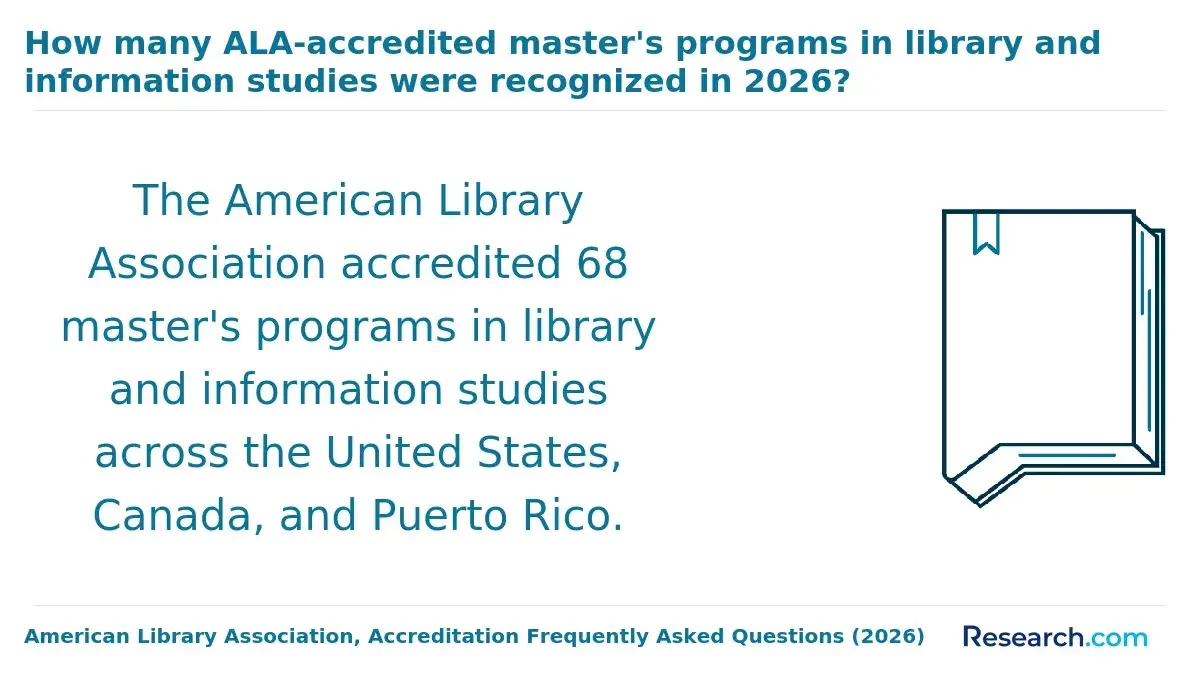
- Check the specific master's program in the ALA accreditation directory. University-wide accreditation alone does not establish ALA accreditation.
- BLS projects 2.6% growth for librarians and media collections specialists from 2025 to 2035; relevant public-library experience can help distinguish applicants within that broader market.
What is an MLIS degree for adult services librarians?
An MLIS is a graduate degree in library and information science. Some institutions use names such as MLS, Master of Science in Library Science, or Master of Information; compare the actual program and curriculum rather than assuming the degree title determines its value. For adult services work, students typically combine general LIS study with courses and projects relevant to serving adults in public libraries.
Adult services librarians help people find books and information, answer reference questions, teach digital skills, plan events, and connect patrons with community resources. The mix varies by library: one position may emphasize readers' advisory and collections, while another centers on outreach or technology instruction. A program need not have a formally named "adult services" concentration to support this career, but a collection of relevant electives is not the same thing as an official concentration.
Do public librarians need an ALA-accredited MLIS degree?
Many professional librarian job postings require or prefer a master's degree from an American Library Association (ALA)-accredited program. Requirements differ by employer and position, so check vacancies in the public-library systems where you hope to work. Library assistant and technician jobs may have different education requirements and can offer a way to gain experience without an MLIS.
ALA accreditation applies to a specific master's program, not automatically to every degree offered by an accredited university. Before applying, check the program's current status in the ALA directory and read target employers' degree requirements. Accreditation does not verify that a particular readers' advisory course, internship, or online option will be available when you need it.
Which MLIS programs prepare students for adult services work?
The strongest choice is the program that lets you build and demonstrate the skills required by your target public-library jobs at a manageable cost. Without verifying current catalogs and course schedules for individual schools, it would be misleading to name a universal "best" adult services program.
Compare programs using the same criteria: ALA accreditation; required public-library content; relevant electives and how often they are offered; opportunities for supervised work with adult patrons; scheduling; and total tuition and fees. Ask whether a public-library placement is available near you and whether you can complete an adult-focused capstone or portfolio project. A program's catalog may list an elective without guaranteeing that it will run before graduation.
Location and price can narrow the search, but they should not replace the curriculum check. Students comparing regional options can use an affordable library information science South comparison as a starting point, then confirm current charges and adult-services opportunities directly with each institution.
What courses matter most for adult services librarians?
Course titles vary, so read descriptions and assignments rather than searching only for the words "adult services." The most useful curriculum connects patron-facing practice with decisions about collections, access, and community needs. This table shows what to look for and what each subject could help you demonstrate to an employer.
| Course area | Adult-services application | Useful evidence of learning |
| Reference and information services | Clarifying questions and helping patrons evaluate information | A research guide or documented reference scenario |
| Readers' advisory and adult literature | Recommending materials across formats and interests | An annotated recommendation guide |
| Collection development | Evaluating materials against community needs and a library's policy | A collection analysis or selection rationale |
| Instruction and digital literacy | Teaching adults to use library tools and everyday technology | An accessible workshop plan |
| Programming and community engagement | Planning events with patrons and local partners | A program proposal with an evaluation method |
| Access, privacy, and library management | Serving patrons fairly while handling records and service decisions responsibly | A policy analysis or service-improvement project |
Choose electives to fill gaps in your experience. Someone already running community events may gain more from reference or collections work; someone with strong research skills may need practice teaching adults. If a course uses AI-assisted search or recommendation tools, look for instruction in checking accuracy, protecting patron privacy, and recognizing accessibility barriers - not simply learning a product.
Are online or campus-based MLIS programs better for public libraries?
Neither format is inherently better for adult services. An online program can make graduate study possible while you keep a library job or live far from campus; a campus program may make local placements and face-to-face collaboration easier. In either case, the decisive question is whether you can get sustained practice with patrons alongside your coursework.
Online does not necessarily mean asynchronous or self-paced. Check live-session times, group-work expectations, campus visits, and whether fieldwork can be completed at a library near you. Campus students should likewise check whether required courses fit their work schedules. If speed matters, a one year online library science masters comparison can help frame questions about course sequencing; verify that an accelerated schedule still leaves room for relevant electives and experience.
What are the admission requirements for MLIS programs?
Applicants generally need a bachelor's degree, transcripts, and the materials specified by each graduate program, which may include a statement of purpose, résumé, or recommendations. Policies on minimum grades, tests, deadlines, and international credentials vary. A public-library job can strengthen an application, but it should not be assumed to replace a published degree requirement.
In your statement, connect your experience or goals to specific adult-services work: helping patrons, teaching, programming, or improving access. If you have prior graduate study, ask whether credits can transfer before treating them as a cost saving; accepted credits must fit the school's graduate transfer policy and degree requirements. An online library science programs accepting transfer credits comparison is a starting point, not confirmation that your courses will count.
How long do MLIS programs take and how much do they cost?
Many students plan around roughly two years of full-time study, while part-time study generally takes longer. The actual timeline depends on required credits, course rotation, fieldwork, and how many courses you can take each term. An accelerated option is useful only if its pace fits your work and finances and its schedule includes the adult-services preparation you want.
To compare costs, multiply the tuition rate applicable to you by the credits required, then add mandatory fees and likely expenses for materials, travel, and fieldwork. Confirm whether online students receive a different rate and whether employer support or scholarships have eligibility conditions. Published tuition is not the same as your out-of-pocket cost, and borrowing changes the eventual cost further. A low cost fast MLIS degree search can identify candidates, but ask each program for a current, individualized cost estimate before choosing on price or speed.
For return on investment, compare that estimate with your present earnings and the requirements of jobs you would realistically pursue. If your immediate goal is to try public-library work, a paid assistant role may be a lower-cost first step than enrolling before you know whether you want a professional librarian position.
What jobs can you get with an MLIS focused on adult services?
Relevant titles include adult services librarian, reference librarian, readers' advisory librarian, public services librarian, outreach librarian, and branch librarian. Job titles overlap: read duties rather than assuming every "reference" or "public services" opening involves the same work. Branch management usually adds supervision and budgeting responsibilities.
An MLIS can position an applicant for professional librarian roles, but hiring also depends on experience and local requirements. Library assistant or technician work can build patron-service experience before or during graduate study; those roles should not be confused with professional librarian positions. For a portfolio, retain work you have permission to share - such as an accessible class plan, a readers' advisory guide, or an evaluated program proposal - and explain the audience, your decisions, and what you learned.
How much do adult services librarians earn?
The BLS median annual wage for librarians and media collections specialists was $68,270 in May 2025. This is a U.S. occupational median, not a salary specifically for adult services librarians, new MLIS graduates, or any particular public-library system. Pay for an individual opening may differ with location, employer, responsibilities, and experience.
For a useful personal comparison, check current postings in places where you would work and distinguish full-time librarian jobs from part-time or paraprofessional roles. An information professional salary comparison may show other paths, but broader salary figures should not be treated as an expected return from a particular MLIS.
What is the job outlook for adult services librarians?
BLS projects 2.6% employment growth for librarians and media collections specialists from 2025 to 2035. That forecast covers multiple settings and specialties, so it does not predict the number of adult-services openings in your area. Local hiring, budgets, and turnover matter more to an individual job search.
Before enrolling, review recent postings in your preferred region: note required credentials, recurring duties, pay, and whether openings are full-time. Then choose courses and fieldwork that address the skills those employers actually request. Public libraries' work with digital access, information evaluation, and patron privacy also makes it valuable to practice teaching technology without losing sight of personal service.
Other Things You Should Know About Library Science
No. Readers' advisory relies on learning a patron's preferences, knowing how to find reliable information about books, and making thoughtful suggestions. Curiosity across genres is more useful than trying to read everything.
Yes. Depending on the library, they may develop programs or outreach for older adults while also serving the wider community. Ask prospective fieldwork sites whether they support that kind of experience.
Possibly. Public libraries may offer programs and service hours outside a standard weekday schedule. Check the actual posting or ask the hiring library rather than assuming every adult-services role has the same hours.
Follow the employer's collection and reconsideration policies, document the concern through the established process, and avoid promising an outcome. Students can prepare by studying intellectual freedom and practicing respectful communication with patrons.
References
- Introduction, Programs for Adults in Public Library Outlets | ed.gov https://nces.ed.gov/surveys/frss/publications/2003010/index.asp
- LIBRARY & INFORMATION SCIENCE | Trends and Issues in Higher Ed https://www.washington.edu/students/crscat/lis.html
- Online Master of Science in Library and Information Science Curriculum | St. John's University Programs https://online.stjohns.edu/online-programs/mslis/curriculum
- Program: Library and Information Science, MLIS - Pitt Catalog https://catalog.upp.pitt.edu/preview_program.php
- Master of Library and Information Science | Wayne State University https://sis.wayne.edu/mlis
- Library & Information Science, M.S. | St. John's University https://www.stjohns.edu/academics/programs/library-and-information-science-master-science
- ALA-Accredited Programs https://www.ala.org/educationcareers/accreditedprograms/directory
- What An Academic Librarianship Course Should Offer | ACRLog https://acrlog.org/2008/06/10/what-an-academic-librarianship-course-should-offer/


