2027 MLIS Programs for Faculty Copyright Consultations

Co-Founder and Chief Data Scientist
Faculty need help deciding whether they can share readings, adapt teaching materials, or deposit research in a repository. An MLIS can prepare librarians to handle these consultations, but the right degree depends on its courses and applied training - not its name alone.
The U.S. Bureau of Labor Statistics projects 2.6% employment growth for librarians and media collections specialists from 2025 to 2035; that broad outlook does not predict demand for copyright specialists. This guide helps prospective students evaluate programs, build relevant experience, and weigh the cost against their career goals.
Key Things You Should Know
- Look for an ALA-accredited master's program with documented copyright or scholarly communication coursework and opportunities to practice advising faculty; do not assume it has a formal copyright concentration.
- Effective preparation combines fair-use analysis, licensing, research-publishing knowledge, clear communication, and the judgment to refer legal questions to university counsel.
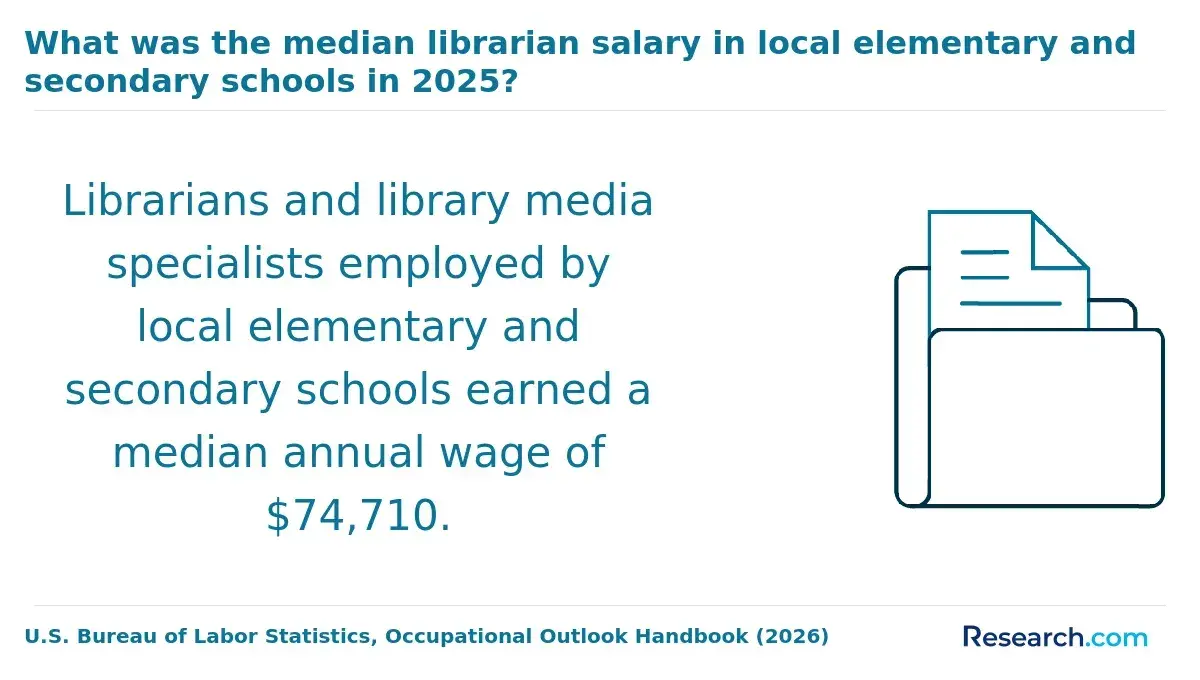
- The May 2025 median salary for the broad U.S. librarians and media collections specialists occupation was $68,270, not a guaranteed salary for copyright consultants or MLIS graduates.
What are MLIS programs for faculty copyright consultations?
These are library and information science master's programs that students can use to prepare for copyright-related work in academic libraries. Faculty consultations may address fair use in teaching, permissions for course materials, publishing agreements, open-access options, and rights questions involving institutional repositories. The librarian's job is often to help someone identify the relevant facts, assess available options, and know when university counsel should take over.
"For faculty copyright consultations" usually describes a career goal, not an official degree title. A program might offer a formal scholarly communication concentration, a relevant elective, or only broader courses that a student can pair with a project. Those are different levels of preparation. When browsing library science degree programs, check the official catalog for the exact credential and requirements rather than treating an MLIS, MLS, Master of Science in Library Science, and Master of Information as interchangeable labels. Any of these institution-specific degrees may be relevant if the curriculum and experience fit the role.
Why is ALA accreditation important for copyright-focused MLIS programs?
American Library Association accreditation applies to a specific master's program, not automatically to every degree offered by an institution. It establishes that the program has met the accreditor's standards for graduate library and information studies education. Because academic librarian postings may require or prefer an ALA-accredited degree, accreditation can affect eligibility as well as program quality.
It does not certify that a program teaches copyright, offers a scholarly communication track, or places students in faculty-facing internships. Before applying, confirm the particular degree's current status in the ALA directory, then separately inspect its catalog and ask whether relevant electives will be available during your expected enrollment. A strong general MLIS without a viable route to copyright experience may be a poorer fit than its accreditation status alone suggests.
How do MLIS programs prepare students for academic copyright consultations?
Good preparation connects copyright principles to the decisions faculty actually bring to a library. Students should learn to ask what material is involved, who holds the rights, what a license permits, how the material will be used, and what institutional policy applies. They also need to explain uncertainty without presenting a consultation as a binding legal opinion.
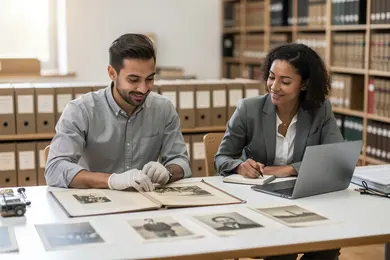
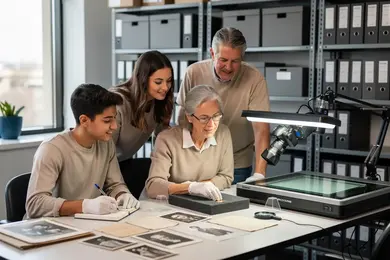
Applied work is especially valuable. An internship with a scholarly communication or copyright services unit, a supervised reference project, or a capstone could produce a decision guide for course readings, a faculty workshop, or an anonymized consultation analysis. These are examples of possible projects, not features every MLIS offers. Ask whether an applied placement can involve copyright work, who would supervise it, and whether remote students can participate.
Current faculty questions can span open-access publishing, reuse of digital collections, accessibility, and the use of third-party materials with AI tools. A useful program teaches students to investigate the applicable rights and policies rather than supplying one blanket answer to every new technology.
What courses should an MLIS curriculum include for copyright specialists?
Start with the required LIS core, then look for electives that build both legal literacy and service skills. The table shows how common subject areas translate into faculty-facing work; course titles and whether a subject is required will differ by school.
| Curricular area | What to look for | Use in consultations |
| Copyright and information policy | Fair use, permissions, educational uses, and policy interpretation | Helps structure an assessment and identify questions requiring legal review |
| Scholarly communication | Author agreements, open access, and repository rights | Supports faculty publishing and deposit decisions |
| Licensing and collection management | Electronic-resource terms and access conditions | Clarifies whether a proposed use is permitted by an agreement |
| Reference and instruction | Interviewing, teaching, and creating accessible guidance | Turns complex rules into usable, appropriately qualified advice |
A course title alone cannot establish depth or availability. Request a recent syllabus if possible, check prerequisites and scheduling, and ask whether students can apply what they learn to a faculty consultation or comparable case study. A student targeting repository work may reasonably prioritize scholarly communication; one targeting course-material questions may need stronger licensing and instruction experience.
Are online MLIS programs effective for academic copyright careers?
They can be. Copyright analysis, consultation interviews, and policy writing can all be practiced online. What matters is whether students receive feedback on realistic cases and can gain experience with an academic library, not simply whether lectures are delivered remotely.
Compare an online program's class meeting times, elective rotation, group-work expectations, and applied-project rules. "Online" does not necessarily mean asynchronous, and an internship may depend on arranging a suitable local or remote supervisor. If scheduling flexibility is essential, use a best online library information science degree overview as a starting point, then verify each program's current requirements directly. An on-campus option may suit a student who can access a relevant library placement; an online option may better suit a working library employee who can develop supervised experience locally.
What admission requirements apply to copyright-focused MLIS programs?
Because copyright consultation is generally a career pathway rather than a separate degree, applicants usually apply to the institution's LIS master's program. Expect to check its published requirements for a completed bachelor's degree, transcripts, an application statement, recommendations, and any current testing or language-proficiency policies. Requirements and deadlines vary; relevant work is valuable context but does not automatically replace a formal admission requirement.
Use the statement to connect your experience to a concrete goal, such as supporting faculty teaching or scholarly publishing. Library experience can help, but applicants from teaching, publishing, legal support, and other fields can also explain transferable skills without claiming expertise they have not yet developed. Career changers considering affordability can investigate scholarships for nontraditional MLIS students, then confirm eligibility and deadlines with each provider.
Before paying an application fee, ask admissions or a program adviser whether the copyright-related courses that interest you are open to new students and whether your intended applied work is feasible. Admission to an MLIS does not reserve a seat in a particular elective or placement.
How long do MLIS programs cost and take to complete?
Many students plan on roughly two years of full-time study; part-time enrollment can take longer, especially when a needed elective runs infrequently. The reliable timeline is the one you build from a program's required credits, course sequence, published schedule, and your available study time. Ask whether delaying a copyright elective would add a term.
There is no defensible single price for a copyright-focused MLIS. To compare programs, multiply the published tuition rate applicable to you by the required credits, then add mandatory fees and likely spending on books, technology, travel, and any placement. Confirm the academic year of each rate and whether online students pay a distinct rate; tuition alone is not total attendance cost. A library science tuition duration and salary comparison can help frame the trade-off, but use current university charges for your own budget.
Separately estimate what grants, scholarships, employer assistance, or savings would cover and what you might borrow. Do not count an award before confirming it, or use a broad occupational salary to calculate a precise payoff. If you already hold a suitable graduate qualification and only need focused copyright training, compare the MLIS cost with employer-supported professional development or a relevant certificate - while checking whether the jobs you want require an ALA-accredited master's.
What careers can an MLIS degree lead to in academic copyright services?
Relevant titles include copyright librarian, scholarly communication librarian, open education librarian, institutional repository librarian, and academic liaison librarian with copyright responsibilities. These roles can differ substantially: one may focus on teaching-material questions, another on author agreements or repository deposits. In a smaller library, copyright service may be only part of a broader position.
An MLIS is commonly relevant to professional academic librarian positions, and some employers specifically require or prefer an ALA-accredited degree. Other copyright, publishing, or policy roles may accept different graduate education or substantial experience. Review actual postings for the work you want rather than assuming every copyright-related job requires an MLIS; advanced librarian career entry requirements can help put specialized roles in context.
For an entry point, seek work or supervised projects involving course reserves, repository deposits, open educational resources, or faculty instruction. A portfolio might include an anonymized fair-use assessment, a sample workshop, and a clearly scoped referral guide. Protect confidential information and label student exercises as exercises. These examples demonstrate judgment and communication; neither the degree nor a portfolio guarantees a specialist appointment.
How much do academic copyright librarians earn?
The U.S. Bureau of Labor Statistics reports a $68,270 median annual salary in May 2025 for librarians and media collections specialists. That is a useful broad benchmark, but it is not a copyright-librarian salary figure: it includes workers across settings and specialties. An individual academic offer will depend on the employer, location, responsibilities, contract terms, and experience.
When evaluating an MLIS financially, compare actual salary ranges in relevant academic-library postings with your current earnings and the program's full cost. Pay particular attention to whether the position combines copyright duties with liaison, instruction, or repository work. Treating the national median as a promised starting salary would make the decision look more certain than it is.
What certifications and professional standards support copyright consultation careers?
There is no single certification that universally qualifies someone to be an academic copyright librarian. ALA accreditation describes the graduate program, not an individual's legal authority or a specialist license. Employers may instead look for evidence of sound analysis, teaching ability, relevant experience, and familiarity with institutional escalation procedures.
Continuing education and professional guidance from library associations can help practitioners keep their skills current. For a faculty-facing role, particularly useful habits include documenting the facts behind a recommendation, distinguishing copyright law from license terms and campus policy, and referring high-stakes or disputed matters to university counsel. These practices matter more than collecting a credential that a prospective employer has not requested.
Other Things You Should Know About Library Science
Not automatically. The answer depends on the publishing agreement, the version of the work, any applicable license, and repository policy. A librarian can help check the permitted version and any conditions before deposit.
No. Check the specific license, credit requirements, and any restrictions on adaptations or commercial use. Also confirm that the source actually has authority to offer the image under that license.
No. Age alone is not enough to establish U.S. public-domain status. Publication details, authorship, and other rights information may matter, so verify the particular work before advising reuse.
They should first check the tool's terms, the readings' licenses, and institutional privacy and AI policies. A permitted use in a course platform does not necessarily authorize uploading the same material to a separate service.
References
- Internships | U.S. Copyright Office https://www.copyright.gov/about/special-programs/internships.html
- Principles of Good Practice for Distance Education | texas.gov https://reportcenter.highered.texas.gov/agency-publication/miscellaneous/principles-of-good-practice-approved-oct-2023/
- Copyright essentials for scholarly work - UVA Library https://library.virginia.edu/copyright/authors-rights/essentials
- 4.1.21 Instructional Modalities and Distance Education | Illinois State https://policy.illinoisstate.edu/academic/4-1-21
- Academic Librarianship -- MLIS Career Pathway | SJSU https://ischool.sjsu.edu/academic-librarianship
- The 12 Types of Experiential Learning | Experience Learning https://experiencelearning.utk.edu/about/types/
- Legal Information vs. Legal Advice: A 25 Year Retrospective | Judicature https://judicature.duke.edu/articles/legal-information-vs-legal-advice-a-25-year-retrospective/
- What is experiential learning? | Ithaca College https://www.ithaca.edu/center-faculty-excellence/teaching-learning-strategies/experiential-learning/what-experiential-learning
- Copyright Considerations - Scholarly Publishing https://guides.lib.umich.edu/scholarlypublishing/copyright-considerations
- Copyright & Fair Use: Faculty - Subject Guides https://guides.upstate.edu/copyright/fairuse