2027 MLIS Programs for Library Services to Teens in Rural Communities

Co-Founder and Chief Data Scientist
Choosing an MLIS for rural teen services means looking beyond a program's youth-services label. You need coursework and field experience that prepare you to work with teens when staffing, transportation, and internet access vary across a community.
The U.S. Bureau of Labor Statistics projects 2.6% employment growth for librarians and media collections specialists from 2025 to 2035, so a degree alone is not a hiring advantage. This guide helps prospective students compare relevant preparation, check credentials and costs, and decide whether an MLIS fits their intended job.
Key Things You Should Know
- Look for an ALA-accredited master's program with documented youth-services coursework and a feasible way to gain experience with teens; a course is not the same as a formal specialization.
- Public library jobs and school librarian jobs have different credential rules. School positions may require state-specific certification or endorsement in addition to graduate study.
- The May 2025 median annual pay for librarians and media collections specialists was $68,270 nationally, it is not a rural teen librarian salary or a forecast of what an MLIS graduate will earn.
What are MLIS programs for teen library services in rural communities?
They are library and information science master's programs that students use to prepare for public library work with adolescents in rural communities. The preparation usually combines general librarian skills with youth-services electives and relevant fieldwork. A program does not need a concentration formally named "rural teen services" to be useful, but applicants should not mistake broadly relevant coursework for a documented specialization.
Rural teen librarians may select materials, answer research questions, teach information and digital literacy, plan programs, and build relationships with schools and community partners. In a small library, the same person may also cover circulation, technology help, and services for other age groups. An library information science degree can provide the professional foundation; supervised work with local teens helps turn it into job-specific preparation.
Which accredited MLIS programs offer youth or teen services specializations?
No named program should be treated as a verified teen-services option without checking its current catalog and ALA accreditation status. MLIS, MLS, Master of Science in Library Science, and Master of Information are institution-specific degree names; the title alone does not establish accreditation or a youth-services track. The ALA directory identifies accredited master's programs, while a university's catalog establishes what that particular program offers.
The distinctions below help applicants compare programs without treating unlike offerings as equivalent.
| Published offering | What it establishes | What remains to verify |
| Formal youth-services concentration or track | The university documents a named pathway and its requirements. | Whether teen-focused courses fit the pathway and when they are offered. |
| Youth or adolescent services electives | Relevant coursework appears in the catalog. | Recent scheduling, prerequisites, and access for online students. |
| Practicum or applied project | A documented opportunity for supervised or project-based learning. | Site approval, supervision, travel, and whether a rural placement is possible. |
| General LIS curriculum | A foundation in library practice. | Whether the student can add meaningful teen-services experience elsewhere. |
Start with the ALA directory, then ask each program for its current degree requirements and recent youth-course schedule. An institution's accreditation is not a substitute for ALA accreditation of the relevant master's program, and ALA accreditation does not guarantee a particular elective or placement.
What education and accreditation requirements do rural teen librarians need?
For professional public librarian positions, an ALA-accredited LIS master's degree is a common qualification or employer preference; the posting determines what a particular job requires. Smaller libraries may also employ youth-services coordinators or library assistants whose positions do not require an MLIS. Experience with teens, outreach, and community partnerships can matter for either path.
School librarian roles are a separate decision. State education authorities set educator licensure, certification, or endorsement requirements, which can include coursework and supervised school-based experience beyond an MLIS. Before choosing a program for a school job, check the rules in the state where you intend to work and ask the university whether its specific preparation route meets them. An online MLIS is not automatically a school librarian credential in every state.
What do MLIS programs teach about serving teens in rural libraries?
The strongest preparation connects adolescent development and youth-services practice to the everyday work of a small library. Useful subjects include teen literature and collection development, reference and information literacy, accessible programming, privacy, and evaluating services with community input. General management coursework can help students plan within limited staffing and budgets.
Rural applicability deserves a closer look than a course title can provide. A useful assignment might ask a student to design a teen program with a school or community partner, account for limited transportation or connectivity, and explain how teens would help assess it. A collection project could address both local interests and intellectual freedom. Ask whether you can complete such work through electives, a capstone, or an approved placement; do not assume every program offers all three.
Are online MLIS programs effective for rural teen library careers?
They can be, if the program is appropriately accredited, relevant courses are accessible to online students, and the student can gain credible experience with teens. Online delivery reduces the need to relocate, but it does not establish that classes are asynchronous, electives fit a work schedule, or a practicum can be completed locally.
When comparing an online library masters program guide with a university's current catalog, focus on delivery details rather than the "online" label. Ask about live attendance, course rotation, placement approval, and whether a local public library or other eligible site can provide suitable supervision. For an applicant already working in a rural library, an approved project tied to actual teen needs may be more valuable than a convenient but unrelated elective.
What are the admission requirements for youth services MLIS programs?
Applicants generally need a bachelor's degree and must meet the chosen university's published graduate admissions requirements. Programs may request transcripts, a statement of purpose, recommendations, or a résumé; document rules and any test policies vary. A youth-services interest usually shapes the application rather than creating a separate admission credential.
Library employment is not universally required. If you plan to apply to MLIS without library experience, use your statement to connect teaching, mentoring, community work, or other relevant experience to teen services. If your academic record or circumstances fall outside a published requirement, request an individual review rather than assuming experience will substitute for it. Prospective school librarians should also ask whether admission to an educator-preparation pathway has separate conditions.
How long do MLIS programs take, and how much do they cost?
Completion time depends on required credits, course load, elective rotation, and any fieldwork or school-certification requirements. Compare each program's published sequence with your actual work schedule. An advertised accelerated route may not fit if the teen-services elective or approved placement you need is unavailable when you need it; a guide to how students finish library science masters quickly is a starting point, not a substitute for an individual degree plan.
There is no reliable single price for this specialization: schools set different tuition rates, credit requirements, and fees. To compare offers, calculate required credits multiplied by your applicable tuition-per-credit rate, then add mandatory fees and likely books, equipment, and placement or travel expenses. Confirm whether online study changes your tuition rate. Compare the resulting gross cost with confirmed aid or employer support to estimate your out-of-pocket cost; separately consider any amount you would borrow. Ask the financial aid office which aid rules apply to your enrollment period before treating loans as available funding.
What careers can an MLIS graduate pursue in rural teen services?
Possible titles include teen librarian, youth services librarian, public services librarian, branch librarian, and library director with youth-services responsibilities. Titles can conceal very different jobs: one opening may center on teen programming, while another expects service to all ages and management of a small facility. Read duties and qualifications, not just titles.
A school librarian position is another possibility only if the candidate meets the relevant state's educator requirements. For a public library applicant, a portfolio showing a teen collection rationale, an accessible program plan, and evidence of collaboration can demonstrate skills more clearly than an elective title alone. Applicants who want hands-on youth work but not professional librarian duties should also compare assistant or coordinator openings before committing to graduate tuition; advancement requirements depend on the employer.
How much do rural librarians and youth services specialists earn?
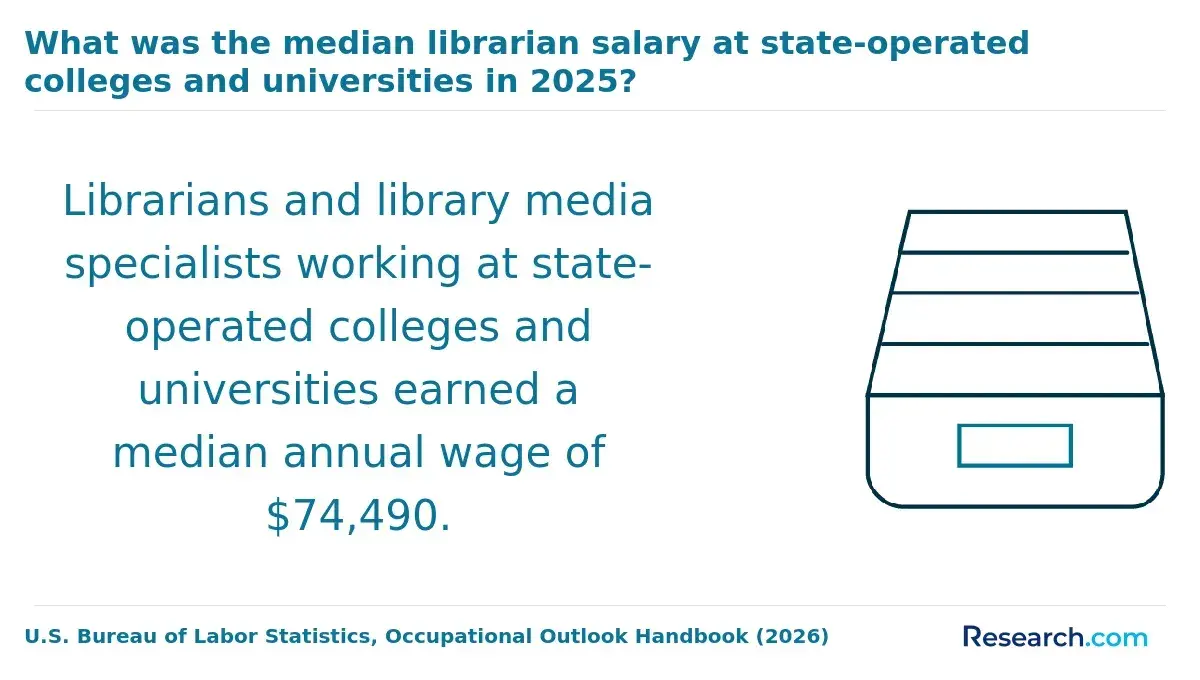
The U.S. Bureau of Labor Statistics reports a May 2025 median annual salary of $68,270 for librarians and media collections specialists. That national occupation-wide figure includes jobs beyond rural public libraries and does not isolate teen-services positions. Use actual local postings, stated hours, benefits, and job duties to judge an offer or the financial case for a degree.
Higher-paying LIS roles may require different responsibilities or experience; a list of the best paying jobs with library science degree should not be read as a forecast for rural youth services. If you already work in a library, compare the pay and advancement requirements of positions you could realistically pursue with and without the MLIS before borrowing for it.
What professional certifications and standards apply to teen librarians?
ALA accreditation applies to a master's program, not to an individual's certification as a teen librarian. Public library employers set position qualifications; there is no single nationwide teen-librarian license to assume every applicant needs. School librarian certification or endorsement is different and must be checked with the intended state's education authority.
Professional guidance on youth services, intellectual freedom, accessibility, and patron privacy can inform daily decisions, but guidance is not automatically a legal requirement. When evaluating a course or placement, ask how it handles real responsibilities: selecting teen materials, protecting patron records, providing equitable access, and applying a library's policies consistently. Those discussions are more useful for this career than collecting optional credentials without a clear connection to the jobs you want.
Other Things You Should Know About Library Science
Yes. A teen advisory group or informal feedback can reveal interests adults might miss. Explain what decisions teens can influence and follow the library's policies for working with minors.
No. A library can offer teen-focused materials and activities in shared space. Clear scheduling and input from local teens can help make that space welcoming.
Follow the library's written reconsideration policy rather than removing a title on the spot. Document the request, explain the review process, and apply collection criteria consistently.
It can when both organizations want to collaborate. Begin by asking the tribal library about its priorities and protocols; do not assume one community's needs or materials represent another's.
References
- Library Services for Teens - Washington Secretary of State https://www.sos.wa.gov/library/resources-libraries/projects/youth-services/library-services-teens
- Transforming Teen Services | NYSL - the New York State Library https://nysl.nysed.gov/libdev/youthsvs/t3
- Cost of Attendance (Budget) | 2025-2026 Federal Student Aid Handbook https://fsapartners.ed.gov/knowledge-center/fsa-handbook/2025-2026/vol3/ch2-cost-attendance-budget
- Using Technology to Overcome the Challenge of Place and Space in Rural Education | IES https://ies.ed.gov/learn/blog/using-technology-overcome-challenge-place-and-space-rural-education
- Distance Education and Off-Campus Instructional Sites at UTC | University of Tennessee at Chattanooga https://www.utc.edu/academic-affairs/policies-and-procedures/distance-education-and-campus-instructional-sites-utc
- Tuition & Fees - UF Online - University of Florida https://ufonline.ufl.edu/tuition/tuition-fees/
- Practicum - School of Information Science & Learning Technologies https://cehd.missouri.edu/information-science-learning-technologies/practicum/
- Youth Librarianship | Long Island University https://www.liu.edu/post/academics/palmer-school-of-library-information-science/academic-programs/~/link.aspx
- Tuition and College Costs - The City University of New York https://www.cuny.edu/financial-aid/tuition-and-college-costs/
- How to Become a School Librarian: Your Complete Career Guide | Syracuse University https://ischool.syracuse.edu/how-to-become-a-school-librarian/