2027 MLIS Programs for Government Document Digitization

Co-Founder and Chief Data Scientist
Choosing an MLIS for government document digitization means looking beyond a program's name: you need training in digital collections, records, preservation, and public access. The U.S. Bureau of Labor Statistics projects 3.4% growth for archivist jobs from 2025 to 2035, but an MLIS alone does not qualify someone for every archives role.
This guide helps prospective students compare degree pathways, identify useful hands-on experience, and weigh costs against the work they actually want to do.
Key Things You Should Know
- Look for an ALA-accredited master's program with relevant electives and a documented way to complete a digitization or digital-preservation project; a related course is not necessarily a formal concentration.
- Government document work combines capture and quality control with metadata, accessibility, records rules, and long-term preservation, not scanning alone.
- The May 2025 median annual wage for archivists was $64,550 across the occupation, not specifically for government digitization jobs or MLIS graduates.
What are MLIS programs for government document digitization?
These are library and information science master's programs that students can use to prepare for preserving and providing access to government publications and records. The work may involve printed reports, maps, photographs, audiovisual items, or records that were created digitally. A project might require selecting materials, creating high-quality digital files, describing them so people can find them, checking text produced by optical character recognition (OCR), and maintaining preservation copies.
"Government document digitization" is usually a career focus rather than the name of a degree or concentration. An MLIS, MLS, Master of Science in Library Science, or institution-specific information degree may be relevant, but the curriculum matters more than the abbreviation. For a broader explanation of what is a library science degree, consider how general LIS training connects to this more specialized work.
The setting shapes the job. A government documents librarian may emphasize discovery and public service; an archivist may emphasize appraisal, arrangement, and description; a records professional may work with retention rules and agency workflows. Compare programs against the setting you hope to enter rather than assuming one digitization course prepares you equally for all three.
Which accreditation should an MLIS program for digitization have?
For applicants seeking professional librarian positions, accreditation by the American Library Association (ALA) is an important program-level credential. Check the specific master's program in the current ALA directory; a university's institutional accreditation does not establish that its LIS degree is ALA-accredited.
ALA accreditation evaluates the program, not a proposed government digitization pathway. It does not confirm that a particular elective will run while you are enrolled, that a practicum can be completed remotely, or that an employer will accept the degree for a particular vacancy. Confirm those details with the department and compare them with actual job postings. Archives and technical digitization employers may also consider other graduate degrees and substantial applied experience.
What degree pathway prepares students for government document digitization?
A strong pathway pairs foundational LIS study with focused electives and an applied project. Core work in information organization, research, and service helps students understand how a digital collection will be found and used; electives and experience build the production and preservation skills.
Evaluate the pathway in this order so that an appealing course title does not hide a gap in practical preparation:
- Identify the target role, such as government documents librarian, digital archivist, or digitization specialist, and compare its qualifications with the degree's core curriculum.
- Check catalog descriptions and recent schedules for relevant electives, distinguishing listed courses from courses likely to be available during your enrollment.
- Ask whether a practicum, capstone, independent study, or approved workplace project can produce a documented collection workflow and portfolio sample.
- Confirm who supervises applied work and whether projects involving restricted records, agency systems, or on-site equipment have placement requirements.
An MLIS is most compelling when the intended jobs call for professional librarianship or value combined access, metadata, and preservation expertise. For a primarily technical scanning position, targeted training and work experience may be a less costly entry point. Records-management or information-technology roles may instead favor experience or degrees specific to those functions.
Are online MLIS programs suitable for government digitization careers?
Yes, an online MLIS can be suitable if its coursework and applied options support the skills you need. Digital collections projects can include remote tasks such as metadata design, OCR review, documentation, and accessibility testing. Physical capture, equipment training, or handling original materials may still require access to a local collection or an on-site placement.
When reviewing best online masters in library science programs, look past the delivery label. Ask whether classes are asynchronous or meet at fixed times, how often specialized electives run, whether any campus visits are required, and whether you can arrange a project with a government library or archive near you. Online delivery does not by itself mean every course or practicum is flexible.
What coursework do government document digitization programs include?
Relevant coursework commonly spans digital collections, archives, metadata, preservation, and information policy. The table connects those subjects to the work they support; it describes useful areas to seek, not required courses at every MLIS program.
| Study area | Application to government documents |
| Digitization and digital collections | Capture planning, file organization, quality review, and access-copy production. |
| Metadata and information organization | Consistent descriptions that help users discover documents across catalogs and repositories; schemas may include Dublin Core. |
| Archives and records management | Provenance, appraisal, description, retention, and the distinction between a publication and an agency record. |
| Digital preservation | File integrity checks, documented workflows, storage planning, and preservation metadata. |
| Access, policy, and usability | Privacy review, copyright assessment, accessibility, and the needs of public users. |
A useful project would document decisions as well as produce files: what was selected, how image and OCR quality were checked, what metadata was created, and what restrictions or accessibility issues remained. Ask programs whether students can do that work in a course or supervised project rather than assuming a catalog listing provides production experience.
What are the admission requirements for MLIS digitization programs?
Requirements vary by school, but applicants should expect a completed bachelor's degree and an application that may request transcripts, a statement of purpose, recommendations, and a résumé. Programs set their own rules for grades, tests, prerequisite study, and application deadlines; do not assume a digitization-focused applicant needs an undergraduate library science major.
Use the statement of purpose to connect a specific interest - such as public access to historical reports or preservation of agency records - to the program's documented courses and project options. Relevant library, archives, records, or technical experience can strengthen that explanation, but it does not automatically replace a published admission requirement. Applicants with unusual academic histories should ask admissions staff for an individual review; this overview of online information science graduate requirements can help frame the questions to ask.
How long do MLIS digitization programs take and cost?
Time and cost depend on the program's required credits, course sequence, enrollment pace, and whether specialized electives are available when needed. A faster schedule is useful only if it leaves room for the project or placement that will make the degree relevant to your target role. Students hoping to finish an online library degree quickly should confirm when each needed course runs before committing to a timeline.
Without a verified school-specific tuition schedule, no single price is a reliable estimate for this specialization. Calculate gross tuition as required credits multiplied by the applicable per-credit rate, then add mandatory fees, materials, and any travel or placement costs. Check residency rules before applying an in-state rate to an online program. Scholarships and employer support may lower out-of-pocket cost; borrowing changes how much is financed, not the program's gross cost.
For a realistic return-on-investment decision, compare the total cost and time away from paid work with the qualifications in your target job postings and your current earnings. Ask each school for its current credit requirement, complete fee schedule, elective rotation, and placement expenses rather than comparing tuition rates alone.
What careers can an MLIS prepare you for in government digitization?
Possible roles include government documents librarian, digital collections librarian, digital archivist, metadata librarian, records specialist, and digitization project coordinator. Titles are not interchangeable: a librarian may manage discovery and patron access, while an archivist may establish context and description for records, and a production specialist may focus on capture and quality control.
Professional librarian vacancies may require or prefer an ALA-accredited LIS master's degree. Archives, records, and technical positions can accept different combinations of education and experience. Review MLIS careers requiring specialized experience alongside actual postings so you can distinguish a degree requirement from skills you must demonstrate.
A credible portfolio can show a small, legally shareable collection with a selection rationale, sample metadata, quality-control notes, and an explanation of accessibility and preservation decisions. Describe your own contribution if it was a team project. Applicants moving from a library technician or scanning role can use that evidence to show readiness for broader responsibility, though advancement is not automatic.
How much do government digitization and archival professionals earn?
Government digitization is not a single Bureau of Labor Statistics (BLS) occupation. These U.S. occupational figures provide context for three possible pathways, not salaries specific to government employers, digitization assignments, or MLIS graduates.
| BLS occupation | Median annual salary, May 2025 | Projected job growth, 2025-2035 |
| Librarians and media collections specialists | $68,270 | +2.6% |
| Archivists | $64,550 | +3.4% |
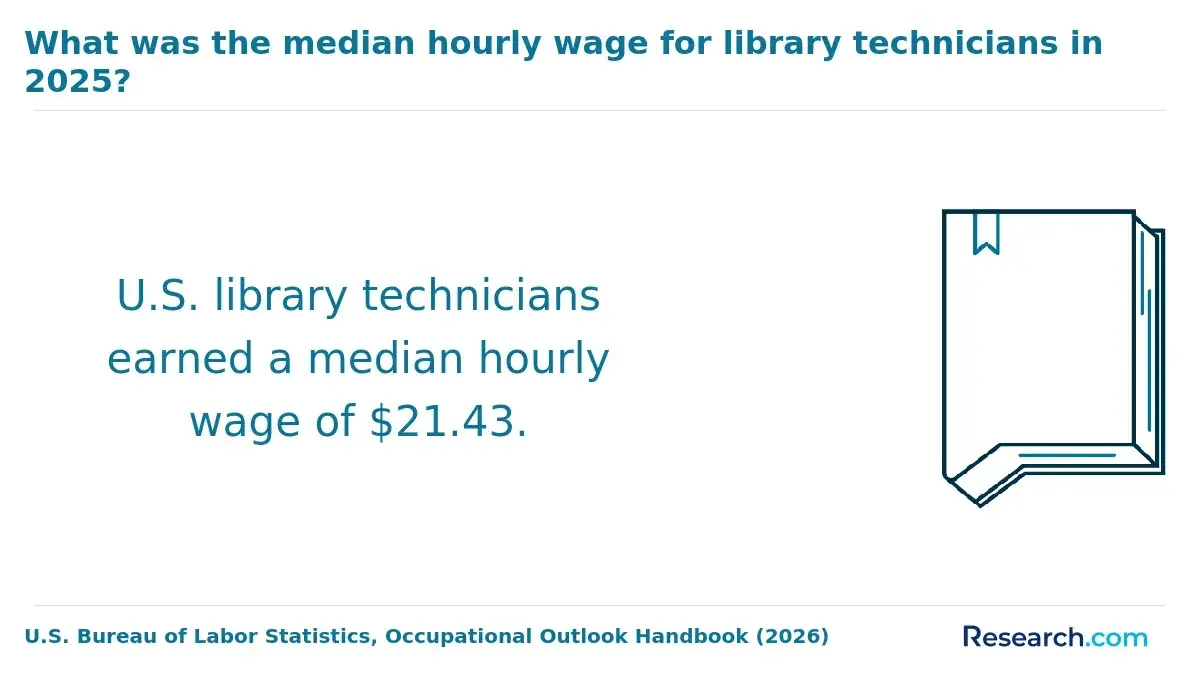
| Library technicians | $44,580 | −6.4% |
The difference between these occupational medians illustrates why the role matters when weighing graduate-school costs. It does not show that earning an MLIS will move someone from one salary to another. Location, employer, experience, duties, and the qualifications stated in a vacancy all affect the pay a candidate may encounter.
What certifications and standards support government digitization careers?
Standards are often more immediately useful than an optional certificate. Depending on the project, employers may look for familiarity with Federal Agencies Digital Guidelines Initiative (FADGI) imaging guidance, metadata practices, file-integrity checking, accessible digital content, and applicable records requirements. Federal agency records work also calls for attention to National Archives and Records Administration (NARA) requirements; those rules should not be assumed to govern every state or local collection in the same way.
Professional credentials in archives or records management can complement experience, but they are not universal legal requirements for digitization jobs. Before paying for one, compare its eligibility rules and subject matter with your target postings. For most students, a supervised project demonstrating careful handling, documented quality checks, and usable access will be stronger evidence of job readiness than a credential unrelated to the work.
Other Things You Should Know About Library Science
No. Many works created by U.S. federal employees as part of their official duties are not protected by U.S. copyright, but a document may contain third-party material. State and local rules also differ. Check rights and any access restrictions before publishing a digital copy.
No. A scan creates a digital file, but preservation also requires documented decisions about file quality, organization, integrity checks, storage, and future access. The original may still need appropriate care.
Not without authorization. Use public or properly cleared material, and remove sensitive information from any project documentation you share with prospective employers.
Searchable text helps, but it does not necessarily provide a usable reading order, meaningful headings, or accessible tables. Accessibility review should be part of planning an online government collection, with agency requirements checked for the particular project.
References
- Library of Congress Digital Preservation Resources https://www.digitalpreservation.gov/about/resources.html
- eCFR:: 36 CFR Part 1236 Subpart E -- Digitizing Permanent Federal Records https://www.ecfr.gov/current/title-36/chapter-XII/subchapter-B/part-1236/subpart-E
- Learn about copyright and federal government materials | usa.gov https://www.usa.gov/government-copyright
- Digital Preservation | GovInfo https://www.govinfo.gov/about/digital-preservation
- What is Copyright? | U.S. Copyright Office https://www.copyright.gov/what-is-copyright/
- Copyright, Restrictions, and Permissions | U.S. Department of the Interior https://www.doi.gov/copyright
- Application Requirements - Graduate Admissions https://gradadmissions.charlotte.edu/apply-now/application-requirements/