2027 Online MLIS Programs With No Technology Fee: What the Published Price Leaves Out

Co-Founder and Chief Data Scientist
"No technology fee" can make an online MLIS look affordable, but it says little about the final bill. The distinction matters for prospective librarians comparing programs while planning around work and other expenses.
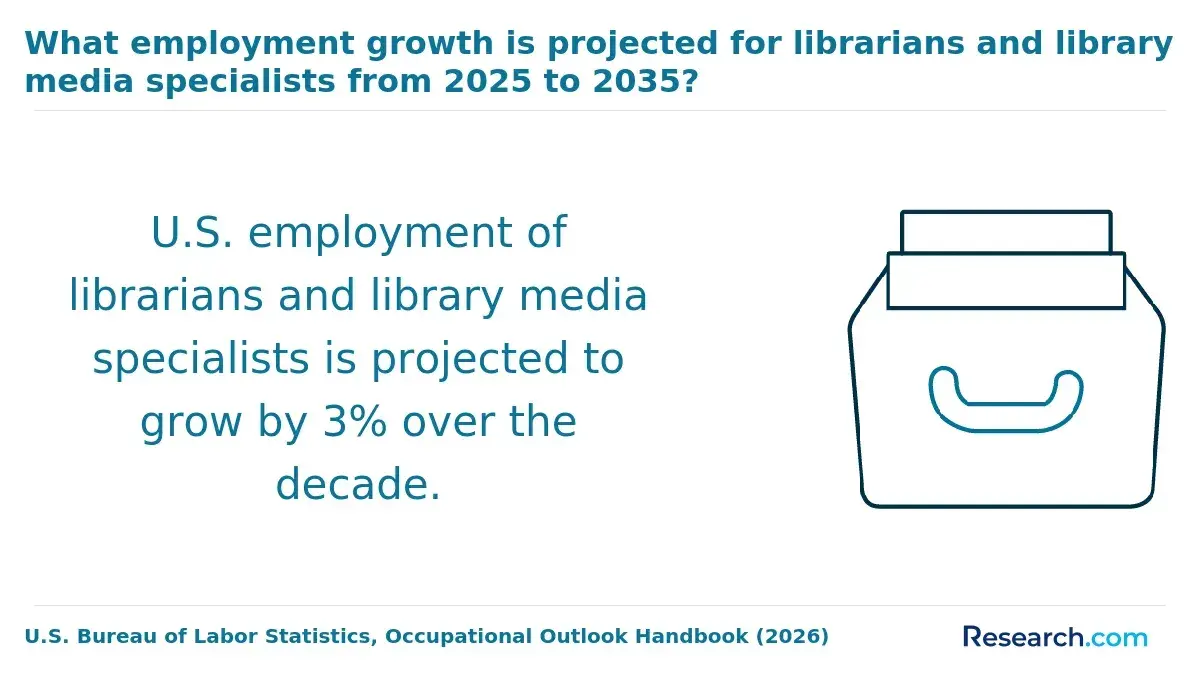
The U.S. Bureau of Labor Statistics projects 2.6% employment growth for librarians and media collections specialists from 2025 to 2035, so borrowing decisions deserve a realistic view of career opportunities. This guide shows you how to verify a fee claim, calculate costs beyond tuition, and weigh accreditation, scheduling, and career fit before applying.
Key Things You Should Know
- "No technology fee" does not mean no mandatory fees. Compare the charges assessed to an online student in your residency category and enrollment term.
- Calculate required credits × applicable tuition per credit, then add mandatory fees, materials, equipment, and any travel or practicum costs; a $0 technology-fee line alone cannot establish the total.
- Check the specific master's program's ALA accreditation and career fit before prioritizing a fee claim. The May 2025 median wage for librarians and media collections specialists was $68,270, not a guaranteed graduate salary.
What are online MLIS programs with no technology fee?
They are online Master of Library and Information Science programs whose applicable published charges do not include a separately assessed technology fee. That description applies only to the fee schedule, student category, and term checked. It does not establish that the program has no online-learning, distance-education, student-services, course, or other mandatory fees.
A blank fee-search result is not proof of a $0 charge. Before treating "no technology fee" as a program feature, ask the bursar for the itemized charges for your intended program, residency status, course load, and start term. Ask whether any fees are assessed per credit, per course, or per term and whether online students can decline them.
Keep the claim separate from affordability: a program with no technology fee can cost more overall than one with a small fee and lower tuition. If you expect to study part time, use an affordable library degree completion plan to think through how extra terms may affect the comparison.
How much do online MLIS programs really cost beyond published tuition?
Published tuition is a starting point, not a total-price quote. The comparable figure is the cost of completing the required credits under the tuition and fee rules that apply to you. Without a verified current schedule for a named program, a reliable school-specific total cannot be stated.
Use this sequence to build an estimate from each university's current tuition schedule and an itemized response from its billing office:
- Multiply the required program credits by your applicable per-credit tuition rate, accounting for any higher rates on particular courses.
- Add mandatory per-credit, per-course, and per-term fees across your planned number of terms.
- Add realistic estimates for books, required software or equipment, and any travel or placement expense you must pay.
- Recalculate if a slower schedule, unavailable elective, or required course sequence adds a term; ask whether tuition or fees can change before you finish.
For a consistent comparison, distinguish gross program cost from what you personally pay after confirmed grants or employer support. Borrowing can cover a bill without reducing its cost. The amount financed also creates repayment obligations. Do not assume online tuition is the same for every state resident or that a scholarship will renew automatically.
The cheapest accelerated MLIS programs may be useful comparison candidates, but compare their required credits and complete fee schedules, not just a headline rate or shortest possible timeline.
Which online MLIS programs are ALA-accredited?
The authoritative way to identify them is to check the current American Library Association directory of accredited master's programs, then match its program name and institution to the online degree you are considering. Institutions use several degree titles, including MLIS, MLS, and institution-specific LIS or information degrees, so the initials alone do not determine accreditation.
Check the specific master's program, not merely the university's institutional accreditation. Then confirm with the school that its advertised online route leads to that accredited degree. ALA accreditation does not, by itself, verify an online format, a particular elective, a concentration, or a placement opportunity.
No named program can responsibly be labeled both ALA-accredited and free of a technology fee without checking its current program listing and applicable billing schedule. If a school makes both claims, request the directory listing and an itemized estimate for your enrollment circumstances before relying on them.
What technology fees and hidden costs should online MLIS students expect?
A technology fee is usually a separately named charge, but other expenses may serve similar purposes or arise from online study. This comparison separates billed charges from costs you may have to arrange yourself.
| Cost category | What it may cover | How it affects the total |
| Mandatory university or online-course fees | Student services, online delivery, or course-specific resources | Can apply even when the technology-fee line is $0 |
| Learning materials | Books, access codes, and required readings | May vary by course selection |
| Personal technology | Computer, internet service, headset, or required software | May not appear on a university bill |
| Applied-learning costs | Travel, placement requirements, or time away from paid work | Depends on program rules and placement location |
Ask whether required software is supplied through the university and whether any in-person activity or supervised placement is mandatory. For funding, compare confirmed scholarships and employer benefits with your own eligibility rather than subtracting an advertised award from every school's estimate.
A library information science aid guide can help you identify questions to take to financial aid staff. Verify federal aid eligibility and loan terms for your actual enrollment period with the school's aid office and Federal Student Aid.
How long does an online MLIS program take to complete?
Completion time depends on required credits, how many courses you can take each term, and when required courses are offered. A published fastest-possible schedule may assume continuous enrollment and a course load that is impractical alongside full-time work.
Ask for a term-by-term course map for your intended pace. Check prerequisites, summer availability, maximum time-to-degree rules, and whether a practicum or capstone could delay graduation. Also confirm whether classes are asynchronous, scheduled live, or a mix; "online" alone does not guarantee that every activity fits your work hours.
A quick online information science masters comparison can help you identify accelerated options, but a longer schedule may be less expensive out of pocket if it lets you keep working or use employer support. Conversely, additional terms can increase per-term fees.
What courses are included in an online MLIS curriculum?
Many LIS master's curricula cover information organization, reference and user services, research methods, and management or policy. Electives may address metadata, digital collections, archives, youth services, or information technology. Requirements vary, so use the current catalog for the degree you would actually earn.
Match courses to your target work before comparing fee labels. For a public-library role, look for instruction and community services; for digital collections, look for metadata and preservation work you can demonstrate in a portfolio. A catalog listing is evidence that a course exists, not that it will run during your enrollment. Ask when relevant electives last ran and whether substitutions are allowed.
Also distinguish a formally named concentration from a few related electives. If an applied project or practicum matters to you, confirm whether it is required, optional, available remotely, and associated with additional costs.
What are the admission requirements for online MLIS programs?
Applicants generally need a bachelor's degree and must follow the individual program's graduate application rules. Schools may request transcripts, a statement of purpose, recommendations, a résumé, or other materials; testing and minimum-grade policies should be checked on the current admissions page rather than assumed.
Ask admissions whether online and campus applicants follow the same requirements, when decisions are issued, and whether a deposit is refundable. If your academic history is unusual, request an individual review before paying application costs. Admission does not establish financial-aid eligibility, an affordable net cost, or access to every elective you hope to take.
What careers can you pursue with an online MLIS degree?
An ALA-accredited LIS master's degree can support applications for professional roles in public, academic, special, and government libraries. Work may involve reference, information literacy instruction, collection development, or managing access to digital resources. Archives, metadata, records, and research-support roles can also be relevant, though employers may seek specialized experience or accept other degrees.
Evaluate the degree against actual postings in your preferred location and setting. Note which positions require a master's, which merely prefer one, and which are paraprofessional roles with different entry requirements.
If your goal is a technology or information-management job that does not require an MLIS, experience, a certificate, or another degree may be a better-value route.
How much can you earn with an MLIS degree?
The U.S. Bureau of Labor Statistics reports a $68,270 median annual wage in May 2025 for librarians and media collections specialists. That is an occupation-wide figure, not the starting salary of an MLIS graduate or the outcome of a particular online program. Pay can differ by employer, location, role, and experience.
For a borrowing decision, compare local job postings and their stated qualifications with your current earnings and likely repayment obligations. The MLIS roles and salary potential overview offers broader career context, but no occupational median can establish a personal payback period.
What job outlook and licensing requirements apply to MLIS graduates?
BLS projects 2.6% employment growth for librarians and media collections specialists from 2025 to 2035. That describes the national occupation, not openings in your area or demand for graduates of a particular program. Review local employers and opportunities for relevant experience before committing to a loan-funded degree.
Licensing depends on the position and jurisdiction. School librarian jobs may require state educator certification or an endorsement in addition to an LIS degree; an online MLIS does not automatically qualify graduates in every state.
Check the education authority in the state where you intend to work and ask a program how its pathway aligns with those rules. For other specialized roles, treat additional credentials mentioned in job postings as employer- or position-specific unless an applicable authority says otherwise.
Other Things You Should Know About Library Science Programs
Access policies vary. Ask which databases, e-books, research consultations, and interlibrary-loan services are available to fully online graduate students before enrollment.
Yes, you can contact a university's disability-services office to discuss its process and the documentation it requires. Ask early about accessible course materials and live-session arrangements relevant to your needs.
Refunds depend on the school's published deadlines and your withdrawal date. Check tuition, fee, and financial-aid consequences separately before changing enrollment.
Possibly, but employer security rules may block required software or university systems. Compare program equipment requirements with your employer's device policy before relying on a work computer.
References
- Cost of Attendance (Budget) | 2025-2026 Federal Student Aid Handbook https://fsapartners.ed.gov/knowledge-center/fsa-handbook/2025-2026/vol3/ch2-cost-attendance-budget
- Qualified Ed expenses | Internal Revenue Service https://www.irs.gov/credits-deductions/individuals/qualified-ed-expenses
- Finding and Applying for Scholarships | studentaid.gov https://studentaid.gov/understand-aid/types/scholarships
- MLIS Scholarship Opportunities - UW Information School https://ischool.uw.edu/programs/mlis/tuition-financial-aid/scholarships
- Online and Distance Education | Student Services Center https://studentservices.ncsu.edu/finances/tuition-and-fees/tuition-and-fee-rates/online-and-distance-education/
- Tuition & Financial Support - School of Information Sciences http://ischool.illinois.edu/academics/graduate/ms-library-and-information-science/tuition-financial-support
- Admissions and Costs | rutgers.edu https://sci.rutgers.edu/academics/graduate-programs/master-information/admissions-and-costs
- iSchool Fees - SJSU | School of Information https://ischool.sjsu.edu/fees
- Student Fees | University of Arkansas | Search Policies and Handbooks https://policies.uark.edu/fayetteville-policies/vcfa/5111-20200521.php
- Tuition and Charges | GCTC https://gateway.kctcs.edu/affording-college/tuition-costs/index.aspx