
2027 MLIS Programs for Emerging Technology and Library Innovation

Co-Founder and Chief Data Scientist
Choosing an MLIS for technology-focused library work means looking beyond a program's name. You need to know whether its courses and projects prepare you for work in digital collections, metadata, accessible services, or responsible AI - and whether the degree fits your budget and career goal. The U.S. Bureau of Labor Statistics projects 2.6% growth for librarians and media collections specialists from 2025 to 2035, making relevant experience especially worth considering.
This guide shows prospective students and career changers how to evaluate programs without mistaking a promising elective for a guaranteed specialization.
Key Things You Should Know
- Look for a verified combination of ALA accreditation, relevant coursework, and applied work; a technology-related elective alone is not a formal concentration.
- Compare the full degree cost and actual course schedule, not just per-credit tuition or an advertised completion time.
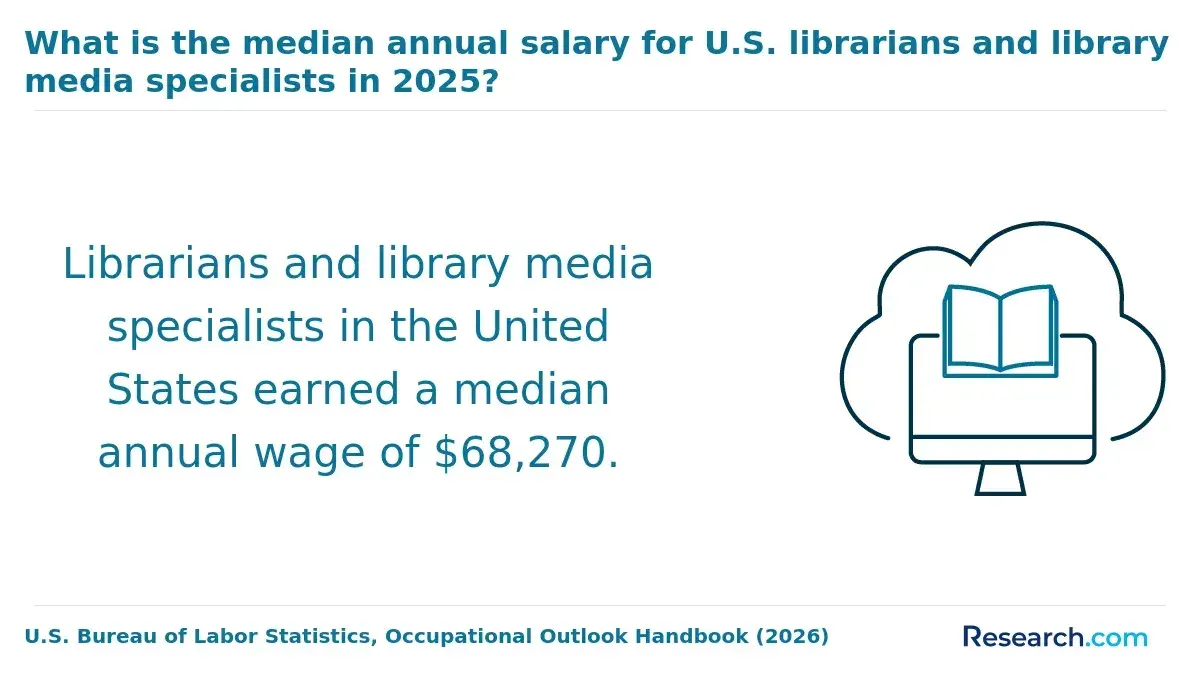
- Technology-focused roles span libraries and adjacent fields. The May 2025 median salary for librarians and media collections specialists was $68,270, but that occupation-wide figure is not a graduate outcome or starting-salary estimate.
What are MLIS programs for emerging technology and library innovation?
These are master's programs in library and information science that can prepare students to improve how information is organized, preserved, discovered, and used. The work might involve making a digital collection searchable, evaluating an AI-assisted discovery tool for accuracy and privacy, or improving access to library technology for people with disabilities.
"Emerging technology" is usually a career focus, not a standard degree title. One school may document a formal concentration; another may offer relevant electives or an independent project without naming a track. MLIS, MLS, Master of Science in Library Science, and Master of Information are institution-specific degree names. Evaluate the particular curriculum and credential rather than assuming the names are interchangeable or that one implies a technology specialization.
Why does ALA accreditation matter for emerging technology MLIS programs?
American Library Association (ALA) accreditation applies to a specific master's program, not automatically to every degree at its university. It is an important qualification to check for professional librarian positions, some of which specify an ALA-accredited degree. Verify the exact program and its current status in the ALA directory, particularly if the school uses a degree name other than MLIS.
Accreditation does not establish that an AI elective will run next term, a digital-libraries concentration exists, or an internship can be completed online. Check the catalog for requirements, then ask the program when relevant electives last ran and what applied opportunities are available to students in your study format. Institutional accreditation and ALA program accreditation answer different questions; neither replaces that curriculum check.
What careers can emerging technology MLIS graduates pursue?
Technology-focused graduates may work in public, academic, government, or special libraries, as well as archives and other information organizations. The right degree depends on the job's responsibilities: professional librarian posts may call for an MLIS or equivalent LIS master's, while software development and some data-focused jobs may favor different training.
A digital collections librarian may coordinate digitization, metadata, access, and preservation workflows. A metadata librarian describes resources so they can be found across catalogs and repositories. A scholarly communication librarian supports publishing and access to research, while a library technology or user-experience specialist may test discovery systems with patrons and staff. These roles also require collaboration, documentation, accessibility awareness, and the ability to explain technical choices to nontechnical colleagues.
Job titles do not reliably indicate degree requirements. Compare current postings for the setting you want, separating "required" qualifications from "preferred" ones. A collections assistant or library technician role can provide experience but is not necessarily a professional librarian position. For a broader view of how credentials relate to roles, see library degree careers by credential.
Which emerging technologies are covered in MLIS curricula?
Relevant curricula connect tools to information problems rather than teaching technology in isolation. Digital collections courses may address digitization, repository workflows, and digital preservation - the ongoing work of keeping files usable. Metadata courses may introduce Dublin Core or MARC for description, and linked-data approaches for connecting records across systems. Availability and depth vary by program.
Other useful topics include discovery-system evaluation, accessible interface design, research data management, privacy, and responsible use of AI. In library work, evaluating an AI-generated description means checking its accuracy, bias, treatment of sensitive information, and usefulness to patrons - not simply learning to operate the tool. A course title is only a starting point: review its recent syllabus or description for hands-on assignments, prerequisites, and the systems students actually use.
Match coursework to a tangible result. An aspiring metadata specialist could create and explain a small collection of descriptive records; someone interested in access could document a usability test and proposed improvements. Ask whether students can develop such work in a course, practicum, or capstone, and whether the opportunity is available in the format you plan to attend.
How do online and campus-based MLIS programs compare?
Format affects more than commuting. The comparison below highlights scheduling and project constraints that matter when you need both technical practice and manageable study time.
| Format | Potential advantage | Point to verify |
| Online | Can accommodate students who cannot relocate | Live sessions, time zones, group work, campus visits, and local practicum rules |
| Campus-based | May provide convenient access to on-site labs and local partners | Whether relevant electives and placements fit your schedule |
| Hybrid | Combines remote study with some in-person learning | Frequency and expense of required travel |
Online does not necessarily mean asynchronous or self-paced. Ask for a sample term schedule and confirm how students access software, technical support, and project supervision. Working adults comparing library masters weekend and online options should also check whether required courses - not just electives - fit their available hours.
What are the admission requirements for MLIS programs?
Applicants generally need a bachelor's degree and must submit the materials specified by each graduate program. These may include transcripts, a statement of purpose, recommendations, and a résumé; test policies and prerequisite expectations vary. A computing or library background can help explain your interests, but do not assume either is universally required or that professional experience replaces a published degree requirement.
Use the statement to connect a specific information problem to the skills you want to develop - for example, improving access to local digital collections - rather than claiming an interest in technology broadly. If your prior study, transcript, or intended project does not fit a program's standard guidance, request an individual review from admissions. Ask separately about graduate transfer-credit limits; undergraduate credits do not automatically shorten a master's program.
Admission and affordability are separate decisions. When narrowing applications, ask each school about its aid process and timing, then compare possible support with your own budget. Library science graduate funding options can help frame that search, but no award or employer benefit should be treated as assured.
How long do MLIS programs take and how much do they cost?
Completion time depends on required credits, course sequencing, enrollment pace, and any practicum or capstone. Full-time study may take roughly two years; a part-time schedule generally takes longer. An accelerated option is only practical if its required courses run when you need them and its workload fits your other commitments. Students considering one year online library science masters should request an actual term-by-term plan before relying on the advertised timeframe.
Without a specific school and tuition year, there is no responsible single price for a technology-focused MLIS. Calculate required credits × your applicable per-credit tuition, then add mandatory fees, materials, equipment, travel, and any practicum expenses. Check whether extra terms or a changed residency status would alter the total. Published tuition is not the same as total attendance cost.
Compare gross program cost, likely out-of-pocket cost after confirmed assistance, and the amount you would need to borrow. Ask the financial aid office to explain eligibility and loan terms for your enrollment period rather than assuming an older aid example still applies. Weigh the resulting cost against jobs you can realistically pursue, your current earnings, and any lower-cost way to gain the missing skill; a degree does not guarantee a financial return.
What salaries and job outlook can MLIS graduates expect?
U.S. Bureau of Labor Statistics occupation-wide figures provide context, not salary predictions for new graduates or particular MLIS programs. The selected categories below differ in duties and may include workers with varied educational backgrounds.
| BLS occupation | Median annual salary, May 2025 | Projected employment growth, 2025-2035 |
| Librarians and media collections specialists | $68,270 | +2.6% |
| Archivists | $64,550 | +3.4% |
| Library technicians | $44,580 | −6.4% |
The librarian category's $68,270 median is a midpoint across the occupation, not an entry-level offer. The projected growth rates describe broad occupations, not demand for a particular technology skill. To judge a program's career value, examine postings in your preferred location and setting for recurring requirements, pay ranges, and whether the position calls for an LIS master's.
Do library technology careers require licenses or certifications?
There is no single technology license required for all library positions. Requirements depend on the role, employer, and jurisdiction. School librarian positions are a particularly important exception to investigate: state education authorities set certification, licensure, or endorsement requirements, and an online MLIS does not automatically satisfy them in every state.
For digital collections, metadata, archives, and specialized libraries, an employer may value particular training or experience without a universal legal certification requirement. Check actual job postings before paying for an optional credential. If your goal is a school library, compare the program's preparation pathway with the current rules of the state where you intend to work; ALA accreditation alone does not establish state eligibility.
How can you choose a reputable MLIS program for library innovation?
Build a shortlist around the work you want to do, then test each school against the same evidence. This sequence helps separate documented preparation from attractive but unverified marketing language.
- Identify target job postings and note the degree, technical work, and service skills they actually request.
- Verify the exact master's program in the current ALA directory and distinguish a documented concentration from electives or general program alignment.
- Check required courses, recent elective availability, and whether an applied project or placement can produce relevant portfolio work.
- Confirm delivery schedules, placement location rules, total cost, and available support directly with the program.
Choose the option that closes your most important skill gap at a cost and pace you can sustain. A lower-cost program with dependable access to the right courses may fit better than a more expensive program with an appealing track name; compare low cost fast MLIS degree options using full costs and course schedules, not price or speed alone. If your target job does not seek an LIS master's, a focused certificate, supervised project, or different degree may be a better first step.
Other Things You Should Know About Library Science
Not necessarily. Check your intended courses for prerequisites. Basic familiarity with spreadsheets, data formats, or scripting can be useful for some projects, but technical expectations differ by program and career goal.
Digitization creates a digital version of material. Digital preservation addresses its continued usability through practices such as file management, documentation, and monitoring over time.
Often, if your employer and instructor permit it. Obtain approval before sharing records, patron information, internal workflows, or unpublished materials, and explain your own contribution clearly.
Ask a local library or information organization about observing a digital-services workflow, helping with an appropriate volunteer project, or speaking with staff about their tools and access challenges. That experience can sharpen your program criteria without committing you to a degree.
References
- Artificial Intelligence and Privacy - Issues and Challenges | Office of the Victorian Information Commissioner https://ovic.vic.gov.au/privacy/resources-for-organisations/artificial-intelligence-and-privacy-issues-and-challenges/
- Cost of Attendance (Budget) | 2025-2026 Federal Student Aid Handbook https://fsapartners.ed.gov/knowledge-center/fsa-handbook/2025-2026/vol3/ch2-cost-attendance-budget
- Innovation Interns | Opportunities | About https://labs.loc.gov/about/opportunities/innovation-interns
- Fully Online Programs and Certificates - Registrar | Illinois https://registrar.illinois.edu/fully-online-ay26/
- Practicum - School of Information Science & Learning Technologies https://cehd.missouri.edu/information-science-learning-technologies/practicum/
- Admissions | Wayne State University https://sis.wayne.edu/admissions
- MLIS Internships - College of Information Science https://infosci.arizona.edu/ma-library-information-science/internships
- Internships | UNLV University Libraries http://www.library.unlv.edu/sca/projects-initiatives/internships
- Emerging Technologies - SJSU - School of Information https://ischool.sjsu.edu/emerging-technologies


