2027 MLIS Programs With Recorded Lectures and Live Advising Appointments

Co-Founder and Chief Data Scientist
Recorded lectures can make an MLIS manageable around work, but they do not guarantee that advising appointments, required courses, or fieldwork will fit your schedule. That distinction matters when weighing the cost of a graduate degree against a career goal: the U.S. Bureau of Labor Statistics reports a May 2025 median annual salary of $68,270 for librarians and media collections specialists, not for all MLIS graduates.
This guide shows prospective students how to verify a program's actual learning and advising arrangements, compare costs, and decide whether the format supports their intended work.
Key Things You Should Know
- Confirm that recorded lectures are available in the courses you need and that live advising appointments can be booked at workable times; an "online" label establishes neither feature.
- Check the specific master's program in the current American Library Association accreditation directory. Institutional accreditation does not establish ALA accreditation.
- The projected 2025-2035 employment growth for librarians and media collections specialists is +2.6%; weigh program cost and practical experience alongside that modest occupation-wide outlook.
What are MLIS programs with recorded lectures and live advising appointments?
These are graduate library and information science programs in which students can watch at least some instructional lectures after they are delivered and meet an adviser in real time, usually by video or phone. Recorded instruction is asynchronous; an advising appointment is synchronous. A program may use both without making every class or service available on demand.
The distinction is especially important for employed students. A recorded lecture may still come with fixed assignment deadlines, group meetings, live presentations, or an in-person practicum. Likewise, a live meeting with an admissions representative is not necessarily continuing academic advising after enrollment.
Ask a program representative for written answers about the arrangements that would affect your weekly schedule:
- Which required courses use recorded lectures, and which require attendance at scheduled class sessions?
- Who provides academic advising after enrollment, how are appointments booked, and what time slots are available in your time zone?
- Can required practica, internships, or other applied work be arranged near home, and who approves the site?
If you need a flexible librarian degree for employees, test those answers against a sample term schedule rather than relying on the program's general description of online learning.
How do you verify MLIS program accreditation and professional quality?
Search the current American Library Association (ALA) directory for the specific master's program, including its degree name and institution. MLIS, MLS, Master of Science in Library Science, and Master of Information are not interchangeable labels, and the degree title alone does not establish accreditation. Check the directory's current status and any stated conditions or dates; confirm details with the program if its name has changed.
Institutional accreditation concerns the university, while ALA accreditation evaluates a qualifying graduate program. Neither establishes that a particular course is offered this term, that lectures are recorded, or that advising appointments are available when you need them. For professional quality and fit, request the current degree plan, recent course schedules, advising procedures, and the rules for applied learning. Compare those documents with the work you hope to do, not just the program's promotional descriptions.
If school librarianship is your goal, also check the education authority in the state where you intend to work. ALA accreditation and state educator licensure answer different questions.
What are the benefits of online MLIS programs compared with campus programs?
An online program can remove a regular commute and widen the set of institutions you can consider. Recorded lectures are particularly useful for reviewing demonstrations of cataloging, search strategies, or digital tools. Campus study may offer easier access to local placements and face-to-face contact; neither format is inherently more flexible in every respect.
The comparison below separates delivery format from actual scheduling requirements. Use it to identify which obligations to confirm before applying.
| Format | Potential scheduling advantage | Constraint to check |
| Online with recorded lectures | Watch covered instruction outside a fixed class hour | Live discussions, deadlines, advising slots, and placement hours |
| Online with live classes | Attend without commuting to campus | Required meeting times and time-zone differences |
| Campus-based | Meet instructors and peers in person | Commute, class timetable, and local placement options |
An accelerated librarian degree online may shorten the calendar but concentrate the weekly workload. If your priority is fitting study around employment, compare required course sequences and meeting times before treating speed as a benefit.
What courses do accredited MLIS programs typically include?
MLIS curricula commonly cover information organization, reference and research services, information access, management, and research methods. Programs differ in what they require and how students pursue interests such as youth services, archives, academic libraries, or digital collections. A catalog listing is evidence that a course exists, not that it will run in the term you need it.
For a recorded-lecture format, inspect how practical skills are taught and assessed. Metadata work might involve describing resources using a standard such as Dublin Core, while reference coursework might involve evaluating sources and conducting a patron interview. Those tasks may require software, collaborative work, or scheduled practice even when lectures are recorded.
Distinguish a formally named concentration from a set of electives or an individual project. If a particular job is your goal, ask which relevant courses are required, when electives were last offered, and whether a supervised project or placement can produce work you may include in a portfolio.
What are the admission requirements for online MLIS programs?
Programs typically ask for a bachelor's degree and academic transcripts. Depending on the institution, applicants may also need a statement of purpose, recommendations, a résumé, or evidence that they meet a published academic threshold. Requirements, deadlines, and policies on prior graduate credit vary; check the current admissions page for the specific degree rather than assuming another online program uses the same rules.
Library employment can strengthen an application and clarify career goals, but it does not automatically replace a required undergraduate degree. Applicants changing careers should describe transferable work - such as teaching, community service, research support, or records handling - without presenting it as professional librarian experience they have not had.
Before accepting an offer, ask when an academic adviser is assigned and whether a proposed part-time course sequence has been reviewed. If funding matters, compare the institution's actual aid terms with information on scholarships for nontraditional MLIS students; do not assume an award or employer benefit will apply to your enrollment.
How long do MLIS programs take and how much do they cost?
Completion time depends on the program's required credits, your course load, course sequencing, and any practicum. Recorded lectures may make weekly study easier to arrange, but they do not reduce degree requirements. Ask an adviser to map both a full-time and a realistic working-student schedule, including when required courses and placements can be taken.
No single tuition figure accurately represents every online MLIS. The categories below show what to collect from each institution so that you compare total expected cost rather than a per-credit advertisement.
| Cost component | What to obtain | Why it matters |
| Tuition | Current rate applicable to your residency and enrollment status, multiplied by required credits | Online students do not necessarily receive the same rate |
| Mandatory fees | Program, university, and technology charges | Published tuition may exclude them |
| Learning and placement expenses | Books, equipment, travel, and practicum-related costs | These can differ by course and placement site |
| Extra enrollment time | Fees and tuition implications of the proposed course sequence | A delayed required course can change the budget |
Separate gross program cost from what you expect to pay after confirmed funding and from any amount you would borrow. Federal aid eligibility and loan terms depend on your circumstances and enrollment period; confirm current details with the school's financial aid office. An affordable librarian degree online is the one whose verified total cost and schedule work for you, not necessarily the one advertising the lowest tuition rate.
What careers can you pursue with an MLIS degree?
An MLIS can prepare students for public, academic, school, and special library roles involving reference, instruction, collections, or community services. It can also support work in archives, metadata, digital collections, and research support when coursework and experience match the position. Employers set their own qualifications, and an MLIS is not required for every information-management job.
Use job postings for your target setting to test the degree's value. An academic library instruction role may emphasize teaching and research support; a digital collections role may call for metadata, accessibility, and preservation workflows. Try to pair relevant courses with a placement or project that demonstrates the requested skills. Some MLIS careers requiring specialized experience need more than the degree alone.
If you are unsure about librarianship, consider library employment, volunteering, or a targeted course before committing to a master's program. For some technology, records, or user-experience positions, another degree or substantial work experience may be a better fit.
What salaries can MLIS graduates expect in library and information careers?
Occupational medians are useful for comparing broad career paths, but they are not starting salaries or outcomes for graduates of a particular program. The U.S. Bureau of Labor Statistics reports the following U.S. medians for May 2025.
| Occupation | Median annual salary, May 2025 | How to interpret it |
| Librarians and media collections specialists | $68,270 | Broad occupation; individual pay varies by position and employer |
| Archivists | $64,550 | A distinct career path that may call for archives-specific experience |
| Library technicians | $44,580 | Paraprofessional work with different typical qualifications |
For a personal cost-benefit decision, compare salaries in current postings for your intended location and setting with your existing earnings and likely borrowing. Do not treat the librarian median as a promised raise or assume every MLIS graduate enters that occupation.
What is the job outlook for librarians and information professionals?
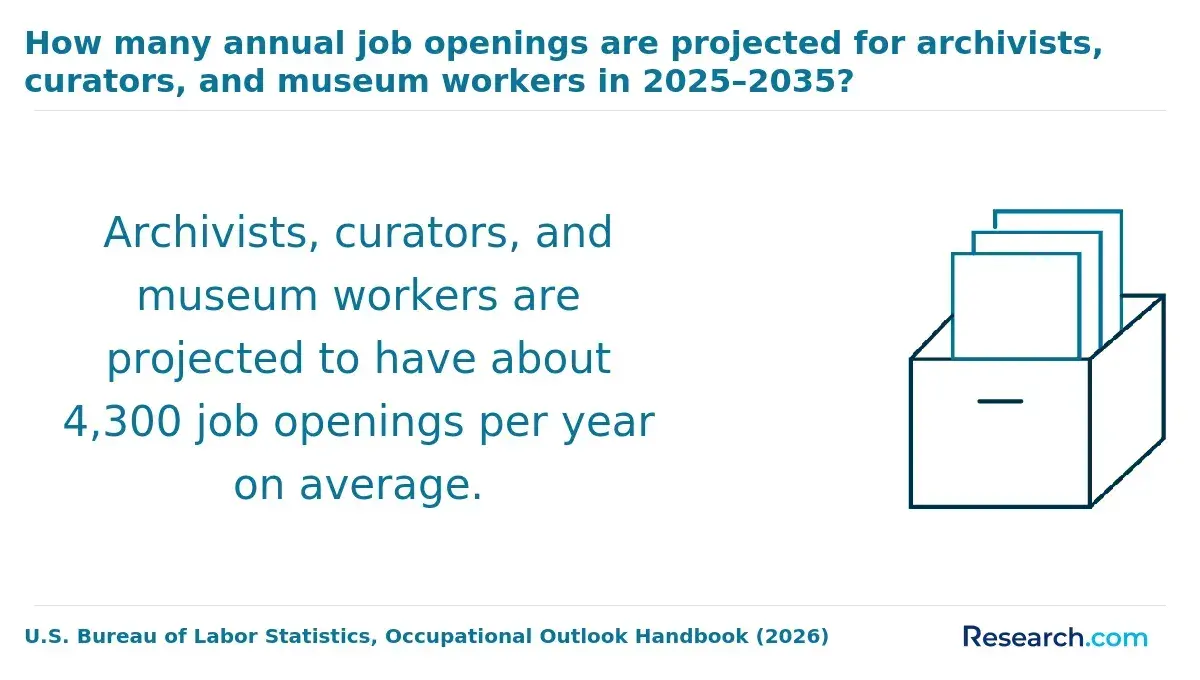
The Bureau of Labor Statistics projects +2.6% employment growth for librarians and media collections specialists from 2025 to 2035. This is an occupation-wide projection, not a forecast of openings in a particular city or a guarantee of employment for MLIS graduates.
Hiring prospects also depend on budgets, retirements, location, and the skills a role requires. Digital collections, research data support, accessibility, and responsible use of AI-assisted discovery can affect how information professionals work, but interest in those areas does not establish that every employer is hiring for them. Review recent postings in your target market and ask programs how students gain applicable experience alongside recorded coursework.
Do librarians need state licensure, certification, or additional credentials?
Requirements depend on the job and jurisdiction. Public and academic librarian positions commonly focus on the degree and relevant experience, while school librarian positions may require state educator certification, a school library endorsement, or other state-specific preparation. An online, ALA-accredited MLIS does not by itself establish eligibility for school librarian certification everywhere.
Before enrolling for a school library career, compare the program's approved preparation pathway with the rules published by the education authority in the state where you plan to work. Ask whether required teaching experience, supervised practice, or assessments can be completed in your circumstances. Law, medical, archives, and other specialized employers may prefer additional subject knowledge or experience; do not mistake a position-specific preference for a universal license.
Other Things You Should Know About Library Science
No universal format applies. Ask the program what accessibility features its course recordings provide and how to request accommodations for a specific class.
That depends on the institution's learning platform and course permissions. Confirm offline access before relying on it for travel or unreliable internet service.
Not necessarily. Ask how long course materials remain available, and keep permitted notes and resources for later professional use.
Policies vary. If the assigned adviser's availability or expertise does not meet your needs, ask the program director or student services office about its reassignment process.
References
- Fast Facts: Tuition costs of colleges and universities (76) | ed.gov https://nces.ed.gov/fastfacts/display.asp
- Classroom Lecture Capture Automatic Recording Opt-In | The University of Alabama at Birmingham https://www.uab.edu/ctl/learning-technologies/guides/classroom-lecture-capture-automatic-recording-opt-in
- Advising Appointments - University College https://universitycollege.indianapolis.iu.edu/support/advising/appointments/index.html
- online Master of Library and Information Science | DEN-EDU https://morgridgeonline.du.edu/online-mlis-program/
- Beginner's Guide to the Academic Advising Video Chat Option | Thomas Edison State University https://www.tesu.edu/about/blog/2015/guide-to-academic-advising-video-chat.php
- Advising | ECTC - KCTCS https://elizabethtown.kctcs.edu/current-students/academic-resources/advising.aspx
- How Does Online Learning Work at CSU? | colostate.edu https://online.colostate.edu/faqs/online-learning.dot
- 5 Tips for Getting Advising during Busy Times | berkeley.edu https://lsadvising.berkeley.edu/news/5-tips-getting-advising-during-busy-times
- Library Science Master's Online - UW Information School https://ischool.uw.edu/programs/mlis/degree-options/online
- Tuition in Detail - One Stop Student Services https://onestop.utk.edu/billing-payments/tuition-detail/