2027 MLIS Programs for Accessible Library Services Coordinators

Co-Founder and Chief Data Scientist
Choosing an MLIS for an accessibility-focused library career takes more than finding a program that mentions inclusion. Coordinators must help people use collections, technology, spaces, and services across a range of disabilities. The U.S. Bureau of Labor Statistics reports a May 2025 median annual wage of $68,270 for librarians and media collections specialists, but that broad figure is not a coordinator-specific salary.
This guide helps prospective students identify relevant coursework and experience, compare formats and costs, and decide whether an MLIS fits the roles they want.
Key Things You Should Know
- Look for an ALA-accredited master's program with documented accessibility coursework or applied projects; a relevant elective is not the same as a formal accessibility concentration.
- Prioritize experience evaluating digital services and improving patron access. Confirm that needed electives and practica will be available within your schedule before enrolling.
- BLS projects 2.6% employment growth for librarians and media collections specialists from 2025 to 2035. That broad outlook does not predict openings for accessibility coordinators at a particular library.
What is an MLIS program for accessible library services coordinators?
It is an MLIS program a student uses to prepare for coordinating access to library services for people with disabilities. That preparation might combine core librarianship courses with electives, an independent project, and supervised experience. Unless a university explicitly documents an accessibility concentration, students should treat this as a career-focused pathway, not an officially named specialization.
Accessible services work spans more than building access. A coordinator might review whether a catalog works with assistive technology, help staff offer materials in usable formats, improve event accommodations, or work with vendors when an online resource creates barriers. The role also requires listening to patrons, protecting their privacy, and turning reported problems into service improvements.
What education and accreditation do accessible library services coordinators need?
An MLIS, MLS, Master of Science in Library Science, or another institution-specific LIS master's degree may qualify someone for professional librarian positions. Degree titles alone do not establish equivalence.
Compare the actual program and the employer's requirements. Accessibility coordinator titles can also cover outreach, technology, or administrative work for which employers may accept other education and relevant experience.
For applicants pursuing professional librarian roles, check the specific master's program in the current American Library Association accreditation directory. Institutional accreditation and ALA program accreditation are different. ALA accreditation does not, by itself, verify an accessibility elective, practicum placement, or online format.
School library positions are a separate consideration. State certification or endorsement rules can apply even when the graduate LIS program is ALA-accredited; prospective school librarians should check the education authority in the state where they intend to work.
How do you choose an accredited MLIS program for accessible library services?
Start with the kind of work you want to do: public-service coordination, accessible digital collections, assistive-technology support, or library-wide policy and training. Then compare programs using evidence from the current catalog and direct answers from program staff.
A list of the top online MLIS programs can help generate options, but it cannot establish which program offers the accessibility preparation you need.
Before applying, ask a program representative these questions. The answers help distinguish a possible pathway from one you can realistically complete.
- Which required courses and electives address disability access, inclusive service design, accessible technology, or community outreach?
- When were the relevant electives last offered, and what happens if one is unavailable before graduation?
- Can a practicum or capstone involve accessibility work, and who arranges and supervises the placement?
- Can students complete the degree in their intended format, and what are the total required credits and fees?
Prefer verifiable opportunities to appealing labels. A documented course establishes relevant coursework; an approved patron-service project establishes applied experience. Neither proves that the program offers a formal concentration or that a graduate will secure a coordinator job.
Are online or campus-based MLIS programs better for accessibility careers?
Neither format is inherently better. The stronger option is the one that lets you access instruction, complete relevant projects, and gain experience with the communities and systems you hope to serve.
This comparison shows the practical differences to verify rather than assuming that online study is automatically flexible or campus study is automatically more hands-on.
| Consideration | Online program | Campus-based program |
| Course participation | May include scheduled live sessions, group work, or asynchronous assignments | Usually involves scheduled in-person meetings |
| Applied experience | Local or remote projects may be possible if the program approves them | Nearby partner libraries may be convenient, but placements still require confirmation |
| Accessibility to the student | Course platform, documents, and live-session access matter | Classrooms, transportation, and campus technology matter |
Ask for a demonstration of the learning platform and examples of accessible course materials if these affect your ability to participate. Students who learn best by demonstrating skills may also want to examine mastery based library information science approaches, while confirming how any such approach works in the particular program.
What courses do MLIS programs offer in accessible library services?
Course names vary, so examine descriptions and assignments rather than searching only for the word "accessibility." Relevant study may include reference and information services, inclusive outreach, user experience, digital libraries, web accessibility, collection development, and library management. Catalog listings show what a program has approved, not necessarily what it will offer during your enrollment.
For applied work, a useful portfolio project could assess a library discovery tool with keyboard navigation, document barriers, recommend changes, and explain how patrons would be involved in testing.
Another could redesign an event-registration process so people can request accommodations without unnecessarily sharing sensitive information. Such projects show judgment as well as technical awareness.
Course sequencing matters if you hope to finish an online library degree quickly. Ask whether prerequisite courses, elective rotation, and project approvals fit your proposed timeline; taking more classes in one term will not solve an unavailable required course.
What are the admission requirements for accessible library services MLIS programs?
Applicants generally need a bachelor's degree and must meet the particular university's graduate admissions requirements. Programs may request transcripts, a statement of purpose, recommendations, a résumé, or other materials; test policies and deadlines vary. An accessibility-focused career goal usually does not require a prior LIS degree or a disability-related credential, but applicants should check each program's published rules.
Use the statement of purpose to connect your experience to a specific problem you want to learn to address, such as inaccessible electronic resources or inconsistent accommodation procedures. Experience in libraries, disability services, community organizations, teaching, or user testing can provide examples without being presented as a substitute for formal eligibility requirements.
How long do MLIS programs take and how much do they cost?
Time to completion depends on required credits, course load, elective scheduling, and any practicum or capstone. For a realistic estimate, map the program's required courses against the terms you can attend. Ask whether a reduced course load changes access to financial aid or extends enrollment into additional fee-bearing terms.
Compare total expected attendance cost, not a single tuition rate. Multiply the published per-credit tuition applicable to you by required credits, then add mandatory fees and likely expenses for books, technology, travel, or a placement.
Check residency rules rather than assuming every online student pays the same rate. Guides to the most affordable online library science programs in the South can help narrow a search, but current university charges should determine your budget.
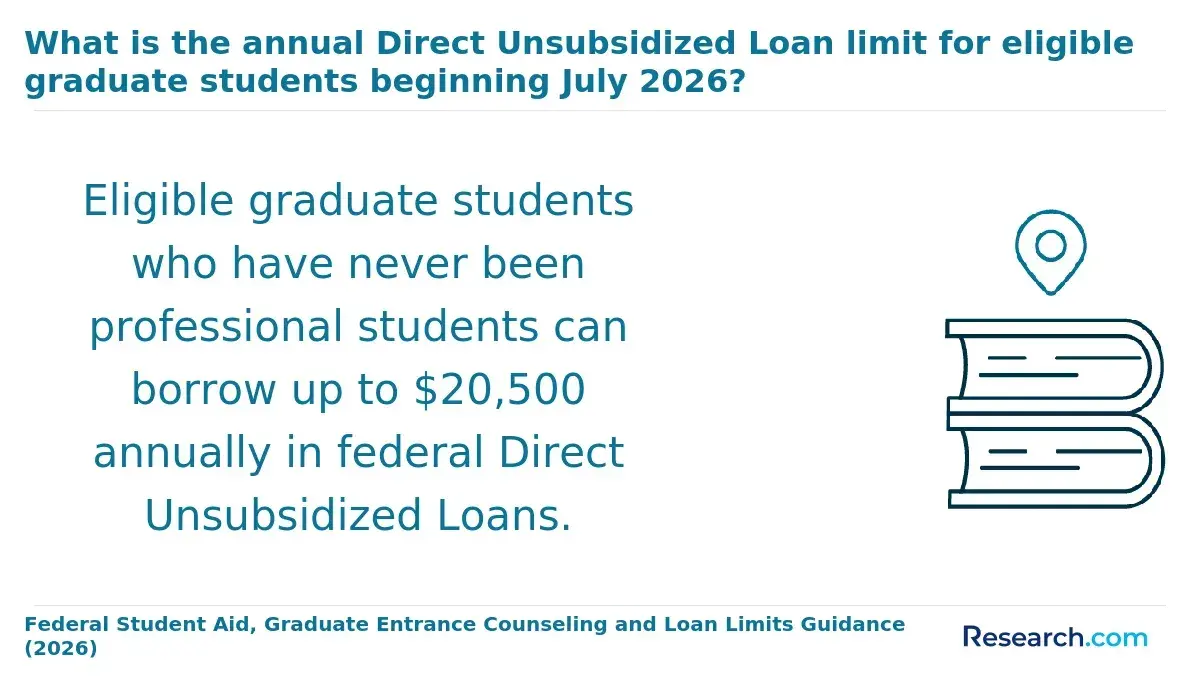
Scholarships, employer support, and borrowing can change what you pay personally without changing the program's gross cost. Confirm current eligibility and loan terms with the school's financial aid office before relying on a funding plan. If you already earn a salary in a related role, weigh any potential career benefit against lost work time and the amount you would need to finance.
What careers can you pursue with an MLIS focused on accessibility?
Accessibility work is often embedded in broader library jobs rather than advertised under one title. The following pathways differ in their primary responsibilities and in how directly an MLIS may fit.
| Pathway | Typical focus | MLIS fit |
| Public or academic librarian with accessibility duties | Reference, instruction, collections, outreach, and service improvements | Often relevant to professional librarian hiring |
| Accessible services or outreach coordinator | Patron access, staff training, accommodations, and community partnerships | May be valued; requirements depend on the employer and scope |
| Digital accessibility or user-experience specialist | Testing and improving websites, documents, and digital tools | One possible route alongside technical or design experience |
A student aiming for professional librarianship should seek patron-facing experience alongside an accessibility project.
Someone primarily interested in website remediation or accessibility testing should also compare technical training, a certificate, or work experience before committing to an MLIS. These jobs have different barriers to library science employment. The degree alone does not meet every position's technical or professional requirements.
How much do accessible library services coordinators earn?
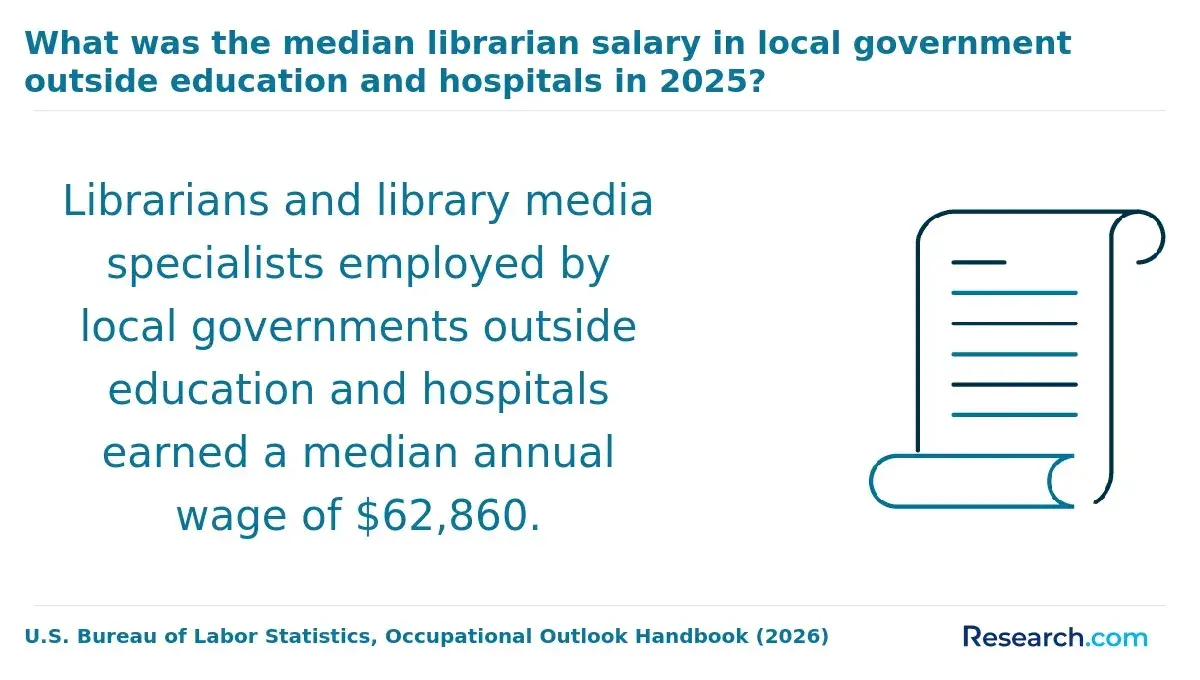
There is no single BLS salary category for accessible library services coordinators. The closest broad comparison for many professional library roles is librarians and media collections specialists, whose median annual wage was $68,270 in May 2025. That is an occupation-wide median, not an entry-level offer or an expected salary for an accessibility-focused graduate.
Pay can depend on whether the position is classified as a librarian, specialist, or coordinator, as well as the employer, location, experience, and supervisory duties. When assessing the degree's financial value, compare actual job postings you would qualify for with your present earnings and the full cost of attendance.
What is the job outlook for accessible library services coordinators?
BLS projects 2.6% employment growth from 2025 to 2035 for librarians and media collections specialists. This provides context for the broader profession but does not measure demand for accessible services coordinators separately. A library may assign accessibility responsibilities to an existing librarian, create a dedicated position, or distribute the work among several teams.
To gauge opportunities, review current postings in your preferred region and setting. Note whether employers ask for patron-service experience, digital accessibility skills, staff training, or an accredited LIS master's degree. That evidence is more useful for choosing electives and projects than assuming every library will hire a dedicated coordinator.
Other Things You Should Know About Library Science Programs
Not for every role. Familiarity with accessible formats and referral options is useful, but check job descriptions before investing in a specialized skill that a position may not require.
Avoid assuming that a diagnosis is needed for an ordinary service request. Some specialized programs have eligibility rules, so staff should follow the applicable policy while collecting only information needed to provide the service.
The Web Content Accessibility Guidelines, commonly called WCAG, provide a practical starting point for understanding web barriers. Legal obligations depend on the library and the service; learning a standard does not replace institution-specific compliance guidance.
Yes. Invite people with varied access needs to test services, make participation voluntary, and explain how their feedback will be used. Their experience can reveal barriers that a checklist misses.
References
- Guidance on Web Accessibility and the ADA https://www.ada.gov/resources/web-guidance/
- Library Outreach Services Coordinator Position Description | shenandoahcountyva.gov https://shenandoahcountyva.gov/DocumentCenter/View/3336/Library-Outreach-Coordinator-5-2025
- Disability Discrimination: Technology Accessibility | ed.gov http://www.ed.gov/laws-and-policy/civil-rights-laws/disability-discrimination/disability-discrimination-key-issues/disability-discrimination-technology-accessibility
- IT Accessibility Laws and Policies | Section508.gov https://www.section508.gov/manage/laws-and-policies/
- Master's in Library and Information Science | UNC Greensboro https://www.uncg.edu/degrees/library-and-information-science-m-l-i-s-instructional-technology-concentration/
- Master's Degree (MSLS) in Library & Information Science | University of Kentucky https://online.uky.edu/masters/library-information-science/msls
- Library Coordinator I - UF TEAMS Titles - University of Florida https://teams-titles.hr.ufl.edu/teams-title/library-coordinator-i/
- Library Science Careers - UW Information School https://ischool.uw.edu/programs/mlis/careers
- Tuition & Financial Support - School of Information Sciences http://ischool.illinois.edu/academics/graduate/ms-library-and-information-science/tuition-financial-support
- ADA Title II Info and FAQ - Digital Accessibility Office https://digitalaccessibility.unc.edu/ada-title-ii-info-and-faq/