2027 MLIS vs. a Research Administration Master's for University Libraries

Co-Founder and Chief Data Scientist
University research support sits across two professions: librarians help people find, manage, and share information, while research administrators help institutions secure and oversee funding. Choosing the wrong master's can close off jobs you expected it to open. The U.S. Bureau of Labor Statistics projects 2.6% employment growth for librarians and media collections specialists from 2025 to 2035, making a clear career target more useful than a broad promise of opportunity. This guide compares credentials, training, costs, and hiring requirements so you can choose a degree that fits the work you want to do.
Key Things You Should Know
- For professional university librarian positions, an ALA-accredited MLIS or equivalent LIS master's is generally the safer choice; a research administration degree usually does not replace it.
- For grants, sponsored projects, and research compliance positions, research administration training is more directly aligned, although employers may also accept relevant experience or other degrees.
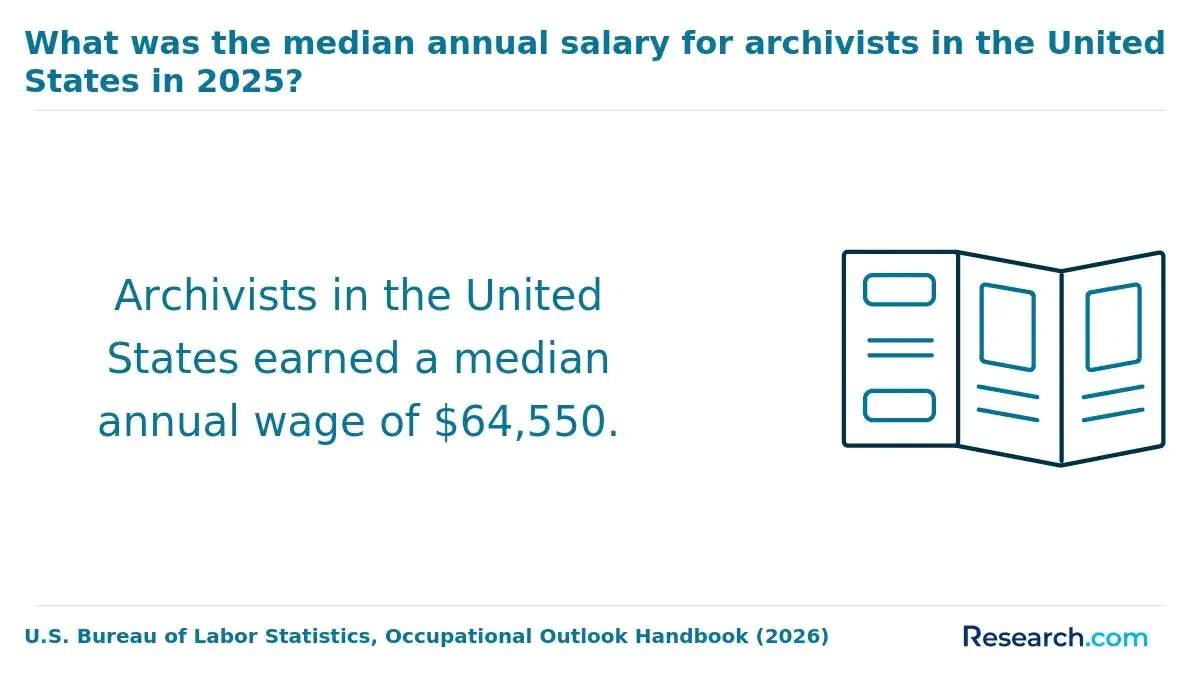
- BLS reports a May 2025 median annual wage of $68,270 for librarians and media collections specialists. That occupational figure is not a university library starting salary or a return-on-investment estimate.
What Is the Difference Between an MLIS and a Research Administration Master's?
An MLIS prepares students to organize information and provide library services. Depending on the institution, an ALA-accredited LIS master's may instead be called an MLS, Master of Science in Library Science, or Master of Information; the degree name alone does not establish its accreditation or curriculum. A research administration master's focuses on the processes institutions use to pursue, manage, and account for sponsored research funding.
The distinction matters because university libraries increasingly support researchers throughout a project, but not every research-support task is a librarian's job. This comparison shows where the two degrees most clearly diverge.
| Decision point | MLIS or equivalent LIS master's | Research administration master's |
| Primary focus | Information access, organization, preservation, and user services | Sponsored-project development, administration, and compliance |
| Typical university home | Library or related information-services unit | Research office, grants office, academic department, or sometimes a library |
| Best fit | Research librarian, scholarly communication librarian, or research data librarian | Grants administrator, sponsored-project specialist, or research compliance professional |
| Main credential limitation | Does not automatically establish expertise in grant accounting or sponsor rules | Usually does not satisfy a librarian posting that requires an ALA-accredited LIS degree |
A library-based position titled "research administrator" may emphasize grants operations rather than reference or collections work. Read its duties and required qualifications instead of relying on its location or title.
Which Degree Leads to More University Library Career Opportunities?
The MLIS generally opens more professional librarian positions within university libraries. Job postings for subject liaison, instruction, collections, and many scholarly communication roles commonly specify an ALA-accredited LIS master's. Some research data and digital scholarship positions accept other graduate degrees when applicants bring substantial disciplinary or technical expertise, so requirements still need to be checked individually.
A research administration master's can be the better investment if "working at a university" matters more than holding a librarian title. Sponsored-project offices and academic departments are natural destinations. A library may employ a grants or research operations specialist, but that possibility should not be mistaken for a broad alternative route into professional librarianship. Library technician and assistant positions are separate, often paraprofessional entry points with different qualifications and advancement paths.
Do University Librarians Need an ALA-Accredited MLIS?
There is no single U.S. law requiring every university librarian to hold an ALA-accredited MLIS. Many employers, however, require or strongly prefer a master's from an ALA-accredited LIS program for professional librarian appointments. Verify the specific program in the current ALA directory: a university's institutional accreditation is not the same thing as ALA accreditation of its LIS master's.
Accreditation also does not certify that a program offers a research data concentration, a particular elective, or a remote internship. Confirm those features separately. School librarian jobs are a different case: state certification or endorsement rules can apply, including when the degree was earned online. For an example of how location-specific requirements affect planning, see Illinois library science degree requirements, then verify current rules with the relevant state education authority.
What Do MLIS and Research Administration Programs Teach?
MLIS coursework commonly addresses information organization, reference and instruction, collection development, information systems, and professional ethics. For university research support, useful electives may cover scholarly communication, research data management, copyright, metadata, or digital preservation. Research administration study is more likely to address proposal development, sponsored-project budgets, award management, institutional policy, and compliance. Actual course titles and requirements vary by program.
The strongest preparation pairs coursework with evidence of applied skill. An aspiring librarian might create a research guide, teach an information-literacy session, or document a repository workflow. An aspiring research administrator might practice reviewing a proposal budget or mapping a sponsored project's approval steps using appropriate, nonconfidential examples. A catalog listing is not a promise that an elective runs when you need it, and a related elective is not necessarily a formal concentration.
What Are the Admission Requirements for Each Master's Degree?
Both types of program typically expect a bachelor's degree and an application that may include transcripts, a statement of purpose, recommendations, and a résumé. Minimum grades, test policies, prerequisite courses, and treatment of professional experience are institution-specific. An applicant without library employment can still explain relevant teaching, research, data, or public-service experience; grants experience may similarly strengthen a research administration application without replacing stated academic requirements.
Check each program's current admissions page, especially if your transcript, prior graduate credits, or international credentials need individual review. This overview of online library degree admission requirements can help you prepare questions, but the university's published policy controls your application.
How Long Do These Master's Programs Take and What Do They Cost?
Duration depends on required credits, course sequencing, and whether you study full time or part time; the degree label alone cannot tell you a reliable completion date. Compare each school's published degree plan with the actual schedule of courses you intend to take. A practicum, capstone, or infrequently offered elective can extend enrollment even when the nominal credit total looks manageable.
Compare total expected cost, not advertised tuition alone. For each program, multiply the tuition rate that applies to you by required credits, then add mandatory fees, materials, and any travel or fieldwork expenses. Ask whether tuition changes with residency or online enrollment and whether employer assistance has eligibility conditions. This guide to online library science cost and earnings offers additional comparison context; obtain a current, individualized estimate before borrowing.
Gross program cost, what you pay out of pocket, and what you finance are different amounts. Scholarships or employer support may lower your personal cost, while loans change when you pay and add repayment obligations. Confirm current federal aid eligibility and loan terms for your enrollment period with the financial aid office rather than assuming that an older estimate still applies.
Are Online or Campus Programs Better for These Career Paths?
Neither format is inherently better. An online program can let a working library assistant or grants employee keep gaining experience, but online delivery does not mean every class is asynchronous or that every placement can be completed remotely. A campus program may make local networking and supervised work easier, yet those opportunities depend on the institution rather than the format alone.
Ask about live-session times, elective rotation, placement rules, and access to research-support projects before deciding. If you need greater control over study pace, examine what a competency based librarian degree actually assesses and whether its accreditation, course access, and deadlines fit your intended librarian roles. For either degree, relevant work experience may matter more than where you sat during class.
What Jobs Can You Get With an MLIS or Research Administration Degree?
With an MLIS, potential university library paths include subject librarian, instruction librarian, scholarly communication librarian, metadata librarian, and research data librarian. The work can involve teaching researchers to evaluate sources, supporting open-access publishing, describing digital materials, or helping teams plan how data will be organized and shared. Subject expertise, technical skills, and experience often affect competitiveness alongside the degree.
Research administration graduates may pursue proposal-development, pre-award, post-award, grants management, or research compliance roles. These jobs can involve reviewing applications, coordinating budgets and approvals, tracking award conditions, and communicating with investigators. Employers may accept other degrees and substantial experience; an MLIS is not ordinarily necessary simply because the position supports researchers.
If compensation is a major consideration, compare specific job postings rather than assuming every library specialization pays alike. A guide to highest paying library science jobs can suggest roles to investigate, but pay and credential requirements must be checked against current openings in your target market.
How Do Salaries and Job Outlook Compare Between These Degrees?
BLS reports a May 2025 median annual wage of $68,270 for librarians and media collections specialists and projects 2.6% employment growth from 2025 to 2035. These are national occupational figures, not salaries for MLIS graduates or university library hires. They also do not establish what a research administration graduate will earn: grants and sponsored-research jobs span different titles and occupational classifications.
For a useful comparison, collect current postings for both paths in the same geographic area. Note stated pay ranges, degree requirements, experience thresholds, and whether roles are full time or grant-funded. Weigh those findings against your current earnings and likely borrowing. Without comparable program costs and job offers, a precise degree "payback period" would be misleading.
How Should You Choose a Reputable Program for Your Goals?
Start with several real postings for jobs you would accept. Mark which require an ALA-accredited LIS master's, which accept alternative degrees, and which ask for grants or library experience. Then use those requirements to judge programs - not the appeal of a concentration name.
A short verification sequence can prevent an expensive mismatch:
- For librarian goals, confirm the specific LIS master's current ALA accreditation status in the ALA directory; for either degree, check the institution's accreditation.
- Match required courses, available electives, and applied projects to the skills named in your target postings; ask when relevant electives next run.
- Confirm placement arrangements, online scheduling, realistic completion time, total estimated cost, and funding conditions directly with the program.
- Speak with staff about recent graduates' job titles and ask how any published outcomes were collected before treating them as predictive.
Choose the MLIS if your nonnegotiable goal is a professional university librarian position. Choose research administration training if you primarily want to manage sponsored projects. If you already hold one degree and want a narrower skill set, relevant experience or targeted coursework may be less costly than earning a second master's.
Other Things You Should Know About Library Science
Possibly. Eligibility depends on the institution's policies and the funder's rules, not on holding an MLIS alone. Ask the university research office about investigator status and approval procedures.
No. An MLIS does not confer authority to approve human-subjects, animal-research, or other regulated work. Those responsibilities follow institutional roles, training, and applicable rules.
Yes, if it gives you relevant responsibilities and a supervisor who can describe your work. Document concrete tasks and outcomes rather than relying on the job title alone.
Include a small number of work samples tied to the job, such as a research guide, metadata project, training resource, or de-identified process document. Explain your contribution, audience, and decisions, and never disclose confidential grant or patron information.
References
- Academic Research and Development | NCSES - NSF https://ncses.nsf.gov/pubs/nsb202326
- Data Competencies | NNLM https://www.nnlm.gov/resources/data/data-competencies
- MLIS Career Pathways: A Look at Academic Librarianship | SJSU https://ischool.sjsu.edu/istudent-blog/mlis-career-pathways-look-academic-librarianship
- Do You Need a Master's to Work in a Library? - Career Guide | University of Arizona Online https://online.arizona.edu/news/do-you-need-masters-work-library-librarian-career-guide
- Systematic Review Librarian - 530376 - Alabama, United States https://careers.ua.edu/jobs/systematic-review-librarian-530376-alabama-united-states
- What Can You Do With a Library Science Degree? | Syracuse University Online Master's Programs https://onlinegrad.syracuse.edu/information-science/mslis/library-science-careers/
- MLIS Curriculum, Specialties & Courses | University of Arizona College of Information Science https://infosci.arizona.edu/ma-library-information-science/curriculum-specialties-courses
- Research Administration | miami.edu https://www.research.miami.edu/how-to-guides/research-administration/index.html
- A Survey of Research Administrators: Identifying Administrative Burden in Post-Award Federal Research Grant Management https://www.srainternational.org/blogs/srai-jra2/2023/10/13/a-survey-of-research-administrators-identifying-ad
- Guidelines for Choosing a Master's Program in Library and Information Studies | ALA https://www.ala.org/educationcareers/accreditedprograms/guidelines-choosing-masters-program-library-and-information-studies