
2027 MLIS Programs for Legal Research and Knowledge Services

Co-Founder and Chief Data Scientist
A legal research career requires more than knowing how to search a database. Prospective students need to find an MLIS program that develops legal-source expertise, research judgment, and practical experience without paying for a specialization they will not use. The U.S. Bureau of Labor Statistics reports a May 2025 median salary of $68,270 for librarians and media collections specialists, though that broad category does not isolate law-library jobs. This guide helps future law librarians and knowledge-services professionals assess credentials, coursework, formats, costs, and career fit.
Key Things You Should Know
- Prioritize an ALA-accredited master's program, then verify legal research electives and applied opportunities separately; accreditation does not establish that a legal specialization exists.
- Legal employers may seek different combinations of an MLIS, legal research experience, technical skills, and sometimes a JD; a law degree is not a universal requirement.
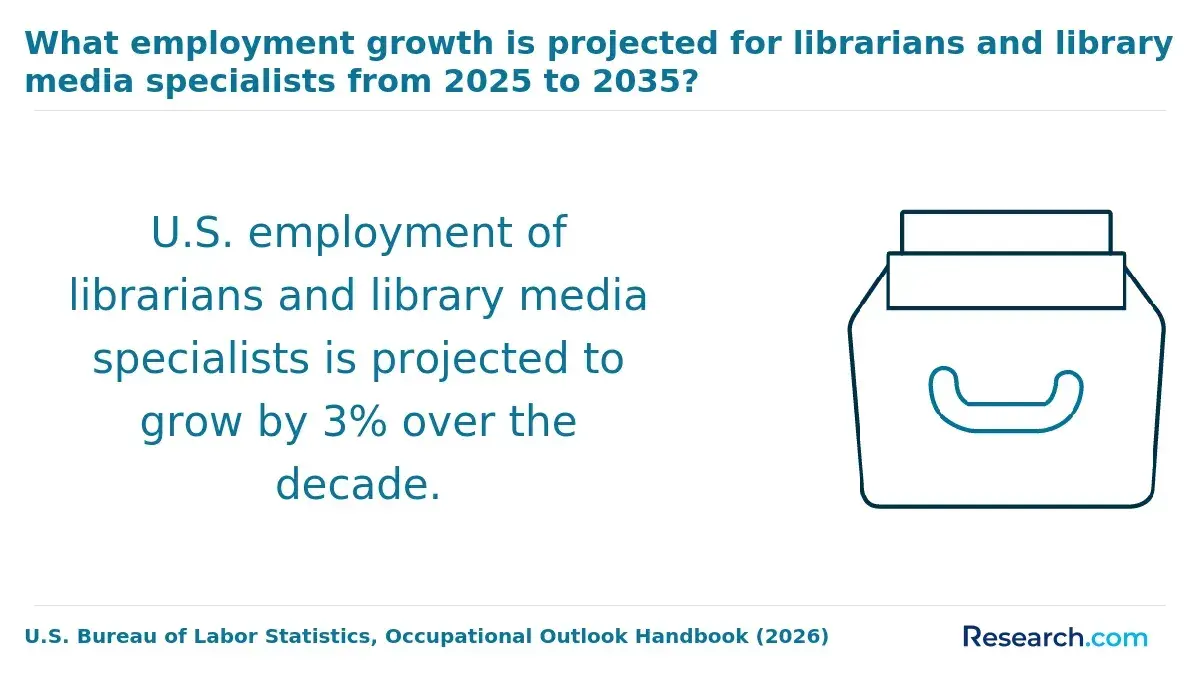
- BLS projects 2.6% employment growth for librarians and media collections specialists from 2025 to 2035, but does not provide a separate projection for legal information roles.
What are MLIS programs for legal research and knowledge services?
These are library and information science master's programs that can prepare students to find, evaluate, organize, and deliver legal information. An MLIS may be called an MLS, Master of Science in Library Science, or another institution-specific name. The degree title alone does not tell you whether its curriculum supports legal work.
Legal research involves locating and checking authorities such as cases, statutes, regulations, and secondary sources. Knowledge services can include maintaining searchable collections of research, improving internal discovery, managing subscriptions, and helping colleagues reuse reliable information. A program might offer a documented law-librarianship track, relevant electives without a formal track, or only a general LIS foundation. Check which description actually applies before treating a program as specialized.
Career interests matter: students drawn primarily to public-library programming may be better served by exploring a children and youth services MLIS than by building a legal research pathway.
Which accreditation should legal research MLIS programs have?
For a U.S. professional librarianship pathway, check whether the specific master's program appears as accredited in the current American Library Association directory. Institutional accreditation applies to the university and is not the same credential as ALA accreditation of its library and information studies program. Confirm the status of the degree you would earn, particularly if a school offers several information-related master's degrees.
ALA accreditation evaluates the program; it does not certify a legal research concentration, guarantee that an elective will run during your enrollment, or establish that a placement is available near you. Ask the program to identify its documented legal coursework and recent scheduling. For adjacent knowledge-management jobs that do not require an MLIS, relevant experience or another graduate degree may also be competitive; compare credentials against the positions you want.
What careers can an MLIS degree lead to in legal information services?
Legal information work appears in law firms, law schools, courts, government agencies, and organizations with substantial regulatory research needs. Titles vary, and the same title can carry different degree expectations. The table distinguishes the work from credentials so you can compare it with actual job postings.
| Potential role | Typical work | Credential consideration |
| Law librarian or legal research librarian | Supports source selection, reference questions, collections, and research instruction. | Many professional librarian positions seek an MLIS or equivalent; some employers also prefer a JD. |
| Legal research specialist | Finds and verifies legal and business information for attorneys or other staff. | Requirements vary; research experience may matter as much as degree title. |
| Knowledge services specialist | Organizes reusable work product, improves search, and supports information workflows. | An MLIS can help, but employers may consider other information-management backgrounds. |
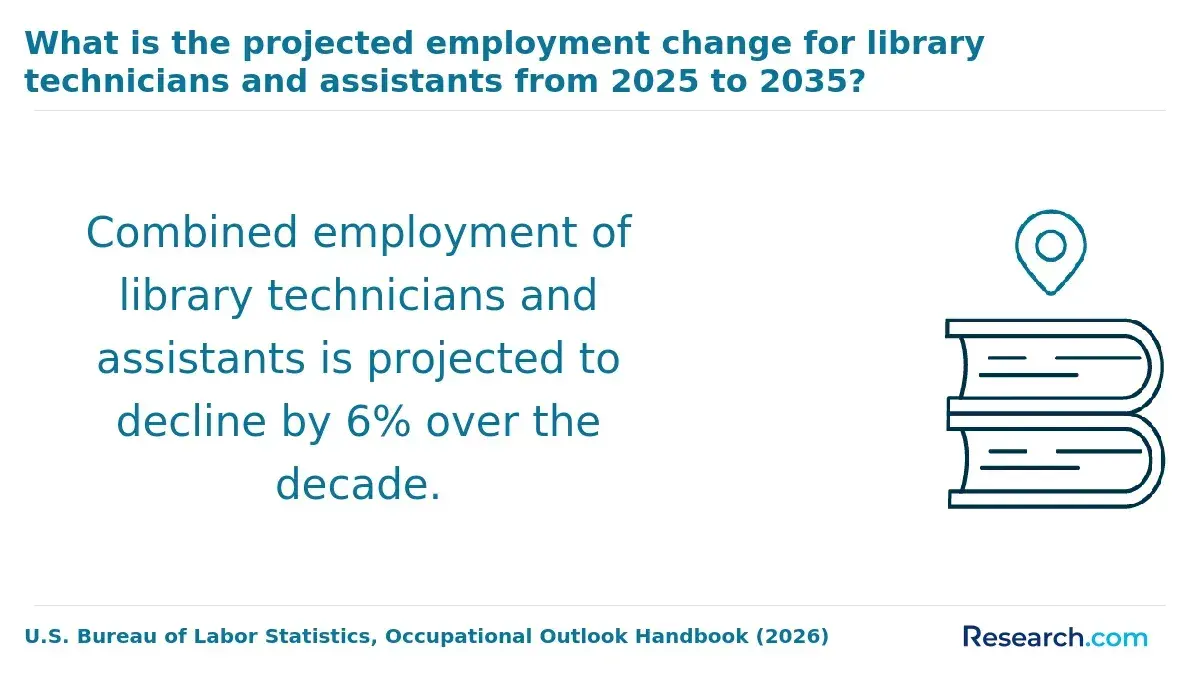
| Library technician or assistant | Maintains resources and handles operational or research-support tasks. | These positions do not necessarily require a master's degree. |
Experience with reference interviews, careful citation checking, database searching, and clear communication can strengthen an application. If you need an entry point before graduate study, compare assistant and other library roles with your intended destination; guidance on becoming a librarian in Illinois without experience illustrates why an entry-level job and a professional librarian position should not be treated as identical.
What do legal research and knowledge services MLIS programs teach?
A useful curriculum combines core LIS skills with legal-information practice. Core work may cover reference, information organization, collection decisions, and information technology. Legal preparation may come through a dedicated course, an independent project, or supervised experience rather than a formally named concentration.
Look for opportunities to practice distinguishing binding from persuasive authority, checking whether a legal source remains current, and explaining findings to a nonexpert. For knowledge services, relevant work includes building taxonomies - consistent labels that make material easier to retrieve - evaluating search results, and designing records and access practices that respect confidentiality. Where AI-assisted discovery is taught, the important skill is validating citations and sources rather than accepting a generated answer as legal authority.
A strong portfolio project could document a legal research guide, a source-verification workflow, or a small taxonomy using public or permission-cleared material. Before enrolling, ask whether the courses supporting that project are required or elective and when they are expected to be offered. A catalog listing alone does not establish that a course will fit your schedule.
Are online or campus-based MLIS programs better for legal careers?
Neither format is inherently better. The stronger choice is the one that lets you complete relevant coursework and obtain credible practice while meeting your work, location, and budget constraints. Online delivery can remove a regular commute, but it does not necessarily mean self-paced classes or remote internships.
The comparison below focuses on practical differences to confirm with each program, rather than assuming that a delivery label describes the entire student experience.
| Consideration | Online option | Campus-based option |
| Class schedule | May include live meetings or fixed deadlines. | Requires travel for scheduled classes. |
| Legal-work experience | May depend on arranging a suitable local or remote placement. | May provide access to nearby law libraries, subject to availability. |
| Additional expense | May involve technology, travel, or placement costs. | May involve commuting or relocation costs. |
Ask whether legal electives are available in your chosen format, whether campus visits are required, and who approves placements. A working student may prefer online study if those answers support a workable schedule; someone seeking in-person mentoring may prefer a campus program with accessible legal employers.
What are the admission requirements for legal research MLIS programs?
Applicants should expect a completed bachelor's degree and school-specific materials such as transcripts, a statement of purpose, recommendations, or a résumé. Policies on GPA, tests, prerequisite experience, and application deadlines vary. A JD or prior law-library employment is not a universal admission prerequisite.
Use your statement to connect your experience to a specific goal: for example, explaining how paralegal work exposed a need for better research instruction or how records work led to an interest in legal knowledge organization. If an academic record does not meet a published threshold, ask admissions staff whether individual review is available rather than assuming that experience automatically waives a requirement. Students in that position can also investigate library masters programs with holistic review, while confirming each school's current policy directly.
How long do MLIS programs cost and take to complete?
Time and price depend on required credits, course load, tuition rules, and whether legal electives are offered when you need them. A faster advertised completion path may not work if a desired course has limited availability or a practicum requires a separate term. Compare the schedule for your intended pathway, not just the shortest schedule in a program's marketing.
For a usable cost estimate, multiply the published per-credit tuition rate applicable to you by the required credits, then add mandatory fees and likely expenses for materials, technology, travel, and placements. Confirm whether online students pay a different rate and whether extra terms change the total. Gross program cost, your out-of-pocket share after any confirmed support, and the amount you borrow are different figures.
If speed is a priority, accelerated library degree admissions can help frame the scheduling questions to ask. Do not assume an accelerated route includes the legal electives or placement you want. Ask the financial aid office about your eligibility and current borrowing terms, and compare the resulting cost with your existing earnings and realistic target jobs rather than relying on a promised payback period.
Do legal information professionals need a law degree or license?
No law degree or attorney license is universally required for legal information work. Some law-school or advanced research positions prefer or require a JD, while many library and knowledge-services positions evaluate applicants through their LIS education and research experience. Check individual postings: an employer preference is not a profession-wide rule.
There is also an important boundary between helping someone find and understand legal information sources and providing legal advice. An MLIS does not authorize its holder to practice law. If your goal is to advise clients as an attorney, investigate the law-degree and bar-admission requirements for that path instead of treating an MLIS as a substitute.
What salaries and job outlook can MLIS graduates expect?
BLS projects 2.6% growth for librarians and media collections specialists from 2025 to 2035. That occupation includes many settings beyond law libraries, so the projection is a broad labor-market reference, not a forecast of legal research openings or any graduate's hiring prospects.
The same scope caution applies to the occupation's median pay: law-firm researchers, court librarians, academic law librarians, and library assistants may be classified differently and paid differently. For a personal salary estimate, examine current postings for the locations and job titles you would pursue, noting whether they require an MLIS, prefer a JD, or seek specialized experience. Compare those opportunities with the full cost of study and the pay you could earn without another degree.
How should students choose a reputable legal research MLIS program?
Start with the jobs you want, then test each program against their recurring requirements. An accredited general MLIS with accessible legal electives and a strong placement may fit better than a program whose specialization sounds ideal but cannot be completed on your schedule. Use a consistent shortlist rather than treating a ranking as evidence of legal-career fit.
These checks separate published features from opportunities you would actually be able to use:
- Confirm the specific degree's current ALA accreditation status and identify whether legal preparation is a formal track, elective pathway, or independent project.
- Request recent or planned schedules for relevant electives, including whether they are available in your study format.
- Ask how legal-library or knowledge-services placements are arranged, approved, and supervised.
- Calculate your applicable tuition, required fees, and likely placement expenses using the credits and pace you expect to complete.
- Compare faculty guidance, career support, and attainable portfolio work with the requirements in your target job postings.
A broader list of top library science masters options can help you assemble candidates, but verify each candidate's current details before applying. If your target role accepts experience or another qualification in place of an MLIS, compare that route too.
Other Things You Should Know About Library Science
Do not share confidential client material without authorization. Use public sources, a hypothetical question, or an approved, fully cleared example instead.
They can show familiarity with a tool, but they do not replace an MLIS where an employer requires one. Demonstrated research judgment matters alongside platform skills.
Look for instruction or experience with foreign and international legal sources, then confirm that an employer's role actually calls for that expertise. General U.S. legal research coursework may not cover it in depth.
A short, permission-safe explanation of your search strategy, source checks, and limitations shows how you reason - not just which answer you found.
References
- Types of Financial Aid: Grants, Work-Study, and Loans | studentaid.gov https://studentaid.gov/understand-aid/types
- Guides: Legal Research for Beginners: Primary Sources | Guides at Texas State Law Library https://guides.sll.texas.gov/legal-research-for-beginners/primary-sources
- Internships | Opportunities | Law Library of Congress https://www.loc.gov/research-centers/law-library-of-congress/opportunities/internships/
- Legal Careers | Summer Law Intern Program https://www.justice.gov/legal-careers/summer-law-intern-program
- MLIS Curriculum, Specialties & Courses | University of Arizona College of Information Science https://infosci.arizona.edu/ma-library-information-science/curriculum-specialties-courses
- Developing Essential Research Skills for Law Practice | tandfonline.com https://www.tandfonline.com/doi/full/10.1080/0270319X.2022.2089809
- Law Librarianship - Washington, DC https://lis.catholic.edu/academics/track/law-librarianship/index.html
- Law Librarianship FAQ - UW Information School https://ischool.uw.edu/programs/mlis/degree-options/law-librarianship/faq
- Cost & Funding - Graduate School - University of Arkansas https://graduate-students.uark.edu/cost-and-funding/
- Resources for Exploring a Career as a Law Librarian | LibGuides at Drake University Law Library https://libguides.law.drake.edu/lawLibrarians


