2027 MLIS Programs for Historians Moving Into Archival Work

Co-Founder and Chief Data Scientist
A history degree builds research skills, but archival jobs can also call for training in appraisal, description, preservation, and access. Historians considering an MLIS need to know whether a program will teach those skills, and whether the credential fits the jobs they want.
The U.S. Bureau of Labor Statistics projects 3.4% growth in archivist employment from 2025 to 2035, a useful reminder to weigh practical experience alongside the degree. This guide explains how to assess programs, costs, and career paths before committing.
Key Things You Should Know
- Choose an MLIS by its documented archival coursework and opportunities for supervised practice, not by a broad library-science label alone.
- An ALA-accredited degree can widen eligibility for library-based positions, but archivist employers may also consider other graduate degrees and relevant experience.
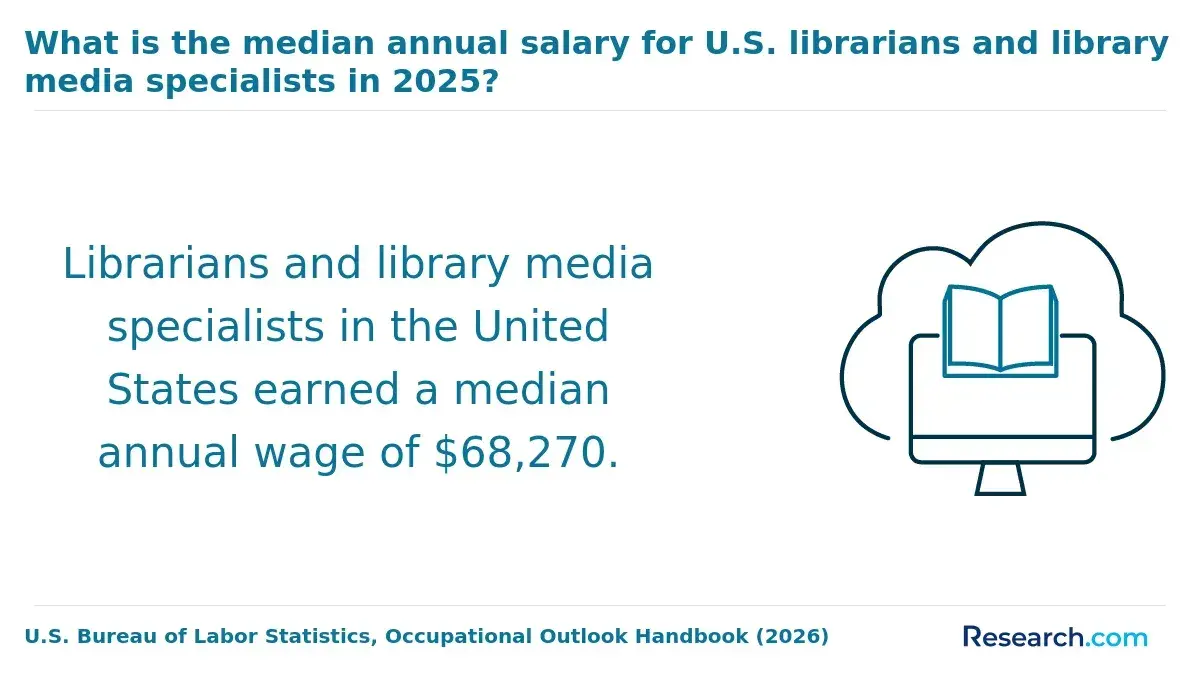
- The U.S. median annual pay for archivists was $64,550 in May 2025; compare that occupational figure with your likely education costs, not with a promise of graduate earnings.
What Is an MLIS Degree for Historians Entering Archival Work?
A Master of Library and Information Science (MLIS) is a graduate degree in organizing, preserving, retrieving, and providing access to information. For a historian, its value lies in learning to manage collections for future users rather than only using sources for personal research. Related degrees may be called an MLS, Master of Science in Library Science, or Master of Information; the name alone does not establish an archival focus.
Archival work involves deciding which records merit long-term retention, preserving their context, describing them so people can find them, and managing access. Historians may already understand sources and historical context, but they should look for training in archival ethics, records management, digital records, and working with donors and researchers. For a broader look at library degree outcomes, distinguish general LIS career possibilities from preparation for an archivist position.
Do Archivists Need an ALA-Accredited MLIS Degree?
Not universally. Archivist qualifications vary by employer and position; an MLIS is one possible graduate pathway, alongside degrees such as history or public history when paired with suitable archival preparation. Some library-based archives positions may require or prefer an ALA-accredited LIS master's, while other employers emphasize archival coursework and hands-on experience. Read actual job postings for the settings you hope to enter rather than treating one requirement as universal.
ALA accredits specific master's programs, not every degree offered by an accredited university. Check the current ALA directory for the exact program and degree under consideration. Accreditation does not establish that a program offers an archives concentration, particular elective, internship, or online format; verify each of those separately.
How Can Historians Choose the Best Archival Studies MLIS Program?
The best fit is a program whose available courses, applied opportunities, schedule, and total cost match your target role. Compare programs using the same evidence rather than assuming that an archival-sounding course title represents a formal concentration. The distinctions below help separate a published feature from preparation you can realistically complete.
| Feature to compare | Evidence to look for | Why it matters |
| Archival pathway | Official concentration requirements or a documented set of relevant electives | A formal concentration and an individually assembled pathway are different commitments. |
| Course access | Recent schedules, prerequisites, and expected rotation | A catalog listing does not mean a course will run before you graduate. |
| Applied work | Published practicum, capstone, or project rules | Assignments and supervision affect the experience you can document for employers. |
| Career fit | Courses and projects aligned with your intended archives setting | Digital records, community collections, and institutional archives may call for different preparation. |
Before applying, ask a program adviser which archival electives are expected during your enrollment, whether you must arrange your own placement, and what recent students have produced in applied courses. If the answers remain uncertain, compare a less specialized program with strong local experience opportunities rather than paying more for an unverified pathway.
What Do Archival Studies MLIS Programs Teach?
Relevant curricula usually combine LIS foundations with courses or projects in archival appraisal, arrangement and description, preservation, records management, and access. Appraisal is the assessment of records for long-term retention; arrangement and description preserve context and create tools, such as finding aids, that help researchers discover collections.
Digital preparation matters because archivists also work with born-digital records and digitized collections. Look for opportunities to practice documenting file transfers, describing digital objects, planning preservation, and managing access restrictions - not simply using a scanning device. Privacy, copyright, and the ethical description of communities are important when making collections available. A project that results in a finding aid, documented workflow, or collection assessment may demonstrate these skills more clearly than a course title alone.
Are Online MLIS Programs Suitable for Aspiring Archivists?
Yes, if the online program offers the archival courses you need and a feasible way to gain collection-based experience. Online lectures and projects can teach description, digital preservation, and records concepts, but handling physical collections and working with repository staff may require a local placement. Do not assume that an online degree includes a remote practicum or that every class is asynchronous.
Ask about live-session times, course sequencing, campus visits, and who approves and supervises placements near your home. A shorter degree is not necessarily the faster route to archival readiness if essential electives or placements delay completion. When considering an affordable rapid library degree, check those constraints alongside its published duration.
What Are the Admission Requirements for Archival Studies MLIS Programs?
Requirements vary by institution, but applicants generally need a bachelor's degree and must submit the materials specified by the graduate program. These may include transcripts, a statement of purpose, recommendations, and a résumé. A history major can explain how source criticism, research, language skills, or public-history work connects to archival goals; previous archival employment is not necessarily an admission requirement.
Use the statement to identify a plausible area of archival work and the skills you need to develop, rather than claiming that historical research and archival management are the same job. If you have unusual transcripts or substantial professional experience, ask admissions staff how those circumstances are evaluated. Confirm current testing, prerequisite, and transfer-credit policies with each program; do not assume graduate credit will transfer because you previously studied history.
How Long and How Much Do Archival Studies MLIS Programs Take?
Time to completion depends on required credits, enrollment pace, course rotation, and any placement or capstone requirements. Because tuition and degree requirements differ by school and enrollment category, there is no reliable single price for an archival MLIS. Build a school-specific estimate before comparing an online option with a campus program.
The following cost categories distinguish published tuition from expenses that can change your actual budget. Use each program's current tuition schedule and requirements to fill in the amounts.
| Cost category | What to verify |
| Tuition | Rate per credit, required credits, residency rules, and any annual rate changes |
| Mandatory charges | University, program, and technology fees |
| Course and placement expenses | Materials, equipment, travel, and any required on-site work |
| Extended enrollment | Costs if course sequencing or part-time study adds terms |
Separate the gross program cost from what grants or employer support may cover and what you would finance through loans. Aid eligibility and loan terms depend on the student and enrollment period; confirm them with the financial aid office rather than assuming all online students receive the same package. An online MLIS financial planning comparison can help frame questions, but the institution's current figures should control your budget.
What Archival Careers Can Historians Pursue With an MLIS Degree?
Historians can pursue roles in universities, government, museums, historical societies, businesses, and community repositories. Titles overlap, so assess each posting by its duties and qualifications. The comparison below shows how an MLIS might support several paths without implying that every employer requires it.
| Role | Typical focus | Preparation to prioritize |
| Archivist | Appraisal, collection stewardship, description, and access | Archival coursework and supervised collection work |
| Digital archivist | Managing and preserving digital records | Digital preservation workflows, metadata, and documented projects |
| Special collections librarian | Helping users discover and use distinctive collections | LIS preparation, reference skills, and relevant collection experience |
| Records manager | Retention and management of organizational records | Records policies, information governance, and stakeholder communication |
A history master's or public-history degree with substantial archival experience may also suit some positions; an MLIS is particularly worth examining if you want access to library-based roles as well. Entry-level work, internships, and volunteer projects can help establish whether you enjoy processing collections and serving users. Compare qualifications in information science jobs with high qualifications against postings in your intended region before choosing a degree.
How Much Do Archivists Earn After Completing an MLIS Program?
The U.S. Bureau of Labor Statistics reports a median annual salary of $64,550 for archivists in May 2025. That is an occupational median across workers with different education and experience - not the starting salary or measured outcome of any MLIS program. Setting, location, responsibilities, and prior experience can change an individual offer.
For a financial decision, compare the full cost and likely borrowing with your current earnings and the qualifications in jobs you could realistically pursue. Do not calculate a payback period from the national median alone. Information on library science program price and career options can help organize that comparison, while current local postings provide a better test of your target roles.
What Certifications and Professional Standards Apply to Archivists?
Professional standards guide archival work, but they are not substitutes for an employer's stated qualifications. The Society of American Archivists provides guidance on archival practice, including description and professional ethics. Descriptive standards help archivists communicate a collection's context consistently; a finding aid built during a supervised project can show how you apply them.
The Academy of Certified Archivists offers a professional certification, but it is not a universal legal requirement to work as an archivist. Decide whether to pursue it by checking eligibility rules and whether employers in your target setting value it. Likewise, an MLIS does not automatically confer certification for school library positions: anyone considering that separate career should verify the relevant state education authority's requirements.
Other Things You Should Know About Library Science
It can demonstrate research and writing, but it usually does not show how you appraise, describe, or manage a collection. Pair it with an archival project if you want to demonstrate those skills.
Not necessarily. Check whether its duties include work with records or collections. An exhibit or interpretation project may be valuable without providing experience in archival processing.
Yes. Some roles focus on digital records, metadata, access systems, or records policies. The amount of physical collection work depends on the position.
Ask who will supervise you, what collection you will work on, and whether you can keep an appropriately anonymized work sample. Those details make the experience more useful when applying for programs or jobs.
References
- Overview | Internships and Fellowships https://www.loc.gov/internships-and-fellowships/overview/
- Complete Your U.S. Application: Undergraduate | EducationUSA https://educationusa.state.gov/your-5-steps-us-study/complete-your-application/undergraduate
- Online Programs Page for TNReconnect.gov https://tnreconnect.gov/-Online-Programs-Page-for-TNReconnectgov
- digital archivist - Department of Labor https://dol.ny.gov/trade-digital-archivist
- Cost of Attendance (Budget) | 2025-2026 Federal Student Aid Handbook https://fsapartners.ed.gov/knowledge-center/fsa-handbook/2025-2026/vol3/ch2-cost-attendance-budget
- Students & Recent Graduates | U.S. Office of Personnel Management https://www.opm.gov/policy-data-oversight/hiring-information/students-recent-graduates/
- Pathways Internship Programs | state.gov https://careers.state.gov/interns-fellows/pathways-programs/pathways-internship-programs/
- Archives and Preservation - SJSU - School of Information https://ischool.sjsu.edu/archives-and-preservation
- MLIS Specialization Archival Studies | UCLA School of Education & Information Studies https://seis.ucla.edu/academics/department-of-information-studies/mlis-specialization-archival-studies/
- How to Become an Archivist - Arizona Online https://online.arizona.edu/news/how-become-archivist-step-step-guide-launching-your-career