2027 MLIS Programs for Digital Library Product Managers

Co-Founder and Chief Data Scientist
Choosing an MLIS for digital library product management means looking beyond a degree title: you need coursework and applied experience that connect library collections with usable digital services. The U.S. Bureau of Labor Statistics projects 2.6% employment growth for librarians and media collections specialists from 2025 to 2035, a reminder to evaluate specialized skills rather than rely on the credential alone.
This guide helps prospective students compare pathways, identify portfolio-building opportunities, estimate costs, and decide whether an MLIS fits their intended product role.
Key Things You Should Know
- Look for an ALA-accredited LIS master's program with relevant electives and documented applied work; a course in digital libraries is not, by itself, a formal product-management concentration.
- Prioritize experience translating user needs into requirements for discovery, repository, or digital-collection services, alongside metadata, accessibility, and privacy skills.
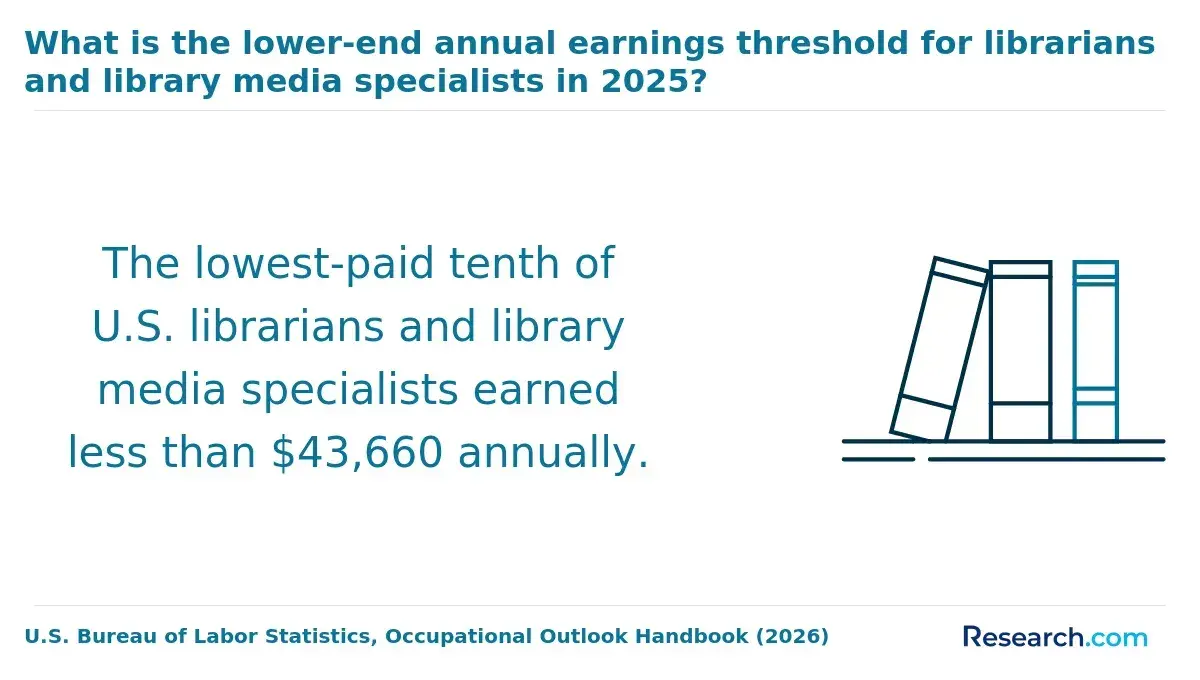
- The May 2025 U.S. median salary for librarians and media collections specialists was $68,270, but that occupational figure is not a digital library product manager salary or a graduate earnings guarantee.
What is an MLIS degree for digital library product managers?
An MLIS is a graduate degree in library and information science. For an aspiring digital library product manager, its value lies in understanding how people find, use, and preserve information - and how libraries make decisions about access, description, rights, and service quality.
An MLS, Master of Science in Library Science, or Master of Information may cover similar ground, but the degree name alone does not establish the curriculum or accreditation status.
A digital library product manager helps define and improve a service such as a collections website, institutional repository, or discovery interface.
The work can include interviewing users, prioritizing improvements, writing requirements, coordinating with librarians and developers, testing accessibility, and measuring whether changes help people complete tasks. Responsibilities vary by employer; some jobs use titles such as digital services manager or repository product owner instead.
Product management is distinct from personally cataloging every item or writing all the software. An MLIS can prepare someone to make informed decisions with metadata specialists, preservation staff, designers, vendors, and engineers. It is one possible route, not a universal hiring requirement for product roles.
Why does ALA accreditation matter for digital library careers?
American Library Association (ALA) accreditation applies to a specific master's program, not automatically to every degree at an accredited university. It can matter when a professional librarian position specifies graduation from an ALA-accredited program.
Check the current ALA directory for the exact program and degree you plan to enter rather than relying on an institution's general accreditation statement.
ALA accreditation does not certify that a program offers product-management training, a digital-libraries concentration, online delivery, or a particular internship. Those claims require separate confirmation in the current catalog and from program staff.
If your target is a product role outside professional librarianship, compare the value of ALA accreditation against the actual curriculum, experience you can gain, and employer requirements.
Which MLIS degree pathways prepare students for digital library product management?
Few applicants need a concentration literally named "digital library product management." The better comparison is between documented specialization, relevant electives, and opportunities to deliver a real project. The table shows what each pathway can offer, and what its label does not prove:
| Pathway | Potential preparation | What to verify |
| Official digital libraries or information technology concentration | A structured set of related requirements | Its current required courses, elective access, and whether product or UX work is included |
| General MLIS with selected electives | Room to combine metadata, UX, systems, and management | Whether needed electives run often enough to fit your timeline |
| MLIS plus applied project or outside experience | Evidence of requirements, testing, and cross-team decisions | Project supervision, access to a real service, and portfolio-use permissions |
Students interested in discovery analytics or evidence-based service decisions can explore an information research analytics MLIS pathway. Confirm its actual courses before treating it as product-management preparation. A documented track provides structure; a flexible degree may fit better if you already have product experience and need library-specific knowledge.
Are online MLIS programs suitable for aspiring digital library product managers?
Yes, if the online format gives you access to the right courses, collaboration, and applied work. Remote study can resemble the distributed teamwork common in digital services, but "online" does not necessarily mean asynchronous, self-paced, or free of scheduled meetings.
Confirm time zones, group-work expectations, course sequencing, and any campus or practicum requirements before enrolling.
Location still matters when a project depends on a local collection or internship. Ask whether you can arrange a placement near home, work with your current employer, or complete an approved remote project - and who must secure the site.
Applicants comparing library science programs serving the South should also check residency-based tuition rules rather than assume that online enrollment produces the same price everywhere.
What coursework do digital library product management programs include?
Course titles vary, so compare learning outcomes and assignments rather than searching for a single ideal title. A useful curriculum links how information is organized to how a digital service is designed, maintained, and evaluated.
Look for a combination of metadata and knowledge organization; digital libraries or repositories; user research and accessible design; information systems; project or service management; and privacy, copyright, or digital preservation.
Dublin Core, for example, is a metadata vocabulary that helps describe resources for discovery and exchange. Knowing when such standards matter is more useful to a product manager than memorizing names without applying them.
Applied work is especially valuable when it produces evidence you can discuss with employers. A strong project might document user interviews, a prioritized improvement plan for a discovery interface, an accessibility review, and the results of usability testing. Ask whether a capstone or practicum permits that scope; a catalog listing alone does not show that the course or project will be available when you need it.
What are the admission requirements for MLIS programs?
Expect to review each program's published requirements for a completed bachelor's degree, transcripts, application statements, recommendations, and any stated academic or language-proficiency criteria.
Requirements and the treatment of professional experience vary. Prior library employment, software work, or product experience may strengthen an application, but do not assume it replaces a formal eligibility requirement.
Use the statement of purpose to connect your background to a specific digital-service problem you want to solve. A concrete example, such as improving access to a repository for first-time researchers, can help explain why you need both LIS knowledge and applied product experience.
Ask admissions staff how applicants without library experience can demonstrate fit and whether relevant projects may appear in the application.
Funding deserves an early check, too. Resources on MLIS scholarships for career changers can help identify possibilities, but verify current eligibility, deadlines, and whether an award applies to your chosen program.
How long do MLIS programs take and what do they cost?
Completion time depends on required credits, your course load, the order in which courses run, and any practicum or capstone. Rather than rely on an advertised shortest timeline, ask for a sample schedule at your intended pace. A specialized elective offered infrequently can delay completion even when the core courses are available.
For a comparable cost estimate, multiply the published tuition rate applicable to you by required credits, then add mandatory fees and likely expenses for materials, equipment, travel, or a placement. Confirm whether rates differ by residency or delivery format.
Gross program cost, what you pay out of pocket after assistance, and what you borrow are different figures; neither an advertised tuition rate nor a potential scholarship settles the full cost.
Compare budget friendly MLIS programs using the same credit and fee assumptions. Before committing, ask the financial aid office about current eligibility and borrowing terms for your enrollment period, and ask your employer whether approved coursework qualifies for support. A lower-cost degree is less attractive if it cannot accommodate the applied work your target jobs request.
What careers can MLIS graduates pursue in digital libraries?
Job titles overlap, but the emphasis changes by employer. The table distinguishes roles where product planning is central from roles that can provide relevant experience on a path toward it:
| Role or title | Typical focus | MLIS fit |
| Digital library product manager or product owner | User needs, priorities, requirements, releases, and service evaluation | Useful for library context; employers may also accept product and technical experience |
| Digital services librarian | Library-facing platforms, support, and service improvement | Professional librarian postings may specify an ALA-accredited master's degree |
| Repository or digital collections specialist | Content workflows, metadata, access, and platform operations | Relevant preparation; degree requirements vary by position |
| UX researcher or service designer | Research, testing, and accessible user journeys | An MLIS can help, though a UX portfolio and other qualifications may carry more weight |
Academic and public libraries, archives, consortia, vendors, and other information organizations may all operate digital services. An entry point might be a repository project, user-research assignment, or cross-functional platform team rather than an immediate product-manager title.
Compare postings for your preferred setting: if they consistently favor software product experience over an LIS credential, a targeted certificate or work-based portfolio may be a better first investment.
How much do digital library product managers earn?
There is no single BLS wage category for digital library product managers. The closest library-sector context supplied by BLS is the May 2025 median annual wage of $68,270 for librarians and media collections specialists.
That median covers a broader occupation, not this product title; pay may differ substantially by employer, location, responsibilities, and whether the role sits on a library or technology pay scale.
For a personal earnings decision, compare current postings with similar responsibilities and locations, then weigh any likely pay change against tuition, time away from work, and borrowing.
A discussion of library science program price and career options can frame that comparison, but occupational medians should never be presented as an individual return on an MLIS.
How should students choose an MLIS program for digital library product management?
Start with the jobs you want, not a concentration label. Compare a small set of recent postings for the same type of employer, then map their requirements to courses and projects you can actually complete. This sequence helps distinguish a program that teaches relevant concepts from one that also lets you demonstrate product decisions.
Use these checks when speaking with program staff; the answers will expose constraints that a course list may hide:
- Verify the exact degree's current ALA accreditation status if your target roles require it.
- Request recent syllabi or course descriptions for metadata, UX, systems, and management electives, and ask how often they run.
- Ask whether a practicum or capstone can involve a real digital service, user testing, and a portfolio artifact you are permitted to share.
- Confirm the schedule, placement rules, total applicable tuition and fees, and a feasible completion plan at your intended pace.
Choose a structured digital-libraries pathway if you want guided course selection and it covers your skill gaps. Choose a flexible MLIS if you can assemble a stronger combination yourself. If you already understand library services but lack product delivery experience, an applied project or product-focused training may be more useful than another broad credential.
Other Things You Should Know About Library Science
Not necessarily. They should be able to discuss technical constraints, read basic platform documentation, and work effectively with developers. Coding expectations depend on the job description.
A repository stores and manages digital content and its descriptive information. A discovery layer helps users search across or navigate resources, potentially including repository content. One service may integrate both functions.
Not always. Product ownership often means setting service priorities and coordinating colleagues without being their line manager. Check whether a posting includes staff supervision.
That depends on the institution's policies and the material's rights and access restrictions. Product managers should involve the relevant collections, copyright, and privacy staff rather than assume digitization grants permission to publish.
References
- Online Library Science Degree | MLIS Program at Mizzou Online https://online.missouri.edu/degrees-programs/mu/education/library-and-information-science/mlis
- Library and Information Science, MLIS (Online) | Southern Connecticut State University https://www.southernct.edu/academics/programs/library-and-information-science-mlis
- What Can You Do With a Library Science Degree? | Syracuse University Online Master's Programs https://onlinegrad.syracuse.edu/information-science/mslis/library-science-careers/
- Looking Ahead: Incorporating AI in MLIS Competencies | sjsu.edu https://scholarworks.sjsu.edu/cgi/viewcontent.cgi
- Top Skills Information Professionals Need to Succeed | SJSU https://ischool.sjsu.edu/career-blog/top-skills-information-professionals-need-succeed
- Required knowledge, skills and transversal competences for a career in software engineering - ScienceDirect https://www.sciencedirect.com/science/article/pii/S0950584925002885
- MSIS Frequently Asked Questions | Wayne State University https://sis.wayne.edu/msis/msis-faq
- What does it cost to attend Wichita State University? https://www.wichita.edu/administration/financial_aid/coa_undergrad.php
- Master of Library and Information Science | St. Catherine University https://www.stkate.edu/academics/academic-programs/gc-library-and-information-science
- Accreditation Frequently Asked Questions | ALA https://www.ala.org/educationcareers/accreditedprograms/faq