2027 Online MLIS Programs Compared by Accessibility and Student Support

Co-Founder and Chief Data Scientist
An online MLIS may let you prepare for librarianship without relocating, but "online" does not tell you whether courses fit your schedule or whether support is accessible when you need it. The stakes are practical: the U.S. median annual pay for librarians and media collections specialists was $68,270 in May 2025, a figure that is not a promise of graduate earnings.
This guide helps prospective students compare delivery, accessibility, advising, fieldwork, and costs so they can choose a program that fits both their career goal and daily life.
Key Things You Should Know
- Check the specific master's program in the ALA directory, university accreditation alone does not establish ALA accreditation.
- Compare accessibility and support using concrete policies: live-session requirements, accommodation processes, advising access, technology help, and fieldwork arrangements.
- Employment growth for librarians and media collections specialists is projected at 2.6% from 2025 to 2035, weigh program cost against your intended role rather than assuming the degree will produce a particular job.
What is an online MLIS program, and who is it best for?
An online Master of Library and Information Science (MLIS) is a graduate program in organizing information, serving information users, and managing collections and services. Related degrees may be titled MLS, Master of Science in Library Science, or Master of Information. The title alone does not establish accreditation, curriculum, or eligibility for a particular job.
Online study can suit working adults, caregivers, and students who cannot relocate, particularly when required courses are available in a workable sequence. It is less convenient if mandatory live meetings conflict with work, a required placement is hard to arrange locally, or the student needs campus-based resources the program cannot provide remotely. Ask for a sample course schedule and speak with the accessibility office before treating "online" as synonymous with "flexible" or "accessible."
Why does ALA accreditation matter when choosing an online MLIS program?
American Library Association (ALA) accreditation evaluates a graduate library and information studies program, not every course, concentration, or method of delivery separately. It matters because many professional librarian job postings require or prefer a degree from an ALA-accredited program. Institutional accreditation is a separate consideration and does not substitute for it.
Look up the exact degree in the current ALA directory, then confirm with the university that the online route leads to that degree. Check any employer or state requirements relevant to your target job as well. Accreditation does not establish that a desired elective runs regularly, that fieldwork can be completed remotely, or that an online graduate qualifies for school librarian certification in every state.
How do online MLIS programs compare with campus-based programs?
The distinction that often matters most is not online versus campus, but how much control students have over when and where they participate. The comparison below identifies typical possibilities, not promises about any individual program.
| Feature | Online program | Campus-based program |
| Class meetings | May be asynchronous, live online, or a mix | Typically scheduled in person; some courses may be hybrid |
| Access to services | Depends on remote advising, library, accessibility, and technology arrangements | May offer in-person access, subject to office hours and availability |
| Applied experience | May require a locally arranged or approved placement | May offer nearby placements, but access is not automatic |
| Travel | May involve travel if the program requires campus visits or in-person fieldwork | Regular commuting or relocation may be necessary |
A self-paced recording can ease scheduling, while a live seminar may provide more immediate discussion; neither format is inherently better. Request written details about attendance, group work, time zones, campus visits, and placement approval. When comparing schools, use the same criteria for format and online library science programs tuition admissions rather than relying on an "online" label.
What courses are included in an online MLIS curriculum?
Common areas include information organization, reference and research services, collection development, information technology, management, and the ethical use of information. Programs differ in what they require and what students may choose. For example, metadata courses may teach students to describe digital resources so people can find and use them; an archives elective may instead address appraisal and description of historical records.
Start with the required-course map, then compare electives against the work you want to do. A public-library applicant might prioritize community services and information literacy; someone interested in digital collections might seek metadata and digital preservation projects. A course listed in a catalog is not necessarily offered every term, and one elective is not a formal concentration. Review the program's schedule and library information science coursework before assuming you can complete a preferred pathway on your intended timeline.
What are the admission requirements for online MLIS programs?
Programs generally ask applicants to document prior undergraduate education and may request transcripts, a statement of purpose, recommendations, a résumé, or other materials. Minimum grades, test policies, prerequisite courses, and deadlines vary. Relevant library work can strengthen an application, but it should not be assumed to replace a required bachelor's degree or another published condition.
If your academic record or preparation is unusual, ask admissions staff which requirements are mandatory, whether individual review is possible, and what documentation they need. That is especially useful for applicants changing careers or comparing library science degree prerequisite options. Request the policy for graduate transfer credit separately; acceptance of previous coursework is not guaranteed.
How long do online MLIS programs take, and what do they cost?
Completion time depends on required credits, the number of courses taken each term, course sequencing, and any practicum or capstone. An advertised fast track may not fit a student who needs part-time enrollment or an elective offered less often. Ask for a term-by-term plan based on the pace you can actually sustain.
For a meaningful cost comparison, multiply the published per-credit tuition by required credits, then add mandatory fees. Also budget for materials, equipment, possible travel, and placement expenses. Confirm whether online tuition changes with residency and which academic year the published rate covers. Published tuition is not total attendance cost, and a lower per-credit rate does not necessarily mean a lower total bill. A comparison of low tuition information science graduate degree options is most useful when credits and fees are counted consistently.
Ask financial aid staff about your eligibility for scholarships, employer-supported study, and federal aid under the rules applicable to your enrollment period. Keep three amounts separate: the program's gross cost, what you must pay yourself, and what you would finance through borrowing. None is a reliable return-on-investment estimate without considering your current earnings and realistic job options.
What student support services should online MLIS programs provide?
Strong support is both available remotely and usable at the times online students need it. Look beyond a general list of university services: ask whether MLIS students can reach program advisers, librarians, accessibility staff, career services, and technical support without visiting campus.
These questions turn broad claims about accessibility and support into comparable evidence. Send the same questions to each program and save the written responses:
- How are course materials, live sessions, recordings, and required software made accessible, and whom do students contact to arrange accommodations?
- When are required live meetings held, how much advance notice is given, and what happens if an accommodation or unavoidable conflict affects attendance?
- Who advises online students on course sequencing, and how quickly can they get help when a required course is unavailable?
- What remote library, tutoring, writing, career, and technology services are available, and during which hours?
- Who approves fieldwork sites, and can a student propose an accessible local placement?
A useful comparison weighs the response against your circumstances. A student using assistive technology may need to test a course platform and required tools; a working student may care most about evening support and predictable meeting times. Do not assume that a placement, accommodation, or remote service is approved merely because a program advertises online access.
What careers can you pursue with an online MLIS degree?
MLIS graduates may pursue professional roles in public, academic, school, special, government, medical, or law libraries. Work can include reference services, instruction, collection development, metadata, digital collections, and management. Archives, records management, and research data support are also possible paths, but employers may seek distinct experience or accept other degrees.
Choose coursework and applied projects around an intended role rather than an attractive concentration name. For example, a reference applicant can document instruction or research-help experience; a metadata applicant can build a project demonstrating how they organized and described a collection. Compare verified tracks with best online MLIS concentrations, then check current course availability and placement opportunities with each school. A documented project can demonstrate skills, but it does not guarantee a job.
An MLIS is not necessary for every information-related position. Library technician roles, some records jobs, and some technology positions have different entry requirements. If your goal is narrowly technical or you already hold an advanced degree, compare job postings with certificate, experience-based, and other graduate pathways before committing to another master's program.
What salaries and job outlook can MLIS graduates expect?
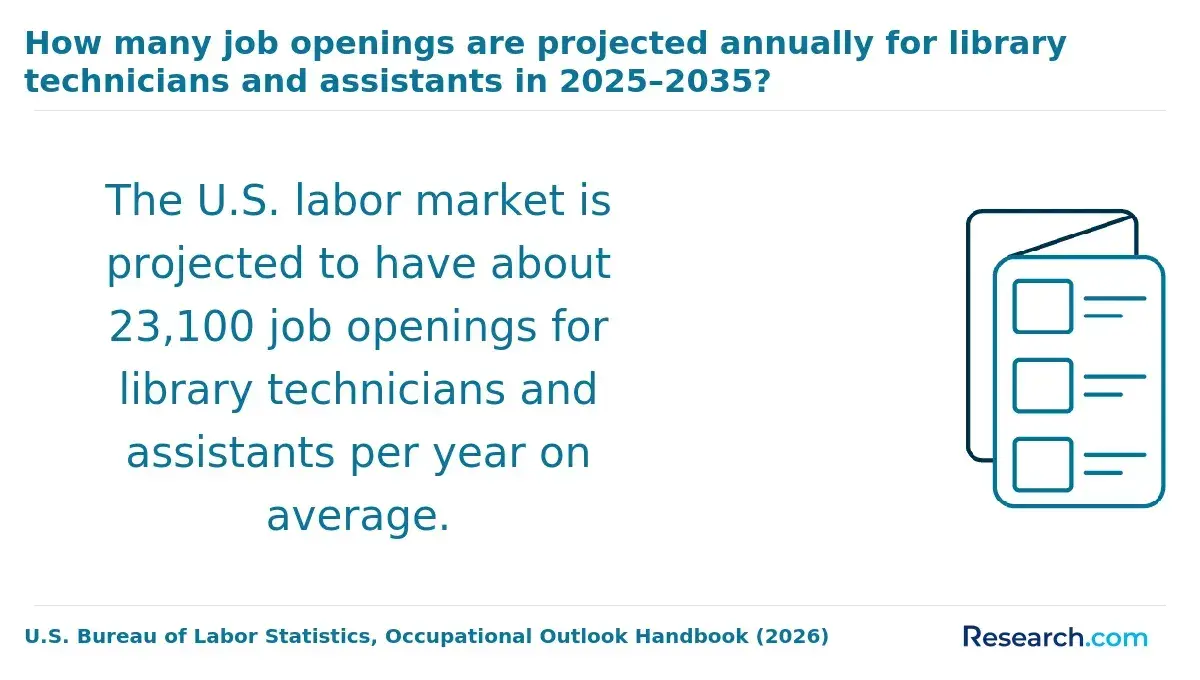
The Bureau of Labor Statistics projects 2.6% employment growth for librarians and media collections specialists from 2025 to 2035. That modest growth makes local openings, relevant experience, and geographic flexibility important considerations. The occupation's May 2025 median annual pay of $68,270 describes workers across career stages, not starting salaries or outcomes for a particular MLIS program.
Specialized roles can fall under different occupational categories, so do not use a broad librarian median as a forecast for an archives, data, or school-library position. Compare pay ranges and qualifications in postings for the jobs and locations you would realistically pursue, alongside the cost and time required to complete the degree.
Do librarians need licenses, certifications, or professional credentials?
Requirements depend on the position and jurisdiction. Many professional librarian roles emphasize an ALA-accredited master's degree, but school librarian positions may also require a state-issued license, certification, or endorsement. An ALA-accredited online MLIS does not, by itself, establish eligibility to work as a school librarian in every state.
If you want a school role, check the relevant state education agency's current rules and ask the university whether its preparation pathway meets them. For law, medical, archival, and other specialized positions, review individual job postings for additional education or experience preferences. Do not treat an optional professional credential or a particular elective as a universal legal requirement.
Other Things You Should Know About Library Science
Some universities permit nondegree graduate enrollment, but permission and later application of the credit vary. Get written confirmation of both policies before paying for a course.
Not automatically. A program may review prior graduate coursework under its own waiver or transfer policy, including limits on which requirements can be replaced.
Ask the university about enrollment eligibility, time-zone expectations, required software access, and any placement restrictions before applying. "Online" does not confirm that every requirement can be completed from another country.
Often, provided the work belongs to you and sharing it does not disclose patron information, restricted records, or other protected material. Check course and placement agreements before publishing examples.
References
- Guidance on Web Accessibility and the ADA https://www.ada.gov/resources/web-guidance/
- Library Science Master's Online - UW Information School https://ischool.uw.edu/programs/mlis/degree-options/online
- Online Library Science Degree | MLIS Program at Mizzou Online https://online.missouri.edu/degrees-programs/mu/education/library-and-information-science/mlis
- Library and Information Science, M.L.I.S. | UNC Greensboro https://www.uncg.edu/academics-support/degrees-programs/online-degrees/library-and-information-science-m-l-i-s/
- Internships, Externships, Practicum, and Fieldwork | The University of Utah https://disability.utah.edu/accommodations-services/fieldwork.php
- Digital Accessibility Policy: Frequently Asked Questions | University Risk and Compliance Services https://compliance.utexas.edu/programs/iaa/digital-accessibility/digital-accessibility-policy-frequently-asked-questions
- Accessibility: Accessible Course Design | University System of New Hampshire https://td.usnh.edu/TDClient/60/Portal/KB/Article/1316/Accessibility-Accessible-Course-Design
- ADA Title II Update: New Requirements for Digital Course Content Accessibility | Undergraduate Education https://ue.berkeley.edu/news/ada-title-ii-update-new-requirements-digital-course-content-accessibility
- Getting Started with Digital Accessibility in Teaching and Learning - UCLA Teaching & Learning Center https://teaching.ucla.edu/resources/teaching-guides/getting-started-with-digital-accessibility-in-teaching-and-learning/