2027 MLIS Programs for Equitable Digital Access Programs

Co-Founder and Chief Data Scientist
Choosing an MLIS for digital access work means looking beyond a program's technology courses. You need preparation to help people use information and services despite barriers involving connectivity, devices, accessibility, privacy, or digital skills.
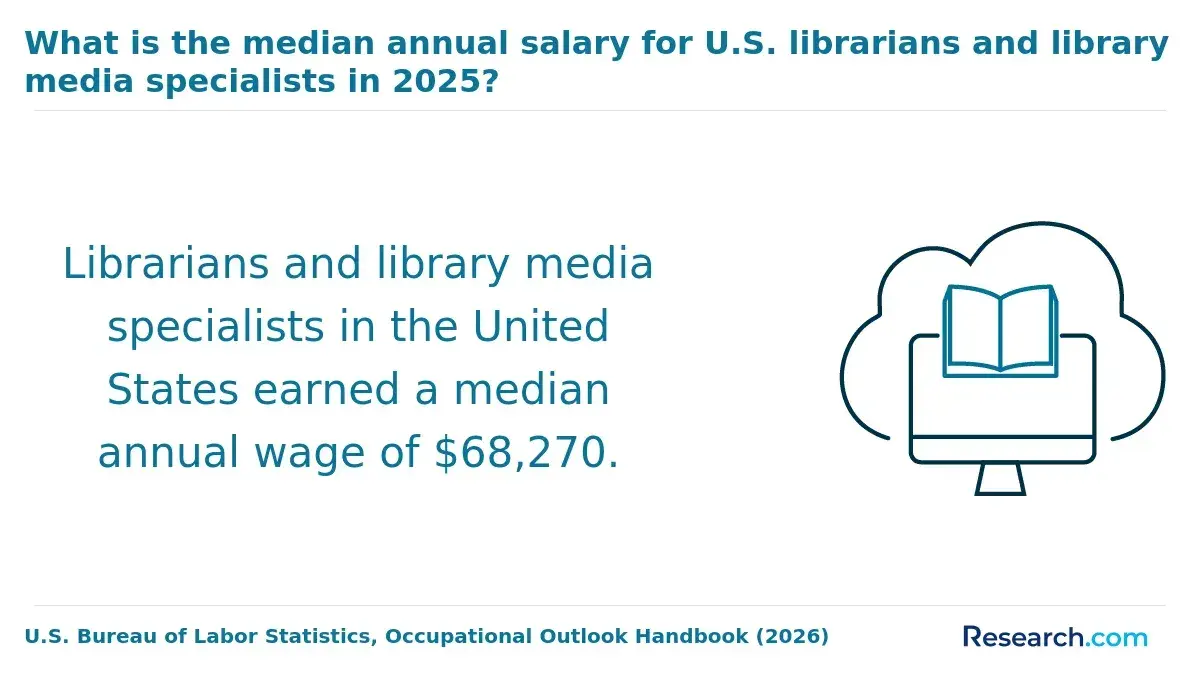
The U.S. Bureau of Labor Statistics reports a May 2025 median annual wage of $68,270 for librarians and media collections specialists, but that occupation-wide figure cannot predict a digital inclusion job offer. This guide helps prospective students compare credentials, coursework, fieldwork, formats, and costs - and decide whether an MLIS is the right route.
Key Things You Should Know
- Choose an ALA-accredited master's program with documented community-facing coursework and applied opportunities; a technology elective alone does not establish a digital equity specialization.
- The Bureau of Labor Statistics projects 2.6% employment growth for librarians and media collections specialists from 2025 to 2035; experience serving patrons will matter alongside the degree.
- Compare total credits, fees, scheduling, and practicum logistics before enrolling. Some digital navigator and community technology roles do not require an MLIS.
What are MLIS programs for equitable digital access?
These are library and information science master's programs that students can use to prepare for digital inclusion work - not necessarily degrees or formally named concentrations in "equitable digital access."
The work can include teaching patrons to use devices, helping them navigate online information, improving access to library technology, and designing services that account for disability, language, cost, and privacy barriers.
A strong program connects these tasks to core librarianship: reference interviews, information literacy, community assessment, program evaluation, and the ethical handling of patron information.
Technical skills matter, but a person who can configure a device still needs to know how to teach its use without taking control of a patron's account or making assumptions about their needs.
When comparing programs, distinguish an officially documented concentration from a relevant elective or a student-designed project. Ask for current course descriptions and examples of placements rather than relying on a specialization label alone.
Why is ALA accreditation important for digital access careers?
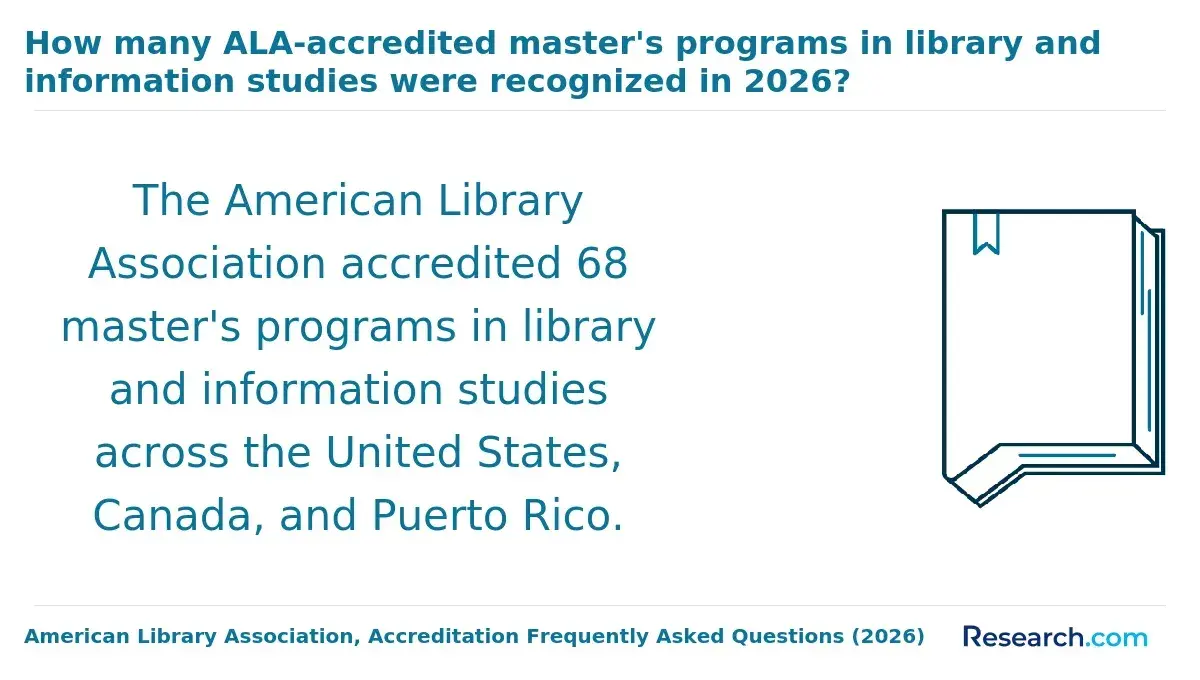
American Library Association (ALA) accreditation applies to eligible master's programs in library and information studies, not automatically to every degree offered by an accredited university. It is an important screening criterion because some professional librarian employers specify or prefer an ALA-accredited master's degree.
Check the specific program and degree in ALA's current directory before applying, particularly when a university offers several information-related degrees.
Accreditation does not certify a digital equity track, guarantee that an elective will run, or establish eligibility for a particular job. Use it as a first filter, then examine curriculum and field experience. A best online librarian degree accreditation comparison can help organize that review, but confirm each program's status and offerings with the ALA directory and university.
School librarianship requires a separate check: state education authorities set certification or endorsement requirements that an ALA-accredited MLIS, including an online one, may not satisfy by itself.
What degree pathways prepare students for digital inclusion work?
An MLIS, MLS, or another institution-specific LIS master's can lead toward professional librarian roles if its curriculum and accreditation match the employer's requirements. A Master of Information may also provide relevant skills, but its title alone does not establish ALA accreditation or equivalence for jobs that require it.
For community technology positions that do not require a librarian credential, a shorter certificate, targeted training, or direct service experience may be a better first step.
The right pathway depends on the work you want to do. Compare these options against actual job postings in your intended location:
| Pathway | Potential fit | Limitation to check |
| ALA-accredited LIS master's | Professional public-library roles combining reference, outreach, and digital inclusion | Whether relevant electives and community placements are available |
| Other information or technology master's | Service design, accessibility, or technology roles outside traditional librarianship | Whether target librarian jobs accept the credential |
| Certificate, training, or direct experience | Digital navigator, workshop support, or entry-level community technology work | Whether advancement into a desired librarian role will later require a master's |
Some students also consider a competency based graduate library program. Whatever the assessment model, verify the exact credential, accreditation, opportunities for supervised service, and how the schedule accommodates community-based work.
How do online and campus-based MLIS programs compare?
Online study can make an MLIS feasible while working, particularly when courses are asynchronous. It does not necessarily mean self-paced study: group projects, scheduled meetings, course sequences, and fieldwork may still impose fixed commitments. Campus study may make local partnerships easier to develop, but proximity alone does not guarantee a relevant placement.
The most consequential format question is often where you can practice. Ask whether you may arrange supervised work at a library or community organization near home, what qualifies as an approved site, and whether any visits to campus are required.
Compare those answers with the support offered to online and campus students, rather than treating delivery format as a proxy for quality.
If you need to keep a full-time job, a guide to the best MLIS programs for working adults can help you frame scheduling and affordability questions. Confirm current meeting times, elective rotation, and placement policies directly with each program.
What courses cover digital equity and community technology?
Look for a curriculum that combines public service with the ability to evaluate technology's effects on different users. Course titles vary, so read descriptions and assignments rather than assuming that a course labeled "digital libraries" teaches community technology instruction.
These subject areas are especially useful because each supports a task graduates may perform:
- Information literacy and instruction: Design lessons that help patrons assess information and complete digital tasks independently.
- Community engagement and public-library services: Identify local needs and develop partnerships instead of assuming one workshop fits everyone.
- Accessibility and user experience: Evaluate whether websites, devices, and learning materials work for patrons with disabilities.
- Privacy and information ethics: Help patrons use online services without collecting unnecessary personal data or handling their credentials.
- Assessment and program evaluation: Measure whether a service is useful without equating attendance with improved access.
Courses in digital collections or discovery systems may complement this work, especially for improving access to online library resources, but they are not substitutes for instruction and outreach. A digital libraries MLIS specialization is most relevant when its documented coursework matches the population and services you hope to support.
Ask when pertinent electives were last offered and whether you can complete a portfolio project on accessible instruction or community technology needs.
What are the admission requirements for MLIS programs?
Applicants generally need a bachelor's degree and must meet each university's published graduate admission requirements. Schools may request transcripts, a statement of purpose, recommendations, a résumé, or other materials; test policies and prerequisites vary.
Library employment can strengthen an application but should not be assumed to replace a required degree or document.
Use the statement of purpose to identify the community problem you want to address and the skills you need to build. Experience in tutoring, disability services, public service, multilingual outreach, or community technology can be relevant even if it was not gained in a library.
If your academic record or credentials need individual review, contact admissions before applying and ask what evidence the program accepts.
How long do MLIS programs take and what do they cost?
Completion time depends on required credits, enrollment pace, course sequencing, and any fieldwork. A published minimum timeline may assume that students take a full load and obtain every needed course on schedule. A library information degree duration comparison is a starting point; ask each program for a term-by-term plan based on the number of courses you can realistically take.
For costs, multiply the applicable tuition per credit by required credits, then add mandatory fees and likely expenses for books, equipment, travel, and fieldwork. Check whether an online student pays resident, nonresident, or separate online tuition. Published tuition is not the same as total attendance cost, and borrowing is not the same as a discount.
Compare a program's estimated total cost with your current earnings and the requirements of jobs you would actually pursue.
Ask the financial aid office about your eligibility for aid for your intended enrollment period, and treat scholarships or employer reimbursement as possibilities until confirmed in writing. An affordable certificate or paid service role may be a lower-risk choice if your target job does not require a master's.
What careers can an MLIS graduate pursue in digital access?
In a public library, a professional librarian might plan digital skills instruction, train staff, build partnerships, evaluate services, and help patrons find reliable information.
Titles may include adult services librarian, outreach librarian, digital services librarian, or technology services librarian; duties and degree requirements differ by employer. Academic libraries also employ librarians who improve access to online resources and teach information skills, though those roles may serve a different population.
Digital navigators, technology trainers, and program coordinators often perform more direct assistance and may enter through experience or non-MLIS credentials. An MLIS can be useful for moving into library leadership or roles that combine service design with professional librarian responsibilities, but it is not necessary for every community technology job.
Build evidence of the work you want to do: for example, a lesson plan tested with learners, an accessibility review of library instructions, or an evaluation of a community workshop. Document your decisions, feedback, and revisions while protecting participants' personal information. Those examples can show employers more than a course title alone.
What salaries and job outlook can MLIS graduates expect?
The U.S. Bureau of Labor Statistics reports a $68,270 median annual wage in May 2025 for librarians and media collections specialists and projects 2.6% employment growth from 2025 to 2035.
These figures describe a broad occupation, not starting pay for MLIS graduates or salaries for digital inclusion specialists. Location, employer, experience, and whether a position is classified as a professional librarian role can materially change the offer.
For a useful personal comparison, collect current postings for the exact titles and locations you would consider. Note which require an MLIS, which accept other qualifications, and what responsibilities the advertised pay covers. That is more informative for an enrollment decision than applying a national occupational median to every digital access role.
Which certifications and standards support equitable digital access?
There is no single certification that universally qualifies someone for digital inclusion work. Employers may value training in accessibility, instruction, or technology support, but the value of a credential depends on the position.
A certificate should supplement, not be confused with, an ALA-accredited master's when the employer requires that degree.
For work involving websites and digital materials, familiarity with the Web Content Accessibility Guidelines (WCAG) provides a practical way to discuss accessible design and testing.
Privacy practices are equally important in patron-facing instruction: use example accounts where possible, avoid requesting passwords, and follow the employer's policies for sensitive information. Choose training that lets you demonstrate these practices in a real service setting rather than collecting credentials without applied experience.
Other Things You Should Know About Library Science
Not usually for patron instruction or outreach roles. You do need confidence learning unfamiliar tools and explaining them clearly. Check individual postings if you want a job maintaining library websites or systems, where technical requirements may differ.
Not for every position. Additional language skills can be valuable where they match community needs, but employers may also rely on translated materials, qualified interpreters, and local partners. Do not assume a bilingual service can be delivered well without appropriate support.
It may provide temporary access, but usefulness depends on device availability, cellular coverage, lending rules, and the patron's needs. Staff should also be ready to explain limitations and point patrons toward other locally available options.
No. Patrons should enter their own credentials and retain control of their accounts. Staff should follow library privacy policies, explain each step, and avoid recording sensitive information unless an authorized service procedure specifically requires it.
References
- Five Digital Inclusion Trends in the United States | ntia.gov https://broadbandusa.ntia.gov/node/7376
- Accessibility | U.S. Web Design System (USWDS) https://designsystem.digital.gov/documentation/accessibility/
- Disability Discrimination: Technology Accessibility | ed.gov http://www.ed.gov/laws-and-policy/civil-rights-laws/disability-discrimination/disability-discrimination-key-issues/disability-discrimination-technology-accessibility
- Universal Design and Accessibility | Section508.gov https://www.section508.gov/develop/universal-design/
- Costs and Financial Aid | Syracuse University https://ischool.syracuse.edu/admissions-aid/costs-and-aid/
- Admissions and Costs | rutgers.edu https://sci.rutgers.edu/academics/graduate-programs/master-information/admissions-and-costs
- MLIS Tuition & Financial Aid - University of Denver | DEN-EDU https://morgridgeonline.du.edu/online-mlis-program/tuition-financial-aid/
- MLIS Curriculum, Specialties & Courses | University of Arizona College of Information Science https://infosci.arizona.edu/ma-library-information-science/curriculum-specialties-courses
- Library & Information Science, M.S. | St. John's University https://www.stjohns.edu/academics/programs/library-and-information-science-master-science
- Master of Library & Information Science (MLIS) | UCLA School of Education & Information Studies https://seis.ucla.edu/academics/department-of-information-studies/master-of-library-information-science-mlis/