
2027 MLIS Admissions for Students Who Need to Explain a Low Recent GPA

Co-Founder and Chief Data Scientist
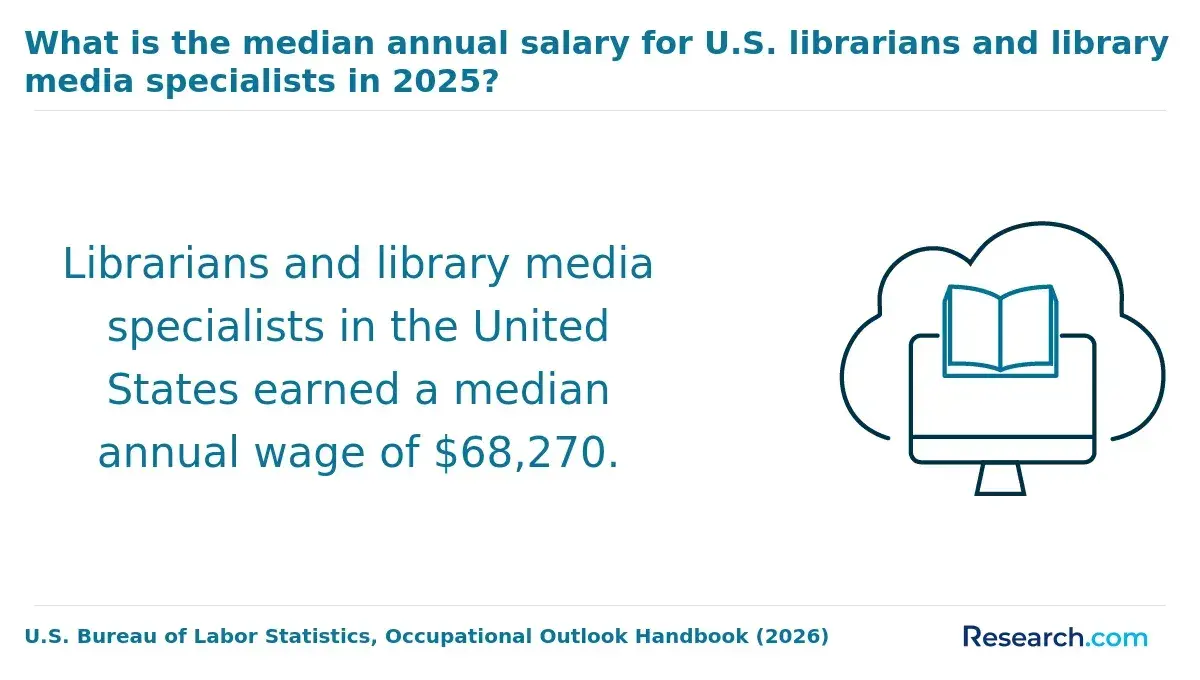
A low recent GPA can make an MLIS application feel uncertain, especially when earlier grades or professional work better reflect your abilities. It matters to choose programs whose policies give you a realistic path forward: librarians and media collections specialists had a median annual salary of $68,270 in May 2025, according to the U.S. Bureau of Labor Statistics, but an MLIS is a significant investment, not a job guarantee.
This guide shows you how to explain your record, identify flexible admissions policies, and weigh accreditation, cost, and career fit before applying.
Key Things You Should Know
- A low recent GPA does not automatically rule out an MLIS. Check whether each program evaluates cumulative, major, or recent coursework, and whether it permits an explanation or individual review.
- Make the explanation brief and specific: identify what affected your grades, show what changed, and support your readiness with stronger recent work or relevant responsibilities.
- Confirm the specific master's program's ALA accreditation and calculate its full cost. BLS projects 2.6% employment growth for librarians and media collections specialists from 2025 to 2035, not guaranteed openings for graduates.
How can you explain a low recent GPA in an MLIS application?
Address the grades directly, without making the explanation the centerpiece of your application. A useful statement identifies the affected period, gives only the context needed to understand it, and explains why you can now handle graduate study. Check whether the application provides an optional academic statement; if it does, keep your personal statement focused on your MLIS goals.
For example: "My grades declined during my final two terms while I was balancing increased family responsibilities. Those responsibilities have since changed, and my subsequent coursework and work managing detailed projects better represent the time and skills I can bring to graduate study." Replace that example with facts you can substantiate. You need not disclose a diagnosis or intimate details to explain an academic disruption.
If the low grades are your most recent academic evidence, show a credible change rather than simply pointing to older success. Strong performance in a later course, sustained work with research or information systems, or a supervisor's account of your reliability can help. Library experience is useful but not the only relevant experience: organizing records, teaching people to find information, and managing digital content can also demonstrate preparation. None of these automatically overrides a published GPA requirement.
Before submitting, ask someone unfamiliar with your circumstances to read the explanation. They should be able to identify what happened, what changed, and why your evidence supports the claim that you are ready now.
Can you get into an MLIS program with a low GPA?
Possibly. MLIS programs set their own minimums, calculation methods, and exception policies. One may use your cumulative undergraduate GPA, while another may give particular attention to later coursework; a minimum may be firm or may allow individual review. Do not assume that "holistic review" means the published minimum is optional.
Make a short list of programs and check each current admissions page for its GPA definition and any appeal or provisional-admission policy. If your record falls below a stated minimum, contact admissions before paying an application fee. Give your cumulative and recent GPAs as shown on your transcript, briefly describe the circumstances, and ask whether an application can receive individual review and what evidence would be useful. Ask for the answer in writing so you can plan accurately.
If direct admission is not currently realistic, a later course with strong grades may provide more current evidence of academic readiness. First ask whether the program considers that coursework and whether any credits could eventually apply to the degree; taking a class elsewhere does not guarantee admission or graduate transfer credit. Relevant paid or volunteer work can strengthen an application, but it does not substitute for a required bachelor's degree.
What are the admission requirements for MLIS programs?
Requirements vary, but applicants commonly need a bachelor's degree, transcripts, an application, a statement of purpose, and recommendations. Some programs request a résumé, writing sample, or additional material. Verify the current requirements for the specific degree - MLIS, MLS, Master of Science in Library Science, and Master of Information are not interchangeable program titles.
For an applicant with a low recent GPA, the details of transcript review matter more than a generic checklist. Ask whether the school uses an applicant-reported GPA or recalculates it, whether it reviews courses taken after graduation, and whether an academic explanation belongs in a designated field. If recommenders may comment on your readiness, choose people who can describe specific work, study habits, or improvement rather than merely confirm your job title.
Match your statement of purpose to the work you want to do. An applicant interested in public-library services could discuss community access and reference work; someone interested in digital collections could explain relevant experience with organizing and preserving information. Your goal is to show a reason for graduate study alongside, not instead of, an honest account of your grades.
How do conditional and provisional MLIS admissions work?
Some institutions may offer conditional or provisional admission to applicants who have not met a standard admission criterion. These terms are not universal policies: a school may require particular grades in initial graduate courses, limit enrollment, or set a deadline for moving to regular standing. Other schools do not offer this route at all.
Request the written conditions before accepting an offer. Clarify which courses count, what happens if you miss a condition, whether credits earned during provisional status count toward the degree, and whether that status affects registration or aid eligibility. Passing an initial course is not necessarily the same as satisfying every condition.
Study format is a separate question. If you are considering a self paced accredited MLIS, confirm with the institution how its actual course schedule works and whether a provisional student can use that format while meeting academic checkpoints.
Which MLIS programs are accredited by the American Library Association?
The American Library Association accredits qualifying master's programs in library and information studies, including programs with names other than MLIS. It does not follow that every LIS degree at an institution is ALA-accredited, or that institutional accreditation alone establishes ALA accreditation.
Use the current ALA directory to check the exact program name and accreditation status before applying, then confirm the degree, delivery format, and admissions policies with the university. This is especially important if you are comparing differently titled degrees. ALA accreditation can matter for librarian job requirements, but it does not confirm that a particular elective, internship, or flexible-admissions option is available.
A shortlist of best online library information science degree options can help you identify programs to investigate; treat any shortlist as a starting point, not a substitute for the current ALA directory and university catalog.
Should you choose an online or campus-based MLIS program?
Choose the format in which you can consistently do graduate-level work, not the one that merely appears more convenient. Online courses may be asynchronous, scheduled live, or a mix; campus programs may also offer some remote classes. Ask about attendance times, group work, course sequencing, and any in-person requirements. Online delivery does not necessarily mean self-paced study.
Campus study may make local networking or access to a particular workplace easier. Online study can preserve access to your current job and community, but you may need to arrange field experience near home. If a program advertises a practicum, verify whether it is required, whether remote placements are permitted, and who finds the site.
Location can affect both opportunity and price. When reviewing Southern online library degree options, for example, compare the tuition that applies to your residency and format rather than assuming every online student pays an in-state rate. For a low-GPA applicant, format flexibility is valuable only if the program's admissions policy also fits your record.
What courses do students take in an MLIS program?
MLIS curricula commonly cover information organization, reference or information services, research methods, collection or resource management, and professional issues such as access and privacy. Requirements differ by program. Electives or applied projects may let you build skills in archives, metadata, digital preservation, youth services, or research data support.
Look beyond course titles when deciding where to apply. A catalog listing does not establish that an elective runs every term, that you can enter it early, or that a set of relevant electives is a formal concentration. Ask an adviser for a realistic course sequence and whether prerequisites could delay the classes most important to your goal.
Exploring MLIS specializations with strong outcomes can help you identify skills to investigate. Then check the university's own curriculum for the distinction between a named specialization, individual electives, and experiential opportunities. If you are rebuilding confidence after weak grades, a feasible first-term course load matters as much as an appealing elective list.
How long does an MLIS take and how much does it cost?
Completion time depends on required credits, your course load, course availability, and any practicum or capstone. Published tuition also rarely represents the full amount you will spend. Because prices and credit requirements are institution-specific, calculate costs from the current university tuition schedule rather than relying on a general MLIS price estimate.
For each program, multiply the tuition rate that applies to you by its required credits, then add mandatory fees, materials, and any travel or placement expenses. Check whether tuition changes with enrollment level and whether a required course offered infrequently could add a term. Compare the resulting gross cost with likely grants or employer support; the amount you personally pay and the amount you borrow may differ.
An accelerated online MLIS programs comparison can help you assess possible timelines, but a shorter schedule is not automatically a better fit. If admission is conditional or your recent grades reflect an unsustainable workload, ask whether you can take a lighter first term without losing access to required courses. Confirm current federal aid eligibility and borrowing terms with each financial aid office before committing.
What careers and salaries can an MLIS degree provide?
An ALA-accredited master's is a common qualification for many professional librarian positions, but requirements vary by employer and specialty. Graduates may seek work in public, academic, government, or special libraries, as well as archives and adjacent information-management roles. Experience with reference services, digital collections, metadata, or community programs can help connect coursework to a particular vacancy.
The following U.S. Bureau of Labor Statistics figures describe occupations, not MLIS graduate outcomes. They provide salary and growth context for planning, but they cannot predict an individual offer or the effect of a specific degree.
| Occupation | Median annual salary, May 2025 | Projected employment change, 2025-2035 |
| Librarians and media collections specialists | $68,270 | +2.6% |
| Archivists | $64,550 | +3.4% |
| Library technicians | $44,580 | −6.4% |
Library technician jobs are generally distinct from professional librarian roles and do not necessarily require an MLIS. If your target is archives or another specialized field, read actual job postings for experience and credential expectations before borrowing for a degree. Compare those requirements with your current earnings and the program's full cost; the broader occupational median alone is not a return-on-investment calculation.
Do MLIS graduates need librarian licensing or certification?
There is no single license required for every U.S. librarian job. Requirements depend on the position and jurisdiction. School librarian roles are a particularly important exception to investigate: a state may require an educator license, a school-library endorsement, supervised experience, or other preparation beyond completing an MLIS.
If school librarianship is your goal, check the state education authority for the state where you intend to work and ask the program whether its pathway meets those requirements. Do this before enrolling, especially in an online program based in another state. For public or specialized library positions, review the relevant employer's requirements rather than assuming an optional professional credential is universally mandatory.
Other Things You Should Know About Library Science
Not necessarily, but a dismissal may need a separate explanation from the GPA itself. Read each application's disclosure questions carefully, answer them accurately, and ask admissions whether eligibility or documentation rules apply before submitting.
That depends on the institution's GPA calculation and transcript-review policy. A passing grade may demonstrate completed coursework without changing the GPA the program evaluates. Ask admissions how it handles your specific transcript.
Many programs accept an application before a term ends, but deadlines for updated or final transcripts vary. Ask when grades must be available for review and whether an admission decision could depend on them.
Do not assume so. Your undergraduate institution's transcript policy and an MLIS program's GPA calculation may differ. Obtain the program's explanation of how it treats both attempts before deciding whether a retake will help your application.
References
- Rule 3341-3-76 - Ohio Administrative Code | Ohio Laws https://codes.ohio.gov/ohio-administrative-code/rule-3341-3-76
- MLIS Application Materials - UW Information School https://ischool.uw.edu/programs/mlis/admissions/application-materials
- Library and Information Science (MLIS) | missouri.edu https://cehd.missouri.edu/degree/library-science-mlis/
- Academic Standing Review | ucsd.edu https://advising.ucsd.edu/students/academic-standing/review.html
- Provisional and Conditional Admission to the Graduate School | University of Louisiana at Lafayette https://louisiana.edu/graduateschool/admissions/after-you-apply/provisional-and-conditional-admission-graduate-school
- Admission - Graduate Catalog - University of Florida https://gradcatalog.ufl.edu/graduate/admission/
- Admission Process for Library Science Master's Programs | University of North Texas https://informationscience.unt.edu/admissions-advising/admission-ms-library-science.html
- Program: Master of Library and Information Science, M.L.I.S. | usm.edu https://catalog.usm.edu/preview_program.php
- GSH Section 2 - Admissions | Graduate School https://gradsch.osu.edu/graduate-school-handbook-gsh/gsh-section-2-admissions


