
2027 What Jobs Can You Get With an MLIS in Archives and Records?

Co-Founder and Chief Data Scientist
An MLIS can prepare you to preserve historical collections, manage an organization's records, or make digital materials accessible - but those jobs require different skills. The U.S. Bureau of Labor Statistics projects archivist employment to grow 3.4% from 2025 to 2035, making it worth examining where an MLIS fits and where experience or another credential matters more.
This guide compares roles, coursework, costs, and career prospects so you can choose a program and build evidence of the work you want to do.
Key Things You Should Know
- An archives-focused MLIS can support archivist, digital preservation, and special collections roles; records management jobs may also accept other degrees plus relevant experience.
- The median annual pay for U.S. archivists was $64,550 in May 2025, according to the Bureau of Labor Statistics - not a guaranteed starting salary for MLIS graduates.
- Prioritize documented archives or records coursework, access to applied projects, and total program cost over a concentration name alone.
What jobs can you get with an MLIS focused on archives and records?
An archives and records MLIS can lead to work with historical collections, active organizational records, or digital information. Employers may use different titles for similar work, so compare job descriptions by duties and required skills rather than title alone.
The roles below show where an MLIS is most directly relevant and what experience can help you compete. Requirements vary by employer.
| Role | Typical work | How an MLIS fits |
| Archivist or processing archivist | Appraises collections, arranges materials, creates finding aids, and supports researcher access. | Often a relevant graduate qualification; archival processing experience is valuable. |
| Digital archivist or digital preservation specialist | Preserves born-digital files, documents their origins, manages metadata, and plans continued access. | Relevant when paired with hands-on digital preservation work; some technical positions accept other degrees. |
| Special collections librarian | Helps researchers use rare or distinctive collections and may teach with collection materials. | An MLIS is particularly relevant when the job includes professional librarian duties. |
| Records manager or records analyst | Maintains retention schedules, supports secure disposition, and coordinates access to business records. | One possible pathway alongside records, compliance, or information-governance experience. |
| Digital collections or metadata specialist | Describes and organizes digital objects so people can discover and use them. | Useful preparation, though some employers prioritize technical or subject expertise. |
Entry-level titles such as archives assistant or records technician can provide practical experience, but they may be paraprofessional jobs that do not require a master's degree. For professional postings, check whether "master's required" means an MLIS specifically or includes history, public history, information management, or another relevant field.
What education and accreditation do archivist and records manager jobs require?
There is no single degree requirement across all archives and records jobs. Archivist postings may seek a master's in library and information science, archival studies, history, or a related field. Records management employers may instead emphasize retention, compliance, systems, and organizational experience. A graduate degree does not replace the hands-on experience a posting explicitly requires.
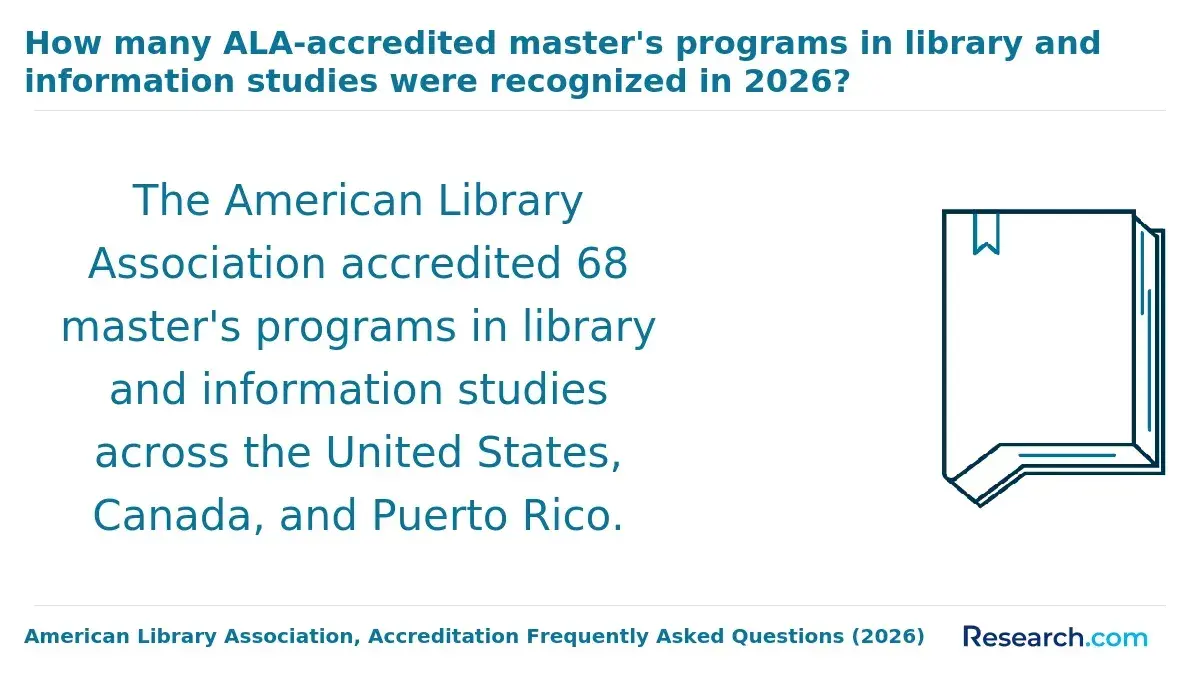
If you choose an MLIS, verify the specific master's program in the American Library Association's current accreditation directory. Institutional accreditation and ALA program accreditation are different. An ALA-accredited program can be especially useful if you want the option to pursue librarian positions, but accreditation does not certify an archives concentration, guarantee an internship, or establish that a particular elective will run when you need it. For broader context, compare MLIS accreditation and career outcomes.
What career paths are available in archives and records management?
A common archives path begins with collection processing, reference work, or digitization and develops toward responsibility for acquisitions, digital preservation, or an entire repository. Records management may begin with records analysis or coordination and progress toward retention policy, information governance, or program leadership. Advancement depends on the setting and your experience, not just the degree.
The best path depends on what you want to manage. Choose archives preparation if you are drawn to appraisal, historical context, description, and public access. Choose records-focused training if you prefer retention schedules, privacy, defensible disposition, and collaboration with legal or business teams. Digital preservation can bridge the two, but it calls for demonstrable experience handling files, metadata, and preservation workflows.
Before selecting a school, distinguish an officially documented concentration from a few relevant electives. Reviewing library science concentration options can help you identify the type of preparation to look for; confirm each program's current requirements and course availability in its own catalog.
What coursework does an MLIS in archives and records typically include?
Relevant study may cover archival appraisal and selection, arrangement and description, preservation, digital collections, metadata, records retention, and privacy. Appraisal means deciding what has lasting value; arrangement and description make retained materials understandable and discoverable. These subjects may appear as required courses, electives, or applied projects - not necessarily a named archives track.
For an archivist goal, look for opportunities to create a finding aid, document processing decisions, and address access restrictions. For records management, look for work with retention schedules and disposition decisions. For digital roles, seek projects involving born-digital materials, metadata, and preservation planning. General library science degree curriculum matters, but a broad information-organization course alone is not proof of specialized preparation.
Ask the program when relevant electives last ran, whether they are scheduled during your expected enrollment, and whether a supervised project can use real collections or records. A catalog listing establishes that a course exists; it does not guarantee you can take it before graduation.
Are online MLIS programs suitable for archives and records careers?
Yes, an online MLIS can be suitable if the program offers relevant coursework and a workable route to applied experience. Online delivery does not mean that collections processing, repository visits, or internships can be completed remotely. Ask where placements may occur, who arranges them, and whether your local institution can host one.
Compare live-session requirements, elective scheduling, and project supervision alongside the delivery format. An accelerated option may reduce calendar time but leave less room for a placement or specialized electives; evaluate quick online information science masters against the experience your target jobs request, not speed alone.
What are the admission requirements for an archives and records MLIS?
Requirements vary by program, but applicants should expect to document a completed bachelor's degree and submit the materials listed in the school's current admissions policy, which may include transcripts, a statement of purpose, recommendations, or a résumé. Do not assume an undergraduate library science or history major is required unless the program says so.
Use the statement of purpose to connect your interests to specific archives or records work - for example, describing materials, managing retention, or preserving digital files. Relevant employment, volunteering, or coursework can strengthen that explanation, but it does not automatically waive a published requirement. If your academic background is unusual, ask admissions staff how the program evaluates it before paying an application fee.
How long does an archives and records MLIS take and cost?
Completion time depends on required credits, your course load, elective rotation, and any practicum or capstone. Full-time study can be substantially quicker than part-time study, but the shortest advertised timeline may not accommodate the archives courses or placement you want. Ask for a course-by-course plan based on your intended pace.
To compare costs, multiply each program's published tuition per credit by its required credits, then add mandatory fees and realistic expenses for books, equipment, and any placement-related travel. Check the applicable tuition rate rather than assuming online enrollment qualifies you for in-state pricing. This yields a more useful estimate than comparing per-credit rates alone.
Scholarships, employer support, and assistantships may reduce your out-of-pocket cost, but availability and eligibility vary. Review library science graduate funding options, then confirm awards and financial-aid terms with each school. Before borrowing, compare your expected debt with the pay and qualifications in actual jobs you would pursue; published tuition is not your total attendance cost.
How much can archivists and records managers earn?
The Bureau of Labor Statistics reports a May 2025 median annual wage of $64,550 for archivists. That is the midpoint for employed archivists across experience levels, not an MLIS graduate salary or a prediction for an entry-level offer. Location, employer, responsibilities, and experience can change what a particular position pays.
Do not apply the archivist median to records managers: records management titles and duties vary, and this figure does not measure them separately. For either path, compare posted salary ranges for positions whose qualifications you meet, then weigh those ranges against the full cost of the education you are considering.
What is the job outlook for archives and records professionals?
The Bureau of Labor Statistics projects 3.4% employment growth for archivists from 2025 to 2035. Growth indicates a direction for the occupation, not the likelihood that an individual applicant will find a job in a preferred city or specialty. It also should not be treated as a separate forecast for every records management title.
Digital collections and organizational records create work that spans preservation, access, privacy, and information systems. To assess your own prospects, sample current postings in the places you can work and note recurring requirements: supervised processing, digital tools, records schedules, subject knowledge, or management experience. Use those findings to select courses and projects rather than assuming any archives-labeled degree matches the local market.
Do archives and records professionals need certification?
Certification is not a universal requirement for archives or records management employment. Some employers value the Academy of Certified Archivists' Certified Archivist credential or the Institute of Certified Records Managers' Certified Records Manager credential, particularly for roles with matching responsibilities. Eligibility requirements and examinations are separate from earning an MLIS.
Read postings in your target field before investing in a credential. If few relevant employers request one, supervised work and a portfolio may be the better immediate priority. Keep examples that show your decisions and results - such as a permitted finding aid, a digital preservation plan, or a sample retention schedule - while removing confidential or restricted information.
Other Things You Should Know About Library Science
Not necessarily. They may examine materials to understand and describe them, but their work also includes organizing collections, documenting decisions, managing access, and helping researchers.
No. Ownership of a physical item does not automatically transfer copyright. Access and reuse decisions may depend on copyright status, donor agreements, and other restrictions.
No. Preservation covers broader planning to protect materials and maintain access; conservation involves specialized examination and treatment of objects. Conservation jobs may require different training than an archives-focused MLIS.
It can demonstrate description and organization skills if you have permission to use the materials. Document your methods, protect private information, and clearly identify the project as independent rather than supervised professional experience.
References
- digital archivist - Department of Labor https://dol.ny.gov/trade-digital-archivist
- cross-disciplinary perspectives on AI and born-digital data | nih.gov https://pmc.ncbi.nlm.nih.gov/articles/PMC8754190/
- What Is an Archivist? Role, Skills & Career Guide | Syracuse University https://ischool.syracuse.edu/what-is-an-archivist/
- Careers in Archives: Archivists & Archival Work | LibGuides at Denison University Libraries https://libguides.denison.edu/careers-in-archives
- Library Science Careers - UW Information School https://ischool.uw.edu/programs/mlis/careers
- What Can You Do With a Library Science Degree? | Syracuse University Online Master's Programs https://onlinegrad.syracuse.edu/information-science/mslis/library-science-careers/
- How to Become an Archivist - Arizona Online https://online.arizona.edu/news/how-become-archivist-step-step-guide-launching-your-career
- Careers in Libraries and Information Science - Subject Guides https://guides.library.unlv.edu/libjobs/careers
- Working with Born-Digital and Digitized Archival Collections | jstor.org https://www.jstor.org/stable/jj.11425482
- 25-4011.00 - Archivists https://www.onetonline.org/link/summary/25-4011.00


