2027 MLIS Programs for Linked Data and Knowledge Graph Careers

Co-Founder and Chief Data Scientist
Choosing an MLIS for linked data work means looking beyond a program's general technology electives. Employers may need people who can connect collections through consistent identifiers, usable metadata, and knowledge graphs, but a course title alone does not show whether students practice those skills.
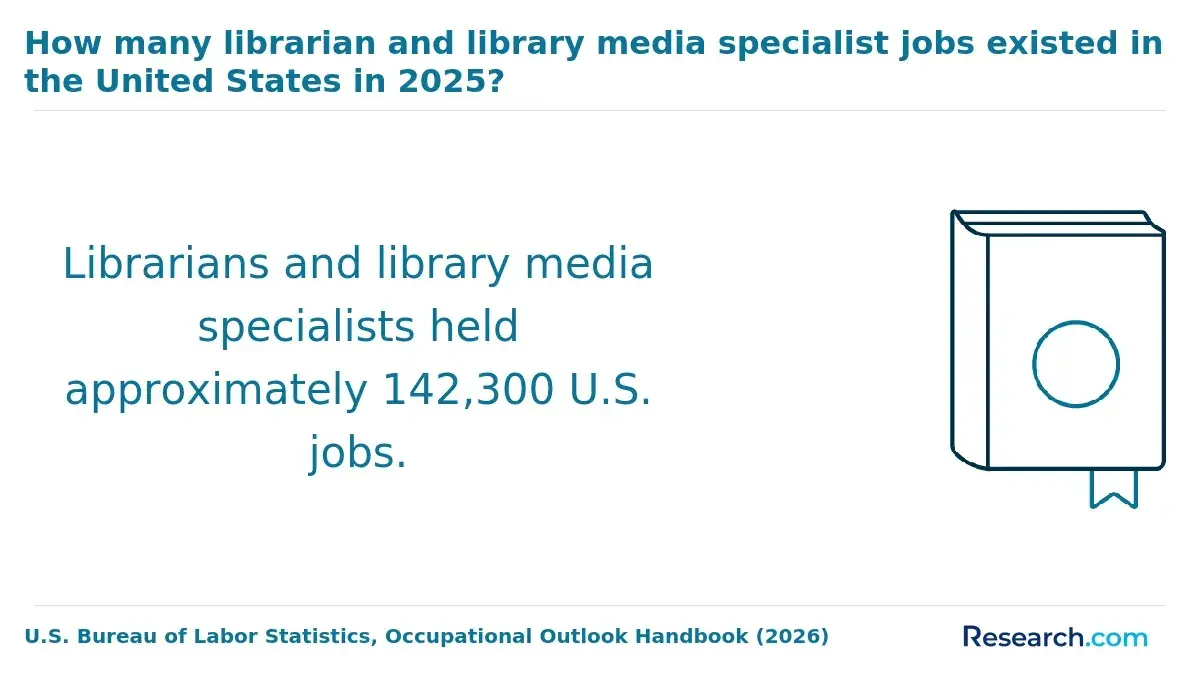
The U.S. Bureau of Labor Statistics reports a May 2025 median annual salary of $68,270 for librarians and media collections specialists; that broad figure is context, not a forecast for a metadata specialist. This guide helps prospective students compare curricula, projects, accreditation, costs, and career paths before committing to a degree.
Key Things You Should Know
- Look for documented instruction in metadata, identifiers, and graph-based data, plus an applied project. Do not mistake one elective for a formal concentration.
- ALA accreditation matters for many professional librarian positions, but knowledge graph jobs outside libraries may accept other degrees and experience.
- BLS projects 2.6% employment growth for librarians and media collections specialists from 2025 to 2035. That occupation-wide estimate does not predict demand for linked data specialists.
What are MLIS programs for linked data and knowledge graph careers?
They are library and information science master's programs in which students can prepare to describe, connect, and manage information across systems. Linked data uses identifiable entities and explicit relationships so that, for example, an author record, a book, and a repository item can be connected rather than treated as unrelated text fields. A knowledge graph organizes entities and relationships for discovery, analysis, or reuse.
In libraries, this work can connect catalogs, digital collections, archives, and research outputs. Beyond libraries, similar methods support organizational knowledge management and data integration.
The degree might be called an MLIS, MLS, Master of Science in Library Science, or Master of Information; the name alone does not establish what technical work students will do. A useful program offers a coherent route from knowledge organization and metadata fundamentals to applied data work, not necessarily a concentration labeled "knowledge graphs."
Which MLIS programs offer linked data and knowledge graph coursework?
No named program should be assumed to offer a current linked data track solely because its catalog mentions metadata.
Course listings, registration schedules, and program requirements establish different things: a listing shows a course exists, while recent schedules help show whether a student can actually take it. Without confirmed, current offerings for individual schools, a ranked list would be misleading.
Use the same evidence standard when comparing schools. The table distinguishes features that are often grouped together in promotional descriptions.
| Evidence to find | What it establishes | What remains to verify |
| Officially named concentration | A documented curricular pathway | Required courses and whether they fit your schedule |
| Published metadata or linked data elective | Relevant coursework exists in the catalog | When it next runs and who may enroll |
| Documented practicum or project option | A potential route to applied work | Whether a suitable supervisor, dataset, and placement are available |
| Broad information organization curriculum | Foundational alignment | Whether graph-specific learning is available at all |
Ask a program for recent syllabi and upcoming schedules, then check whether a project could produce a portfolio artifact you are permitted to share. Location can matter if you want local internships or librarian positions: compare opportunities in your target market rather than assuming a national salary figure applies locally.
Readers considering Illinois can use an Illinois library science salary outlook as additional career context, while confirming current local openings independently.
Do linked data MLIS programs need ALA accreditation?
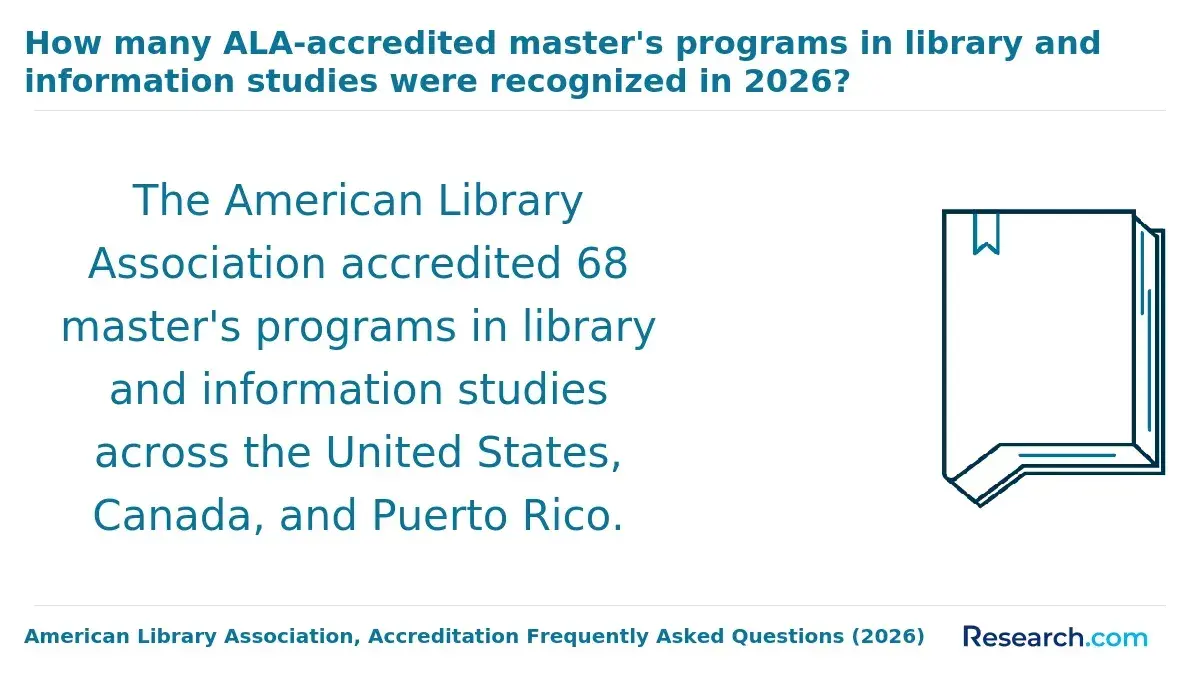
ALA accreditation is important when you want to preserve eligibility for professional librarian jobs that require or prefer a degree from an ALA-accredited program. It accredits specific master's programs, not every degree a university offers. Institutional accreditation is a separate consideration and does not establish ALA accreditation.
Check the specific degree in the current American Library Association directory before applying. Accreditation does not certify that the program has a linked data concentration, that a desired elective will run during your enrollment, or that a practicum can be completed remotely.
For a knowledge graph position outside librarianship, employers may instead emphasize demonstrated technical skills or accept an information science, computer science, or related degree. Read actual postings in your target sector before paying for an MLIS primarily to obtain the credential.
What degree pathways lead to linked data and knowledge graph careers?
An MLIS is a strong fit when you want to apply graph methods to library collections, authority records, digital repositories, or other work where professional LIS preparation is valued. A different graduate degree may fit better if your target job centers on large-scale software engineering or data infrastructure rather than stewardship and description of information.
These routes differ in what you would need to demonstrate to an employer.
| Pathway | Best-aligned goal | Potential gap to address |
| MLIS or another LIS master's | Library metadata, discovery, and knowledge organization | Hands-on graph tools or programming, if electives are limited |
| Information science or computer science master's | Knowledge graph engineering and data systems | Cataloging standards and collection-specific workflows |
| Relevant experience plus focused coursework or a certificate | Adding linked data skills to an existing information role | Formal degree requirements in some librarian postings |
Time is another trade-off. An accelerated one year library degree may appeal to someone who can study intensively, but a shorter schedule is a poor fit if it leaves no opportunity to take the relevant elective or complete a substantial project. Map courses by term before choosing speed over specialization.
What do students learn in a linked data and knowledge graph MLIS curriculum?
The most useful curriculum connects traditional description to structured, reusable data. Students should learn why authority control keeps names consistent, how metadata schemas represent resources, and what changes when records identify entities and relationships explicitly. MARC and RDA may provide library cataloging context; BIBFRAME is particularly relevant to work connecting bibliographic information as linked data.
A strong elective or project might introduce persistent identifiers, RDF for expressing relationships, SPARQL for querying graph data, and methods for checking data quality. Not every job requires the same tools.
A metadata librarian may spend more time reconciling names and documenting decisions than writing software, while a graph engineer may need substantial programming and data-pipeline experience.
Look for an assignment with a reviewable result: for example, transform a small permitted collection dataset, reconcile creator names against an authority source, document uncertain matches, and show how the resulting relationships improve discovery.
This demonstrates judgment as well as technical execution. It also prepares you to evaluate AI-assisted entity matching critically: generated matches still need provenance, error checks, and attention to biased or incomplete source descriptions.
Are online or campus-based MLIS programs better for linked data careers?
Neither format is inherently better. Choose based on access to the right courses, feedback on technical work, and opportunities to complete a relevant project. Online study can make it easier to keep a job and use your workplace data, subject to permission. Campus study may make local collaboration and placements easier. Either format can work well if students receive meaningful project supervision.
Confirm whether online courses are asynchronous or meet at set times, whether required classes are offered when you need them, and whether internships can be arranged where you live. "Online" does not establish that every elective is available online or that a placement may be completed remotely. A candidate comparing formats should request a term-by-term plan that includes the linked data coursework, not just the general degree requirements.
What are the admission requirements for linked data MLIS programs?
Requirements vary by institution. Applicants should check the current program page for the required prior degree, transcripts, recommendations, statement of purpose, application deadlines, and any English-language documentation that applies to them. Do not assume that programming experience is required or that prior library employment substitutes for a published academic requirement.
Use your statement to connect your intended work to the program's verified courses or project options. Experience cleaning a catalog, maintaining a taxonomy, managing a repository, or documenting a dataset can be relevant even if you have never built a knowledge graph.
If you have prior graduate coursework, ask for an individual review before assuming credits will transfer; limits and eligible course types differ. A guide to transfer friendly library science programs can help frame that conversation, but the receiving program decides what counts toward its degree.
How long do MLIS programs for knowledge graph careers take and cost?
Duration depends on required credits, course availability, and how many courses you take each term. Published degree length may not reflect your schedule if a needed elective runs infrequently or an applied project requires additional planning. Ask an adviser to map the entire degree against the most recent course rotation.
No single tuition figure accurately represents these programs. For each school, calculate required credits multiplied by the tuition rate that applies to you, then add mandatory fees and likely materials, travel, or placement expenses. Check whether online students receive a different rate; do not assume they qualify for in-state tuition.
Compare the same academic year and cost categories across schools. Resources on quick cheap online masters library science can surface possibilities, but a low advertised price is not the same as a low total cost for your course plan.
Separate the program's gross cost from what you would pay after confirmed employer support or awards, and from the amount you would borrow. Ask the financial aid office about aid eligibility for your enrollment period and verify current federal loan rules before relying on borrowing.
Whether the degree is worth the expense depends on your existing earnings, target employers' credential requirements, and the skills you can gain without enrolling.
What careers and salaries can linked data MLIS graduates expect?
Relevant titles include metadata librarian, cataloging or discovery librarian, digital collections metadata specialist, taxonomy specialist, and knowledge graph analyst. Titles are not interchangeable: librarian postings may require an MLIS, while analyst or engineering jobs may accept several degrees and place greater weight on technical experience.
Entry-level work can involve metadata cleanup, identifier reconciliation, and quality review; more advanced roles may design schemas, coordinate migrations, or lead cross-team data governance.
The following BLS figures describe broad U.S. occupations, not salaries or openings specifically for linked data graduates. Use them as context alongside current postings for the roles and locations you want.
| U.S. occupation | Median annual salary, May 2025 | Projected job growth, 2025-2035 |
| Librarians and media collections specialists | $68,270 | 2.6% |
| Library technicians | $44,580 | −6.4% |
The distinction matters because a technician role is not necessarily a professional librarian role, even if both involve metadata. Neither occupational category isolates knowledge graph positions.
For a wider view of compensation across library roles, see high salary librarian careers. Then compare the qualifications and pay ranges in actual openings rather than treating an occupation-wide median as your expected offer.
Which certifications and skills support linked data and knowledge graph careers?
There is no universal linked data certification required for these jobs. A short course or certificate can demonstrate focused study, but employers can assess a documented project more directly: what data you used, how you modeled it, which decisions you made, and how you tested the result. For a librarian position, an optional technical credential does not replace a required graduate degree.
Prioritize skills that match your target postings: metadata mapping and authority work for collections roles; RDF and query skills for graph-focused roles; and scripting, data transformation, and documentation where the job involves repeatable pipelines. Communication matters too. You may need to explain ambiguous matches to a cataloger, a developer, and a subject expert without hiding uncertainty.
Before enrolling, collect a few postings you would genuinely apply for and mark their required qualifications separately from preferences. Choose coursework and an authorized portfolio project that address the recurring gaps. That approach is more reliable than accumulating credentials whose relevance to your intended work is unclear.
Other Things You Should Know About Library Science Programs
No. Systems and migration plans vary, so familiarity with both can be useful. Ask prospective employers which formats their current workflows use.
Only with appropriate permission. If the records or documentation are restricted, use an approved public dataset or create a small illustrative example and clearly label what you did.
No. Access, licenses, and rights can differ across datasets and individual content. Check the terms before copying, transforming, or publishing records.
A taxonomy generally organizes terms into categories or hierarchies. An ontology can define a wider range of entities and relationships. The right approach depends on what users and systems need to represent.
References
- Information Organization - SJSU - School of Information https://ischool.sjsu.edu/information-organization
- MLIS Curriculum, Specialties & Courses | University of Arizona College of Information Science https://infosci.arizona.edu/ma-library-information-science/curriculum-specialties-courses
- MS Information Science | University at Albany https://www.albany.edu/cehc/programs/ms-information-science
- Applied Learning Experiences - UW Information School https://ischool.uw.edu/programs/msim/curriculum/applied-learning-experiences
- Linked data - The next evolution of library metadata | OCLC https://www.oclc.org/en/linked-data.html
- Accredited Programs | ALA https://www.ala.org/educationcareers/accreditedprograms