2027 MLIS Programs for Applicants With a Graduate Certificate but No Bachelor's in the Field

Co-Founder and Chief Data Scientist
A graduate certificate can strengthen an MLIS application, but it does not settle a crucial eligibility question: do you have a bachelor's degree in another field, or no bachelor's degree at all? The distinction matters when weighing the cost of graduate study against career opportunities.
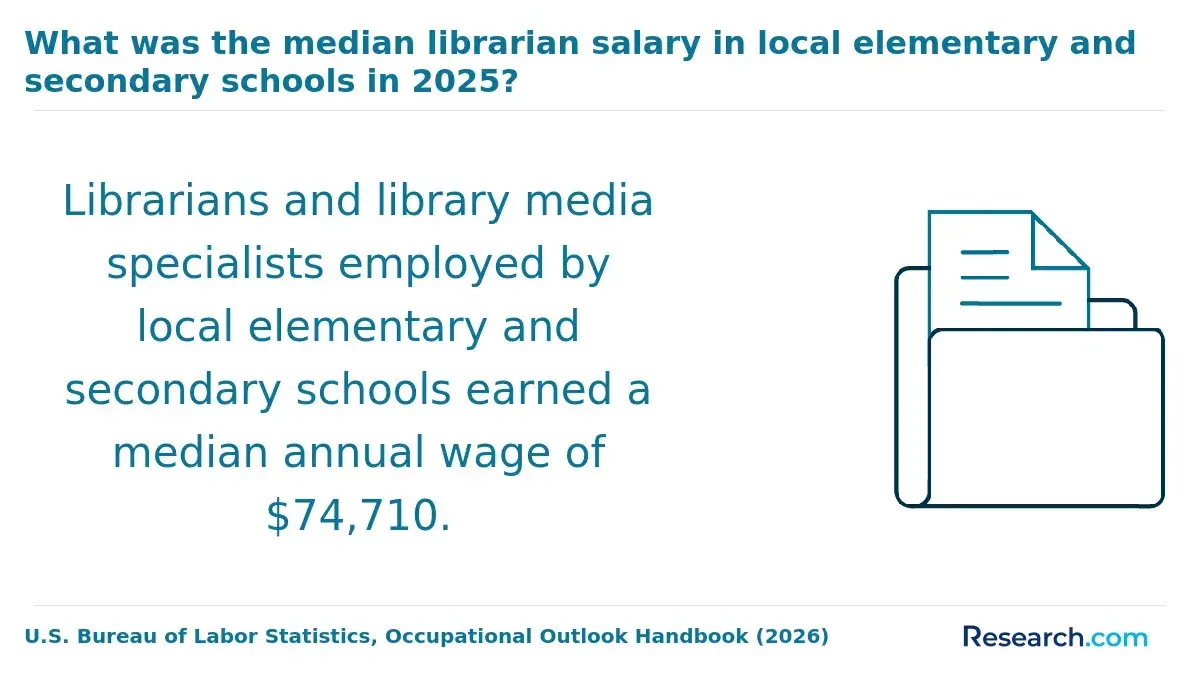
The U.S. Bureau of Labor Statistics reports a May 2025 median annual salary of $68,270 for librarians and media collections specialists, though that figure is not a starting salary. This guide explains admissions rules, accreditation, costs, and alternatives so you can identify a realistic next step.
Key Things You Should Know
- If you have a bachelor's degree outside library science, you can generally seek MLIS admission, your graduate certificate may demonstrate relevant preparation but does not replace program-specific requirements.
- If you have no bachelor's degree, a graduate certificate ordinarily does not substitute for one. Request an individual eligibility review before paying an application fee.
- The Bureau of Labor Statistics projects 2.6% employment growth for librarians and media collections specialists from 2025 to 2035. Compare the credential required for your target jobs with the full cost of qualifying.
Can you pursue an MLIS with a graduate certificate but no bachelor's degree?
If "no bachelor's" means no bachelor's in library science, usually yes: a bachelor's in another subject can meet the underlying degree requirement. If you have no bachelor's degree in any subject, a graduate certificate usually does not establish eligibility for a master's program. A certificate records a distinct course of study; it is not automatically equivalent to an undergraduate degree.
The distinction determines which admissions question to ask. These common situations call for different responses.
| Academic history | Likely admissions issue | Best next move |
| Bachelor's in another field plus graduate certificate | Whether the bachelor's meets the school's degree requirement | Apply under the regular policy and explain how the certificate supports your goals |
| No bachelor's, but a graduate certificate | Whether any formally published exception applies | Request a written eligibility determination before applying |
| Unclear or incomplete undergraduate record | Whether a degree was awarded or additional coursework is needed | Obtain official records and ask admissions to review them |
A certificate issued by a university that also offers an MLIS is not an admission promise. Ask the graduate admissions office to distinguish a published degree requirement from any discretionary exception; do not rely on a verbal assumption that graduate-level work must qualify you.
Do MLIS programs require a bachelor's degree in library science?
Generally, no. MLIS programs prepare students for graduate-level library and information work and commonly admit applicants whose undergraduate majors are unrelated to library science. A history major might bring archival research experience; a computer science major might bring technical skills. Neither background automatically replaces required MLIS coursework.
Check the exact degree requirement in each school's current graduate catalog, along with any prerequisite courses or minimum academic standards. Do not confuse a preference for relevant experience with a rule requiring a library science major. Likewise, confirm the credential you want: MLIS, MLS, Master of Science in Library Science, and some Master of Information degrees may lead toward similar work, but their curricula and accreditation status must be checked individually.
Which MLIS programs accept applicants from unrelated academic fields?
Look for programs whose published admissions rules require a bachelor's degree without restricting its major. That wording is more useful than an unverified list of supposedly "career-changer-friendly" schools: it tells you whether your undergraduate field is an obstacle. A certificate in archives, information management, education, or another subject may add context, but its value depends on the courses and the program's review criteria.
Once eligibility is clear, compare programs on the work you want to do. For public librarianship, examine reference, community services, and collection development coursework. For archives or digital collections, look for documented instruction in archival description, metadata, and preservation, plus opportunities for applied work. A relevant elective is not the same as a formal concentration, and a catalog listing does not establish that a course runs every term. Ask when essential electives are next expected and whether a practicum is required or optional.
Is an ALA-accredited MLIS required for librarian careers?
An ALA-accredited master's degree is a common qualification for professional librarian positions in the United States, but requirements vary by employer and role. Some positions specify an ALA-accredited degree; others accept related graduate education or experience. Institutional accreditation of a university does not mean its particular library and information studies master's program is ALA-accredited.
Before committing, check the specific degree in the current American Library Association directory of accredited programs, then compare that result with job postings in your intended setting. If you want to be a school librarian, also check the relevant state education agency's certification or endorsement rules. ALA accreditation and state school-librarian eligibility are separate questions, and an online degree does not automatically satisfy every state's requirements.
Specialized employers may assess additional preparation. A law library, medical library, or archives position may value subject knowledge, another degree, or particular experience, but those preferences should not be mistaken for universal licensing rules.
What alternative pathways exist if you lack a bachelor's degree?
If you have no completed bachelor's degree, the most direct route to standard MLIS eligibility is usually to finish one, in a field that fits your interests and circumstances. Ask undergraduate admissions how previous college credits will be evaluated; that is a different decision from whether graduate certificate credits can transfer into an MLIS. An individual MLIS admissions review is still worthwhile if you believe an exception may apply, but do not build a financial plan around an unpublished exception.
You can also test your career interest before committing to more education. Library assistant, technician, circulation, and other support roles can offer exposure to library operations, although job qualifications and advancement opportunities differ. For some information-management jobs outside professional librarianship, targeted training and relevant experience may be more useful than an MLIS. Compare your intended roles - not just degree titles - with a guide to library science degree types and salaries before choosing a longer educational path.
What do MLIS programs teach about libraries and information management?
MLIS study typically combines ways to organize information with ways to help people find and use it. Depending on the program, core work may address reference services, information retrieval, collection development, research methods, and the ethical responsibilities of providing access. Electives can then help you prepare for a particular setting.
For example, metadata courses may cover the descriptive information that makes digital or physical collections discoverable; archives courses may address appraisal and finding aids; and public-service work may emphasize information literacy, accessibility, and privacy. Compare required courses with electives before assuming every graduate receives the same technical preparation. An MLIS degree overview can help you place these subjects in context, but the institution's current catalog should determine your course plan.
Ask whether you can complete a project using a real collection, build a searchable resource, or evaluate an information service. Such work can produce evidence of your skills, particularly if your earlier certificate was in another discipline. It does not guarantee a job.
How do online and campus-based MLIS programs compare?
Delivery format affects how you attend class, not whether you meet admissions or professional requirements. The comparison below highlights scheduling questions that matter especially if you will work while studying or need an on-site placement.
| Consideration | Online study | Campus-based study |
| Class schedule | May include recorded work, live meetings, or both | Usually involves scheduled travel to class |
| Applied experience | Confirm whether placements can be arranged near home | Ask about local placement options and commuting |
| Total expense | Check tuition, fees, equipment, and any required visits | Check tuition, fees, commuting, and relocation if applicable |
Online does not necessarily mean asynchronous, and asynchronous does not mean self-paced. Ask how often required courses are offered, whether live sessions conflict with your work hours, and whether any campus visits are mandatory. If time to completion is decisive, examine sequencing rather than relying on an advertised duration; a guide to short library science program that pays well is a starting point, not a substitute for confirming your own schedule and costs.
What are typical MLIS admission requirements and application materials?
Programs commonly request evidence of a completed bachelor's degree, academic transcripts, and materials explaining your preparation and goals. Depending on the institution, these may include a statement, résumé, recommendations, or additional items. Use the current program page and graduate catalog as the authority; an application checklist from another school may omit a requirement.
If your academic history is unusual, contact admissions before applying. A concise inquiry makes it easier to receive a useful, case-specific answer:
- State whether you hold a completed bachelor's degree, naming its field, awarding institution, and award date if applicable.
- Identify the graduate certificate, its awarding institution, and whether it carries graduate academic credit.
- Ask whether you meet the published degree requirement and whether an individual review or documented exception is available.
- Ask separately whether any certificate courses might be eligible for graduate transfer credit, subject to the program's rules.
Include transcripts or course descriptions if requested. Admission eligibility and transfer credit are separate decisions: even an admitted applicant should not assume certificate courses will shorten the MLIS. If you are considering accelerated library degree admissions, get written confirmation of both eligibility and the course sequence before relying on a short completion timeline.
How long do MLIS programs take and what do they cost?
Completion time depends on required credits, enrollment intensity, course sequencing, and any practicum or capstone. Full-time students may finish substantially sooner than part-time students, but the useful figure is the school's current plan of study for your expected course load. If certificate credits are accepted, ask which MLIS requirements they actually satisfy.
No single tuition figure accurately represents every MLIS. Calculate published tuition using the required credits and the rate that applies to you, then add mandatory fees, books and equipment, and any travel or placement expenses. Ask whether online enrollment changes the rate and whether an extra term would add fees. Published tuition is not the same as total attendance cost, and borrowing does not reduce that cost - it changes when and how you pay it.
Compare scholarships, employer support, and aid eligibility only after checking their terms with the school and financial aid office. Library degree scholarships for professionals may help identify possibilities, but an award should not enter your budget until you know you qualify and have received it. Weigh your likely personal cost against the qualifications in jobs you would actually pursue, rather than assuming any MLIS will pay for itself.
What careers, salaries, and job outlooks follow an MLIS degree?
Professional librarians work in public, academic, school, government, and special libraries, with duties that can include research assistance, instruction, collection decisions, and service management. MLIS graduates also pursue archives, metadata, digital collections, and information-management work. Those adjacent jobs do not all require an MLIS, and employers may instead emphasize subject expertise, technical skills, or experience.
The Bureau of Labor Statistics reports a May 2025 median annual salary of $44,580 for library technicians. That occupational figure describes a different role from a professional librarian and illustrates why comparing job titles matters when considering whether to invest in a master's degree. Neither that median nor the librarian median in the introduction predicts your offer, which will depend on the position, employer, location, and experience.
Before enrolling, read several postings for your target job and note whether the MLIS is required, preferred, or one of multiple accepted credentials. Then look for coursework and applied projects that let you demonstrate the requested skills. If the roles you want rarely call for an MLIS, experience or narrower training may be the more proportionate investment.
Other Things You Should Know About Library Science
Possibly. Ask the program whether it accepts an in-progress certificate on an application and when it needs the final transcript. Describe completed and planned courses accurately.
Awarded credentials do not generally disappear from your academic record, but a program may set recency rules for prerequisites or transfer credit. Check the specific policy before assuming older coursework will count toward the MLIS.
Not necessarily. A noncredit professional certificate can document skills, but it is not automatically graduate academic credit. Identify the issuer and credit status clearly when contacting admissions.
Yes, if you label it accurately - for example, as "in progress" with an expected completion date. Do not describe it as awarded until the institution has conferred it.
References
- DAPIP | Homepage - Office of Postsecondary Education (OPE) https://ope.ed.gov/dapip/
- Chapter 5 - Advanced Degree or Exceptional Ability https://www.uscis.gov/policy-manual/volume-6-part-f-chapter-5
- Eligibility Requirements | Federal Student Aid https://studentaid.gov/understand-aid/eligibility/requirements
- School-Determined Requirements | 2024-2025 Federal Student Aid Handbook https://fsapartners.ed.gov/knowledge-center/fsa-handbook/2024-2025/vol1/ch1-school-determined-requirements
- MLIS Admissions Frequently Asked Questions | missouri.edu https://cehd.missouri.edu/information-science-learning-technologies/mlis-admissions-frequently-asked-questions/
- Program: Library and Information Science, MLIS - Pitt Catalog https://catalog.upp.pitt.edu/preview_program.php
- International Degree Equivalencies - Cornell Graduate School https://gradschool.cornell.edu/admissions/application-steps/transcripts/international-degree-equivalencies/
- Online School Library Information Specialist Graduate Certificate | Vols Online https://volsonline.utk.edu/program/certificates/library-information-specialist/
- MSIS Frequently Asked Questions | Wayne State University https://sis.wayne.edu/msis/msis-faq
- Master of Library and Information Science | valdosta.edu http://catalog.valdosta.edu/archive/2021-2022/graduate/graduate-degree-programs/education-human-services/library-information-studies/mlis/