2027 MLIS Programs for Research Data Metadata Specialists

Co-Founder and Chief Data Scientist
Choosing an MLIS for research data work means looking beyond a program's title. You need coursework and practical experience that match the work: describing datasets, supporting researchers, and making information easier to find and reuse.
The U.S. Bureau of Labor Statistics reports a May 2025 median annual salary of $68,270 for librarians and media collections specialists, but that broad figure does not predict pay in this specialty. This guide helps prospective students and career changers compare program evidence, identify worthwhile skills, and weigh the degree against its cost.
Key Things You Should Know
- Look for verified metadata and research data coursework plus an applied project; a relevant elective is not the same as a formal specialization.
- Check the specific master's program in the ALA accreditation directory, then confirm when relevant electives run and whether a suitable practicum is available.
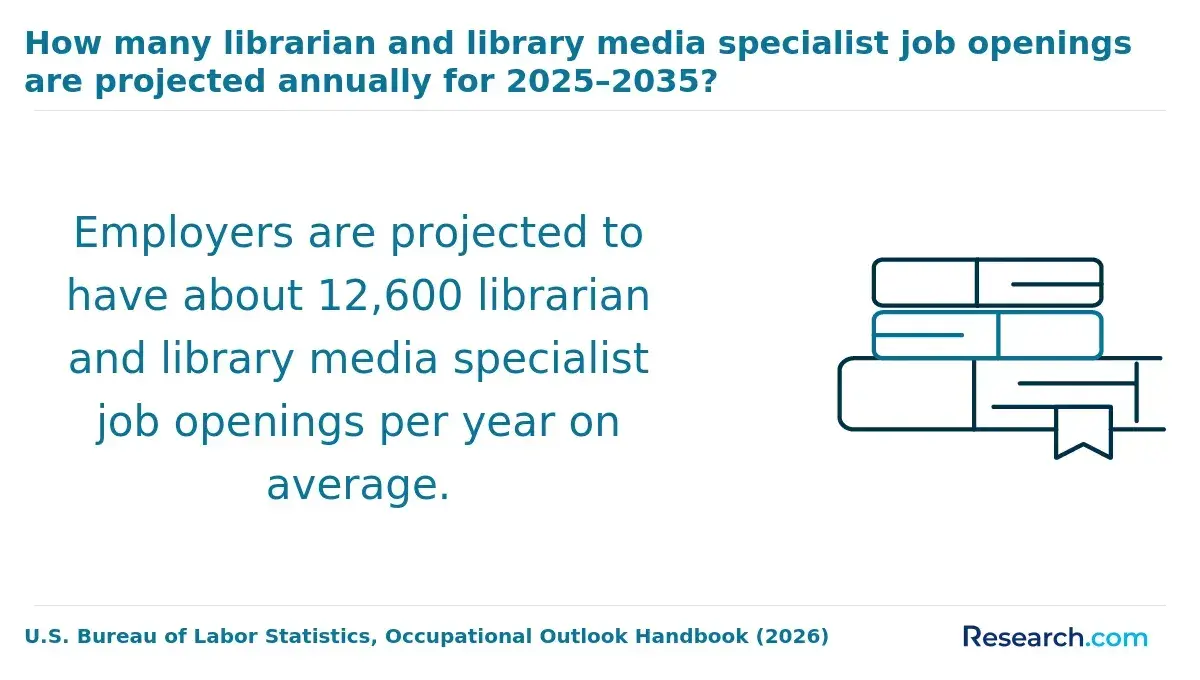
- BLS projects 2.6% employment growth for librarians and media collections specialists from 2025 to 2035; that occupation-wide projection is not a forecast for metadata specialists.
What are MLIS programs for research data and metadata specialists?
These are library and information science master's programs that students can use to prepare for research data management, metadata creation, or related repository work. The phrase describes a career goal, not a standard degree title or a universally available concentration. An institution might award an MLIS, MLS, Master of Science in Library Science, or another LIS-related master's degree; the curriculum and the accreditation of the specific program matter more than its abbreviation.
Research data specialists help researchers plan how data will be documented, organized, shared, and preserved. Metadata specialists create and maintain structured descriptions so people and systems can discover and interpret resources. The jobs overlap when, for example, a university repository needs clear dataset descriptions, persistent identifiers, and consistent access information.
An MLIS can be a strong fit for work that combines researcher support, knowledge organization, and stewardship. Someone primarily seeking statistical modeling or software engineering may be better served by a different degree or technical training. Broader library science degree programs also lead to roles outside research data, so compare the curriculum with the work you actually want to do.
Which accredited MLIS programs prepare students for data and metadata careers?
No program should be treated as a verified research data pathway solely because its university offers an MLIS or its catalog mentions metadata. Without confirming current accreditation, course schedules, and applied opportunities for individual schools, a named shortlist would give a false impression of certainty.
Start with the American Library Association's current directory to confirm that the specific master's program is ALA-accredited. Institutional accreditation is a separate matter. Then assess each program using the same evidence standard: a documented formal concentration, relevant courses, an applicable practicum or project, or general curricular alignment. A catalog listing establishes that a course exists; it does not establish that it will run before you graduate.
Ask a program adviser which metadata and research data courses have been offered recently, whether they have prerequisites, and whether students can complete projects with a repository, research office, or digital collections team. Ask who arranges placements and whether remote placements are permitted. Those answers will be more useful than an unverified "best programs" ranking. To build a broader shortlist, compare online MLIS programs before checking specialization details directly with each school.
What degree requirements lead to research data and metadata specialist roles?
There is no single degree requirement across these jobs. Academic librarian positions may require or prefer an ALA-accredited LIS master's degree, while repository, data stewardship, and metadata positions may accept other graduate degrees or substantial technical experience. Read job postings for the settings you want to enter rather than assuming every information-management role requires an MLIS.
Within an MLIS, a useful path connects knowledge organization and information retrieval with research data management, digital preservation, and a substantial applied assignment. A project might involve mapping fields between two metadata schemas, documenting a dataset for deposit, or writing a repository workflow. Keep a portfolio that explains the problem, your decisions, and the result; do not publish restricted research data or confidential institutional records.
If you already have advanced subject expertise, a focused certificate or supervised repository experience may address a narrower skills gap. If you want professional academic library roles as well as data work, the MLIS may offer a broader credential. Neither pathway guarantees a specialist position.
Are online MLIS programs effective for research data and metadata careers?
An online MLIS can prepare you well if you can take relevant courses, receive feedback on technical work, and complete an applicable project or placement. Delivery mode alone says little about preparation. Confirm whether courses are asynchronous or require live meetings, how group work is scheduled, and whether specialized electives are accessible to online students.
Also check whether a practicum can be completed near home or remotely. "Online program" does not necessarily mean every activity is remote or that every course can be taken whenever you choose. A self-paced library science degree may appeal to students with unpredictable schedules, but verify how its course structure accommodates the sequencing and applied work you need.
For working students, the strongest format is the one in which required courses, specialist electives, and a feasible placement fit together without extending enrollment unexpectedly.
What courses do MLIS programs offer in metadata and research data management?
Course titles vary, so read descriptions and assignments rather than searching only for "research data specialist." The most relevant curricula connect descriptive standards with the practical work of helping people deposit, find, interpret, and preserve research outputs.
Look for coverage of metadata design and quality, knowledge organization, research data management, repositories, digital preservation, and research support. Metadata courses may introduce Dublin Core for resource description, MARC or RDA for bibliographic work, and linked data for connecting entities across systems. Research data courses may address documentation, file organization, sharing decisions, and preservation planning. Not every standard is equally important for every job.
Applied assignments are especially valuable: a student who can explain a schema crosswalk, a data documentation template, or a repository deposit review can show more than a list of course titles. Ask whether coursework includes hands-on work with actual systems or realistic sample records, and whether the relevant elective will be offered during your expected enrollment.
What are the admission requirements for research-focused MLIS programs?
Admissions rules belong to the individual program, not to the research data specialization as a profession. Programs commonly ask applicants for evidence of a completed bachelor's degree and may request transcripts, a statement of purpose, recommendations, or a résumé. Check each school's current requirements, including any policies for international credentials or prior graduate study.
A research background can strengthen an application, but applicants do not necessarily need prior library employment. In a statement of purpose, connect your experience to a specific problem - such as inconsistent dataset documentation or difficulty finding reusable research materials - and explain which published courses or projects would help you address it. If your academic history is unusual, request an individual admissions review rather than assuming experience substitutes for a stated degree requirement.
How long do MLIS programs take and how much do they cost?
Time to completion depends on required credits, course load, prerequisites, and how often specialist electives are offered. An accelerated schedule is useful only if it leaves room for the metadata courses and applied experience you want. Published 12-month online MLIS programs can provide a starting point for comparing pace, but confirm each program's current schedule and requirements.
For a realistic cost estimate, multiply the program's current tuition per credit by its required credits, then add mandatory fees, materials, and any travel or practicum expenses. Check whether tuition differs by residency or delivery mode. Published tuition is a gross program cost, not necessarily what you will pay out of pocket or borrow: scholarships and employer support can change the former, while financing choices change the latter.
Before committing, ask for a sample course sequence and an estimate of all required charges for your enrollment status. Compare that total with your existing earnings and the qualifications in jobs you would pursue. Do not base a payback calculation on an occupation-wide median salary as though it were a graduate offer.
What jobs can you get with an MLIS focused on research data?
Possible titles include research data librarian, data services librarian, metadata librarian, metadata specialist, repository manager, and digital scholarship specialist. Titles are not standardized: one "data librarian" may teach researchers how to document and share data, while another position focuses on repository operations or metadata quality.
Academic libraries, research institutions, government organizations, and other information services may employ people doing this work. Entry-level applicants can look for repository assistantships, digital collections projects, or research support placements that produce demonstrable work. Experience collaborating with researchers matters alongside technical skills because staff often must translate policies and standards into workable advice.
An MLIS is particularly relevant when a job combines library services with data stewardship. For positions centered on advanced analysis, database engineering, or discipline-specific research, employers may favor other training. Students more interested in collection description and preservation than researcher-facing data services can also explore archives and digital library degrees. Compare actual job duties before choosing a pathway.
How much do research data and metadata specialists earn?
There is no single BLS wage category for "research data and metadata specialist." The closest broad benchmark for many library-based positions is librarians and media collections specialists, whose May 2025 median annual salary was $68,270. That figure combines many kinds of librarianship; it is not a starting salary, a specialist salary, or an MLIS graduate outcome.
Pay can differ with employer, location, responsibilities, and experience. When evaluating a program, compare salaries in current postings for the exact roles and locations you would consider, alongside their degree requirements. For context on opportunity rather than pay, BLS projects 2.6% growth for the broader librarian and media collections specialist occupation from 2025 to 2035; specialist hiring may follow a different pattern.
Which certifications and standards support metadata and data management careers?
Standards knowledge is often more directly useful than collecting credentials. A metadata-focused student should be able to explain why a schema fits a collection, how fields are mapped between systems, and how consistent names and identifiers improve discovery. Depending on the setting, relevant examples include Dublin Core, MARC, RDA, and linked data. Research data work also calls for sound documentation, repository practices, and attention to privacy and access conditions.
Professional training or a certificate can help fill a specific gap, but no single optional metadata or data management certification is a universal requirement for these jobs. Choose additional training after reviewing target job postings: a course in a repository system is more valuable when that system appears in roles you want than a credential chosen for its title alone. Keep examples of work that demonstrate what you can do.
Other Things You Should Know About Library Science
Often, yes. Check the dataset's license and citation instructions, and clearly separate your own documentation or metadata work from material created by others.
Use approved access and storage arrangements set by the institution or data owner. If those are unavailable, use a public or synthetic dataset instead of including sensitive records in a portfolio.
Not necessarily. Research experience can help, but the role may focus on guidance, documentation, repository services, and coordination rather than conducting the faculty member's research.
Yes. Subject knowledge can help you communicate with a research community, while LIS study develops skills in description, discovery, and stewardship. Whether both degrees are worth pursuing depends on the requirements of your target jobs.
References
- Ten simple rules for effective research data management - PMC https://pmc.ncbi.nlm.nih.gov/articles/PMC12685206/
- Metadata for Describing Digital Objects: Metadata Schema | Research Guides at Appalachian State University https://guides.library.appstate.edu/metadataForDigitalObjects/Schema
- Cross-Disciplinary Standards - Metadata Basics https://guides.lib.utexas.edu/metadata-basics/general-standards
- Article - RDMC Data Management Guide:... - Help - UNC https://tdx.unc.edu/TDClient/33/Portal/KB/ArticleDet
- Research Data Management Graduate Certificate | utk.edu https://cci.utk.edu/academics/graduate-certificates/research-data-management/
- Applied Learning Experiences - UW Information School https://ischool.uw.edu/programs/msim/curriculum/applied-learning-experiences
- Lesson 3: Data Management Plans | UW-Madison Libraries https://learn.library.wisc.edu/responsible-data/lesson-3/
- Data Management and Sharing Plan | harvard.edu https://datamanagement.hms.harvard.edu/plan-design/data-management-and-sharing-plan
- MLIS Curriculum, Specialties & Courses | University of Arizona College of Information Science https://infosci.arizona.edu/ma-library-information-science/curriculum-specialties-courses