2027 MLIS Programs for Knowledge Management Implementation Teams

Co-Founder and Chief Data Scientist
Choosing an MLIS for knowledge management means looking beyond a program's name. You need evidence that its courses and projects prepare you to organize information, improve search, and help teams share what they know.
The U.S. Bureau of Labor Statistics reports a May 2025 median annual salary of $68,270 for librarians and media collections specialists, but that figure does not describe knowledge management salaries specifically. This guide helps prospective students and career changers evaluate program fit, costs, credentials, and realistic paths into implementation work.
Key Things You Should Know
- Look for documented coursework in metadata, information organization, user research, and information systems, plus an applied project. A relevant elective is not necessarily a formal knowledge management concentration.
- Check the specific master's program in the ALA accreditation directory. Institutional accreditation alone does not establish ALA accreditation or confirm that particular electives are available.
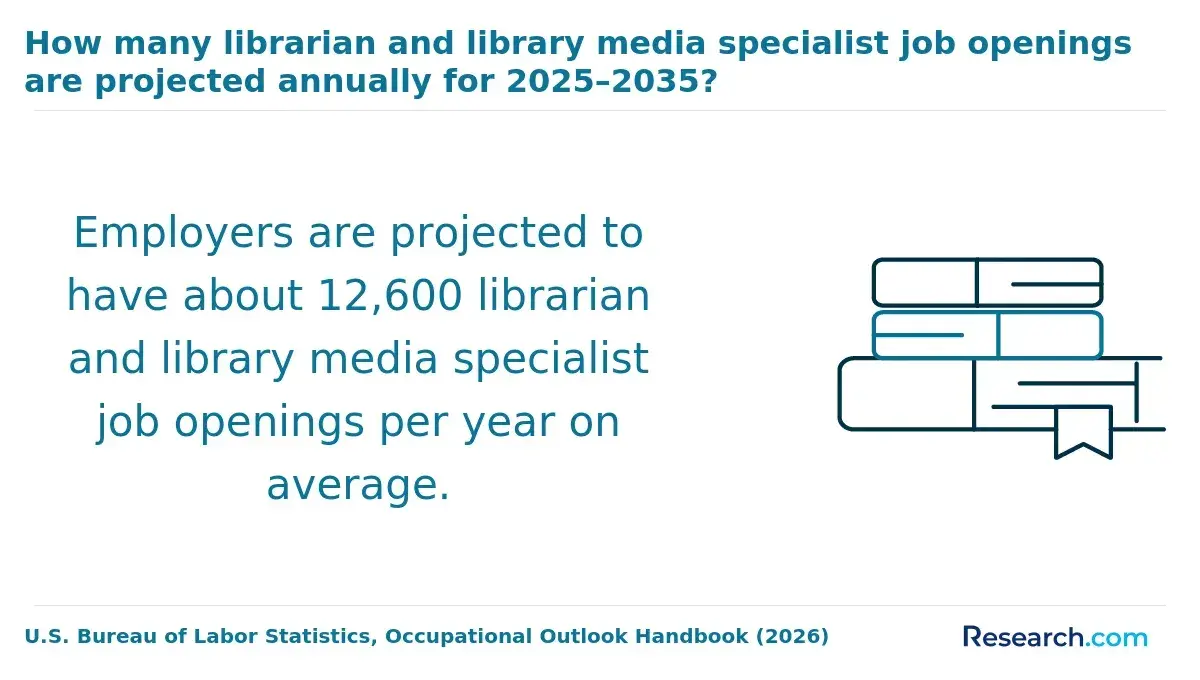
- BLS projects 2.6% employment growth for librarians and media collections specialists from 2025 to 2035. That projection is context for one related occupation, not a forecast for knowledge management jobs.
What are MLIS programs for knowledge management implementation teams?
These are library and information science master's programs whose curriculum can support work on organizational knowledge systems. Implementation teams may inventory existing information, design a taxonomy, a consistent set of categories, migrate content, configure a knowledge base, test whether people can find answers, and establish ownership for keeping information current.
An MLIS can contribute expertise in knowledge organization, metadata, search behavior, and access. Teammates may bring skills in software engineering, operations, training, or organizational change.
The degree might be called an MLIS, MLS, Master of Science in Library Science, or another institution-specific LIS title; judge the documented curriculum rather than assuming a title signals a particular specialization.
Start with the job you want. A role designing findable, trustworthy content may align well with an MLIS. A role centered on deploying enterprise software may call for more systems experience than a typical LIS curriculum supplies.
Why does ALA accreditation matter for knowledge management careers?
ALA accreditation applies to specific library and information studies master's programs, not to every degree awarded by an accredited university. It is especially worth checking if you want to keep professional librarian positions open alongside knowledge management work. Confirm the exact program and its current status in the ALA directory before applying.
Accreditation is not a certification in knowledge management. It does not verify that a school offers a named KM concentration, a particular elective, or a remote internship. Employers hiring for corporate knowledge roles may also consider applicants with other degrees and relevant implementation experience.
If you may later pursue school librarianship, investigate the applicable state's licensure or endorsement rules separately; an online MLIS does not automatically meet them. State-specific guidance, such as library jobs in Illinois requirements, can help frame questions to take to the state education authority.
What career paths can an MLIS prepare you for in knowledge management?
Knowledge management titles differ across employers. This comparison shows the work behind common titles and where an MLIS may contribute; none of the titles has a universal degree requirement.
| Potential role | Typical contribution | Preparation to demonstrate |
| Knowledge manager or specialist | Coordinates content governance, contributors, and findability improvements | Content audits, stakeholder interviews, and maintenance plans |
| Taxonomy or metadata specialist | Creates categories and descriptive rules that improve navigation and search | Taxonomy samples, metadata mappings, and usability tests |
| Information governance analyst | Helps define how information is classified, retained, and accessed | Policy analysis and work with records or compliance teams |
| Knowledge-base content strategist | Structures answers for employees or customers and manages updates | Content models, editorial workflows, and search-feedback analysis |
An MLIS may be required for a professional librarian vacancy, preferred for some information roles, or simply one relevant qualification among several for a corporate KM opening. Compare job postings in your intended setting before committing to a degree.
If you lack direct experience, a small, documented project can make your skills more visible; guidance on library science roles with portfolio expectations provides additional career context.
What do MLIS programs teach about knowledge management implementation?
The strongest preparation connects information design to the people who will use and maintain the system. Seek courses that let you practice organizing material, studying users, evaluating retrieval, and setting policies for access and updates. Course titles alone cannot show whether you will do this work.
For example, metadata coursework can teach you to describe content consistently; taxonomy work can make categories understandable across departments; and user research can reveal where employees' terminology differs from the terms in a system.
Privacy and information governance matter when a knowledge base contains sensitive material. AI-assisted search may also change how answers are surfaced, making source quality, permissions, and human review important implementation concerns.
Ask to see recent syllabi and project descriptions. A useful capstone or practicum would produce a defensible artifact, such as a content inventory, taxonomy proposal, migration mapping, or search evaluation, and explain the decisions behind it. Verify whether the opportunity is available to students in your format and whether an elective is offered often enough to fit your schedule.
Are online or campus-based MLIS programs better for knowledge management?
Neither format is inherently better. Online study may suit a working professional who can apply assignments to an existing workplace; campus study may make local partnerships and in-person collaboration easier. In either format, the deciding factor is access to the courses, feedback, and projects that build implementation skills.
Check whether classes are asynchronous or meet live, when required courses are offered, how group projects are scheduled, and whether a practicum needs an approved site. "Online" does not establish that every activity can be completed at any time or from any location.
Students comparing flexible pathways can use a competency based online library science masters overview as a starting point, then confirm the actual assessment and scheduling rules with each school.
What are the admission requirements for knowledge management MLIS programs?
Requirements vary by institution, so consult the current admissions page for each degree. Applicants should expect to document prior undergraduate study and may be asked for a statement of purpose, recommendations, a résumé, or additional materials. Do not assume that professional experience replaces a published degree requirement or that every program uses the same test policy.
Use your application to connect experience to the intended work. Examples could include organizing shared files, improving documentation, interviewing users, or coordinating a content migration. If your record is unusual or you hope to transfer graduate credit, request an individual policy review before applying; admission and transfer-credit decisions are school-specific.
How long do MLIS programs take and how much do they cost?
Time to completion depends on required credits, course sequencing, and how many courses you can take each term. A published minimum timeline may not reflect a part-time student's path or the timing of a desired elective or practicum. Ask an adviser to map a realistic term-by-term plan.
For a comparable cost estimate, multiply each program's required credits by the tuition rate that applies to you, then add mandatory fees and likely books, software, travel, or practicum expenses. Confirm whether online students receive the quoted rate. Published tuition is not the same as total attendance cost, personal out-of-pocket cost, or the amount financed through borrowing.
Compare that estimate with your current earnings and the qualifications in jobs you would actually seek. An affordable information science graduate degree is only a good-value choice if it also provides the coursework and applied experience you need. Check current aid terms and employer reimbursement rules rather than assuming either will cover your expenses.
What salaries can MLIS graduates earn in knowledge management roles?
There is no single salary figure for MLIS graduates working in knowledge management: titles, employers, locations, and prior experience vary. BLS reports a May 2025 median annual salary of $68,270 for librarians and media collections specialists. That occupational median is a reference point, not a KM salary estimate or a prediction of an individual graduate's earnings.
For a better comparison, collect salary ranges from postings for your target titles and location, then separate entry-level requirements from positions asking for substantial systems or management experience. When weighing tuition against possible earnings, account for what you already earn.
Discussions of affordable online librarian degree outcomes can provide context, but program-level outcomes should not be treated as guaranteed KM results.
What is the job outlook for knowledge management and information professionals?
BLS projects 2.6% growth in employment for librarians and media collections specialists from 2025 to 2035. Because knowledge management work appears under multiple job titles and occupational categories, that projection cannot be read as a KM-specific hiring forecast.
A more useful local signal is the mix of skills in current postings: look for repeated requests for content governance, taxonomy, search evaluation, stakeholder training, or particular platforms. If your target openings emphasize system configuration over information organization, plan for technical experience alongside or instead of an MLIS. Avoid treating an occupational growth projection as evidence that any one program will lead to a job.
Which certifications and standards support knowledge management implementation careers?
No single certification is universally required for knowledge management implementation. A platform credential can be useful when your target employers use that product, but its value is narrower than demonstrated ability to organize content and improve retrieval. Review actual job requirements before paying for an optional credential.
Standards and practices are most useful when tied to a project. Metadata schemas support consistent description and exchange; controlled vocabularies help people use terms consistently; records-retention rules address how long certain information should be kept. An MLIS project that explains why you chose a structure, how you tested it, and who will maintain it is stronger evidence than a list of standards without application.
Other Things You Should Know About Library Science Programs
Ask your employer for permission first. If the work is confidential, use a synthetic example and describe your methods and decisions without revealing internal content, users, or system details.
Start with the tools named in jobs you want. Learning how search, permissions, metadata, and content workflows operate is more transferable than assuming every employer uses the same platform.
Agree on measures before launch, such as whether users find correct answers, how often searches fail, and whether content owners complete reviews. Interpret those measures alongside user feedback rather than relying on page views alone.
Ownership depends on the organization. A sustainable plan identifies who approves content, who updates it, who manages access, and how users report errors; the implementation team should establish those responsibilities before handoff.
References
- Online Master of Science in Library and Information Science Curriculum | St. John's University Programs https://online.stjohns.edu/online-programs/mslis/curriculum
- MLIS Courses | Information School | University of Washington https://ischool.uw.edu/programs/mlis/curriculum/courses
- MLIS Program Requirements and Curriculum | umd.edu https://info.umd.edu/academics/masters-programs/master-of-library-and-information-science/curriculum-specializations/
- Program: Library and Information Science, MLIS - Pitt Catalog https://catalog.upp.pitt.edu/preview_program.php
- Library & Information Science, M.S. | St. John's University https://www.stjohns.edu/academics/programs/library-and-information-science-master-science
- MLIS Curriculum | Southern Connecticut State University https://inside.southernct.edu/information-and-library-science/mlis-curriculum
- MLIS Curriculum, Specialties & Courses | University of Arizona College of Information Science https://infosci.arizona.edu/ma-library-information-science/curriculum-specialties-courses
- Accreditation Frequently Asked Questions | ALA https://www.ala.org/educationcareers/accreditedprograms/faq