2027 MLIS Admissions for Applicants With a Nontraditional Grading System

Co-Founder and Chief Data Scientist
A transcript without a conventional GPA can make MLIS admission requirements difficult to interpret. It does not, by itself, rule out graduate study, but each school decides how to assess academic readiness. The decision matters financially as well as academically: the U.S. Bureau of Labor Statistics reports a May 2025 median annual wage of $68,270 for librarians and media collections specialists, not a guaranteed salary for MLIS graduates.
This guide helps applicants with pass-fail, narrative, or competency-based records identify suitable programs, prepare evidence, and ask admissions offices the right questions before applying.
Key Things You Should Know
- A missing GPA is not an automatic rejection: ask each program whether it accepts the transcript as issued, requires a credential evaluation, or conducts an individual review.
- Submit the institution's grading explanation alongside your transcript; a self-calculated GPA may not satisfy a published minimum-GPA rule.
- The BLS projects 2.6% employment growth for librarians and media collections specialists from 2025 to 2035. Weigh program cost and career fit alongside admission eligibility.
What is an MLIS program, and how do schools evaluate nontraditional grading systems?
A Master of Library and Information Science (MLIS) is a graduate degree preparing students for work such as reference services, information organization, digital collections, and library management. Related degrees may be called an MLS, Master of Science in Library Science, or Master of Information; the curriculum and accreditation status matter more than the exact title.
Admissions staff generally need to establish that an applicant completed the required prior degree and can succeed in graduate coursework. A conventional GPA makes one part of that review straightforward. With an alternative grading system, the transcript may establish completion but need accompanying information to show how performance was assessed. The distinctions below explain why applicants should not treat all nontraditional records alike.
| Transcript format | What it may establish | What may remain unclear |
| Pass-fail or credit-no credit | Course completion and credits earned | Performance within passing courses |
| Narrative evaluations | Instructor assessments of particular work and skills | How the institution summarizes performance across courses |
| Competency-based record | Demonstrated mastery of specified outcomes | How mastery levels relate to a program's GPA rule |
Schools may consider the transcript legend, an official grading policy, recommendations, written work, and relevant experience. That is an explanation of possible review methods - not a promise that a particular program will waive its requirements.
Can applicants with pass-fail or competency-based transcripts enter an MLIS program?
Yes, potentially. A pass-fail or competency-based bachelor's record does not automatically prevent admission to an MLIS program. Eligibility depends on the graduate school's degree requirements, the specific program's GPA policy, and whether reviewers can assess the applicant's preparation from the available evidence.
Distinguish an entire degree awarded under an alternative grading system from a few pass-fail courses on an otherwise graded transcript. The former may require a policy review; the latter may leave enough graded coursework for the school to calculate a GPA. Applicants considering a library science program for working adults should also check whether its admission process accommodates their prior transcript format; flexible course delivery does not establish flexible admission rules.
If the published policy specifies a minimum GPA but does not explain how ungraded degrees are handled, request an individual determination before paying an application fee. Professional experience may strengthen an application, but it should not be assumed to replace a required bachelor's degree.
What MLIS admission requirements apply when transcripts lack a standard GPA?
Typical applications ask for proof of a completed bachelor's degree, official transcripts, a statement of purpose, and recommendations; some request a résumé or writing sample. Requirements vary, including whether a GPA threshold applies to the entire degree, the final portion of undergraduate study, or graded courses only. An institution's general graduate-admission policy may also differ from its MLIS program's instructions.
Before applying, identify who makes the GPA-equivalency decision: the LIS program, the graduate school, or a designated credential evaluator. Ask whether the school accepts "GPA not available" on its application, calculates a GPA from graded courses, or needs official clarification from the awarding institution. Do not enter an estimated GPA simply to complete a form without the admissions office's instructions.
If an application portal requires a number your institution never issued, contact admissions before submission and keep its written response. That small step can prevent an inaccurate self-reported GPA from becoming a larger problem during transcript verification.
How should applicants document academic readiness for MLIS graduate study?
Show what your record demonstrates rather than apologizing for its format. In a brief statement, explain the grading system, identify substantial research or writing projects, and connect your preparation to the program's coursework. A focused example - such as analyzing sources for a research project or organizing a collection's descriptive information - is more useful than an unsupported claim that you "work well with information."
Choose recommenders who can assess graduate-level skills through direct observation: sustained writing, independent inquiry, collaboration, or careful work with users and information. A supervisor can speak to relevant professional performance, while an instructor may better explain academic work completed under narrative or competency-based assessment. Follow the program's rules on who may write letters.
A writing sample or portfolio can provide additional evidence when requested or permitted. Select work you can explain, respect confidentiality, and label your individual contribution to group projects. These materials supplement the official record; they do not change its grades or guarantee admission.
Do ALA-accredited MLIS programs accept applicants with alternative grading systems?
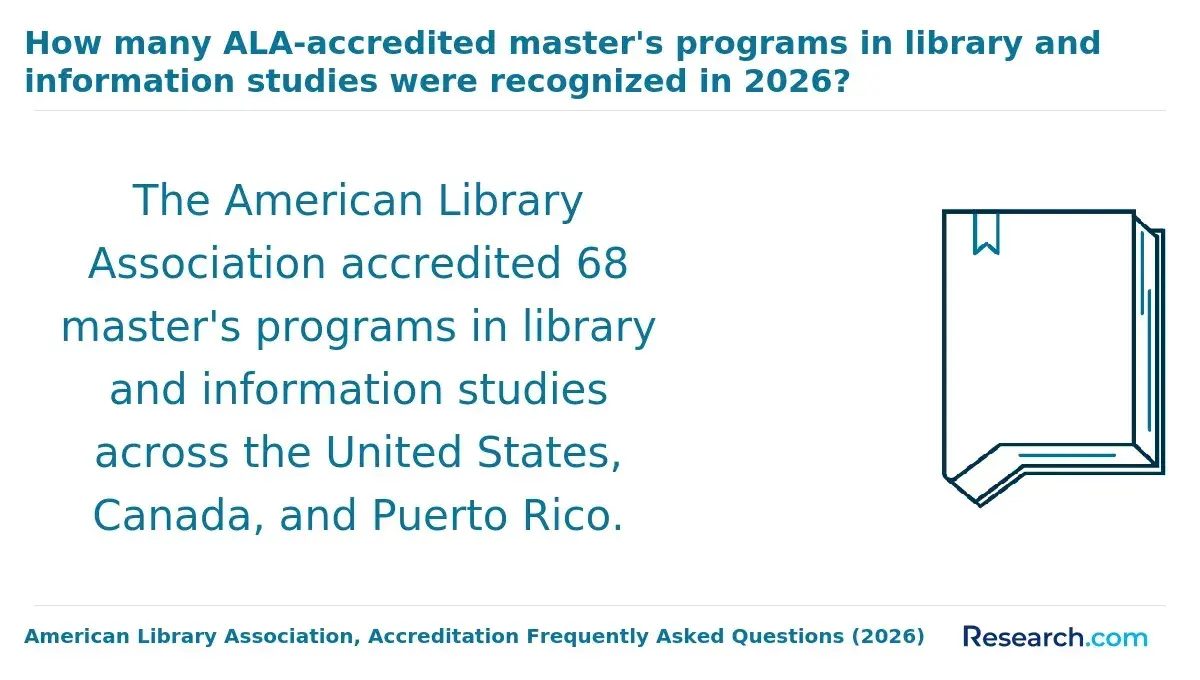
ALA accreditation does not impose a single admissions decision for every applicant with nontraditional grades. Individual universities set and administer their admission requirements. Consequently, an applicant should verify both that the specific master's program appears in the current American Library Association directory of accredited programs and that the school will review the transcript in question. Institutional accreditation alone is not the same as ALA program accreditation.
Ask each prospective program for a written answer about its GPA policy before assuming that accreditation implies acceptance or rejection. For a geographically focused search, resources on Illinois online MLIS options can help frame questions about programs and career goals, but confirm each program's current accreditation status and admissions rules directly with the institution and the ALA directory.
ALA accreditation also does not establish that an online option, particular elective, or practicum is available. Verify those features separately if they affect whether the program is worth applying to.
What documents explain a nontraditional transcript to an MLIS admissions committee?
The strongest explanation pairs official records with a short account of what those records mean. Requirements differ, so check whether a program wants documents uploaded with the application, sent directly by your institution, or supplied only after an initial review. The following materials address different gaps in an ungraded record:
- Official transcript: Confirms courses, credits or competencies, dates, and degree conferral.
- Official grading legend or policy: Defines passing, mastery, narrative evaluations, and whether the institution issues GPAs.
- Course descriptions or evaluation records: Provide context for substantial work if the transcript alone does not identify it and the program permits additional materials.
- Brief applicant explanation: Connects the official policy to your own record without assigning yourself unofficial letter grades.
Request missing policy documents from the registrar rather than relying on an old webpage or your own recollection. If the transcript is from outside the United States, ask whether the graduate school requires a particular credential evaluation or translation; do not purchase one before checking its instructions.
Should applicants with nontraditional grades submit test scores or supplementary coursework?
Submit test scores only when a program requires them or explicitly accepts them and they add useful evidence. A strong score cannot automatically override a degree or GPA requirement, and an unrequested score may not be considered. Check the current policy before paying for a test.
Supplementary graded coursework can make sense if several otherwise suitable programs say they need recent evidence of academic performance. A relevant research, writing, or information-organization course may be more persuasive than an unrelated class. Before enrolling, ask admissions whether undergraduate, graduate, or nondegree coursework would address its concern - and whether a specified minimum grade applies. Do not assume a course taken for admission will later transfer into the MLIS; graduate transfer-credit rules are separate.
If a program already accepts your institution's grading system and your evaluations document strong work, extra tuition and testing may offer little benefit. Get the school's advice first.
How do online and campus-based MLIS programs differ for these applicants?
The transcript-review question applies to both formats: an online MLIS is not inherently easier to enter, and campus attendance does not resolve a missing GPA. Compare the same admission policy, ALA accreditation status, curriculum, and total costs across formats. A list of top online MLIS programs can be a starting point, not a substitute for checking each school's current requirements.
Format matters after admission. Online courses may be asynchronous, meet live at scheduled times, or combine both approaches. Campus programs may offer easier access to local placements, while online students may need to arrange their own nearby practicum opportunities. Neither format guarantees a particular internship or course schedule.
For applicants who work full time, ask when required courses run, whether live attendance is mandatory, and whether a practicum can be completed locally. Choose the format that makes both the application and the actual degree requirements manageable.
How long does an MLIS take, and what does the degree cost?
Completion time depends on required credits, enrollment pace, course sequencing, and any practicum or capstone. A published accelerated route may demand a heavier course load than a working applicant can sustain. Compare the actual schedule behind one-year accelerated library programs with a part-time plan, and confirm whether required courses are available when you would need them.
Without a specific program and academic-year tuition schedule, a reliable total cannot be quoted. Estimate gross tuition by multiplying required credits by the applicable per-credit rate, then add mandatory fees, books and equipment, and any travel or placement expenses. Confirm whether an online rate applies to your residency status. An extra term caused by course sequencing can also change the total.
Separate gross program cost from what you would pay after confirmed employer support or awards, and from what you would borrow. Ask the financial aid office about eligibility and rules for your enrollment period, including any applicable federal-loan transition provisions. Neither admission nor a possible scholarship should be treated as secured funding.
What careers, salaries, and certifications can an MLIS degree lead to?
An MLIS can prepare graduates for public, academic, and special-library roles involving research assistance, instruction, collections, and information access. It can also support work in archives, metadata, records management, or digital preservation, although employers in those fields may accept other degrees and may value specialized experience. An applicant interested primarily in one adjacent function should compare MLIS coursework and applied opportunities with a relevant certificate or another graduate degree before committing.
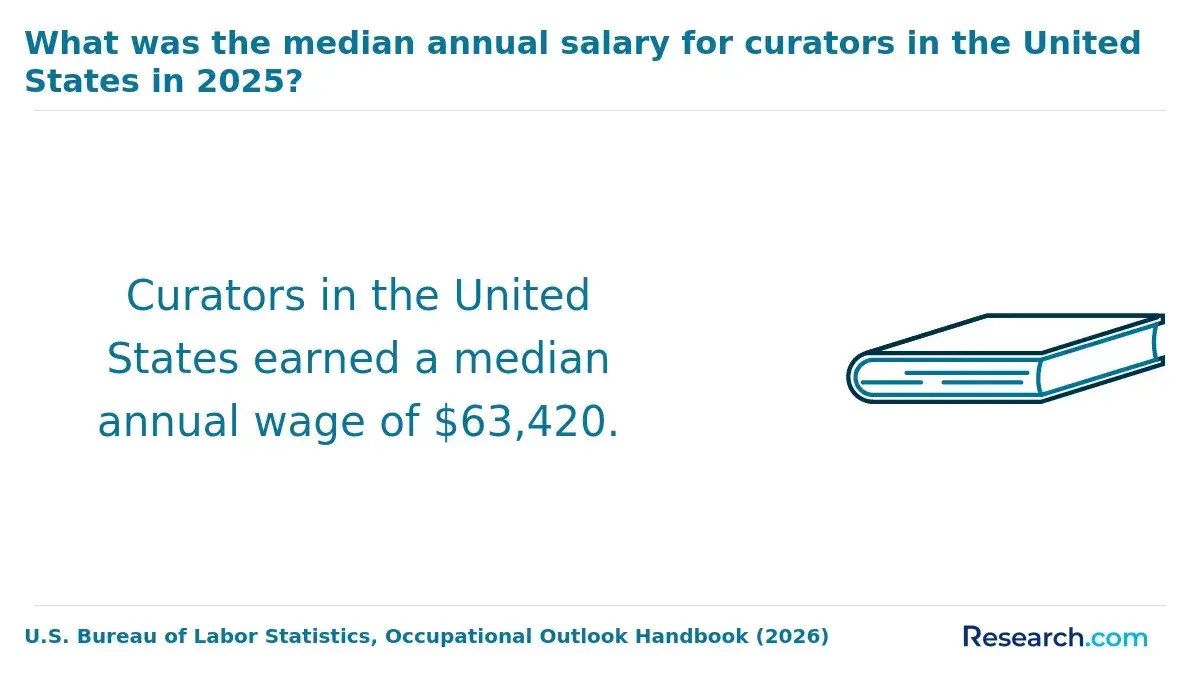
Pay depends on occupation, employer, location, and experience - not the degree alone. Alongside the librarian occupation's median wage noted earlier, the BLS reports a May 2025 median annual wage of $64,550 for archivists. That figure describes employed archivists across the occupation; it is not an entry-level offer or an MLIS graduate outcome. Explore library information science salary potential in light of the jobs you would actually seek and the amount you would need to borrow.
For school librarian positions, state licensure, certification, or endorsement requirements are distinct from ALA accreditation and vary by state. Verify the rules with the state education authority where you plan to work; an online MLIS does not automatically satisfy them. For other specialized roles, check individual job postings for additional qualifications rather than assuming one credential is universally required.
Other Things You Should Know About Library Science
Ask the graduate school how to document the connection between your current application name and the name on the official record. Follow its instructions for submitting any legal name-change documentation securely.
Some schools review applicants who are finishing a degree, but admission and enrollment conditions vary. Check whether the program accepts an in-progress transcript and when it requires proof of degree conferral.
Appeal or reconsideration policies are school-specific. Ask whether the institution offers a formal process, what grounds it accepts, and whether new academic evidence would be considered instead in a future application.
It depends on the university. Check the graduate admissions office's waiver criteria and deadline before submitting or paying for an application; eligibility for a waiver does not affect the academic review.
References
- Evaluation of Foreign Degrees - United States Department of State https://www.state.gov/global-community-liaison-office/family-member-employment/family-member-employment-in-the-d-c-area/evaluation-of-foreign-degrees
- Direct Assessment (Competency-Based) Programs | ed.gov http://www.ed.gov/laws-and-policy/higher-education-laws-and-policy/higher-education-policy/direct-assessment-competency-based-programs
- School-Determined Requirements | 2024-2025 Federal Student Aid Handbook https://fsapartners.ed.gov/knowledge-center/fsa-handbook/2024-2025/vol1/ch1-school-determined-requirements
- MLIS Admissions FAQ - UW Information School https://ischool.uw.edu/programs/mlis/admissions/resources/faq
- International Credential Evaluation Requirements | Information Technology Services https://graduate.louisville.edu/admission/international/evaluation/requirements
- How to Apply | Dominican University https://www.dom.edu/academics/grad-phd/library-and-information-science/mlis/how-apply
- Program: Library and Information Science, MLIS - Pitt Catalog https://catalog.upp.pitt.edu/preview_program.php
- Admissions - Master of Library and Information Science (MLIS) https://info.umd.edu/academics/masters-programs/master-of-library-and-information-science/admissions/
- Apply for MLIS Admission | Library and Information Science at Mizzou https://online.missouri.edu/degrees-programs/mu/education/library-and-information-science/mlis/admissions
- Accreditation Frequently Asked Questions | ALA https://www.ala.org/educationcareers/accreditedprograms/faq