2027 MLIS Programs With Saturday Synchronous Sessions: How to Compare the Schedule

Co-Founder and Chief Data Scientist
A Saturday class can make an MLIS possible alongside a weekday job - but only if the rest of the degree fits your calendar. Live sessions, weekday assignments, required practica, and courses offered in limited terms can change the picture. The U.S. Bureau of Labor Statistics projects 2.6% employment growth for librarians and media collections specialists from 2025 to 2035, making program fit and cost worth examining carefully. This guide shows working adults and other schedule-conscious applicants how to verify a Saturday timetable, compare online formats, and choose a program that supports their career goals.
Key Things You Should Know
- A Saturday synchronous course is not necessarily a Saturday-only degree; check required courses, practica, group work, and exams across the full program.
- Ask for a term-by-term schedule showing live-session times, time zones, attendance rules, and how often required courses run.
- The May 2025 median pay for librarians and media collections specialists was $68,270, but that occupational figure is not a graduate salary or a reason to ignore total program cost.
What are MLIS programs with Saturday synchronous sessions?
These are graduate library and information science programs in which students attend at least some classes live on Saturdays, usually online or in a hybrid format. "Synchronous" means meeting at a scheduled time with an instructor and classmates. A program may call its degree an MLIS, MLS, Master of Science in Library Science, or another LIS-related title; the degree name alone does not establish its timetable.
The important distinction is between a Saturday section and a degree you can complete on a Saturday-friendly schedule. A required course might meet on Saturday one term and on a weekday the next. A recorded lecture might be available after a live meeting without excusing attendance. Published delivery formats do not, by themselves, establish which sections will run in future terms.
Start with the program's current course schedule, then ask an adviser to map every required course through graduation for your intended start term. If you are still comparing degree types, a library information studies program overview can help you clarify which credentials fit your goal; confirm scheduling with the institution itself.
How do Saturday synchronous MLIS programs compare with asynchronous online programs?
Saturday live classes offer a predictable meeting time and immediate discussion. Asynchronous classes generally let students access materials and contribute within deadlines, but they may still require group coordination or occasional scheduled activities. Neither format means the coursework happens only when it is convenient.
The comparison below focuses on commitments that can affect a working student's week. Individual course rules may differ from the program's general description.
| Scheduling factor | Saturday synchronous | Asynchronous online |
| Class attendance | Live participation at a published time may be required | Usually completed within weekly or module deadlines |
| Immediate interaction | Discussion and feedback during the session | Often occurs through forums, messages, or arranged meetings |
| Workweek flexibility | Protects some weekdays, but assignments remain | More control over study hours, but deadlines remain |
| Potential conflict | Weekend work, caregiving, travel, or time-zone differences | Self-directed pacing and possible group-meeting conflicts |
A live format may suit someone who learns best through scheduled discussion and can reliably protect Saturdays. An asynchronous format may suit someone whose shifts or caregiving arrangements change weekly. Compare actual attendance policies, not marketing labels: ask whether recordings count for attendance, how absences are handled, and whether collaborative work requires meetings outside class. You can use lists of online librarian programs with strong outcomes to identify options, then verify the current delivery of each required course.
How can you verify an MLIS program's ALA accreditation?
Check the specific master's program in the American Library Association's current directory of accredited programs. Match the institution and degree to the credential you intend to earn, and review any status information. Institutional accreditation and ALA accreditation are different: a university's institutional standing does not establish that its LIS master's program is ALA-accredited.
Accreditation also does not certify that a Saturday section, elective, concentration, or internship will be available when you need it. After checking the directory, ask the program which degree and delivery options its accreditation covers and request the current academic catalog and upcoming course schedule. If an employer or licensing authority specifies an accredited degree, confirm its exact requirement before applying.
What online and campus formats do MLIS programs offer?
MLIS programs may offer fully online, campus-based, or hybrid study. Within an online degree, individual courses can be live, asynchronous, or a combination. Hybrid programs may require campus visits, while an online course may include a local field placement. Do not infer "no travel" from "online."
For a Saturday-dependent applicant, the useful comparison is the entire path to graduation, not the format of an introductory course. Ask whether all required courses can be taken in your preferred format, whether an in-person orientation or residency is required, and whether a practicum site must operate during weekday hours. Check which time zone governs live meetings and how daylight saving time affects you. Accessibility needs also matter: request information about captions, recordings, participation tools, and the process for arranging accommodations.
What coursework do MLIS programs typically include?
Core study commonly addresses information organization, reference or information services, research, collections, and the management of information organizations. Electives may develop skills in areas such as archives, metadata, digital collections, youth services, or research data support. A catalog listing shows that a course exists; it does not prove that the course runs regularly or on Saturdays.
Match coursework to the work you want to do. A prospective public librarian might prioritize community services and collection development, while someone interested in digital collections might look for metadata and preservation work with a tangible project. Distinguish an officially named concentration from a set of relevant electives. Ask when those electives last ran, when they are expected to run again, and whether their prerequisites fit your planned sequence. A portfolio project can demonstrate applied skill, but neither a course nor a concentration guarantees a job.
What are the admission requirements for MLIS programs?
Requirements vary by institution but commonly include a bachelor's degree, transcripts, an application, and a statement of purpose; some programs request recommendations, a résumé, or additional materials. Check the current policy for your intended term rather than assuming that another school's requirements apply. If you need a Saturday schedule, ask admissions when you can obtain an individualized course plan - not merely whether the program is online.
Applicants with previous graduate coursework should ask whether credits can be accepted toward the specific MLIS and whether transfer courses replace required courses or count only as electives. Undergraduate transfer-credit policies are not the same as graduate transfer policies. Resources about how to transfer college credits to library degree programs can provide questions to raise, but the receiving graduate program makes the decision. Accepted credit may reduce tuition without shortening the degree if remaining courses follow a fixed sequence.
How long do Saturday-schedule MLIS programs take to complete?
Completion time depends on required credits, the number of courses you take per term, course rotation, and any practicum or culminating requirement. A Saturday-friendly program can take longer than expected if a required live section runs infrequently or if its prerequisites must be completed in order. Do not estimate a graduation date by dividing total credits by your preferred term load alone.
Before committing, request a plan based on your intended start term and realistic weekly availability. The following checks reveal delays that a general program-length estimate can hide:
- Identify every required course and prerequisite, including the term and format in which each is expected to be offered.
- Confirm whether summer enrollment is necessary and whether Saturday sections are planned for those terms.
- Ask whether the practicum, capstone, or final assessment requires weekday hours or a separate term.
- Find out what happens to your sequence if you miss a live session or must skip a term.
Treat the resulting plan as an advising estimate, not a guarantee that future sections cannot change.
How much do MLIS programs with Saturday classes cost?
Saturday delivery does not establish a particular price. To compare programs fairly, multiply the tuition rate that applies to you by required credits, then add mandatory fees and likely attendance expenses. Confirm whether online students receive a different rate from campus students and whether residency affects that rate.
This cost framework separates published charges from expenses that depend on your schedule. It helps you avoid treating a tuition quote as the full cost of attendance.
| Cost category | What to verify | Why Saturday students should care |
| Tuition | Applicable per-credit or per-term rate and required credits | Extra terms may change the amount paid |
| Mandatory fees | Program, technology, and term-based charges | Term-based fees can recur if sequencing extends enrollment |
| Materials and equipment | Books, software, and computer requirements | Live participation may require reliable equipment and internet access |
| Travel and fieldwork | Campus visits and practicum-related expenses | A placement may require travel or time away from paid work |
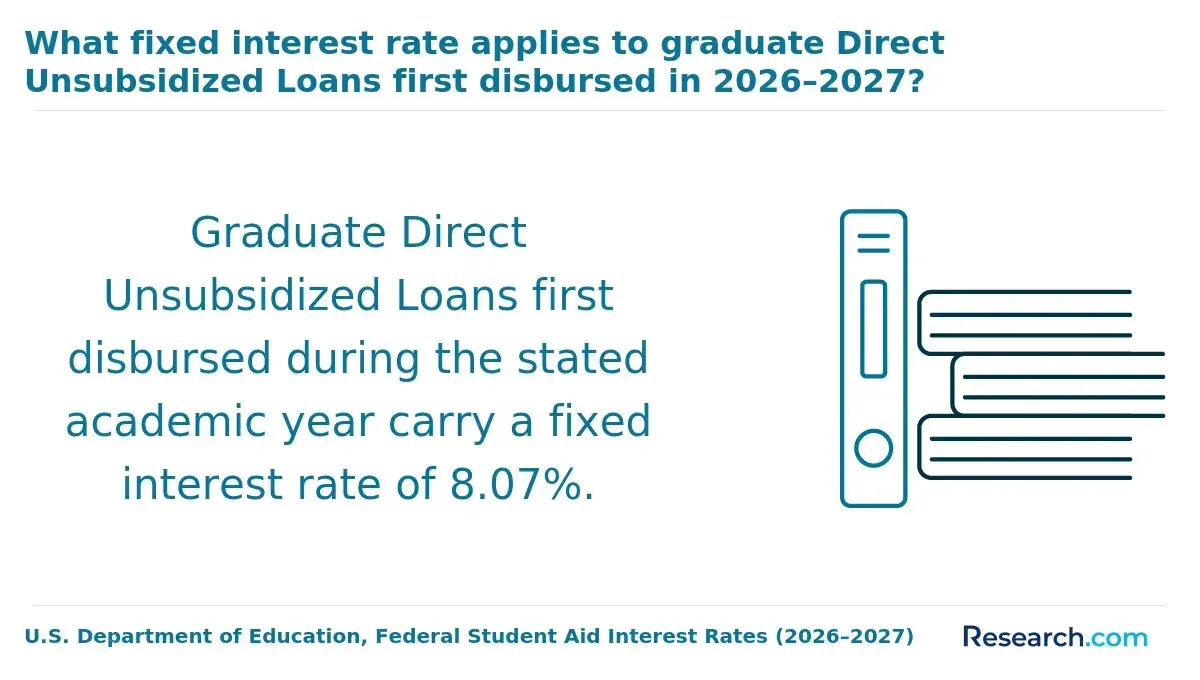
Ask the financial aid office about eligibility for your planned enrollment load and term, rather than assuming all part-time arrangements qualify for the same aid. Employer reimbursement or scholarships can lower your out-of-pocket cost if you qualify, while loans change when you pay - not the gross price. When comparing library graduate programs that pay well, separate occupational earnings data from a school's verified graduate outcomes and consider what you would give up in work hours to attend.
What careers and salaries can an MLIS degree lead to?
An MLIS can prepare applicants for professional roles in public, academic, school, and specialized libraries, as well as some positions in archives and information management. Requirements vary: a librarian posting may seek an ALA-accredited master's, while an adjacent metadata or records role may accept other education and experience. Library technician roles are distinct from professional librarian positions and do not universally require an MLIS.
The BLS reports a May 2025 median annual wage of $68,270 for librarians and media collections specialists. That is a national occupational midpoint across workers, not an entry-level offer or an outcome attributable to a particular degree. Compare local job postings with your current earnings, intended work setting, and total education cost. If you are targeting school, law, medical, or other specialized roles, investigate position-specific qualifications and the library degree career barriers that could affect your path.
Use the degree plan to build evidence of relevant work: for example, a reference-service project for public librarianship or a documented metadata project for digital collections. If your goal is an information job that does not require an MLIS, compare the degree with relevant experience, a certificate, or another graduate program before borrowing to enroll.
What licensing and certifications do library professionals need?
There is no single license required for every U.S. librarian. Requirements depend on the position and jurisdiction. School librarian jobs may require a state-issued teaching license, school library certification, or an endorsement; an online MLIS does not automatically meet every state's rules. Check the state education authority for the state where you intend to work and ask the university how its preparation pathway aligns with those requirements.
Public library positions can also have state or local credential rules, while specialized employers may prefer subject knowledge, experience, or an additional credential. Those preferences should not be mistaken for universal legal requirements. If licensure is part of your goal, confirm required supervised experiences early: their hours and site rules may matter more to your Saturday schedule than the classroom timetable.
Other Things You Should Know About Library Science
Possibly, if your employer permits it and you have a private, reliable place to participate. Check workplace policies and whether class discussions involve material you should not share on a work network.
Ask the program about alternative sections and its accommodation process before enrolling. Do not assume that a recording or a future section will be available.
Yes. Library assistant, technician, volunteer, or related information-service work can help you assess the daily tasks and speak with professionals about local hiring requirements. The experience does not automatically replace a degree required for a particular job.
If the program can connect you with willing students, ask how reliably live classes fit around work and how much coordination happens outside scheduled meetings. Their experiences add useful context, but verify current policies and upcoming sections with the university.
References
- Independent Study Frequently Asked Questions | ca.gov https://www.cde.ca.gov/sp/eo/is/faq.asp
- U.S. Time Zones | navy.mil https://aa.usno.navy.mil/faq/us_tzones
- Academic Years, Academic Calendars, Payment Periods, and Disbursements | 2025-2026 Federal Student Aid Handbook https://fsapartners.ed.gov/knowledge-center/fsa-handbook/2025-2026/vol3/ch1-academic-years-academic-calendars-payment-periods-and-disbursements
- Mode of Instruction - Queens College - CUNY https://www.qc.cuny.edu/cetll/mode-of-instruction/
- Course Modes & Definitions - Office of the University Registrar https://registrar.washington.edu/classrooms/course-modes/
- What's the Difference Between Asynchronous and Synchronous Learning? | Ohio State Online https://online.osu.edu/content-hub/blogs/whats-the-difference-between-asynchronous-and-synchronous-learning/
- The difference between a synchronous and an asynchronous class | Boise State Online https://www.boisestate.edu/online/2024/10/25/the-difference-between-a-synchronous-and-an-asynchronous-class/
- Approved Fieldwork Site Application Process | The University of New Mexico https://coehs.unm.edu/departments-programs/ifce/counselor-education/fieldwork.html
- Time Zones and Due Dates in myLesley https://support.lesley.edu/support/solutions/articles/4000209122-time-zones-and-due-dates-in-mylesley
- Learning Modalities | Golden Gate University https://ggu.edu/learning-modalities/