2027 MLIS Admissions When You Have Multiple Transfer Transcripts

Co-Founder and Chief Data Scientist
A bachelor's transcript may show the credits you transferred, but it may not satisfy an MLIS program's request for records from every college you attended. That distinction matters when you are gathering documents, explaining grades, and estimating whether previous coursework will shorten your degree.
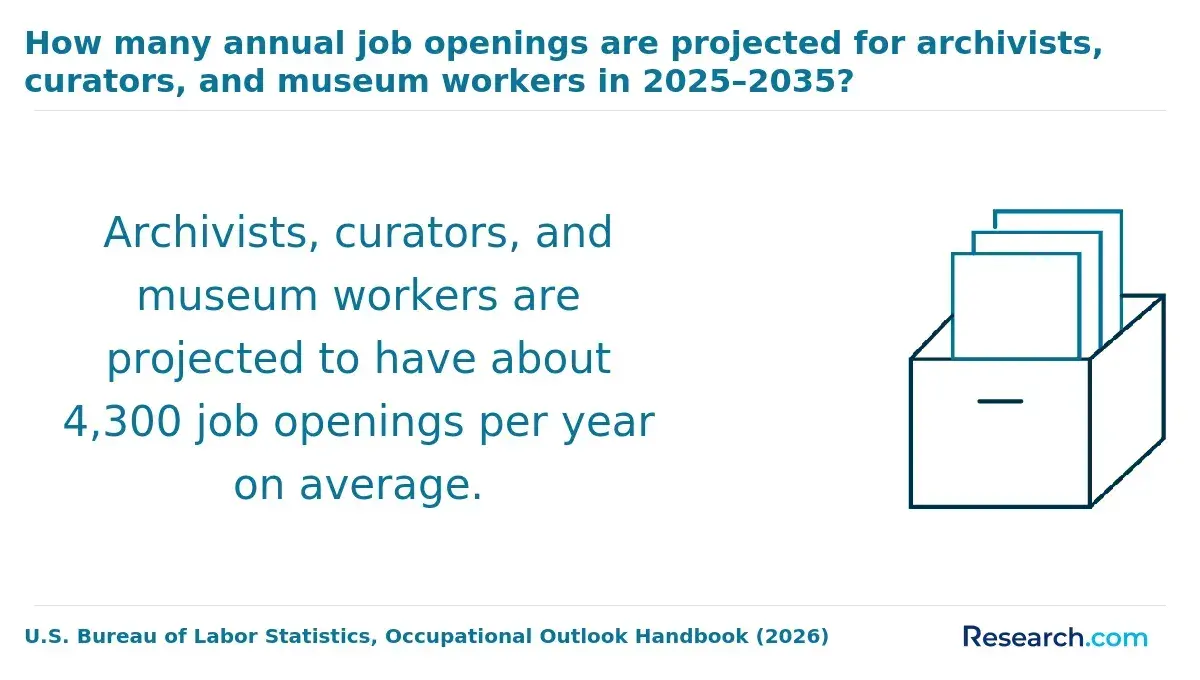
The U.S. Bureau of Labor Statistics projects 2.6% employment growth for librarians and media collections specialists from 2025 to 2035, making program fit and cost worth evaluating carefully. This guide helps applicants with multiple transcripts identify what to submit, what credit may count, and which questions to settle before paying an application fee.
Key Things You Should Know
- Expect to identify every college attended, even when another institution accepted its credits. Ask each MLIS program whether it requires an official transcript from each one.
- Undergraduate transfer credits may help establish your admission eligibility, but they ordinarily do not reduce graduate MLIS requirements. Ask separately about graduate-level transfer or waiver policies.
- Compare transcript requirements, accreditation, total cost, and completion rules before applying. A faster schedule does not necessarily mean fewer required credits.
What transcripts do MLIS programs require from applicants with multiple colleges?
Many graduate admissions offices ask applicants to disclose every postsecondary institution attended and submit a transcript from each, including colleges where courses did not produce a degree.
Some initially accept uploaded copies and request official records later; others require official transcripts earlier. Follow the specific program's instructions rather than assuming your degree-granting university's transcript is enough.
A receiving university's transcript often lists transfer hours without the original course grades or full course history. Admissions staff may therefore need the issuing institution's record to evaluate prerequisites, academic standing, or a minimum GPA. Requirements can also differ for dual-enrollment courses, study at a community college, or coursework taken after your bachelor's degree.
Before ordering records, make a school-by-school inventory from your academic history. Ask admissions whether it needs transcripts for institutions where you withdrew, earned no transferable credit, or attended under a different name, and whether it accepts electronic delivery directly from the issuing institution.
If an old record is difficult to obtain, contact admissions before the deadline; do not silently leave the institution off your application.
How do MLIS programs evaluate transfer credits from different institutions?
Admission review and graduate degree credit are separate decisions. An MLIS program may consider your entire undergraduate history when deciding whether you qualify, while counting only approved graduate coursework toward its own degree. Credit shown as transferred on your bachelor's transcript is not automatically MLIS transfer credit.
The distinction below helps you ask the right office the right question. Actual credit decisions depend on the receiving program's published policy and individual review.
| Previous study | Possible role in MLIS review | What to verify |
| Undergraduate courses from multiple colleges | Evidence of completed bachelor's requirements, grades, or relevant preparation | Which original transcripts are required and how GPA is calculated |
| Graduate LIS coursework taken elsewhere | Potential degree credit if approved | Credit limits, grades, recency, course equivalence, and accreditation rules |
| Other graduate or professional coursework | Possible elective credit or a basis for a course waiver, depending on policy | Whether approval reduces required credits or only changes course selection |
For a prior graduate course, be ready to provide its syllabus as well as a transcript. Ask whether transfer credit must be approved before enrollment and whether a waived core course must be replaced with an elective.
If you are considering an accelerated accredited MLIS, confirm the actual credit requirement and course sequence: acceleration through a heavier course load is different from receiving transfer credit.
How can you apply to an MLIS program with a complicated academic history?
A complicated record is easier to review when your application is complete and your explanation is specific. A change of major, a low-grade term, or time away from school does not have one universal admissions outcome; the program decides how it weighs the record under its policies.
Use this sequence to resolve document problems before you submit applications or incur avoidable transcript fees.
- List every institution attended, attendance dates, credentials earned, and any name under which records were issued.
- Read each target program's transcript and GPA instructions, noting when unofficial and official records are due.
- Ask admissions about missing records, repeated courses, academic renewal, or conflicting transfer-credit entries before the deadline.
- Use an optional statement, if permitted, to explain material circumstances briefly and show subsequent academic or professional preparation.
- Keep copies of written policy answers, submission confirmations, and any graduate-credit evaluation.
If a published threshold appears to rule you out, ask whether the program offers an individual review or another eligible route; neither should be assumed.
Guidance on MLIS programs for nontraditional students can help frame that conversation, but the institution must confirm its current requirements. Library work or other experience may strengthen an application, but it does not automatically replace a required bachelor's degree.
Does MLIS accreditation affect admission, transfer credit, or librarian eligibility?
The American Library Association (ALA) accredits specific master's programs in library and information studies, not every degree offered by a university. A university's institutional accreditation does not establish that its MLIS, MLS, Master of Science in Library Science, or differently named LIS degree is ALA-accredited. Check the specific program and its current status in the ALA directory.
ALA accreditation can matter for jobs that require or prefer a degree from an accredited program. It does not set one universal admissions rule or require programs to accept transfer courses from one another. Ask the receiving program whether a previous course's institution or program accreditation affects its credit decision.
School librarian eligibility is a separate question. States set their own certification, licensure, or endorsement rules. Before selecting an MLIS compare its preparation pathway with the requirements of the state where you intend to work, using that state's education authority. Accreditation alone does not establish eligibility for every school librarian position.
What are the admission requirements for accredited MLIS programs?
Typically, applicants need a completed bachelor's degree and the materials specified by the graduate school and LIS program. These may include transcripts, a statement of purpose, recommendations, a résumé, and evidence of English proficiency where applicable.
GPA thresholds, test policies, application deadlines, and rules for a degree still in progress vary; check the current instructions for each program rather than relying on a general MLIS checklist.
For applicants with multiple colleges, two questions deserve particular attention: Does the program calculate eligibility using the degree-granting institution's GPA, all undergraduate coursework, or another measure? And must every original transcript arrive before review begins? Request a written answer if the published policy does not address your record.
Relevant library, archive, teaching, research, or technology experience can give your application useful context, but its weight is discretionary unless the program states otherwise. If you do not yet meet a formal requirement, ask whether later entry, additional qualifying coursework, or another documented pathway is available before applying.
Are online and campus-based MLIS programs equally suitable for transfer students?
Either format can work for someone with multiple transcripts. Delivery format does not itself determine which records admissions requires or whether graduate credits transfer. The better choice depends on how the program reviews prior coursework, schedules required classes, and provides access to needed experience.
Online study may reduce travel, but it does not necessarily mean self-paced classes, remote practica, or courses offered every term. Campus study may offer easier access to local placements while requiring a workable commute.
Working applicants considering an evening online library science program should verify live-session times, time zones, residency requirements, and the frequency of required courses directly with the school.
Ask both formats the same completion question: If any prior graduate courses are approved, which remaining requirements can you take next, and when? A program that accepts credit on paper may still take longer if a required course or practicum is available only at a particular point in its sequence.
What coursework and specializations are offered in MLIS programs?
MLIS curricula commonly address the organization of information, reference and user services, research methods, information technology, and management, though requirements differ.
Electives may support interests such as archives, digital collections, metadata, or school librarianship. A relevant elective is not the same as a formally named concentration, and a catalog listing does not guarantee that a course will run when you need it.
Previous undergraduate study can inform your elective choices even when it cannot reduce your MLIS credits. For example, a history background may support archival work, while computing experience may be useful in metadata or digital preservation projects.
Compare archives and digital library degrees against your intended work, then check each program's actual course requirements, recent scheduling, and applied-learning options.
If you hope to transfer graduate coursework, obtain a course-by-course assessment before assuming it satisfies a core requirement or specialization. If the goal is a school library role, prioritize a pathway that meets your state's preparation rules over electives that merely sound relevant.
How long does an MLIS take, and what does the degree cost?
Completion time depends on required credits, enrollment pace, course rotation, and any approved graduate transfer credit, not on the number of undergraduate colleges you attended. Ask for a tentative degree plan that includes the next available offering of each required course. This is more useful than an advertised minimum completion time when you need a particular schedule.
To compare costs, multiply the published tuition per credit by the credits you would actually need, then add mandatory fees and likely books, equipment, travel, and practicum expenses.
Check the applicable academic year, residency classification, and online tuition rules. An affordable information science graduate degree by per-credit price may cost more overall if it requires additional credits or terms.
Keep three figures separate: the program's estimated total cost, what you can pay from savings or confirmed support, and what you may need to borrow. Scholarships, employer assistance, and federal aid are subject to eligibility and current terms; confirm details with the school's financial aid office. Do not budget for transfer credit until it has been approved in writing.
What librarian careers and salaries can an MLIS degree lead to?
An MLIS can prepare applicants for professional roles in public, academic, school, and special libraries, depending on the position and any additional requirements.
Work may involve reference and information literacy instruction, collection development, community services, metadata, or digital collections. School roles can require state credentials; specialized employers may prefer subject expertise or relevant experience.
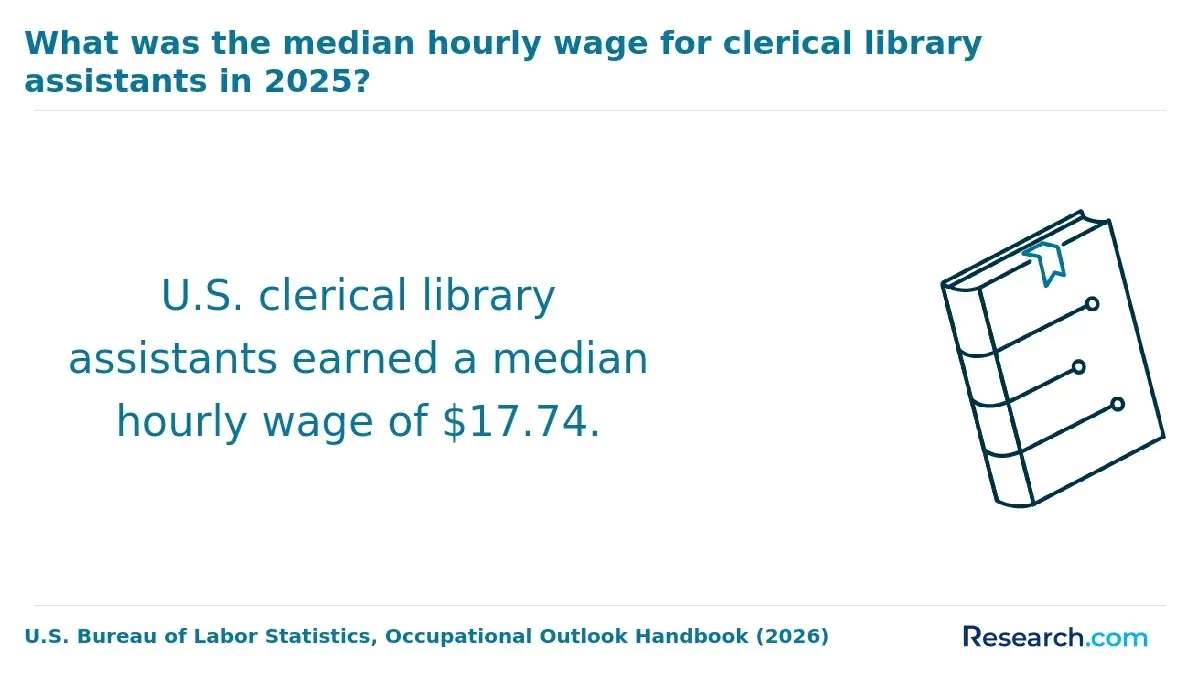
The U.S. Bureau of Labor Statistics reports a May 2025 median annual salary of $68,270 for librarians and media collections specialists. That is an occupation-wide midpoint, not a starting salary or a predicted outcome from a particular MLIS program. Compare local job postings and their stated degree requirements with your likely total education cost before deciding to enroll.
Not every adjacent information job requires an MLIS. Library technician positions, for example, are distinct from professional librarian roles, while some archives, records, or technology positions consider other degrees and experience. If your goal is narrow, review actual job requirements before choosing a full master's over targeted coursework or work experience.
What is the job outlook for librarians and information professionals?
BLS projects 2.6% employment growth for librarians and media collections specialists from 2025 to 2035. That modest occupation-wide projection is a reason to assess the positions you want, not a forecast of openings in your location or of your personal prospects. Hiring conditions differ across library settings and specialties.
As you compare programs, look for opportunities to demonstrate skills employers request: serving users, organizing and making information discoverable, supporting accessible digital collections, and handling information responsibly.
An approved internship, relevant job, or documented project may help you show those skills, but none guarantees employment. The strongest admissions decision connects the degree's verified curriculum and cost to specific roles you would realistically pursue.
Other Things You Should Know About Library Science Programs
Look for the institution's designated records custodian through the relevant state higher education agency or the school's former accreditor. Tell the MLIS admissions office if access is delayed, and ask what documentation it will accept while you pursue the official record.
Exam credit is generally recorded differently from coursework taken at another college. Check whether the MLIS application requests separate exam documentation; do not assume an exam credit entry changes its rules for transcripts from institutions you attended.
Ask each program whether it requires a credential evaluation, a translation, original-language records, or a particular document-delivery method. These requirements vary, so arrange any required evaluation early.
List prior names where the application requests them and ask admissions how to match those records to your file. Follow the school's instructions for any supporting documentation rather than altering a transcript yourself.
References
- Evaluation of Foreign Degrees - United States Department of State https://www.state.gov/global-community-liaison-office/family-member-employment/family-member-employment-in-the-d-c-area/evaluation-of-foreign-degrees
- Closed Institutions | Department of Education https://www.pa.gov/agencies/education/programs-and-services/instruction/postsecondary-and-adult-education/closed-institutions
- Online MLIS Application Requirements | DEN-EDU https://morgridgeonline.du.edu/online-mlis-program/admissions/requirements/
- MLIS Admissions FAQ - UW Information School https://ischool.uw.edu/programs/mlis/admissions/resources/faq
- MLIS Admissions & Cost | College of Information Science https://infosci.arizona.edu/ma-library-information-science/admissions-cost
- Admissions | Wayne State University https://sis.wayne.edu/admissions
- Admissions - Master of Library and Information Science (MLIS) https://info.umd.edu/academics/masters-programs/master-of-library-and-information-science/admissions/
- Master of Library and Information Science - MLIS | St. Catherine University Academic Catalog https://catalog.stkate.edu/graduate/labl/library-information-science/mlis/
- Accreditation Frequently Asked Questions | ALA https://www.ala.org/educationcareers/accreditedprograms/faq