2027 MLIS Programs With Practicum Credit for Current Library Employees

Co-Founder and Chief Data Scientist
If you already work in a library, an MLIS practicum could let you build professional skills without finding a second workplace. But enrollment alone does not make your regular job eligible for academic credit. This guide explains how to identify programs that may approve your workplace, what a qualifying project usually needs, and how to compare scheduling and costs.
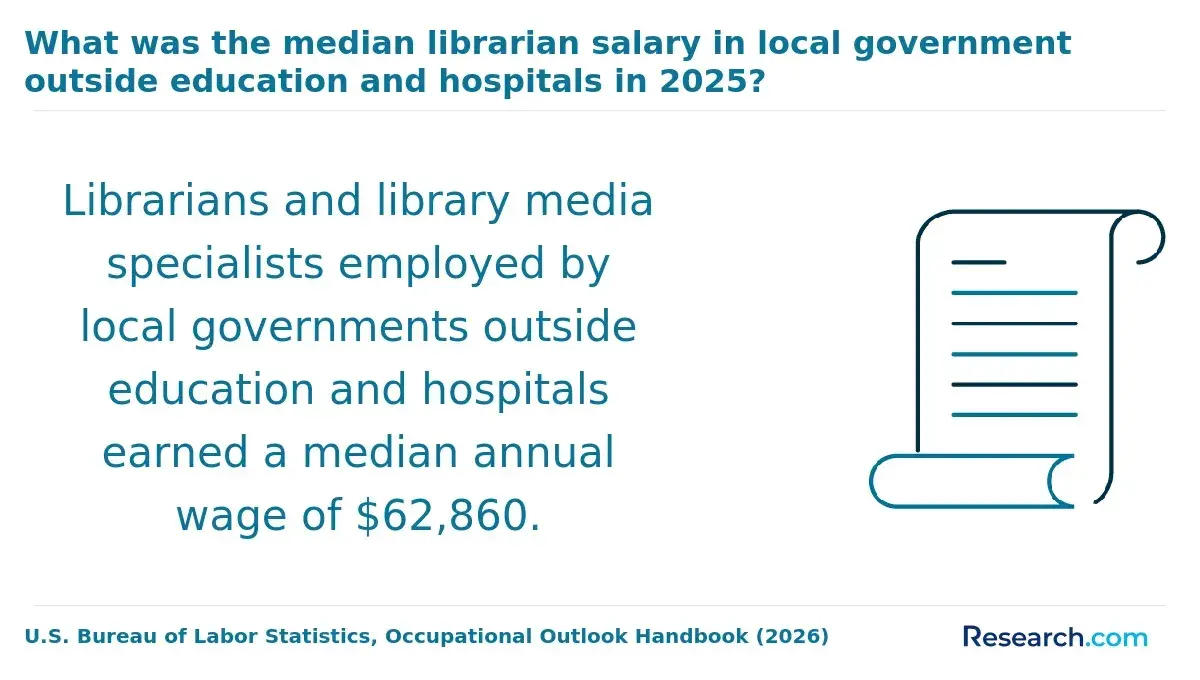
The distinction matters for career planning, librarians and media collections specialists had a median annual wage of $68,270 in May 2025, according to the U.S. Bureau of Labor Statistics, but that occupational figure is not a promise of advancement.
Key Things You Should Know
- Current library employees may be able to complete an MLIS practicum at work, but approval typically depends on a new learning assignment, qualified supervision, and the program's rules, not employment status alone.
- Confirm the specific master's program's ALA accreditation separately from its workplace-credit policy; accreditation does not establish that an employee's existing duties qualify.
- Compare the full degree cost and the practicum's effect on your schedule, not just tuition: a workplace placement may reduce travel while still requiring supervised hours and work beyond regular duties.
What are MLIS practicum-credit programs for current library employees?
An MLIS practicum is supervised, credit-bearing fieldwork assessed as part of a master's degree. Some programs call a similar experience an internship or field experience; the name alone does not tell you whether an existing employee can use their workplace. Unlike credit for prior experience, practicum credit normally depends on work completed under an approved learning plan during enrollment.
For a library assistant, that might mean planning an information-literacy session, developing metadata for a digital collection, or evaluating an accessibility improvement rather than simply repeating circulation-desk shifts. The proposed work should connect to course learning outcomes and create something an instructor and site supervisor can evaluate. Ask the program whether paid hours can count, whether practicum activities may occur during your regular shift, and whether your employer can accommodate the assignment.
Which MLIS programs let library employees earn practicum credit at work?
There is no reliable blanket list: approval can vary by program, course, supervisor, project, and even an individual student's current duties. Without a current, explicit policy confirming that existing employees may use their own workplace, a school should not be treated as offering this option. A program's statement that it offers internships is not enough.
The distinctions below help you interpret program descriptions before requesting a decision about your own position. They describe possible policies, not verified promises by particular universities.
| Published or proposed option | What it establishes | What still needs confirmation |
| Practicum or internship at an approved site | Fieldwork is available | Whether an employee's existing workplace is eligible |
| Workplace placement permitted | Current employment is not automatically disqualifying | Whether your duties, project, and supervisor qualify |
| Practicum waiver or alternative | Another route may satisfy a degree requirement | Whether it awards academic credit and how it affects graduation requirements |
Start with the current academic catalog and fieldwork handbook, then ask the practicum coordinator for written confirmation of the policy and approval process. If the school cannot yet assess your proposed project, request its learning-plan template and supervisor criteria. That produces a more useful answer than asking whether the program "accepts work experience."
How does ALA accreditation affect MLIS programs with practicum credit?
ALA accreditation applies to a specific library and information studies master's program, not automatically to every graduate degree at its university. Check the current ALA directory for the exact degree you intend to enter, whether it is called an MLIS, MLS, Master of Science in Library Science, or another institution-specific name. Institutional accreditation is a separate consideration.
ALA accreditation can matter for positions whose employers require or prefer an ALA-accredited master's. It does not certify that a program offers a practicum, that an employee can complete one at work, or that the degree meets every professional licensing requirement. If your goal is a school library position, check the applicable state education authority for certification or endorsement rules before choosing courses or a placement. State-specific guidance, such as Illinois librarian education requirements, can provide context, but the relevant authority determines current school-credential requirements.
What practicum options do online and campus-based MLIS programs offer?
Online coursework does not necessarily mean a remote practicum. A student might take classes online and complete supervised work at a local library; a campus-based student might also need to arrange a separate site. The useful comparison is where the fieldwork happens, when it happens, and who can supervise it.
These format differences can determine whether a current employee can keep their usual schedule while meeting fieldwork requirements.
| Arrangement | Potential advantage | Constraint to check |
| Online courses; practicum at current library | No separate commute to a placement | Approval of new duties and time for supervision |
| Online courses; practicum at another site | Experience in a new setting | Travel, shift conflicts, and site availability |
| Campus courses; practicum at current library | Existing workplace relationship | Class meetings alongside required fieldwork |
| Remote project with an approved site | Possible flexibility for project-based work | Whether remote supervision and tasks are permitted |
Ask about synchronous class meetings, placement deadlines, required site visits, and whether the practicum runs in the term you need it. If speed is a priority, consider how fast can you get a library science degree online in light of course sequencing and fieldwork approval - not just advertised course length.
What coursework do MLIS students complete alongside practicum requirements?
Core LIS study commonly addresses how people seek information, how collections are organized and accessed, research methods, and the management or delivery of information services. Exact required courses vary. A practicum is most useful when it applies a skill the student has studied and produces evidence of growth beyond routine job performance.
For example, an employee interested in public services could connect reference or information-literacy coursework to a supervised instruction project. Someone moving toward digital collections might pair metadata study with documented description work, using an appropriate schema rather than merely scanning materials. A catalog course listed in a program is not necessarily required, offered every term, or available before the practicum; compare library science curriculum against actual course schedules and prerequisites.
What are the admission requirements for MLIS practicum-credit programs?
Admission to an MLIS and approval for a workplace practicum are separate decisions. Programs typically publish degree-entry requirements such as a bachelor's degree, transcripts, and application materials; requirements for recommendations, statements, tests, or minimum academic performance vary. Library employment can help explain your goals but should not be assumed to replace a formal admission requirement.
A prospective practicum may require an additional proposal, site agreement, supervisor information, or prerequisite coursework after admission. Before applying, tell the program what you currently do, what new work your employer could assign, and who would supervise it. Ask when approval is granted. If a workplace decision cannot be made until enrollment, factor that uncertainty into your program choice.
How long do MLIS programs with practicum credit take and cost?
Completion time depends on required credits, enrollment pace, course sequencing, and when a placement can be approved. Doing a practicum at work may save commuting time, but it does not necessarily reduce required credits or shorten the degree. Request a term-by-term plan showing when you would take prerequisites and complete fieldwork.
For cost comparisons, multiply the applicable tuition rate by required credits, then add mandatory fees and expected books, equipment, and practicum expenses. Check residency and online-rate rules rather than assuming the lowest advertised rate applies to you. Your gross program cost differs from your out-of-pocket cost after confirmed employer assistance or awards; any borrowed amount is a separate figure that can increase with interest.
Ask your employer whether tuition assistance covers a practicum course and whether supervised project time can be scheduled during paid work. Funding options, including scholarships for aspiring librarians, should be counted only after you confirm eligibility and an award. For federal aid, obtain current enrollment-period guidance from the school's financial aid office rather than assuming part-time enrollment or a particular loan arrangement qualifies.
Which library careers can an MLIS practicum prepare employees for?
A well-chosen workplace project can help a paraprofessional employee demonstrate professional-level responsibilities. Reference or instruction work may support applications for public or academic librarian positions; collection analysis may be relevant to selection and access roles; and a documented digital-collections project may support applications involving metadata or preservation. Employers still assess the full position requirements, not practicum credit alone.
Choose the assignment for the job you want, not just the department where you already work. A useful portfolio item might include a redacted project plan, the standards or methods you applied, and an evaluation of results. For school librarian roles, state credential rules remain essential. Archives, medical libraries, and other specialized settings may prefer additional subject knowledge or experience. Conversely, some records, information-technology, and knowledge-management jobs accept other degrees or relevant work experience, so an MLIS is not the only possible route.
What salaries and job outlook can MLIS graduates expect?
The U.S. Bureau of Labor Statistics reports a May 2025 median annual wage of $68,270 for librarians and media collections specialists, with 2.6% projected employment growth from 2025 to 2035. These are occupation-wide figures, not starting salaries, MLIS-graduate outcomes, or estimates of the financial return from a practicum. Location, employer, experience, and role can substantially affect an individual offer.
For an employee considering promotion, the most relevant comparison is between current compensation, the qualifications in local job postings, and the likely cost of the degree. Higher-paying specialties may call for skills or experience beyond an MLIS; use guides to top paying library jobs as a starting point for researching positions, not as a salary guarantee.
How should library employees compare MLIS programs with practicum credit?
Shortlist programs that fit your target job and budget, then seek a written answer about your proposed workplace arrangement from each fieldwork coordinator. Compare the same issues at every school: accreditation of the exact master's degree, whether the practicum is required or optional, employee eligibility, supervisor qualifications, project expectations, approval timing, and the course's place in your graduation plan.
Send a brief description of your job and proposed new assignment, then ask: "Can this project at my current employer earn practicum credit under your current policy, who may supervise it, and what must be approved before work begins?" Confirm the answer against your employer's staffing needs. A program that permits workplace fieldwork may be the better fit if it supports a meaningful new assignment; a placement elsewhere may be worth the scheduling burden if your current job cannot offer experience relevant to your next role.
Other Things You Should Know About Library Science
Do not assume so. A supervised practicum generally assesses work under an approved course plan, while credit for prior learning, if available, is a separate policy. Ask the program which rule applies.
Tell the practicum coordinator before changing sites or duties. A new supervisor or assignment may need approval for the remaining work to count.
Only if your employer's policies and the program permit it. Use anonymized or simulated examples when necessary, and obtain approval before sharing workplace records.
That depends on the program's assessment rules. Site supervisors may provide evaluations, while the course instructor assesses academic work. Request the grading rubric and clarify both roles before the placement begins.
References
- Professional Development | NYSL - the New York State Library https://nysl.nysed.gov/libdev/cert/conted
- MLIS Graduate Students - Volunteering - Library Research https://research.fairfaxcounty.gov/c.php
- F-1 Curricular Practical Training (CPT) - Study in the States https://studyinthestates.dhs.gov/sevis-help-hub/student-records/fm-student-employment/f-1-curricular-practical-training-cpt
- Credit for Prior Learning - Transfer Credit Ohio https://transfercredit.ohio.gov/students/student-programs/Prior-Learning-Assessments
- Master of Library and Information Science (MLIS) | umd.edu https://info.umd.edu/academics/masters-programs/master-of-library-and-information-science/
- Online Library Science Degree | MLIS Program at Mizzou Online https://online.missouri.edu/degrees-programs/mu/education/library-and-information-science/mlis
- MLIS Internships - College of Information Science https://infosci.arizona.edu/ma-library-information-science/internships
- ALA-Accredited Programs https://www.ala.org/educationcareers/accreditedprograms/directory