2027 MLIS Programs for Ontology and Knowledge Organization Roles

Co-Founder and Chief Data Scientist
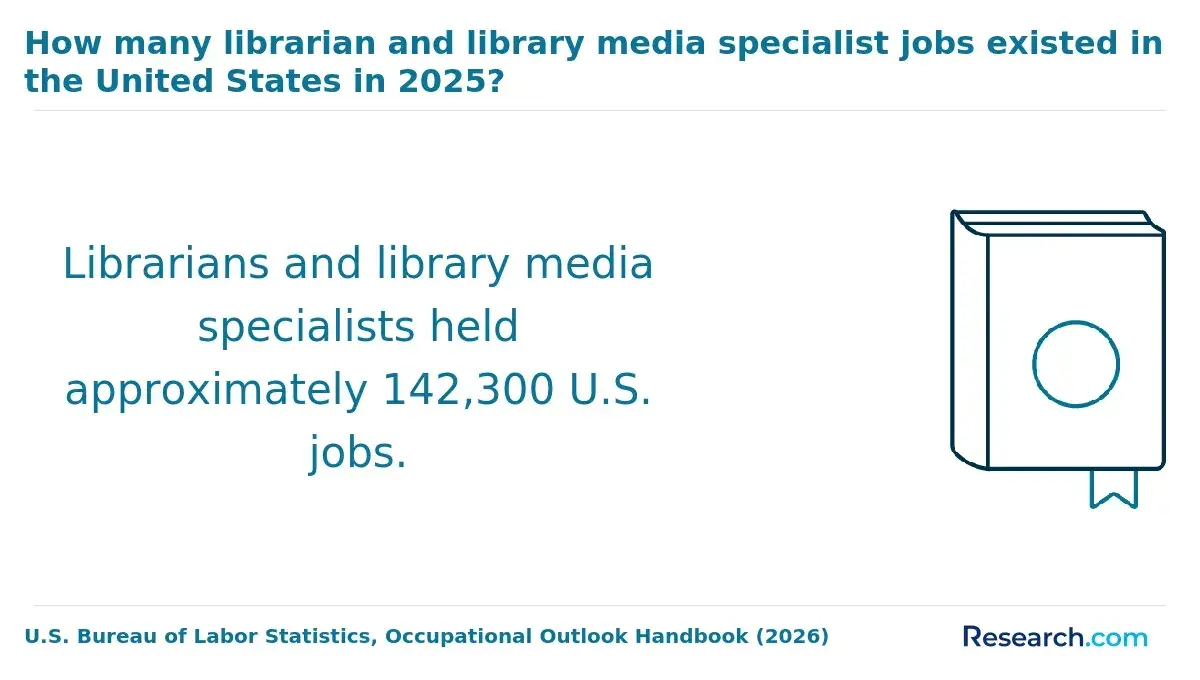
An MLIS can prepare you to organize information, but not every program teaches the ontology and metadata skills that employers seek. The distinction matters: the U.S. Bureau of Labor Statistics projects 2.6% growth for librarians and media collections specialists from 2025 to 2035, while many adjacent information roles follow different hiring paths.
This guide is for prospective students weighing an MLIS against other options. It explains what to look for in coursework and projects, how to check accreditation and cost, and which career claims deserve closer scrutiny.
Key Things You Should Know
- Look for documented coursework in metadata, controlled vocabularies, information retrieval, and linked data - not merely an MLIS program described as "technology-focused."
- ALA accreditation applies to a specific master's program; it does not verify that an ontology elective runs regularly or that a practicum is available online.
- The May 2025 median pay for librarians and media collections specialists was $68,270, but that occupation-wide figure is not an ontology specialist salary or a graduate outcome.
What are MLIS programs for ontology and knowledge organization roles?
These are library and information science master's programs whose courses and applied work can support the design of systems that describe, connect, and retrieve information. Knowledge organization covers practices such as classification, subject description, authority control, and the design of controlled vocabularies. A taxonomy usually organizes terms into categories; an ontology formally defines concepts and relationships so people and software can interpret them consistently.
In practice, a graduate might map descriptions between two digital collections, maintain a product taxonomy, improve search results, or model relationships among research datasets. An MLIS, MLS, Master of Science in Library Science, or Master of Information may offer relevant preparation, but degree names alone do not establish equivalent curricula. Nor should a course on ontologies be mistaken for a formally named ontology concentration.
What education and accreditation do ontology and knowledge organization specialists need?
There is no universal license to work as an ontology or taxonomy specialist. Library-based professional positions may require or prefer an ALA-accredited LIS master's degree. Corporate knowledge-management and technology positions may instead accept experience or degrees in information science, computer science, linguistics, or a domain relevant to the employer.
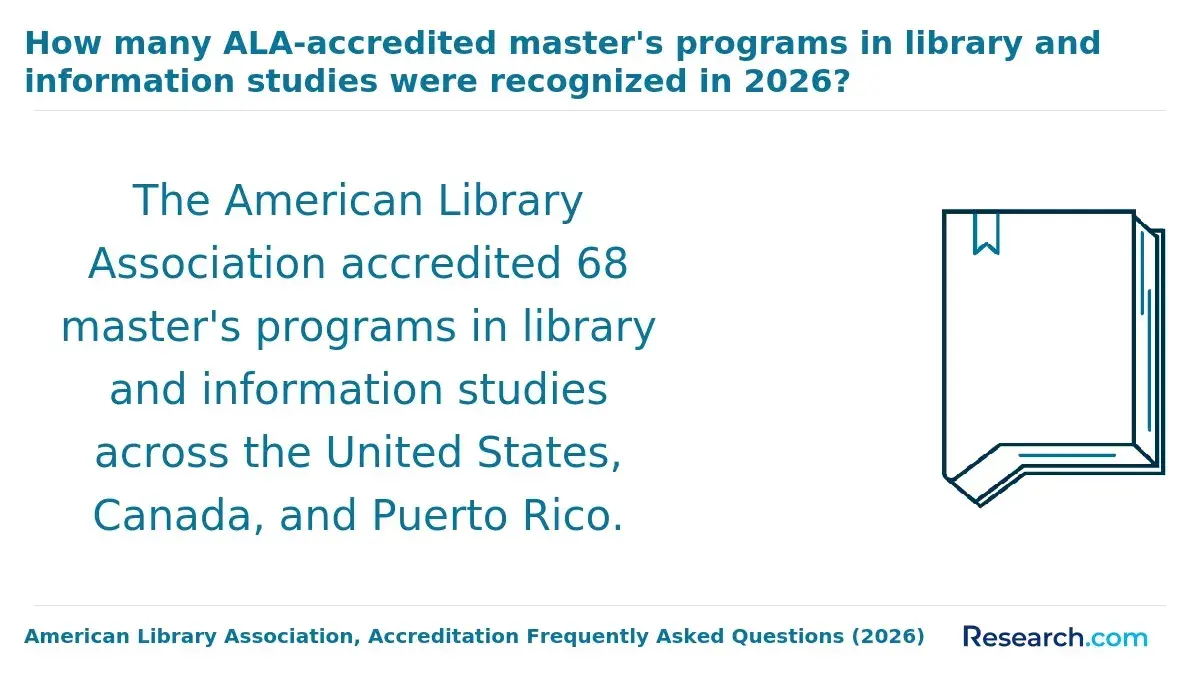
If you want to preserve eligibility for jobs specifying an ALA-accredited degree, check the specific master's program in the current ALA directory before applying. A university's institutional accreditation is different from ALA program accreditation. Neither form of accreditation establishes that a particular elective, online format, or internship is offered. If school librarianship is also a goal, check the relevant state education authority separately for certification requirements.
Choose the credential around the jobs you intend to seek: an ALA-accredited MLIS can be particularly valuable for library eligibility, while a narrower certificate or technical training may be more efficient if you already have a degree and need a specific ontology skill.
Which MLIS programs offer coursework in ontology, metadata, and knowledge organization?
There is no reliable shortcut from a program title to a current course schedule. Rather than treating an unverified school list as a recommendation, compare programs using their official catalogs, recent schedules, and responses from advisers. A course listed in a catalog may be an elective that does not run during your enrollment.
For each candidate, look for evidence at three distinct levels: a formally named specialization, relevant courses, and an applied opportunity such as a capstone or supervised project. Then check whether required courses leave room for the electives you want. To compare online MLIS programs, use the same curriculum, scheduling, accreditation, and total-cost criteria for each school.
Ask an adviser which terms the relevant courses most recently ran, whether they have prerequisites, and whether students can complete an ontology or metadata project with faculty feedback. Those answers are more useful than an unsupported claim that a program has an "ontology track."
Are online MLIS programs effective for ontology and knowledge organization careers?
They can be, if students can access the right electives, practice with realistic data, and receive feedback on their designs. Ontology and metadata work lends itself to remote projects, but online delivery does not guarantee asynchronous classes, convenient meeting times, or a remote practicum. Ask how group work, software access, project supervision, and any campus requirements actually operate.
Speed also has a trade-off. Students considering a fast library masters for working adults should check whether accelerated course sequencing leaves room for specialized electives and a substantial portfolio project. A longer schedule may fit better if the most relevant course runs infrequently or you need time for supervised practice.
What do MLIS programs teach about metadata, taxonomies, and information retrieval?
Strong preparation connects descriptive decisions to what users can find and machines can exchange. The table distinguishes related areas that are often grouped together in course descriptions; it can help you identify gaps in a proposed study plan.
| Area | What students practice | Typical work product |
| Metadata | Describing resources consistently and mapping fields between schemas such as Dublin Core and MARC | A documented metadata application profile or crosswalk |
| Taxonomies and authority control | Choosing preferred terms, managing synonyms, and maintaining consistent names | A controlled vocabulary with editorial rules |
| Ontologies and linked data | Defining entities and relationships that support interoperable description | A small, documented concept model |
| Information retrieval | Evaluating how indexing, terminology, and user queries affect search | A search evaluation with proposed improvements |
Depending on the setting, relevant standards may include RDA for resource description and BIBFRAME for linked bibliographic data. A useful course should teach when a standard fits - not simply require memorizing its name. Because AI-assisted discovery can reuse existing descriptions, students should also learn to inspect metadata quality, document uncertain matches, and protect sensitive information rather than assume automated output is correct.
What are the admission requirements for ontology-focused MLIS programs?
Applicants generally need to meet the university's graduate admission requirements, including a completed bachelor's degree and whatever transcripts, statements, recommendations, or language-proficiency evidence the specific program requests. Requirements for tests, prerequisite study, and professional experience vary; ontology interest alone does not create a separate admissions category unless a program says it does.
Use your statement to connect prior work to a concrete problem: inconsistent labels in a collection, hard-to-find organizational documents, or data that cannot be exchanged cleanly. Applicants from libraries, archives, technology, publishing, or a subject specialty can all make that case without claiming experience they do not have. If your academic record is unusual, request an individual review rather than assuming work experience waives a formal requirement. Readers seeking flexible library science admissions should still verify each school's published eligibility rules directly.
How long do MLIS programs take and how much do they cost?
Completion time depends on required credits, enrollment pace, course sequencing, and whether a project or practicum is required. The useful comparison is not a program's advertised minimum duration but the schedule in which you can take the ontology-related courses. Ask whether missing an elective would add another term.
Published tuition is only one part of the expense. Build a comparable estimate for each program using these components, then distinguish the total cost from what you would pay out of pocket or borrow:
- Required credits multiplied by the tuition rate that applies to your residency and enrollment status
- Mandatory university and program fees, plus books, software, and equipment
- Possible travel, practicum expenses, and additional costs if course sequencing extends enrollment
Do not assume an online rate is the same for every student or that funding is guaranteed. Explore employer support and scholarships for aspiring librarians, then confirm eligibility and renewal terms. For federal aid, ask the financial aid office to assess your particular enrollment period and circumstances under current rules. A sensible return-on-investment decision compares the amount you may need to borrow with your current earnings and the qualifications in jobs you would realistically pursue - not with an occupation-wide median alone.
What careers can an MLIS prepare you for in ontology and knowledge organization?
Relevant titles include metadata librarian, cataloging or discovery librarian, taxonomy specialist, ontology specialist, and knowledge organization analyst. The work varies: a library position may maintain authority records and improve discovery, while a company role may organize product information or define relationships used across internal systems. Archives and digital collections roles can also involve extensive description, though their other responsibilities differ.
Read job descriptions for both credential requirements and tasks. An MLIS may be required for some librarian openings, preferred for others, and one of several accepted backgrounds for corporate roles. Students can make their preparation visible through a documented vocabulary, a metadata crosswalk, or a search-improvement project that explains design choices and evaluation. Relevant experience and subject knowledge can matter as much as the project's technical complexity.
If your target jobs primarily require software engineering or large-scale data architecture, compare an MLIS with technical degrees or focused training before enrolling. For those pursuing library leadership as well as specialist work, information on advanced librarian roles and salary can provide career context, but advancement depends on duties, experience, and the employer.
How much do ontology and knowledge organization professionals earn?
No single U.S. Bureau of Labor Statistics occupation covers every ontology or taxonomy job. These May 2025 medians show the pay context for two library occupations, not expected earnings for graduates of a particular program or for corporate ontology specialists.
| BLS occupation | Median annual pay, May 2025 | Projected employment change, 2025-2035 |
| Librarians and media collections specialists | $68,270 | +2.6% |
| Library technicians | $44,580 | −6.4% |
The difference matters when comparing professional librarian and paraprofessional openings: they may involve related collections but carry different duties and credential expectations. For an individual offer, examine the employer, location, scope of responsibility, and required technical skills. Do not use a broad occupational median as evidence that a specific MLIS will raise your pay by a predictable amount.
What certifications and professional standards support knowledge organization careers?
There is no single certification required across ontology and knowledge organization jobs. For library hiring, the degree requirement in a posting may matter more than an optional certificate. For adjacent roles, demonstrable skill with the employer's data and tools may matter more than either credential.
Standards give practitioners a shared way to describe and exchange information. MARC and RDA are relevant to many bibliographic workflows; Dublin Core is used for simpler resource description; BIBFRAME addresses linked bibliographic data. Which ones to learn first depends on your intended setting. A practical goal is to show that you can apply a relevant standard, explain local choices, and maintain documentation when terms or requirements change.
Other Things You Should Know About Library Science
Yes. Use openly available or self-created sample data, document its source and permitted use, and explain the problem your model addresses. Avoid publishing confidential records or personal information.
Test whether its terms and relationships answer a defined set of user questions. Record ambiguous cases, check for inconsistent labels or relationships, and revise the model based on the results.
Ask what data you may work with, who will supervise you, what feedback you will receive, and whether you may show a sanitized version of the work in a portfolio. Get permission before sharing any employer material.
Membership is generally optional. It may be worthwhile if its events, publications, or local network match the field you want to enter; compare the student cost with the opportunities you would actually use.
References
- Information Organization - SJSU - School of Information https://ischool.sjsu.edu/information-organization
- Online Library and Information Science Master's Degree | Syracuse University https://ischool.syracuse.edu/academics/online-library-and-information-science-masters-degree/
- MLIS Courses | Information School | University of Washington https://ischool.uw.edu/programs/mlis/curriculum/courses
- Key choices in the design of Simple Knowledge Organization System (SKOS) - ScienceDirect https://www.sciencedirect.com/science/article/pii/S1570826813000176
- MLIS Program Requirements and Curriculum | umd.edu https://info.umd.edu/academics/masters-programs/master-of-library-and-information-science/curriculum-specializations/
- MSIS Frequently Asked Questions | Wayne State University https://sis.wayne.edu/msis/msis-faq
- SKOS: Simple Knowledge Organisation for the Web - ePubs https://epubs.stfc.ac.uk/manifestation/1621/skos-
- Words/Terms Related to Internships | Gardner-Webb University https://gardner-webb.edu/words-terms-related-to-internships/
- MLIS Curriculum, Specialties & Courses | University of Arizona College of Information Science https://infosci.arizona.edu/ma-library-information-science/curriculum-specialties-courses
- Capstone projects as opportunities for real-life applications | Trends and Issues in Higher Ed https://www.washington.edu/trends/capstone-projects-as-opportunities-for-real-life-applications/