2027 MLIS Programs for Trauma-Informed Library Services

Co-Founder and Chief Data Scientist
Choosing an MLIS for trauma-informed library services means looking beyond a program's name to the skills and experience it actually offers. Libraries serve people facing housing instability, violence, grief, and other difficult circumstances, while staff must protect privacy and maintain professional boundaries.
The U.S. Bureau of Labor Statistics projects 2.6% employment growth for librarians and media collections specialists from 2025 to 2035, a reminder to weigh preparation against a competitive job market. This guide helps prospective students evaluate coursework, practical training, cost, and career fit without assuming that a trauma-informed concentration exists.
Key Things You Should Know
- Look for an ALA-accredited master's program with relevant electives and supervised practice, a course on community services is not, by itself, a formal trauma-informed specialization.
- Trauma-informed work calls for privacy, accessible service, de-escalation, referral judgment, and staff well-being, not clinical diagnosis or counseling.
- The May 2025 median annual pay for librarians and media collections specialists was $68,270 across the occupation, not a promised starting salary or a trauma-informed specialty premium.
What are MLIS programs for trauma-informed library services?
These are master's programs in library and information science that students can use to prepare for library work informed by an understanding of trauma. The approach emphasizes physical and emotional safety, trust, choice, collaboration, and attention to barriers that can make library services difficult to use. In practice, that might mean explaining options without pressing a patron to disclose personal details, protecting borrowing privacy, or designing a quieter and more accessible service interaction.
"Trauma-informed MLIS" describes a preparation goal, not necessarily an official degree title or concentration. An institution might offer an MLIS, an MLS, a Master of Science in Library Science, or another LIS master's degree; students should inspect the specific program rather than infer its content from the credential name. Relevant preparation may come from electives, an independent project, and experience in a library or community partnership.
Librarians are not automatically trained or authorized to provide therapy. A sound program should help students distinguish responsive library service from clinical care and know when a referral or established workplace procedure is appropriate.
Why choose an ALA-accredited MLIS program for trauma-informed practice?
ALA accreditation provides an established review framework for a library and information studies master's program and can matter for professional librarian hiring. It is distinct from the university's institutional accreditation. Check the specific degree program in the current ALA directory, especially if a university offers several information-related degrees.
Accreditation does not verify that a trauma-informed elective, concentration, online format, or practicum exists. Nor does it show that a course runs often enough to fit your graduation schedule. If you hope to work in school libraries, confirm state educator-credential rules separately; ALA accreditation alone does not establish eligibility for a particular state's school librarian license.
What careers can trauma-informed MLIS graduates pursue?
Trauma-informed skills can strengthen public-facing roles, particularly where staff routinely support people navigating stressful circumstances. The work remains librarianship: connecting people with information and services, teaching research skills, developing collections, and maintaining equitable access.
Public services librarians may adapt reference interviews to give patrons choices and avoid unnecessary personal questions. Youth and teen librarians may build predictable, welcoming programs while following safeguarding policies. Outreach librarians may coordinate with shelters, health organizations, or other partners without promising services the library cannot provide. Academic and school librarians can also apply these principles when teaching, answering sensitive questions, or improving access.
Professional librarian postings commonly ask for an LIS master's degree, while some outreach, program-assistant, and other paraprofessional jobs may not. Experience in community services can be valuable before enrollment. For applicants considering specialized positions, competitive library science careers may involve additional experience or credentials beyond an MLIS. Compare actual job postings in your target setting before deciding that another degree is necessary - or that an MLIS alone will be sufficient.
What courses cover trauma-informed library services?
Few course titles will describe the entire practice. A useful curriculum combines core LIS skills with instruction on serving communities, protecting information, and responding appropriately to difficult interactions. A catalog entry establishes what a course covers, but not whether it will be offered during your enrollment.
The table connects likely course areas to tangible learning outcomes. Use it to review a best library science curriculum online against your intended workplace, rather than looking for one elective to cover everything.
| Course area | Relevance to trauma-informed work | Possible applied work |
| Reference and information services | Respectful interviewing, options for patrons, and appropriate referrals | A scenario-based service guide |
| Community engagement and youth services | Understanding local needs and designing accessible programs | A program plan developed with community input |
| Information ethics, privacy, and accessibility | Limiting unnecessary data collection and reducing barriers to use | A privacy or accessibility review of a service |
| Management and organizational behavior | Staff procedures, boundaries, and support after difficult incidents | A draft staff-training resource |
Ask whether relevant courses are required or elective, when they last ran, and whether an independent study or supervised placement could fill a gap. For portfolio work involving patrons, use fictional scenarios or appropriately de-identified material and follow the host organization's privacy rules.
Are online MLIS programs suitable for trauma-informed library careers?
Yes, if the program lets you study the relevant material and practice interpersonal skills with feedback. Online classes can support discussion, role-play, case analysis, and reflective projects, but the delivery label alone says little about how much interaction students receive.
Check whether classes are asynchronous or meet live, whether required sessions fit your time zone, and whether a placement can be arranged near you. A remote degree does not mean every internship can be completed remotely; placements serving patrons may require on-site work and screening. Ask how the program supervises students during challenging service experiences.
If you already work in a library, ask whether coursework can build on that experience and how learning is assessed. A competency based librarian degree may appeal to experienced applicants, but confirm the specific program's assessment, scheduling, and accreditation before assuming it will be faster or more flexible.
What are the admission requirements for trauma-informed MLIS programs?
Admissions criteria generally belong to the LIS master's program, not to a separate trauma-informed credential. Programs typically ask applicants to document a completed bachelor's degree and submit materials such as transcripts, a statement of purpose, and recommendations; exact requirements, testing policies, and deadlines vary by institution.
Use the statement to connect your goals to documented courses or applied opportunities. Experience in libraries, education, social services, or community organizations can provide useful examples, but it does not automatically replace a formal admission requirement. Applicants with unusual academic records should ask admissions staff for an individual review rather than assume they are ineligible - or guaranteed admission.
How long do trauma-informed MLIS programs take and cost?
Completion time depends on the program's required credits, your course load, course sequencing, and any practicum. There is no standard extra duration for a trauma-informed focus unless the institution documents additional requirements. An accelerated schedule can reduce time enrolled, but it may leave less room for electives or a substantial placement. Compare 12 month online MLIS programs with the actual timing of the courses you want.
For a defensible cost estimate, multiply the published tuition rate applicable to you by the required credits, then add mandatory fees, materials, and any travel or placement expenses. Check whether tuition differs by residency or study format. Published tuition is not the same as total attendance cost, and a placement that reduces paid work can affect your budget even if it carries no separate fee.
Ask financial aid staff which grants, scholarships, employer benefits, and federal aid options apply to your enrollment period and course load. Compare the total program cost, what you expect to pay out of pocket, and what you would need to borrow as separate figures. Without a verified program price and your personal funding details, a precise payback estimate would be misleading.
Do trauma-informed library careers require state licensure or certification?
There is no universal state license specifically for trauma-informed library service. Public and academic library positions generally depend on employer qualifications, which may include an LIS master's degree, relevant experience, or both. Training in trauma-informed practice can strengthen an application but does not confer a clinical credential.
School librarian positions are different: states set their own educator licensure, certification, or endorsement rules, which may include approved preparation and fieldwork. Before choosing a school-focused MLIS pathway - online or on campus - check the education authority in the state where you intend to work. Also verify any employer-specific requirements for specialized settings rather than treating a preferred certificate as a legal requirement everywhere.
What salaries and job outlook can MLIS graduates expect?
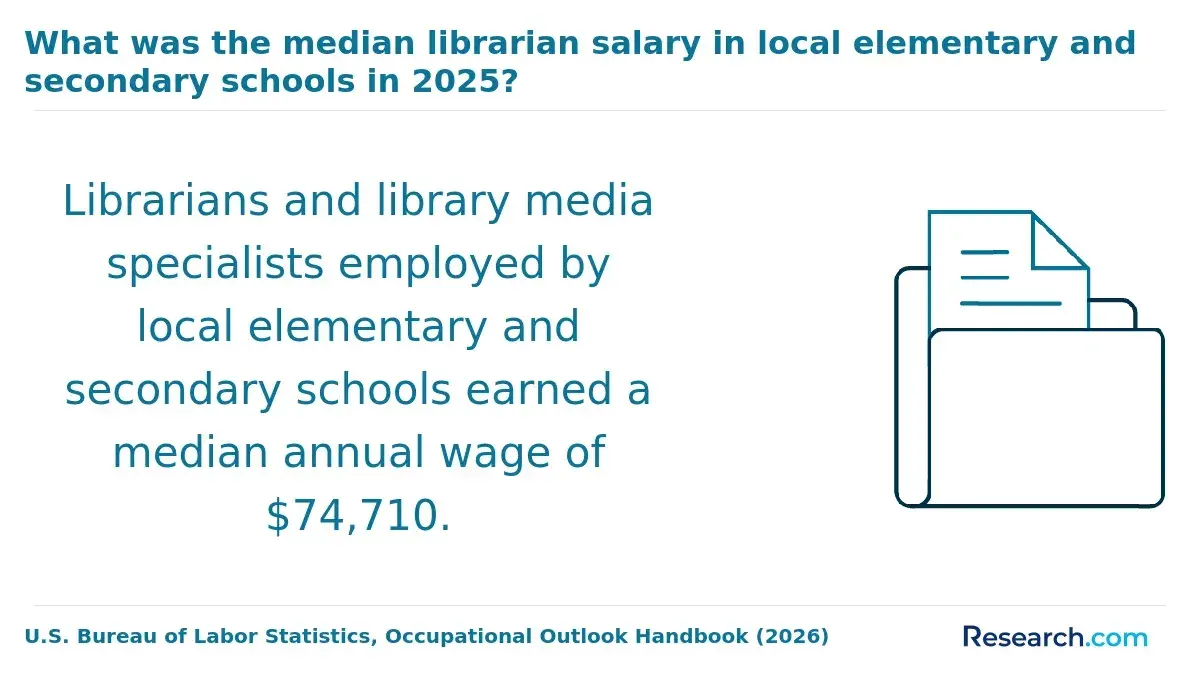
The U.S. Bureau of Labor Statistics reports a May 2025 median annual wage of $68,270 for librarians and media collections specialists. Its 2025-2035 employment projection for that occupation is 2.6% growth. These national figures describe a broad occupation, not entry-level pay, local hiring conditions, graduate outcomes, or compensation for trauma-informed expertise.
Public, school, and academic employers may offer different duties and pay structures. When weighing an MLIS, compare posted salaries and qualification requirements for jobs in your preferred region with your expected education costs and current earnings. A strong placement or portfolio may help you demonstrate readiness, but neither guarantees a job.
How should you choose a trauma-informed MLIS program?
Start with the setting you want to serve, then test each program against the preparation that setting requires. The following checks help separate documented opportunities from appealing but unverified descriptions.
- Confirm the specific master's program's ALA accreditation status and, for school roles, check the intended state's credential rules.
- Identify relevant required courses, electives, and applied work; ask when electives run and whether local placements are feasible.
- Compare total costs and schedules, then ask who supervises placements and how students receive feedback on sensitive service scenarios.
A working professional may prefer a part time online library science masters option if it preserves income and allows time for practical experience, even if graduation takes longer. Someone already qualified for their target job may get more immediate value from workplace training or a focused certificate. Choose the MLIS when the roles you want call for the degree and the particular program offers a credible route to the skills you need.
Other Things You Should Know About Library Science
Listen without pressing for details, explain what help the library can offer, and follow workplace procedures for referrals or immediate safety concerns. Do not promise confidentiality beyond the library's actual policies or present library service as counseling.
It describes stress that can arise from repeated exposure to other people's traumatic experiences. Clear role boundaries, supportive supervision, and established incident procedures can help staff respond without taking on responsibilities outside their role.
Yes. Partnerships can improve referrals and make services easier to find. Staff should agree in advance on responsibilities, privacy practices, and what each organization can realistically provide.
Only in a way that follows the library's privacy rules and any applicable course or placement requirements. A fictionalized scenario or a project stripped of identifying details is usually safer than recounting a recognizable patron encounter.
References
- Developing Pathways to Health Sciences Librarianship with an Introductory Course and Mentoring Program - PMC https://pmc.ncbi.nlm.nih.gov/articles/PMC9698376/
- Trauma-Informed Librarianship - State Library of Oregon https://slo.oregon.gov/conted/trauma
- Trauma-Informed Approaches and Programs | samhsa.gov https://www.samhsa.gov/mental-health/trauma-violence/trauma-informed-approaches-programs
- Preparing Students for Trauma Exposure in Field Education Settings: Applied Learning in Social Work Education https://alswe.simmons.edu/article/preparing-students-for-trauma-exposure-in-field-education-settings/
- Online Master's in Library & Information Science (MLIS) | Drexel University Online https://www.online.drexel.edu/online-degrees/information-sciences-degrees/ms-di/index.aspx
- Full article: Trauma-Informed Librarianship: Guidance for Libraries with and Without Social Workers | tandfonline.com https://www.tandfonline.com/doi/full/10.1080/24750158.2023.2255942
- Master's Degree (MSLS) in Library & Information Science | University of Kentucky https://online.uky.edu/masters/library-information-science/msls
- ALA-Accredited Programs https://www.ala.org/educationcareers/accreditedprograms/directory
- Trauma-Informed and Relational Care for Libraries 2025 | MLA https://www.mlanet.org/courses/trauma-informed-and-relational-care-for-libraries-2025/