2027 MLIS vs. a Knowledge Management Master's for Corporate Roles

Co-Founder and Chief Data Scientist
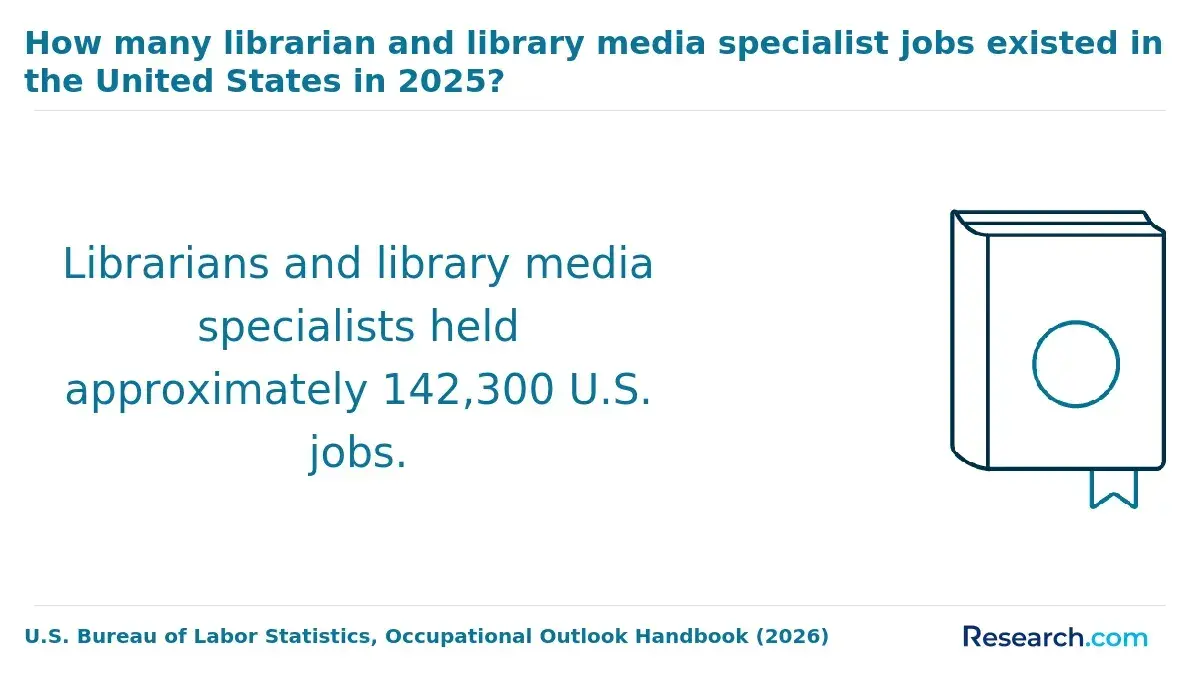
Choosing between an MLIS and a knowledge management master's means deciding which kind of information work you want to do - not simply which degree sounds more relevant. Corporate teams need people who can organize content, help colleagues find expertise, and govern information responsibly. Meanwhile, the U.S. Bureau of Labor Statistics projects 2.6% employment growth for librarians and media collections specialists from 2025 to 2035.
If you are considering a corporate role but want to preserve other career options, this guide will help you compare the degrees, evaluate programs, and weigh the cost against your goals.
Key Things You Should Know
- Choose an MLIS if you want corporate information roles while keeping professional librarianship open; choose a knowledge management master's if your target work centers on organizational knowledge-sharing and change.
- ALA accreditation matters for many librarian hiring pathways, but it is not a standard requirement for corporate knowledge management jobs.
- The BLS reports a May 2025 median annual salary of $68,270 for librarians and media collections specialists; that figure is not a salary forecast for corporate knowledge management graduates.
What Is the Difference Between an MLIS and a Knowledge Management Master's?
An MLIS is a graduate degree in library and information science. It generally prepares students to organize, retrieve, preserve, and provide access to information for users. A knowledge management (KM) master's focuses more directly on how organizations capture expertise, share what employees know, and improve decisions and workflows. Degree titles vary: an MLS, Master of Information, or another LIS degree may serve a similar purpose, but its curriculum and accreditation must be checked individually.
The distinction is one of emphasis, not a strict division of jobs. Both routes can lead to corporate work involving search, taxonomies, document systems, and information governance. This comparison shows which questions each degree is more likely to put at the center of your training.
| Decision factor | MLIS | Knowledge management master's |
| Primary lens | How people find, use, and maintain information | How an organization shares knowledge and improves its use |
| Likely emphasis | Information organization, research services, metadata, and user access | Knowledge-sharing processes, collaboration, strategy, and organizational change |
| Career flexibility | Can support librarian and adjacent corporate pathways | More directly aligned with corporate KM, depending on the curriculum |
Which Degree Is Better for Corporate Knowledge Management Careers?
Neither degree is automatically better. A KM master's may be the closer fit if you want to lead knowledge-sharing initiatives, improve employee workflows, and measure whether teams can reuse what they learn. An MLIS may be stronger if you want to build the underlying information architecture: taxonomies, metadata, research services, enterprise search, or managed collections.
For many corporate openings, the deciding evidence will be relevant experience rather than the degree title alone. Employers may consider candidates from information science, business, technology, and other backgrounds. Read several jobs you would actually apply for: if they emphasize stakeholder adoption and organizational change, compare KM curricula closely; if they emphasize classification, retrieval, or specialist research, examine MLIS coursework and projects. If you already perform the work, a targeted course or certificate may be more economical than another master's.
What Careers Can You Pursue With Each Master's Degree?
Corporate job titles rarely map neatly to a single credential. The roles below distinguish the work involved from the education an employer might accept; neither degree guarantees entry.
| Role | Typical work | Relevant preparation |
| Knowledge manager or KM specialist | Improve how teams document, find, and reuse expertise | KM strategy, facilitation, change management, and system evaluation |
| Information architect or taxonomy specialist | Structure content and search terms so information is easier to find | Knowledge organization, metadata, user research, and applied taxonomy work |
| Corporate librarian or research specialist | Find, evaluate, and deliver information for business decisions | Research methods, reference services, subject knowledge, and licensing awareness |
| Information governance or records specialist | Help manage information through retention and disposal workflows | Records management, privacy, policy, and cross-functional communication |
A corporate librarian opening may prefer an MLIS; a KM or information-architecture opening may accept several degrees and prioritize demonstrated work. Before enrolling, compare job descriptions with the library science roles with portfolio expectations. A sample taxonomy, documented search improvement, or research deliverable can show employers what you can do, provided you have permission to share it.
How Do MLIS and Knowledge Management Curricula Compare?
Compare required courses before electives: an appealing catalog description is less useful if you cannot fit the course into your degree plan. MLIS curricula commonly address information organization, users, research, and information services. A KM curriculum may devote more required study to organizational learning, collaboration, change, and evaluating knowledge-sharing practices. Actual requirements differ by program.
For corporate work, look for opportunities to build a taxonomy - a controlled set of terms for organizing content - and to test whether people can find and use what they need. Metadata courses can teach how descriptive fields support search across systems; records management courses can address retention and disposal. Projects involving enterprise search, digital assets, privacy, or responsible AI-assisted discovery are useful when they require you to explain decisions and evaluate results, not merely operate a tool. Confirm whether relevant courses are required, elective, or available through an independent project, and ask when they are next scheduled.
Do MLIS or Knowledge Management Programs Require Accreditation?
In the United States, ALA accreditation applies to specific master's programs in library and information studies, not automatically to every degree offered by an institution. It can matter when an employer specifies an ALA-accredited degree for a professional librarian position. Check the specific program in the current ALA directory rather than inferring its status from its university or degree title.
A corporate KM job does not generally require an ALA-accredited degree, so lack of ALA accreditation does not by itself make a KM master's unsuitable. Check the institution's recognized accreditation and assess the KM program's curriculum, applied work, and outcomes on their own merits. If you might later pursue public or academic librarianship, preserve that option by checking the exact credential requirements in job postings before choosing a program. School librarian certification is a separate, state-specific matter; an online MLIS alone does not establish eligibility in every state.
What Are the Admission Requirements for Each Master's Program?
Both types of program typically expect a completed bachelor's degree and an application that lets reviewers assess academic preparation and goals. Schools set their own rules for transcripts, statements, recommendations, résumés, tests, and relevant experience. Neither a library studies major nor prior KM employment should be assumed to be universally required.
If your background is outside information work, use your statement to connect a concrete problem you have handled - such as inconsistent documentation or difficult-to-find research - to the skills you want to learn. Applicants missing a published requirement should ask the admissions office whether conditional entry, prerequisite coursework, or another route is possible rather than assuming work experience waives the rule. Guidance on online library science application flexibility can help frame that conversation, but the program's current policy controls.
How Long Do These Degrees Take and What Do They Cost?
There is no reliable single price or completion time for either degree. Required credits, per-credit tuition, fees, course sequencing, and whether you study full or part time determine the comparison. For a usable estimate, multiply each program's published tuition rate by its required credits, then add mandatory fees, materials, and any travel or practicum costs. Check which rate applies to you; online enrollment does not necessarily mean in-state tuition.
Ask each program for a course-by-course completion plan matching the number of classes you can take while working. A listed elective may delay graduation if it is offered infrequently. The discussion of online librarian masters pacing can help you assess scheduling claims, but request a plan from each school. Compare the gross program cost with your likely out-of-pocket cost after any confirmed employer support; if borrowing, consider repayment against plausible jobs and your current earnings. Do not count an unawarded scholarship or unapproved reimbursement as guaranteed savings.
Are Online or Campus Programs Better for These Career Paths?
Choose the format that lets you complete relevant work and make useful professional connections, rather than assuming one delivery method carries more value. Online study can suit an employed applicant who can turn an approved workplace problem into a project. Campus study may make in-person collaboration or locally arranged experience easier, but neither format guarantees an internship or a corporate network.
Confirm whether courses meet live, whether any campus visits are required, and whether applied projects can be completed where you live or work. These details matter more than an "online" label if your schedule is fixed. When comparing library masters weekend and online options, also ask how group work, instructor access, and elective scheduling will fit your working hours.
What Salaries and Job Outlook Can Graduates Expect?
The BLS reports a May 2025 median annual salary of $68,270 for librarians and media collections specialists. This is a benchmark for that occupation, not for all MLIS holders, KM graduates, or corporate knowledge managers. The BLS projects 2.6% growth for the same occupation from 2025 to 2035; that projection likewise should not be treated as a forecast for every corporate information job.
Pay for your target role will depend on the employer, location, duties, and experience. To judge whether a degree is financially sensible, compare current job postings for the work you want, note which credentials they actually request, and weigh possible advancement against tuition, foregone time, and borrowing. Neither a broad occupational median nor a program's promotional outcome can substitute for that role-specific comparison.
How Should You Choose a Reputable Program for Corporate Roles?
Start with a shortlist of jobs, not a shortlist of degree names. Then compare programs against the same evidence: verified accreditation where it matters, required courses, relevant electives and their recent scheduling, an applied project you can show employers, realistic completion time, and total cost. Ask career staff whether they support corporate placements specifically; general library placement information may not answer your question.
Request a sample degree plan and ask who approves a workplace-based capstone, how confidential material must be handled, and what happens if a key elective is unavailable. Use published prices - not a headline tuition claim - to compare cheap online masters in library science with KM alternatives on the same credit-and-fee basis. If professional librarian roles remain a serious possibility, verify ALA program accreditation before committing. If corporate KM is your only goal, give greater weight to directly relevant projects, scheduling, and cost than to an accreditation employers do not request.
Other Things You Should Know About Library Science
Not for every role. Taxonomy, research, and KM positions may emphasize analysis and collaboration, while some technical positions request scripting or data skills. Check the tools and tasks in the jobs you want before choosing courses.
Requirements vary. A program may use a thesis, capstone, portfolio, practicum, or other culminating work. Check its current degree requirements and choose a project format that helps demonstrate your target skills.
Possibly, but the receiving university decides whether graduate-level credits meet its transfer limits and degree requirements. Get a written evaluation before relying on credits to reduce cost or time.
Only with the necessary employer and university approvals. Ask whether you can use anonymized information or a simulated case, and confirm the rules for storing, presenting, and publishing project work.
References
- THE VALUE OF EDUCATIONAL DEGREES IN TURBULENT ECONOMIC TIMES: EVIDENCE FROM THE YOUTH DEVELOPMENT STUDY - PMC https://pmc.ncbi.nlm.nih.gov/articles/PMC4792031/
- Annual Earnings by Educational Attainment - COE https://nces.ed.gov/programs/coe/indicator/cba/annual-earnings
- MSIS Frequently Asked Questions | Wayne State University https://sis.wayne.edu/msis/msis-faq
- Competitive Intelligence - SJSU - School of Information https://ischool.sjsu.edu/post/competitive-intelligence
- What Can You Do With a Library Science Degree? | Syracuse University Online Master's Programs https://onlinegrad.syracuse.edu/information-science/mslis/library-science-careers/
- MLIS Curriculum, Specialties & Courses | University of Arizona College of Information Science https://infosci.arizona.edu/ma-library-information-science/curriculum-specialties-courses
- MLS vs. MLIS Programs: What's the Difference? | Library Science Degrees Online https://librarysciencedegreesonline.org/mls-vs-mlis/
- How to Build a Career in Knowledge Management in 2026 | Bloomfire https://bloomfire.com/blog/career-in-knowledge-management/
- Accreditation Frequently Asked Questions | ALA https://www.ala.org/educationcareers/accreditedprograms/faq
- What is Knowledge Management Job | KM Job | eGain https://www.egain.com/what-is-knowledge-management-job/