2027 MLIS Programs for University Library Collections Strategists

Co-Founder and Chief Data Scientist
Choosing an MLIS for university library collections strategy takes more than finding a course called "collection development." The work increasingly spans electronic resources, scholarly publishing, accessibility, and evidence-based spending decisions. The U.S. Bureau of Labor Statistics reports a May 2025 median annual salary of $68,270 for librarians and media collections specialists - a useful career benchmark, not a promise of starting pay. This guide shows prospective students and working library staff how to evaluate programs, build relevant experience, and judge whether the degree fits their goals.
Key Things You Should Know
- Look for an ALA-accredited master's program with collections-related coursework and applied projects; a relevant elective is not necessarily a formal concentration.
- Prioritize experience analyzing use, access, costs, and community needs - not just selecting materials.
- BLS projects 2.6% employment growth for librarians and media collections specialists from 2025 to 2035, so compare the degree's full cost with the positions you intend to pursue.
What is a library collections strategist, and what does the role involve?
A university library collections strategist helps decide what information resources an institution should acquire, retain, license, preserve, or make more accessible. The title varies: similar responsibilities may sit with a collection development librarian, electronic resources librarian, acquisitions librarian, or scholarly resources librarian. Larger libraries may divide the work among several specialists.
Decisions draw on faculty and student needs, collection-use evidence, licensing terms, accessibility, preservation needs, and available funds. For example, a strategist might compare demand for a journal package with its renewal cost, then consult subject librarians and negotiate with a vendor. The aim is not simply to maximize holdings; it is to support teaching and research while making defensible choices about access and spending.
Which MLIS degree requirements prepare students for library collections strategy?
The strongest foundation combines general LIS requirements with choices that let students apply them to academic collections. Core work in information organization, research methods, library management, and information ethics can support decisions about discovery, assessment, budgets, and equitable access. Program catalogs differ, so distinguish required courses from electives before assuming every graduate receives the same preparation.
For this specialty, an applied assignment can be especially valuable: a collection assessment using appropriately anonymized usage data, a licensing comparison, or a proposal to improve discovery of an underused collection. Ask whether a practicum, capstone, or independent study could support that work and who would supervise it. A course title alone does not establish that students can complete a collections-focused project.
How can you find an ALA-accredited MLIS program for collections strategy?
Start with the American Library Association's current directory of accredited master's programs and confirm the status of the specific degree you are considering. Institutional accreditation and ALA program accreditation are different. Degree names also vary - MLIS, MLS, Master of Science in Library Science, and Master of Information may describe different curricula - so evaluate the published program rather than its abbreviation.
Next, inspect the current catalog for required courses, collections-related electives, project options, and course scheduling. Ask an adviser when relevant electives last ran and whether a proposed practicum placement is feasible. Neither ALA accreditation nor a catalog listing guarantees a collections concentration, a particular elective next term, or an internship.
University collections roles differ from school librarian positions, which can involve state-specific certification. If you are considering both paths, compare your target state's requirements separately; an Illinois librarian credential timeline can help frame that distinct question.
Are online or campus-based MLIS programs better for collections strategy?
Neither format is inherently better. An online program may let a working library employee apply lessons immediately and avoid relocation. A campus program may make it easier to pursue local library placements or build in-person relationships. What matters most is whether the format allows you to take the right courses and complete credible applied work.
Check whether online classes are live or asynchronous, whether electives have limited seats, and whether projects or practica require on-site work. For campus study, check travel and schedule demands as well as access to relevant placements. Online delivery does not by itself mean flexible deadlines or remote internships. If affordability drives your choice, use an affordable librarian degree online comparison as a starting point, then verify current tuition, fees, and residency rules with each school.
What courses should an MLIS program include for collections strategists?
Seek a curriculum that connects collection decisions to how university users find, access, and use resources. The table identifies useful subject areas and the capability each can help you demonstrate; it does not imply that every program offers them under these names.
| Subject area | Why it matters for collections strategy |
| Collection development and assessment | Supports selection policies, use analysis, and decisions to retain or remove resources. |
| Electronic resources and licensing | Builds understanding of access terms, renewals, vendor relationships, and usage evidence. |
| Scholarly communication and copyright | Connects acquisitions decisions with publishing models and campus research needs. |
| Metadata and discovery | Explains how description and library systems affect whether users can find collections. |
| Management and research methods | Strengthens budgeting, stakeholder consultation, and defensible evaluation. |
Also examine how students demonstrate these skills. An assessment based MLIS programs resource can prompt useful questions about portfolios and demonstrated competencies, but verify each school's actual assessment methods. If electives compete for space, favor those that fill gaps in your existing experience rather than collecting course titles with no applied outcome.
What are the admission requirements for MLIS programs?
Applicants generally need a bachelor's degree and must follow each institution's graduate admission process. Schools may request transcripts, a statement of purpose, recommendations, a résumé, or other materials; testing and minimum-grade policies vary. Check the current admissions page of the specific program rather than treating another school's requirements as universal.
Library employment can strengthen an application and help clarify a collections goal, but it does not automatically replace a stated academic requirement. In your statement, connect a specific problem you have observed - such as evaluating a subscription or improving access to course materials - to the courses or projects you hope to pursue. Applicants with unusual transcripts or international credentials should ask admissions staff how their records will be evaluated before applying.
How long do MLIS programs take, and how much do they cost?
Duration depends on required credits, course availability, enrollment pace, and any practicum or capstone sequence. Full-time study generally finishes sooner than part-time study, but a key elective offered infrequently can change either plan. If speed matters, use a shortest path to an MLIS discussion to identify scheduling questions, then obtain a term-by-term plan from the program.
For a cost comparison, multiply the current tuition rate applicable to you by required credits, then add mandatory fees and likely books, technology, travel, and placement expenses. Ask whether online students pay a different rate and whether taking longer adds term-based fees. Published tuition is not the same as total cost, and borrowing is not a tuition discount. Compare the full expense with your current earnings, employer support, and the qualifications in jobs you would realistically seek; request current aid terms from the school before relying on a financing plan.
What careers can you pursue in library collections strategy?
An MLIS can support entry into academic librarianship, but "collections strategist" may be a later-career title. New graduates can also look for collection development, acquisitions, electronic resources, or subject-liaison positions, matching their applications to the work described rather than the title alone. Academic librarian postings may require or prefer an ALA-accredited master's; check each employer's wording.
A practical portfolio could include an anonymized collection-use analysis, a sample selection policy, or a comparison of access models with stated assumptions. Library assistant or technician work can provide relevant experience, although those positions are distinct from professional librarian roles. If your interest is primarily in archival appraisal and description, explore an archives library science concentration instead of assuming collections coursework covers archival practice. People focused chiefly on procurement analytics or publishing operations should also compare jobs that accept other degrees or substantial experience before committing to an MLIS.
How much do library collections strategists earn?
BLS reports a May 2025 median annual wage of $68,270 for librarians and media collections specialists. That broad occupation is the closest supplied benchmark, not a collections-strategist salary or an MLIS graduate outcome. Pay for a particular opening will depend on its responsibilities, employer, location, and experience requirements. For a personal decision, compare actual postings in your target region with your current compensation rather than treating the national median as an offer.
What is the job outlook for library collections professionals?
BLS projects 2.6% employment growth for librarians and media collections specialists from 2025 to 2035. The projection covers a broad occupation, not a separate market forecast for university collections strategists. It is a reason to build transferable skills - not evidence that a particular specialization will have openings when you graduate.
Collections work increasingly requires decisions across print and digital access, including license terms, discovery, accessibility, and scholarly communication. When evaluating programs, look for opportunities to practice explaining those trade-offs to faculty, library colleagues, and administrators. That evidence of judgment can be more useful in a job search than an elective title alone.
Other Things You Should Know About Library Science
Possibly, but program policies vary. Ask whether your current job qualifies, whether the project must be separate from routine duties, and who can supervise and evaluate it.
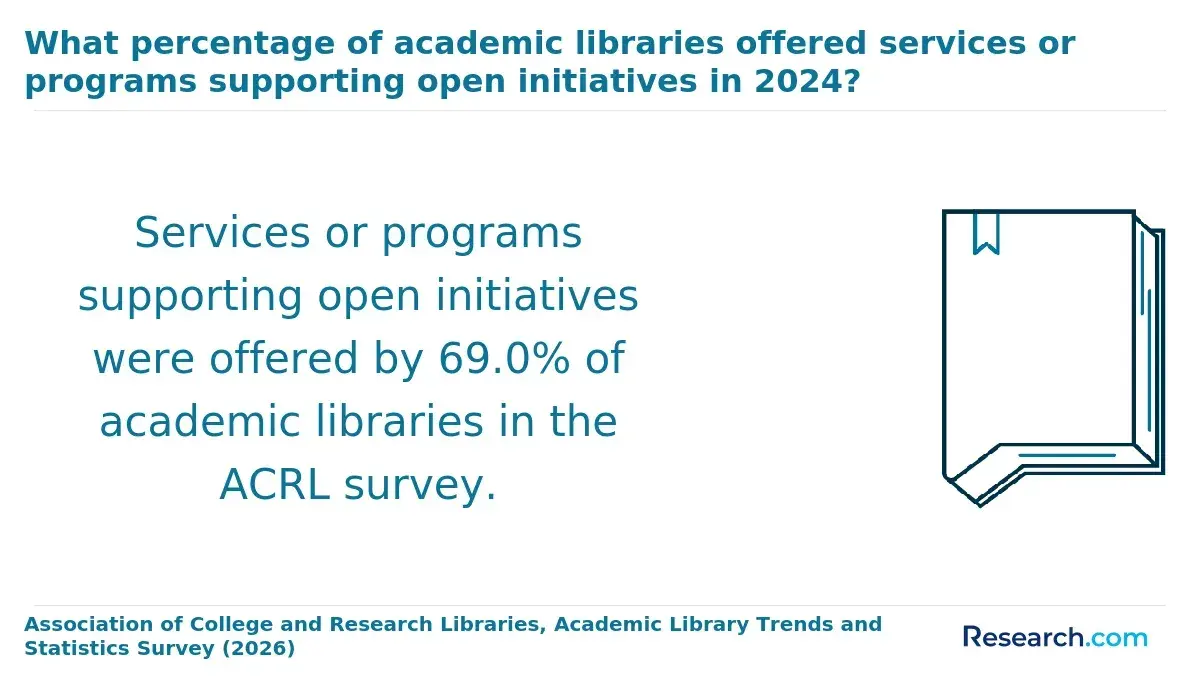
They may. At some universities, collections staff help assess or support openly licensed course materials, often in partnership with faculty and other library teams.
Some libraries publish them. Reading a policy can show how a library describes its collecting priorities, selection responsibilities, and review practices; ask staff for clarification if a policy is unavailable or outdated.
Exclude confidential license prices, identifiable patron-use data, and internal documents you lack permission to share. A clearly labeled sample using public or invented data can still show your reasoning.
References
- Research Guides: Digital Scholarship at the Library of Congress: A Research Guide: Accessing Digital Materials https://guides.loc.gov/digital-scholarship/accessing-digital-materials
- Career and Internship Opportunities | Share and Distribute https://www.loc.gov/library-of-congress-resources/share-and-distribute/career-and-internship-opportunities/
- Master of Library Science | Luddy School of Informatics, Computing, and Engineering https://luddy.iu.edu/academics/masters/library-science.html
- Data & Outcomes | Barnard College https://barnard.edu/beyond-barnard/data-and-outcomes
- Lemieux Library - Collections - Seattle University https://library.seattleu.edu/collections/
- Librarian Career Guide to Impactful Library Work | American College of Education https://ace.edu/student-success/career-guides/librarian/
- Open Access - Mason Publishing Group https://publishing.gmu.edu/category/communication/oa/
- Master of Library and Information Science (MLIS) | du.edu https://morgridge.du.edu/academics-advising/programs-gr/mlis-library-and-information-science
- Master of Arts in Library & Information Science | University of Arizona College of Information Science https://infosci.arizona.edu/ma-library-information-science
- Degrees of Academic Librarians | Cambridge Core https://www.cambridge.org/core/elements/degrees-of-academic-librarians/96DE27D48B89B151B520E952507DB0C3