2027 MLIS vs. a Business Master's for Corporate Information Roles

Co-Founder and Chief Data Scientist
Choosing between an MLIS and a business master's is difficult when both can lead to corporate information work but prepare you for different parts of it. The distinction matters if you want to move into research, knowledge management, records, or strategy without paying for the wrong credential.
The U.S. Bureau of Labor Statistics projects 2.6% employment growth for librarians and media collections specialists from 2025 to 2035; that broad category does not measure corporate openings specifically. This guide helps prospective students compare roles, coursework, costs, and employer requirements before choosing a program.
Key Things You Should Know
- Choose an MLIS for research services, information organization, or specialized library work. Favor a business master's when your target role centers on strategy, operations, or management.
- The May 2025 median annual salary for U.S. librarians and media collections specialists was $68,270, but it is not a salary forecast for corporate information jobs.
- Neither degree is universally required for knowledge management or information governance; compare actual job postings and total program costs before enrolling.
How does an MLIS compare with a business master's for corporate information careers?
An MLIS focuses on finding, evaluating, organizing, preserving, and providing access to information. A business master's is a broader category.
An MBA emphasizes organizational leadership and business decisions, while a specialized master's in business analytics or management may focus more heavily on a particular function. The best choice depends less on the degree label than on the work you want to do.
This comparison shows where each degree typically has the strongest curricular fit. It describes fields of study, not universal employer hiring rules.
| Decision factor | MLIS | Business master's |
| Primary focus | Information access, research, organization, and stewardship | Business performance, decisions, operations, or a named specialty |
| Especially relevant work | Corporate research services, specialized libraries, metadata, and knowledge organization | Strategy, operations, analytics leadership, and business-facing management |
| Potential gap to address | Financial analysis and organizational strategy | Research methods, taxonomies, records practices, and information access |
| Best evidence of fit | Relevant courses and applied information projects | Relevant courses and applied business projects |
A degree name alone is a weak predictor of fit. A corporate researcher who must build a searchable evidence base may benefit more from LIS training; someone expected to own budgets and operational targets may need stronger business preparation. Existing work experience can change that calculation.
What corporate information roles can you pursue with each degree?
Corporate information work appears in consulting firms, law firms, healthcare companies, financial services, technology businesses, and other employers. Titles vary, so judge a posting by its duties rather than assuming every "information manager" does the same job.
The table connects common work to plausible educational pathways. "Fit" means relevant preparation, not that the credential alone qualifies someone for every opening.
| Role or function | Typical work | Likely educational fit |
| Corporate librarian or research specialist | Finds and evaluates sources, answers research requests, and manages information resources | Often MLIS-aligned; subject expertise may also matter |
| Knowledge management specialist | Improves how teams capture, find, and reuse internal knowledge | Either degree, depending on whether the role emphasizes information architecture or organizational change |
| Metadata or taxonomy specialist | Defines descriptive fields and controlled terms so content can be found consistently | Often MLIS-aligned, with systems experience valuable |
| Records or information governance specialist | Supports retention, access, and handling of organizational records | Either degree alongside applicable records, legal, and technical knowledge |
| Business analyst or strategy manager | Uses business evidence to improve processes or guide decisions | Usually more closely aligned with a relevant business master's |
Some specialized positions have additional barriers: a law-firm research role, for example, may value familiarity with legal sources. See overcoming barriers to library careers for a broader view of how requirements differ across information occupations.
Which degree better matches your corporate career goals?
Start with the responsibility you want to own. If success means retrieving reliable evidence, designing search and discovery systems, or organizing organizational knowledge, an MLIS is a strong candidate. If success means setting commercial priorities, managing teams and budgets, or interpreting business performance, compare business master's programs first.
For a hybrid goal such as knowledge management leadership, examine what you already know. A researcher with deep information skills may gain more from business coursework or employer-supported management training than from a second information degree. A manager who struggles with content structure and retrieval may benefit from LIS coursework without necessarily needing a full MLIS.
Before applying, collect a small set of postings for your target title and preferred industry. Separate stated requirements from preferences, note recurring tools and responsibilities, and ask professionals doing the work which gaps are hardest to close through experience alone. This is more reliable than choosing based on a job title that sounds appealing.
What do MLIS and business master's programs teach?
MLIS curricula commonly address research and reference, information organization, user needs, information technology, and professional practice. For corporate roles, particularly useful study may include taxonomies, controlled vocabularies that make content easier to classify and retrieve, metadata, database searching, records management, and knowledge management.
An MBA commonly covers subjects such as finance, operations, marketing, and leadership; a specialized business master's may be narrower.
Compare required courses separately from electives. A catalog entry does not establish that an elective runs on a schedule that works for you, and a related course does not constitute a formal concentration. Ask whether you can complete a project with an employer, practice with relevant systems, and graduate with work you can discuss in an interview.
When reviewing the top library science graduate programs online, use the listings to identify candidates, then check each institution's current catalog and course schedule against your corporate goal.
Do corporate information jobs require an MLIS or business master's?
There is no universal degree requirement across corporate information roles. An employer may require an MLIS for a professional librarian position, accept several related graduate degrees for knowledge management, or prioritize demonstrated business and technical experience for an analyst role. "Preferred" in a posting is not the same as "required."
Read qualifications alongside duties. A job centered on research requests and licensed information resources may favor LIS preparation even if its title omits "librarian."
A role responsible for financial modeling may favor business or quantitative training even if it sits within an information team. Entry-level research, records, or content operations experience can help you test the work before committing to either graduate degree.
Does ALA accreditation matter for corporate information careers?
American Library Association (ALA) accreditation applies to specific LIS master's programs, not automatically to every degree offered by an accredited university. It matters most when you want to remain eligible for librarian jobs whose employers require or prefer an ALA-accredited degree. Corporate employers hiring for adjacent roles may assess skills and experience instead.
Check the current ALA directory for the specific program you are considering; do not infer its status from an institution's reputation or from a similar degree title. An MLIS, MLS, Master of Science in Library Science, or Master of Information may have different content and accreditation status depending on the institution. ALA accreditation also does not verify that a particular corporate-focused elective, internship, or online format is available.
How do online and campus-based programs compare?
Either format can support a corporate information career if it offers relevant coursework and applied experience. Online study may make it easier to keep working; campus study may suit someone who wants regular in-person contact. Neither label tells you whether courses are asynchronous, meetings fit your time zone, or an internship can be completed near home.
Ask each program how often your target electives run, whether required sessions have fixed meeting times, and how working students complete applied projects. If you hope to use prior study, distinguish graduate transfer-credit rules from undergraduate credit policies. An online librarian degree with prior credits still requires an individual review of which credits, if any, the graduate program will accept.
What are the admission requirements, costs, and completion times?
Expect to check each program's published requirements for a bachelor's degree, transcripts, recommendations, essays, and any program-specific prerequisites or tests. Completion time depends on required credits, enrollment pace, course sequencing, and whether applied work is required. Do not assume that an online option can be finished at any pace you choose.
Compare costs using required credits × tuition per credit, then add mandatory fees and likely expenses for materials, travel, and applied work. That produces a more useful estimate than comparing tuition rates alone.
Separately calculate what an employer may reimburse, what you can pay yourself, and what you would need to borrow; eligibility for aid or reimbursement should be confirmed rather than assumed.
Geography can affect the published options worth investigating, but an online listing is not proof that every student pays the same rate. If you are comparing programs in that area, use library science tuition South region to build a shortlist, then verify current rates, residency rules, and fees directly with each school.
How do salaries and job outlook compare by career path?
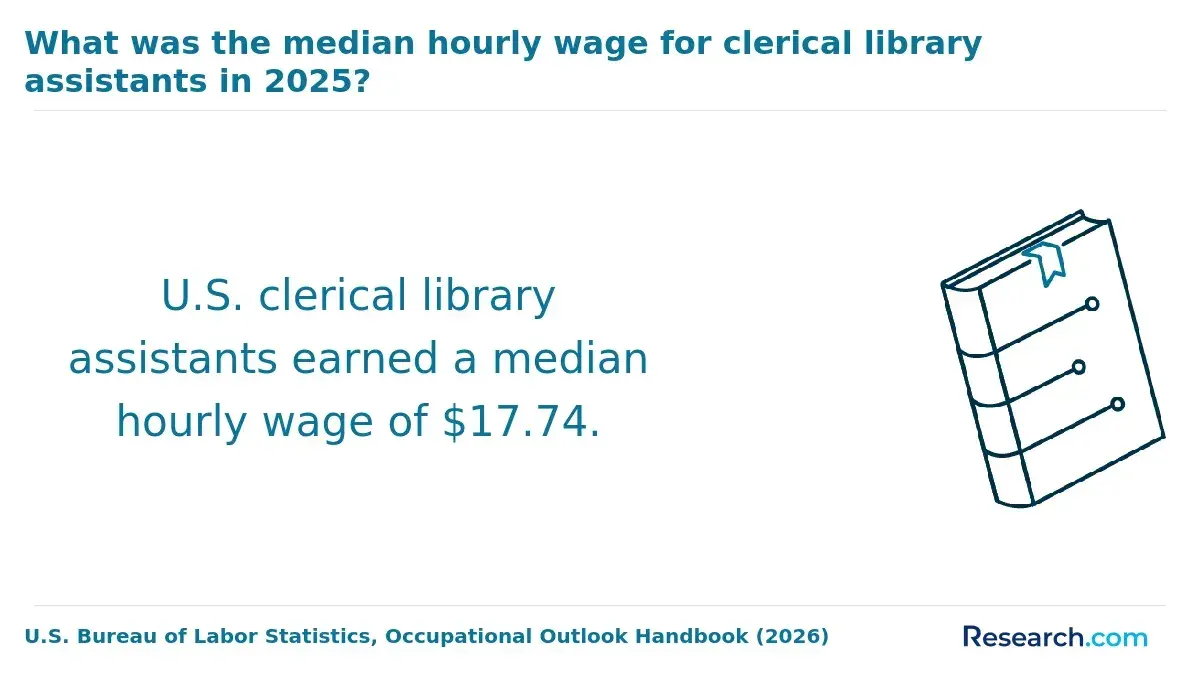
The Bureau of Labor Statistics reports a May 2025 median annual salary of $68,270 for librarians and media collections specialists and projects 2.6% employment growth for that occupation from 2025 to 2035.
Those figures describe a broad U.S. occupation, not corporate librarians alone, MLIS graduates, or people with business master's degrees. They should not be treated as a promised salary or a direct comparison with business roles.
For either path, evaluate the pay range and experience requirements in postings for your intended role and location. Compare those opportunities with your current earnings and the full cost of the program, including income you might give up to study.
The discussion of library science tuition duration and salary can help frame that comparison, but no degree-wide average substitutes for an offer in your target market.
What skills and certifications strengthen either degree?
For research-heavy roles, practice turning an unclear business request into a defensible search, evaluating source quality, and presenting findings concisely. For knowledge and content roles, learn to design usable taxonomies, describe content consistently, and test whether people can find what they need. Business-facing roles also reward stakeholder interviews, process improvement, and clear explanations of costs and benefits.
Build evidence through a project, internship, or relevant job task: for example, document how you improved a search workflow or organized a collection of reusable guidance.
Handle private company information carefully and use only material you have permission to share. Optional certifications in areas such as records or project management can complement either degree when they match job postings; none is a universal substitute for the qualifications an employer specifies.
Other Things You Should Know About Library Science Programs
It is an information service built for a particular organization or subject area. Its staff may provide research, manage specialized resources, or help employees find evidence rather than serve the general public.
Only with appropriate permission. Otherwise, describe your process without disclosing protected material, or recreate the method using public or fictional information.
It can provide transferable research, technology, and service experience. Check the requirements of the specific library role; some professional librarian openings require an ALA-accredited master's and may value setting-specific experience.
Search by the work as well as the title: research services, competitive intelligence, knowledge management, taxonomy, records, and information governance can reveal different kinds of openings. Read the duties before deciding whether a role fits.
References
- Job Titles and Responsibilities - SJSU - School of Information https://ischool.sjsu.edu/post/job-titles-and-responsibilities-special
- Deep dive into the differences between an MS in Business Analytics and an MBA - D'Amore-McKim School of Business https://damore-mckim.northeastern.edu/resources/cc-deep-dive-into-the-differences-between-an-msba-and-an-mba/
- Choosing a Concentration for a Master of Business Administration Program | UIC Business https://businessgraddegrees.uic.edu/articles/choosing-a-concentration-for-an-mba-program/
- Library and Information Studies, MLIS | University of Alabama https://catalog.ua.edu/graduate/communication-information-sciences/library-information-studies/mlis/
- Best Library Data Science Degrees Online for 2026 | Library Science Degrees https://www.librarysciencedegrees.org/programs/library-data-science
- What Is an MLIS Degree? Master of Library and Information Science Explained | gabble.ai https://gabble.ai/blog/what-is-an-mlis-degree
- The MBA Concentrations Guide | Teach https://teach.com/online-ed/business-degrees/online-masters-business-administration/concentrations/