2027 MLIS Programs for School Library Grant Writing and Fundraising

Co-Founder and Chief Data Scientist
School librarians seeking funding for books, technology, and student programs need more than a persuasive proposal: they need projects that fit school priorities and can be evaluated. Choosing an MLIS program for that work also means checking whether it leads toward the right school credential.
The U.S. Bureau of Labor Statistics projects 2.6% employment growth for librarians and media collections specialists from 2025 to 2035. This guide helps prospective students weigh curriculum, certification, format, cost, and career options without mistaking a grant-writing elective for a complete school librarianship pathway.
Key Things You Should Know
- Choose a program that supports your intended state's school librarian certification requirements; ALA accreditation and state eligibility answer different questions.
- Look for school library preparation plus opportunities to practice needs assessment, budgeting, proposal writing, and evaluation - not a presumed "grant writing" concentration.
- The May 2025 median annual pay for the broader occupation of librarians and media collections specialists was $68,270; it is not a school librarian starting-salary estimate.
What are MLIS programs for school library grant writing and fundraising?
These are library and information science master's programs that prepare students for school library work while allowing them to develop funding skills through coursework or applied projects. "School library grant writing and fundraising" is a career goal, not necessarily the name of a formal concentration.
A program might offer a documented school librarianship track, relevant electives, a suitable practicum, or only general coursework that students can apply to funding projects. Check which of those opportunities actually exists.
The work starts before a grant application. A school librarian might identify a collection gap, consult teachers and students, select resources, develop a budget, and explain how the project will improve access or learning.
After an award, the librarian may need to track spending and report results under district rules. Readers exploring other pathways can compare best online MLIS concentrations, but should verify that any listed pathway includes school-specific preparation.
Do school librarians need an MLIS degree and state certification?
For a public-school librarian position, the decisive requirement is the credential specified by the state and employer. States may call it a school librarian license, school library media certification, or an endorsement, and may differ on teacher licensure, coursework, testing, and supervised experience.
An MLIS, also sometimes titled an MLS or another LIS master's degree, may form part of the route, but the degree alone does not establish eligibility in every state.
Start with the education agency in the state where you intend to work, then ask the university which credential its specific program prepares students to seek there. If you already hold a teaching credential, an endorsement pathway may differ from the route for someone entering education for the first time.
If your goal is fundraising for a library rather than a credentialed school librarian role, compare the required preparation with shorter professional development or employer training before committing to graduate study. Working applicants who do need the degree can consider low tuition MLIS for professionals while checking credential eligibility separately.
Which accreditation should you look for in a school librarianship program?
Look at graduate program accreditation and school-credential approval as separate checks. The American Library Association (ALA) accredits eligible master's programs in library and information studies; an institution's accreditation does not mean its particular LIS master's program is ALA-accredited.
Confirm the current status of the specific degree in the ALA directory rather than relying on a university-wide statement.
Then check whether the school librarianship pathway meets the requirements of your intended state. ALA accreditation does not, by itself, award a state school librarian credential or verify that a particular elective, practicum placement, or online format is available.
Ask the program's school library adviser for its state-eligibility guidance, and confirm the answer with the state education authority - especially if you plan to enroll across state lines.
What do MLIS programs teach about grant writing and fundraising?
Relevant preparation usually combines school library practice with project planning. Grant writing is the proposal side of the work; fundraising can also involve relationships with school partners and supporters, subject to district policies. A course title alone cannot show how much supervised practice a student will get.
The following curriculum areas show how ordinary LIS coursework can contribute to a fundable school library project. They are features to check in a program's current catalog, not claims that every MLIS requires them:
| Curriculum area | Connection to funding work |
| School library services and instruction | Connects a proposed purchase or program to student and teacher needs. |
| Collection development and assessment | Helps document gaps, set selection criteria, and describe intended results. |
| Management and budgeting | Supports cost estimates, implementation plans, and stewardship of funds. |
| Research methods or evaluation | Helps define feasible measures for reporting project outcomes. |
| Grant writing or nonprofit development elective | May provide direct practice with proposals or donor communications, if offered and available to students. |
A useful applied project could be a proposal for an accessible reading collection or a family literacy initiative, supported by a needs assessment, itemized budget, implementation schedule, and evaluation plan. Before enrolling, ask whether you can develop that work in a course, practicum, or capstone - and whether the relevant elective is expected to run during your enrollment.
How do online and campus-based MLIS programs compare?
Either format can support school library preparation, but course delivery and field experience are separate questions. An online program may reduce campus travel without removing scheduled class meetings, school-day practicum hours, or requirements for an approved local placement.
A campus-based program may make local school partnerships easier to access, but that depends on the institution and placement process.
When comparing library science graduate schools online with campus options, request a term-by-term schedule for school library courses.
Ask whether classes are asynchronous or meet live, who arranges placements, whether a placement can be completed near you, and how the program handles candidates seeking credentials outside its home state. The best fit is the format in which you can complete both the coursework and required field experience.
What are the admission requirements for school library MLIS programs?
Applicants generally need a bachelor's degree and must meet the institution's graduate admissions requirements. Programs may also request transcripts, a statement of purpose, recommendations, or a résumé; specific requirements and deadlines vary.
A school library pathway may have additional eligibility or field-placement conditions, particularly when it is tied to teacher licensure or a state endorsement.
Tell admissions and the school library adviser where you intend to seek certification and whether you already hold a teaching credential. If you have prior graduate coursework, ask for a written evaluation before assuming it will reduce your degree requirements.
Policies on transfer credit library science cost savings can help frame that conversation, but the receiving program decides which credits apply, how many it accepts, and whether transferred courses satisfy school-library-specific requirements.
How long do MLIS programs take and how much do they cost?
Completion time depends on required credits, enrollment pace, course sequencing, and any school library fieldwork or additional credential requirements. Published tuition alone is not a reliable total: the amount you pay also depends on per-credit rates, mandatory fees, books and equipment, travel, and possible extra terms. Online enrollment does not automatically confer an in-state rate.
To compare offers fairly, multiply each program's published tuition rate by the credits you would actually need, then add required fees and estimated placement or travel expenses.
Obtain a personalized estimate if transfer credits or an endorsement pathway may change your course plan. An accelerated option such as a one year online library science masters is useful only if its sequencing, workload, and school-credential requirements fit your situation.
Ask about scholarships and employer support without treating either as guaranteed. If borrowing is necessary, confirm current federal aid eligibility and terms with the financial aid office for your enrollment period. Compare the full cost with your existing earnings and the positions for which the credential would make you eligible, rather than assuming grant-writing skills will produce a particular financial return.
What careers can you pursue with school library grant writing skills?
The most direct path is a school librarian or library media specialist role where funding work supports collections, instruction, technology access, and student programs.
Job titles and the time available for grant work vary by district. A school librarian may collaborate with administrators or a district grants office rather than manage fundraising alone.
Related possibilities include library program coordination, community outreach, or development work for a library-serving organization. Those positions can value proposal writing, budgeting, partnership-building, and outcome reporting, but an MLIS is not universally required; employers may seek fundraising experience or other qualifications instead.
For a school library applicant, a portfolio containing a carefully scoped sample proposal and evaluation plan can demonstrate skills without implying that the project received funding.
How much do school librarians and library media specialists earn?
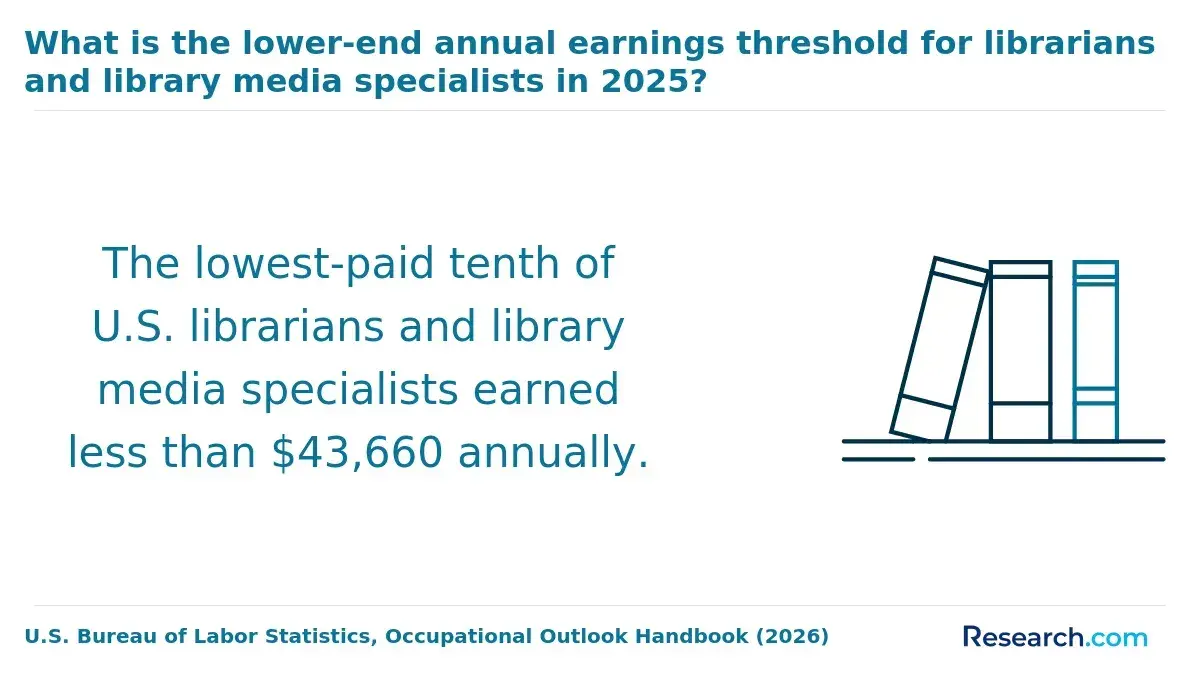
The U.S. Bureau of Labor Statistics reports a $68,270 median annual wage in May 2025 for librarians and media collections specialists. That occupation is broader than school librarianship, so the figure is a benchmark - not a school-specific salary, entry-level offer, or expected return on an MLIS.
For a decision closer to your circumstances, review salary schedules and job postings from districts where you could work. Pay may depend on the district's schedule, your qualifications, and recognized experience. Compare those terms with the total cost of the credential you would need.
What is the job outlook for school librarians and library media specialists?
The BLS projects 2.6% employment growth from 2025 to 2035 for librarians and media collections specialists. Because the category includes roles outside schools, that projection cannot predict hiring by a particular school district or state. Local staffing decisions and credential rules matter more when judging where to apply.
Grant-writing ability can strengthen a candidate's examples of planning and collaboration, but it does not replace the required school credential or guarantee a position. Before choosing a program, compare current vacancies in your target area with the credential the program prepares you to pursue.
Other Things You Should Know About Library Science
Possibly. Eligibility depends on the funder's rules, and the organization and district must agree on who will receive, spend, and account for the award. Confirm those responsibilities before submitting a proposal.
Do not assume so. Awards can restrict eligible purchases or require approval for budget changes. Check the grant agreement and your district's purchasing procedures before redirecting funds.
Students may be able to contribute ideas or help describe a library need, subject to school policies and appropriate supervision. Seek permission before sharing student work, images, or personal information with a funder.
It means the applicant must contribute resources alongside the grant award under the funder's stated rules. Confirm what counts as a match, who can commit it, and how it must be documented before applying.
References
- General Grant Writing Tips | nih.gov https://grants.nih.gov/grants-process/write-application/general-grant-writing-tips
- Student Services Certificates | Texas Education Agency https://tea.texas.gov/educators/certification/additional-certifications/student-services-certificates
- Writing Effective Proposals - Funding Tools & Materials (CA Dept of Education) https://www.cde.ca.gov/fg/fo/fm/we.asp
- Professional Development | NYSL - the New York State Library https://nysl.nysed.gov/libdev/cert/conted
- Grants and Programs | U.S. Department of Education http://www.ed.gov/grants-and-programs
- Grants to States | Institute of Museum and Library Services https://www.imls.gov/find-funding/funding-opportunities/grants-to-states-overview
- MLIS Tuition & Financial Aid - UW Information School https://ischool.uw.edu/programs/mlis/tuition-financial-aid
- How to Become a School Librarian: Your Complete Career Guide | Syracuse University https://ischool.syracuse.edu/how-to-become-a-school-librarian/
- Fundraising for School Libraries | Four Ways to Combat Barriers | Follett Software https://follettsoftware.com/resource/four-ways-to-combat-barriers-to-fundraising-for-school-libraries/
- ALA-Accredited Programs https://www.ala.org/educationcareers/accreditedprograms/directory