
2027 MLIS Programs With Corporate Information Internships

Co-Founder and Chief Data Scientist
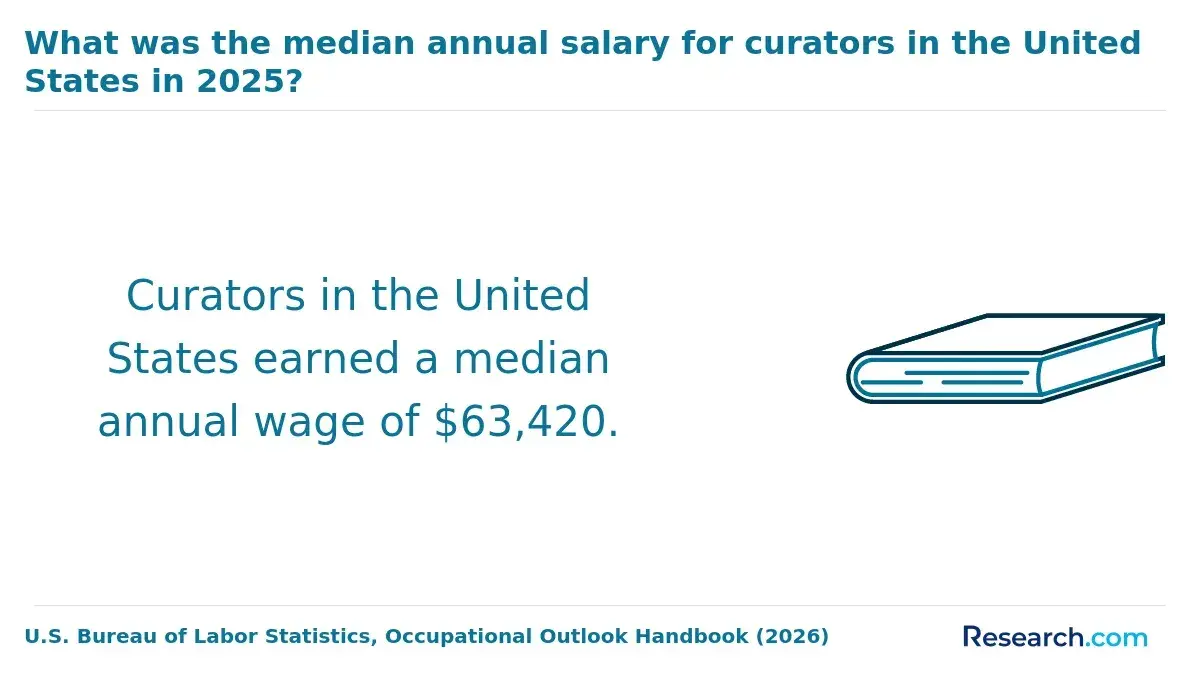
A corporate information internship can make an MLIS more relevant to research, knowledge management, and information governance - but a program's internship listing does not mean a corporate placement is available. The U.S. Bureau of Labor Statistics reports a $68,270 median annual salary for librarians and media collections specialists in May 2025; that figure is useful context, not a corporate salary estimate.
This guide helps prospective students distinguish documented opportunities from possibilities, compare online and campus options, and decide whether an MLIS with applied experience fits their career goals and budget.
Key Things You Should Know
- Look for a documented internship process and evidence of relevant employers; an elective or general practicum option does not establish a corporate placement.
- Confirm whether an employer can host remote or local work, whether the placement earns credit, and who finds and approves the site.
- The Bureau of Labor Statistics projects 2.6% employment growth for librarians and media collections specialists from 2025 to 2035, but that projection does not describe the market for every corporate information role.
What are MLIS programs with corporate information internships?
These are library and information science master's programs that allow students to apply their studies in a business or other private-sector organization. Depending on the site, an intern might improve an internal knowledge base, organize research reports, describe digital assets, assess records-retention practices, or support competitive research. Employers may call this work knowledge management, information governance, research services, or content operations rather than librarianship.
"Corporate information" is usually a career goal, not the name of a formal MLIS concentration. A program may offer relevant electives and an internship course without promising placements in companies. Conversely, a student might arrange a suitable corporate project through a general practicum. Treat coursework, permission to complete an internship, and evidence of actual placements as separate claims.
Which MLIS programs offer corporate information internships?
There is no reliable basis for treating every MLIS program with an internship course as a program that offers corporate placements. Internship hosts and approval rules can change, so a useful shortlist must be built from current program documents and direct answers from internship coordinators. The distinctions below show what to verify before naming a program a strong match.
| Published arrangement | Evidence to request | What remains uncertain |
| Required or optional internship | Current catalog requirements and placement policy | Whether corporate hosts are eligible or available |
| Student-arranged practicum | Site-approval criteria, faculty supervision rules, and sample eligible projects | Whether the student can secure a host |
| Named corporate partnership or prior placement | Current confirmation from the program and employer | Whether that placement will be offered to the next cohort |
Ask the coordinator which private-sector sites have hosted students recently, how many positions were available, and whether students competed for them. If a school cannot document a corporate option, evaluate it as a program with potential for student-arranged experience - not a guaranteed corporate internship.
Why choose an MLIS program with corporate internship experience?
A well-scoped internship gives you evidence of what you can do with information in an organization: identify a retrieval problem, design a practical solution, and explain the result to stakeholders. That experience can be more persuasive than a course title when applying for roles outside libraries, particularly if the employer uses different job titles and tools.
The benefit depends on the assignment. Repetitive filing offers less career preparation than supervised work on search, metadata, records, or knowledge-sharing decisions. Ask what deliverable you would own, which staff member would supervise you, and how the work could be described without revealing confidential information. An internship is not a job offer; applicants with substantial relevant work experience may get similar value from an applied capstone while continuing to earn a salary.
Are corporate information internships available in online MLIS programs?
They can be, but online classes do not make an internship remote. A student may complete coursework online while working at an approved local site; a remote corporate project may also be possible if the program and host permit it. Approval may depend on supervision, access to company systems, confidentiality, and the ability to assess the student's work.
Before enrolling, ask whether you must find your own host, whether your current employer can qualify, whether the internship course meets at fixed times, and whether any campus attendance is required. For someone balancing full-time work, an evening online library science program may make classes easier to schedule, but its timetable still needs to fit the host's working hours. Get the internship coordinator's approval rules in writing before relying on a proposed remote placement.
What do students learn in corporate-focused MLIS programs?
Useful preparation combines information organization with an understanding of how employees create, find, retain, and use information. Relevant electives might cover taxonomy design, metadata, search and retrieval, digital asset management, records management, or information policy. A taxonomy is a controlled way to label and group content so people can find it consistently; information governance addresses rules for managing information across its life cycle.
Coursework alone may not show whether you can work with business stakeholders. Seek an applied assignment that produces a usable artifact, such as a content audit, a metadata template, or a proposed retention workflow, with sensitive details removed from any portfolio version. If your goal includes leading teams or services, a library management specialization may add relevant planning and leadership skills, but it is not a substitute for checking the program's corporate project opportunities. Confirm when desired electives are actually scheduled; catalog inclusion does not mean they run every term.
What are the admission requirements for corporate information MLIS programs?
Admission is to the specific graduate program, not usually to a corporate internship pathway. Applicants should check the school's current requirements for an undergraduate degree, transcripts, statements, recommendations, and any program-specific materials. Prior business or library experience can strengthen an application or help clarify career goals, but it should not be assumed to replace a published degree requirement.
Applicants changing careers can use a statement of purpose to connect previous work - such as document control, research, compliance, or content management - to a concrete information problem they want to study. If your academic record does not match a published requirement, ask admissions whether an individual review is possible rather than assuming an exception. A guide to library science programs with alternative requirements can help frame that conversation, but the institution's current policy controls.
How long do MLIS programs with internships take and cost?
Time to completion depends on required credits, course sequencing, enrollment pace, and when an approved internship can begin. A short published degree timeline may not accommodate a delayed placement or a required elective offered infrequently. When comparing programs, request a term-by-term plan that includes the internship.
The cost categories below distinguish a published tuition figure from the amount a student may actually need to pay or finance. Use each school's current tuition schedule and your expected enrollment status to calculate a comparable total.
| Cost category | What to include in your estimate |
| Tuition | Required credits multiplied by your applicable per-credit rate, or the relevant term charges |
| Required expenses | University and program fees, materials, and any required travel |
| Internship-related costs | Additional tuition if the placement carries credit, commuting, and possible reduced work hours |
Published tuition is a gross education cost, not necessarily your out-of-pocket cost or the amount you borrow. Check whether a placement is paid, whether employer support applies, and whether added terms change fees. A fast one year library information science option is worth comparing only if its course and internship sequence is feasible for your schedule.
What careers can corporate information internship experience lead to?
Corporate placements can support applications for several kinds of information work, but job titles and qualifications vary by employer. The comparison below connects typical assignments to roles so you can choose an internship that yields relevant evidence for your target jobs.
| Target role | Typical work | Credential consideration |
| Corporate librarian or research specialist | Finds, evaluates, and organizes information for employees or clients | An MLIS may be valued, but check individual postings |
| Knowledge management specialist | Improves internal content, search, and knowledge-sharing practices | Employers may accept several degrees plus relevant experience |
| Information governance or records analyst | Supports retention, classification, and defensible handling of records | Policy and systems experience may matter as much as degree title |
| Metadata or digital asset specialist | Describes and organizes digital content for consistent retrieval | A portfolio can demonstrate skills gained through an MLIS or another route |
Read actual vacancies in your preferred industry before committing to the degree. If the positions you want consistently favor another qualification or hands-on systems experience, a targeted certificate or employer-based project may be a less costly starting point than an MLIS.
How much do corporate information professionals earn after an MLIS?
There is no single reliable salary figure for all corporate information professionals with an MLIS. The Bureau of Labor Statistics' May 2025 median of $68,270 for librarians and media collections specialists describes an occupation across settings, not the pay of MLIS graduates with corporate internships. Roles titled knowledge manager, records analyst, or metadata specialist may fall under different occupational categories.
Use that median as background rather than a return-on-investment forecast. For a personal estimate, compare salary ranges in current vacancies for your desired role and location with your existing earnings, total program expense, and any income you would give up during an internship. An unpaid placement can be worthwhile for relevant experience, but it increases the financial risk if it replaces paid work.
How should you evaluate an accredited MLIS program with internships?
Start with the specific master's program in the American Library Association's current accreditation directory. Institutional accreditation and ALA accreditation are different, and neither establishes that a corporate placement, elective, or online format is available. A degree may also be called an MLS, Master of Science in Library Science, or Master of Information; check the credential and program accreditation rather than relying on its initials.
Then ask each program to document its internship approval process, recent relevant sites, supervision arrangements, elective schedule, and total cost. Compare those answers against the work you hope to do. A program with strong coursework but no demonstrated corporate hosts may suit someone who can arrange a placement through an employer; a student who needs placement assistance should give more weight to documented support. When comparing online MLIS admissions and tuition, apply the same checks to each option rather than treating flexible delivery as proof of a flexible internship. Choose only after the coordinator confirms that your intended type of project is eligible.
Other Things You Should Know About Library Science
Only with the host's permission. Ask whether you can share a redacted deliverable, a sanitized description of your process, or a new sample built with nonconfidential information.
Possibly. Programs may require a distinct project, approved supervision, and work that differs from your regular duties. Obtain approval before treating your job as an internship site.
You can explore interest, but avoid promising that a project will qualify for credit. The program must assess the host, project, and supervision under its own rules.
Ownership and permitted use depend on the host's agreements and the program's requirements. Review those terms before starting, particularly if you hope to publish or reuse a project.
References
- Fact Sheet #71: Internship Programs Under The Fair Labor Standards Act | U.S. Department of Labor https://www.dol.gov/agencies/whd/fact-sheets/71-flsa-internships
- Develop an Effective Internship Program - USC Career Center https://careers.usc.edu/resources/develop-an-effective-internship-program/
- Master of Library and Information Science (MLIS) | du.edu https://morgridge.du.edu/academics-advising/programs-gr/mlis-library-and-information-science
- Internships - Compensation - UW Career & Internship Center https://careers.uw.edu/resources/internships-compensation/
- Academic Internships • Career Development Center | SUNY Purchase https://www.purchase.edu/offices/career-development/academic-internships/
- Virtual internships as alternative work-based learning | sciencedirect.com https://www.sciencedirect.com/science/article/pii/S0360131525002076
- MLIS Curriculum, Specialties & Courses | University of Arizona College of Information Science https://infosci.arizona.edu/ma-library-information-science/curriculum-specialties-courses
- Online Library Science Degree | MLIS Program at Mizzou Online https://online.missouri.edu/degrees-programs/mu/education/library-and-information-science/mlis
- Master of Library and Information Science (MLIS) | umd.edu https://info.umd.edu/academics/masters-programs/master-of-library-and-information-science/
- Internship Toolkit for Employers | College of Liberal Arts https://cla.umn.edu/community-employer-partners/cla-employer-engagement/internship-toolkit-employers


