2027 MLIS Programs With Paid Library Practicum Opportunities

Co-Founder and Chief Data Scientist
A paid library practicum can help offset the cost of an MLIS while providing experience for a first professional role. But an online degree, a practicum course, and a paid placement are three separate offerings, and finding all three together takes careful checking.
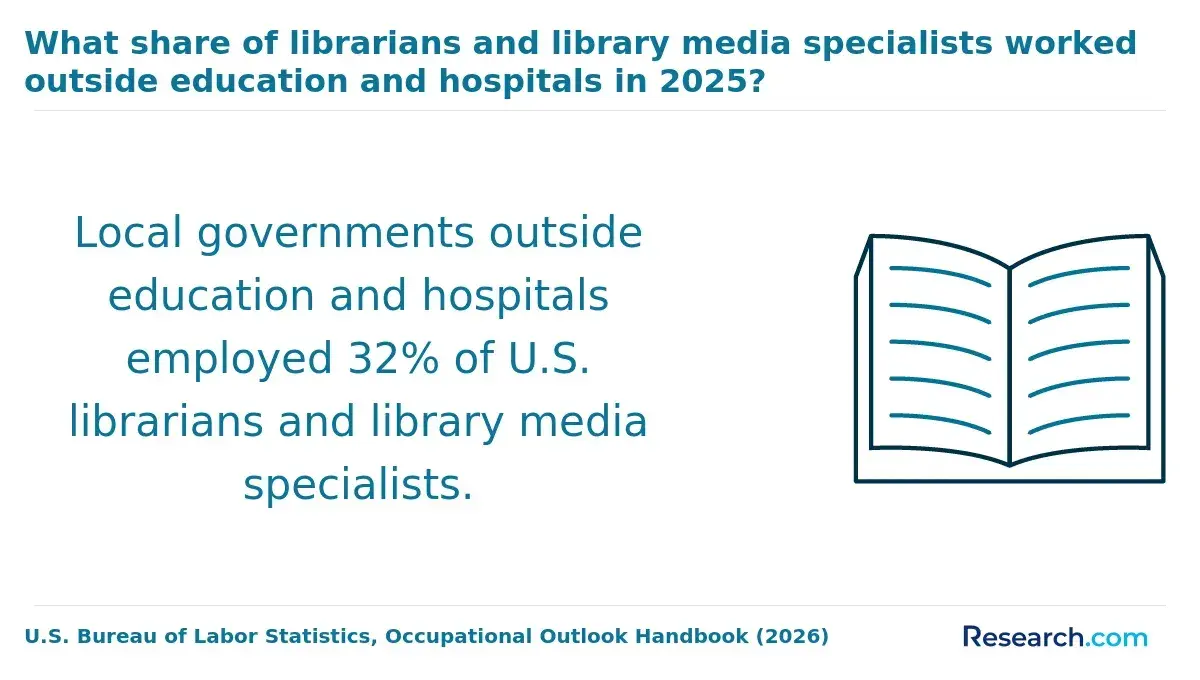
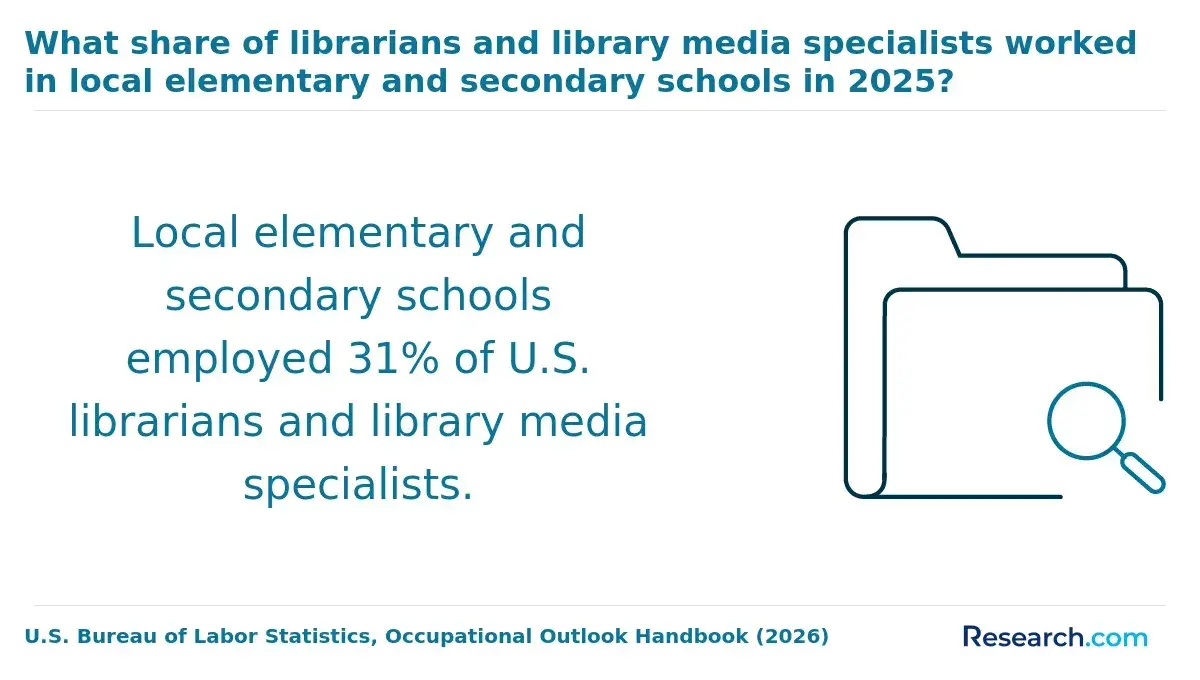
The U.S. Bureau of Labor Statistics reports a May 2025 median annual salary of $68,270 for librarians and media collections specialists; that figure is useful career context, not a promise of earnings. This guide shows prospective students how to assess placement availability, academic credit, costs, and career fit before choosing a program.
Key Things You Should Know
- A practicum listed in an MLIS catalog is not necessarily paid; confirm the employer, compensation, eligibility, and course-credit rules separately.
- Online coursework does not mean the placement is remote. Ask whether the program approves paid sites near you and whether work hours fit your schedule.
- BLS projects 2.6% employment growth for librarians and media collections specialists from 2025 to 2035. Paid experience may strengthen an application, but neither the degree nor a placement guarantees a job.
What are MLIS programs with paid library practicum opportunities?
An MLIS program with a paid library practicum allows a student to undertake supervised professional work for compensation and, when approved, apply that work toward an experiential course.
Payment usually comes from the host library or a separate university job rather than from the academic course itself. An assistantship, internship, fellowship, and practicum may have different hiring and credit rules even when the work looks similar.
The distinction that matters: A school can offer an accredited MLIS and an optional practicum without securing paid positions for students. A paid library job can likewise be valuable without qualifying for practicum credit.
Ask for written confirmation of both the employment arrangement and the academic arrangement before treating a listing as a paid-for-credit opportunity.
Which MLIS programs offer paid practicums for online students?
There is no reliable basis here for naming an MLIS program that guarantees a paid practicum to every online student. Paid openings depend on employer hiring, location, funding, and term; a university's online delivery format establishes none of those conditions.
Use the comparison below to identify the kinds of opportunities worth asking programs about, rather than treating them as confirmed offerings at any particular school:
| Opportunity to investigate | Potential advantage | What remains to verify |
| Local library placement | May let an online student work near home | Site approval, pay, supervision, and credit eligibility |
| University library assistantship | May combine wages with substantial library experience | Online-student eligibility, location requirements, and whether duties qualify for credit |
| Remote digital-collections internship | May fit students who cannot commute to a host site | Whether remote work is permitted, compensated, supervised, and available in the intended term |
Start with ALA-accredited programs whose catalogs document an experiential course, then contact the practicum coordinator about placements for online students in your state. A list of past employers is evidence of previous opportunities, not a current offer or a guarantee of wages.
How can you find paid library practicums in accredited MLIS programs?
Searching only for "paid MLIS practicum" can miss relevant positions: employers may advertise library assistantships or internships, while schools describe the corresponding academic work as field experience.
Check the current ALA directory for the specific master's program, not just the university's institutional accreditation, and then follow up with the program and potential hosts.
A short sequence of checks can prevent an attractive job listing from becoming an unusable practicum:
- Find the program's current practicum course description and identify prerequisites, required hours, and who approves sites.
- Ask the coordinator whether paid employment can qualify and whether students may propose a host library near home.
- Ask the employer whether the position is paid, who supervises it, and whether its duties and schedule can meet course requirements.
- Get site approval and any agreement in writing before accepting the role or registering for practicum credit.
If a school describes a placement network, request recent examples relevant to your location and interests. That is more informative than a general statement that internships are available.
What does an MLIS library practicum typically involve?
A library practicum typically combines assigned work at a host site with academic supervision. Depending on the setting, a student might assist with reference and information-literacy instruction, describe archival materials, improve catalog records, support community programs, or prepare digital collections for access.
Professional-level duties and a defined learning goal are more useful than a placement consisting solely of routine circulation or shelving.
Before the placement begins, the student, site supervisor, and faculty coordinator should agree on duties, supervision, hours, and how learning will be assessed.
An academic library project might produce an accessible research guide; an archives project might produce a finding aid. Public versions of either project may need review to protect patron privacy, confidential records, or employer-owned material.
Do paid practicums count toward MLIS degree requirements?
Paid work can count toward an MLIS when the program permits it and the student completes the applicable practicum requirements. Payment alone does not confer academic credit.
Schools may require advance registration, a qualified supervisor, distinct learning objectives, documented hours, and faculty evaluation; some may restrict credit for work a student was already doing.
Ask whether an approved practicum fulfills a required course, counts as an elective, or adds credits beyond the degree minimum. Students bringing prior graduate study should evaluate that separately: library science program credit evaluation concerns transfer policy, not automatic credit for professional experience.
Obtaining written approval before starting paid work is the safest way to avoid completing hours that do not count.
What do MLIS programs teach through practicum coursework?
Practicum coursework is intended to connect LIS concepts to decisions made on the job: serving users, organizing information, evaluating resources, protecting privacy, and assessing whether a service works.
A student describing digital objects, for example, may apply a metadata schema, agreed fields used to describe and retrieve materials, while learning how inconsistent descriptions affect discovery and access.
Match the placement to the work you want next. A student interested in library technology might seek supervised experience with discovery systems, accessible digital collections, or metadata workflows, then compare related electives through a library technology specialization lens.
A course appearing in a catalog does not establish that it runs every term, and a technology-focused project is not necessarily a formal concentration.
How much do MLIS programs with paid practicums cost?
Published tuition is only the starting point for comparing MLIS programs with paid experience. Calculate degree tuition from the required credits and the rate that applies to your residency and enrollment status; then add mandatory fees, materials, and any travel or site-related expenses. Ask whether practicum credits carry regular tuition and whether course sequencing could require another term.
Keep three figures separate: gross education cost, expected out-of-pocket cost after confirmed assistance and pay, and the amount you may need to borrow.
A wage does not necessarily cover tuition, and a competitive assistantship should not be included in a budget until awarded. If speed affects your costs, compare library science degree completion time against the actual practicum schedule, not just the fastest advertised course sequence. Confirm current aid eligibility and borrowing terms with the school's financial aid office before committing.
What are the admission requirements for MLIS programs with practicums?
MLIS applicants generally need a bachelor's degree and the documents specified by each graduate program, such as transcripts, a statement of purpose, a résumé, and recommendations.
Requirements for grades, tests, application dates, and relevant work experience vary. Admission to the degree does not mean admission to a paid assistantship or selection by a practicum employer; those opportunities can have separate applications and hiring criteria.
If paid experience is essential to your budget, ask admissions when students become eligible to apply and whether positions are available to new, part-time, and online students.
Request that the practicum coordinator, not admissions alone, confirm site and course policies. Apply early enough to complete any employer selection process before the term in which you need the placement.
What careers and salaries can MLIS graduates expect after paid practicums?
A well-matched practicum can give employers evidence of supervised work, references, and projects relevant to public, academic, special, or government libraries. It may also support applications for archives or adjacent information-management roles, though those jobs have differing qualification requirements.
The MLIS is common preparation for professional librarian positions; library technician and other support roles may offer entry points without it.
BLS reports a May 2025 median annual salary of $68,270 for librarians and media collections specialists, compared with $44,580 for library technicians. These are occupation-wide medians, not starting salaries or estimates of a practicum's payoff.
Compare local job postings and their required credentials with your likely education costs and existing earnings. State-specific pathways matter too: readers considering Illinois MLIS programs and careers should assess the roles and requirements that apply where they intend to work.
How do you choose a reputable MLIS program with paid experience?
Choose a program by testing its claims against your intended job and circumstances. Verify the specific master's degree in the current ALA accreditation directory; institutional accreditation alone is not the same designation.
Then compare documented practicum rules, online-student eligibility, recent placement examples, relevant courses, total cost, and the availability of someone who can help arrange a site.
Ask each finalist: "Can an online student in my location complete a paid, credit-bearing placement in my intended term, and what approvals are required?" Get the answer in writing, including any limits on existing jobs or remote work.
Compare accredited MLIS degree outcomes cautiously: broad career information cannot establish what one program's practicum will deliver. If your goal is school librarianship, also check the relevant state education authority's certification rules; ALA accreditation and online study do not by themselves establish licensure eligibility.
Other Things You Should Know About Library Science
Some do, particularly when work involves children or access to sensitive facilities or records. Ask the host about screening, timing, and any student-paid costs before planning a start date.
Often, with the host's permission. Request approval before sharing records, screenshots, code, or reports, and remove confidential or patron-identifying information.
Not necessarily. Employers set their own criteria. Relevant customer service, teaching, research, records, or technology experience may help you demonstrate readiness for the position.
Eligibility depends on immigration status and the particular job and course arrangement. Consult the university's designated school official before accepting paid work or relying on it to meet a degree requirement.
References
- Understanding College Costs | studentaid.gov https://studentaid.gov/resources/prepare-for-college/students/choosing-schools/consider-costs
- Optional Practical Training (OPT) for F-1 Students | uscis.gov https://www.uscis.gov/working-in-the-united-states/students-and-exchange-visitors/optional-practical-training-opt-for-f-1-students
- Cost of Attendance (Budget) | 2025-2026 Federal Student Aid Handbook https://fsapartners.ed.gov/knowledge-center/fsa-handbook/2025-2026/vol3/ch2-cost-attendance-budget
- Students and the Form I-20 | Study in the States https://studyinthestates.dhs.gov/students/prepare/students-and-the-form-i-20
- MLIS Graduate Students - Volunteering - Library Research https://research.fairfaxcounty.gov/c.php
- College Supervised Practicum | nysed.gov https://www.nysed.gov/teaching-initiatives/college-supervised-practicum
- Chapter 9: Information Institutions and Professional Associations | unt.edu https://openbooks.library.unt.edu/information-knowledge-professions/chapter/chapter-9-information-institutions-and-professional-associations/
- Master of Library and Information Science (MLIS) | umd.edu https://info.umd.edu/academics/masters-programs/master-of-library-and-information-science/
- Types of Libraries: 6 Categories and Their Roles | Syracuse University https://ischool.syracuse.edu/types-of-libraries/
- Special Libraries - SJSU - School of Information https://ischool.sjsu.edu/special-libraries