
2027 MLIS Programs for Federal Depository Library Careers

Co-Founder and Chief Data Scientist
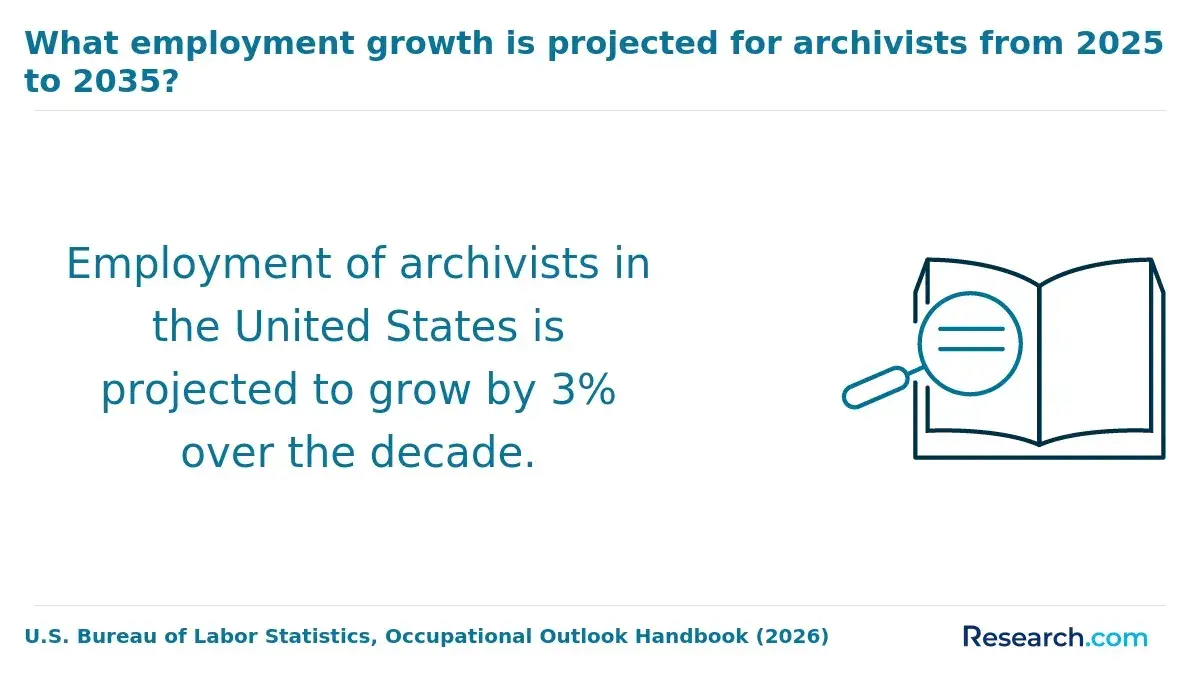
A federal depository library career calls for more than a general interest in government. Librarians help people find, evaluate, and use federal information across print and digital collections, so the right MLIS program must support both reference work and government information expertise. The U.S. Bureau of Labor Statistics projects 2.6% employment growth for librarians and media collections specialists from 2025 to 2035; that broad outlook makes targeted experience especially valuable.
This guide helps prospective students assess programs, costs, credentials, and career options without mistaking a depository library job for a federal government job.
Key Things You Should Know
- Look for an ALA-accredited LIS master's program with government information coursework or projects, strong reference training, and access to relevant field experience; a named federal depository concentration is not necessary.
- Federal depository libraries include institutions outside the federal government. Their librarian positions follow each employer's hiring rules, while federal agency jobs may have separate qualification standards.
- The May 2025 median annual pay for the broad U.S. occupation of librarians and media collections specialists was $68,270, not a salary specific to depository positions or new MLIS graduates.
What is an MLIS program for federal depository library careers?
It is a graduate library and information science program that prepares a student to help the public use U.S. government information. Federal Depository Library Program (FDLP) libraries provide access to federal publications and related information. A depository librarian might answer questions about legislation or statistics, teach researchers how to locate agency publications, maintain records for government materials, and connect users with accessible digital sources.
"MLIS" describes one common degree title, not a required name for the credential. Institutions may award an MLS, a Master of Science in Library Science, a Master of Information, or another LIS master's degree. What matters is the specific program's accreditation, curriculum, and fit with the positions a student intends to pursue. Government information preparation may come from electives and applied work rather than an officially designated concentration.
The distinction between depository library and federal employer shapes the search. A university, public, or law library can participate in the FDLP without employing federal civil servants. Students interested in those libraries should study their local hiring expectations; students seeking federal agency positions should also review the qualifications in each federal vacancy announcement.
Which accreditation should an MLIS program have for federal library jobs?
For professional librarian roles, an American Library Association (ALA)-accredited master's program is a strong starting point because many employers recognize that credential. Check the specific LIS program in ALA's current directory before applying. Accreditation of the university itself is a separate matter and does not establish that its LIS master's program is ALA-accredited.
Accreditation does not verify a government information elective, a federal depository internship, or an online delivery option. Compare the program's current catalog and course schedule separately. A useful first pass through library science degree options online should therefore lead to a program-by-program check of accreditation and relevant offerings.
For federal agency jobs, read the current vacancy announcement and the applicable U.S. Office of Personnel Management qualification standard rather than assuming that any degree title automatically qualifies. For university, public, or law library jobs, the employer's stated education and experience requirements control.
What degree requirements apply to federal depository library careers?
There is no single degree rule covering everyone who works with FDLP materials. Professional librarian postings commonly seek an LIS master's degree, often from an ALA-accredited program, but requirements vary by employer and role. Library assistants and technicians may enter through different education and experience pathways. A law library position may value legal research knowledge; an academic library may emphasize instruction and faculty support.
A federal depository assignment is often part of a broader job. One librarian might combine government information with reference and teaching, while another handles collection management or digital access. Read the full description to determine whether the MLIS is required, preferred, or one acceptable qualification - and whether government information expertise is central or incidental.
Someone interested mainly in federal records, data analysis, or web publishing should compare those job descriptions before enrolling. Records management, public policy, information technology, and other fields can provide more direct preparation for some adjacent positions; an MLIS is not a universal entry requirement for information work.
Are online MLIS programs suitable for federal depository library careers?
Yes - an online MLIS can be suitable when the specific program is appropriately accredited and lets students develop relevant skills and experience. Delivery format alone says little about preparation. Compare access to government information electives, reference instruction, research support, and an applied project or placement that can involve federal publications.
Ask how live meetings, time zones, and course sequencing affect enrollment. An evening online library science program may suit a working applicant, but evening classes are not the same as fully asynchronous study. Similarly, an online degree does not establish that a practicum can be completed remotely or at a nearby depository.
For students without library experience, a local placement can be especially valuable: it provides a chance to handle real reference questions and observe how users encounter government information. Confirm placement approval, supervision, and any on-site requirements with the program before relying on that opportunity.
What courses prepare students for federal depository library work?
Government information or government publications is the most directly relevant subject when a program offers it. Reference and information services, research instruction, collection development, metadata, and digital preservation can also prepare students for the work. These are course areas to investigate, not a claim that every MLIS program requires or offers them.
The strongest combination depends on the intended job. A public-facing librarian benefits from reference interviewing, accessible instruction, and the ability to explain unfamiliar government sources. A collections-focused librarian needs knowledge of discovery, description, and long-term access. Metadata skills matter when records must help users find publications across catalogs and digital systems.
Course titles are only a starting point. Examine descriptions and recent schedules to see whether students work with sources such as federal agency publications or GPO's GovInfo service. Ask whether a supervised project could produce a research guide, an instruction session, or a documented improvement to the discovery of government materials. A catalog listing alone does not establish that an elective will run before graduation.
What are the admission requirements for MLIS programs?
Applicants generally need a bachelor's degree, but minimum grades, required documents, test policies, and deadlines are program-specific. Review each school's current admissions page for transcript rules, recommendations, a statement of purpose, and any requirements that apply to international applicants. Previous library employment can strengthen an application but should not be assumed to replace a formal degree requirement.
A statement of purpose can connect the applicant's experience to government information work: public service, legal or policy research, teaching, community outreach, or digital collections are all potentially relevant. Applicants changing careers should also ask whether the school offers advising that helps them build library experience alongside coursework.
Admission and affordability are separate decisions. If funding affects whether enrollment is feasible, investigate school aid and scholarships for aspiring librarians early; eligibility, award amounts, and renewal terms vary. Request an individual review from admissions when a transcript or prior degree does not fit the published requirements.
How long do MLIS programs take and what do they cost?
Completion time depends on required credits, enrollment pace, and when needed courses are offered. Full-time students may finish sooner than part-time students, but a missed elective or placement window can extend either schedule. For a program-specific timeline, map the required courses and intended government information electives against published schedules. Readers comparing accelerated options can use how fast can you get a library science degree online as a starting point, then confirm each school's actual sequencing.
No single tuition figure describes the cost of an MLIS for depository work. The table separates the cost categories that determine whether an apparently affordable program fits a student's budget; amounts must come from each school's current published rates and policies.
| Cost category | What it includes | Why it can differ |
| Tuition | Published rate applied to required credits | Credit requirements and residency or online rates vary |
| Mandatory fees | University and program charges | Some are assessed by credit; others by term |
| Learning and placement costs | Materials, equipment, and possible travel | Requirements depend on courses and fieldwork location |
| Additional terms | Charges incurred if enrollment extends | Part-time pacing and course availability affect timing |
Calculate gross program cost from the required credits, applicable tuition rate, fees, and likely additional expenses. Then distinguish that amount from what grants or employer support might cover and what would need to be paid or borrowed. Confirm current aid eligibility and loan terms with the school's financial aid office; do not assume an online rate, scholarship, or employer benefit applies to every student. The investment makes the most sense when the target jobs' requirements and the student's existing earnings justify the cost and time away from other opportunities.
What jobs can an MLIS graduate pursue in federal depository libraries?
Depository work appears under several job titles rather than one universal "federal depository librarian" title. The table shows how responsibilities can differ, helping applicants match electives and experience to the jobs they actually want.
| Possible role | Typical connection to government information | Preparation to prioritize |
| Government information librarian | Reference, instruction, outreach, and access to federal publications | Government sources, research assistance, and teaching |
| Reference or research librarian | Assisting users whose questions involve federal laws, data, or agency information | Reference interviews and source evaluation |
| Collections or technical services librarian | Describing, organizing, and maintaining access to government materials | Collection workflows, metadata, and discovery |
| Law librarian with depository duties | Supporting legal research involving federal materials | Legal information research and user instruction |
An entry point may be a broader reference or technical services job that includes depository responsibilities. For applicants without professional library experience, a supervised placement, part-time library role, or project using federal information can provide evidence of relevant skills. Keep a portfolio artifact - such as a research guide or an accessibility-reviewed instruction resource - that explains the user need, sources selected, and decisions made.
Job titles do not establish uniform degree requirements. Compare postings from the type of institution where you hope to work, then choose coursework and experience that address the recurring duties rather than relying on a specialization label alone.
How much do federal depository librarians earn?
The Bureau of Labor Statistics reports a $68,270 median annual wage in May 2025 for U.S. librarians and media collections specialists. That figure covers a broad occupation; it is not a measured median for FDLP librarians, federal employees, entry-level hires, or graduates of a particular MLIS program.
Actual pay depends on the employer, location, job classification, experience, and responsibilities. A university depository position may use a different pay structure from a federal agency librarian role. Use current postings for the institutions and regions you are considering when assessing whether an MLIS is financially workable. For a broader comparison of MLIS career paths and salaries, keep occupation-wide figures separate from individual offers and program outcomes.
What certifications and professional standards matter for federal library careers?
There is no universal additional certification required simply to work with FDLP collections. An employer may expect an LIS master's degree and demonstrated government information skills, while specialized positions can set other requirements. Check the actual posting before paying for a certificate that may not improve eligibility.
Professional practice is more directly relevant. The U.S. Government Publishing Office administers the FDLP and provides guidance and training for participating libraries. Librarians need to understand the program's access and collection responsibilities, follow current guidance applicable to their institution, and help users navigate both physical and digital federal information. Continuing education can help staff keep pace with changes to discovery tools and digital access.
ALA program accreditation concerns the graduate program, not an individual librarian's license. State school librarian credentials are a separate pathway and do not automatically follow from an MLIS or an FDLP-focused placement. If a position combines school library duties with government information work, verify certification requirements with the relevant state education authority.
Other Things You Should Know About Library Science
Federal depository libraries provide public access to federal government information. Check a particular library's hours and visitor procedures before going; access to the institution's other services may follow different rules.
Yes. Many federal publications are available online through government sources, including GPO's GovInfo service. A depository library can still help you identify the right source or locate material that is difficult to find.
The FDLP concerns U.S. federal government information. An individual library may also collect state or local materials under its own collection policy, but those holdings are not implied by its depository status.
A library may have ordinary printing or reproduction charges. Ask about its policies before requesting copies; a copying fee is different from a charge to access federal depository information.
References
- Pathways Programs | Federal Register https://www.federalregister.gov/documents/2024/04/12/2024-06810/pathways-programs
- Students & Recent Grads | U.S. Department of the Interior https://www.doi.gov/pathways
- Classifying General Schedule Positions | U.S. Office of Personnel Management https://www.opm.gov/policy-data-oversight/classification-qualifications/classifying-general-schedule-positions/
- Federal Depository Library Program | gpo.gov https://www.gpo.gov/how-to-work-with-us/agency/services-for-agencies/federal-depository-library-program
- Federal Depository Library Program (FDLP) | Research Guides at Library of Congress https://guides.loc.gov/us-government-publications/federal-depository-library-program
- What will my library be expected to do in a digital FDLP? What options do we have? | gpo.gov https://ask.gpo.gov/s/article/What-will-my-library-be-expected-to-do-in-a-digital-FDLP-What-options-do-we-have
- online Master of Library and Information Science | DEN-EDU https://morgridgeonline.du.edu/online-mlis-program/
- MLIS Curriculum, Specialties & Courses | University of Arizona College of Information Science https://infosci.arizona.edu/ma-library-information-science/curriculum-specialties-courses
- School of Information Studies Department Courses | Queens College Catalog https://qc-graduate.catalog.cuny.edu/departments/GLIS-QC/courses
- Become a Librarian | ALA https://www.ala.org/educationcareers/libcareers/become


