2027 MLIS Programs for Nurses Moving Into Health Sciences Libraries

Co-Founder and Chief Data Scientist
Moving from nursing into a health sciences library means choosing an education path that builds on clinical knowledge without assuming bedside experience replaces library training.
The U.S. Bureau of Labor Statistics projects 2.6% employment growth for librarians and media collections specialists from 2025 to 2035, so a career change deserves careful planning rather than an assumption of abundant openings.
This guide helps nurses assess MLIS programs, build relevant experience, compare costs, and decide whether a librarian role - or a different information career - fits their goals.
Key Things You Should Know
- An ALA-accredited master's is a strong choice for nurses seeking professional librarian positions, but employers set their own qualifications; a nursing credential does not replace library training.
- Look for evidence-searching, evidence synthesis, health information, and applied-project opportunities, not just a program's mention of healthcare. Check whether relevant electives actually run when you need them.
- The May 2025 median salary for the broad U.S. occupation of librarians and media collections specialists was $68,270; it is not a health sciences librarian starting salary or a forecast of what an MLIS graduate will earn.
What Is an MLIS Program for Nurses Entering Health Sciences Librarianship?
An MLIS is a graduate degree in finding, organizing, evaluating, preserving, and providing access to information. For a nurse pursuing health sciences librarianship, its value lies in pairing library methods with knowledge of clinical terminology, care settings, and how healthcare professionals use evidence.
The same career preparation may appear in a degree called an MLS, Master of Science in Library Science, or Master of Information; evaluate the specific program and curriculum rather than the initials alone.
Health sciences librarians may teach clinicians to search databases, help researchers develop reproducible searches for evidence syntheses, manage collections, or support research data and scholarly communication.
They do not make clinical decisions for a care team. A nursing background can help a librarian understand a research question, but the MLIS should add skills such as search strategy design, instruction, information ethics, and evaluating sources.
"Health sciences" may describe a formal concentration, a set of electives, an individual course, or a student-designed project. Those are different levels of preparation. Ask each program what it officially offers and what a nursing student can complete within the planned schedule.
Do Nurses Need an ALA-Accredited MLIS to Become Health Sciences Librarians?
There is no universal requirement that a health sciences librarian hold an ALA-accredited MLIS. Individual hospital, academic medical center, government, and other employers determine their hiring criteria.
An ALA-accredited master's is nevertheless a useful option for someone targeting professional librarian openings, particularly when job postings specify an accredited LIS degree.
ALA accreditation applies to a particular master's program, not automatically to every degree at an institution. Verify the current status of the exact program in the ALA directory before enrolling. Accreditation also does not establish that a health sciences elective, internship, or online format is available.
A nurse seeking research coordination, clinical informatics, or another adjacent information role should compare actual job requirements before paying for an MLIS; those jobs may favor different training. Requirements can also change by role and location.
For an example of why a state-focused check matters, review Illinois librarian education requirements, then confirm the requirements for the particular position with its employer or relevant state authority.
What Career Paths Can Nurses Pursue With an MLIS Degree?
Nurses can aim for several library roles, but each uses clinical experience differently. The comparison below shows where an MLIS is most directly relevant and what to seek while studying; titles and degree requirements vary by employer:
| Path | Typical work | Useful preparation |
| Hospital librarian | Supports clinical questions, staff instruction, and access to journals and databases | Clinical search practice, reference service, and teaching |
| Academic health sciences librarian | Supports health professions students, faculty, and researchers | Instruction, evidence synthesis, and scholarly communication |
| Evidence synthesis or research support specialist | Designs and documents searches for reviews | Reproducible search methods and collaborative project experience; an MLIS may be one of several accepted qualifications |
| Health information or data support professional | Organizes information resources or supports research data workflows | Metadata, privacy, and data-management skills; degree preferences vary |
For a first professional librarian application, a portfolio can show more than a nursing résumé alone: include a documented search strategy, a brief instruction plan, or a clearly scoped collection or research-support project. Remove patient information and follow workplace policies when creating samples.
Nurses considering other LIS directions can compare MLIS specializations with strong outcomes against the jobs they actually want, rather than assuming every information career requires the same degree.
Should Nurses Choose an Online or Campus-Based MLIS Program?
Choose the format that makes the necessary courses and experience feasible alongside your nursing schedule. Online delivery alone does not mean self-paced study: programs may use live meetings, fixed deadlines, group work, or locally arranged field placements.
Campus-based study may make it easier to use nearby libraries and meet potential mentors, but travel and class times can be difficult for shift workers.
Ask whether required classes are synchronous, when health-related electives are offered, and whether a practicum can be completed near home or at your current employer. If you hope to use a hospital library for fieldwork, confirm the program's supervision and approval rules before counting on that arrangement.
Nurses prioritizing a faster or less expensive route can explore an affordable short librarian degree, while checking that its timetable and curriculum still support health sciences work.
What Courses Do Health Sciences MLIS Programs Typically Include?
Relevant preparation usually combines general LIS foundations with courses or projects directed at health research. Course names differ, and an elective appearing in a catalog may not be offered during every student's enrollment. Look for documented opportunities to develop these skills:
- Information retrieval and reference: Translating a clinical question into a structured, effective database search.
- Research methods and evidence synthesis: Documenting searches so a review team can understand and reproduce them.
- Instruction and information literacy: Teaching students or clinicians to find and assess evidence.
- Collection development and scholarly communication: Evaluating resources and helping users navigate research publishing and access.
- Metadata, data management, and ethics: Organizing research outputs while respecting privacy and responsible use of information.
Prioritize a program where you can apply these skills, not merely read about them. A supervised practicum, capstone, or independent project involving health information can produce work to discuss in interviews. If a school advertises a concentration, verify its required courses; if it does not, ask whether an approved elective pathway can still meet your goals.
What Are the Admission Requirements for MLIS Programs?
Applicants generally need a completed bachelor's degree and the materials specified by each graduate program, which may include transcripts, a statement of purpose, recommendations, and a résumé. Schools set their own academic and application policies.
Nursing experience can strengthen an explanation of career goals, but it should not be assumed to waive degree requirements or guarantee admission.
In a statement of purpose, connect a specific experience, such as helping colleagues locate evidence, to the library skills you want to learn. If you have previous graduate coursework, request an individual transfer-credit review before budgeting for a shorter program.
Transfer rules concern eligible graduate credits and may limit how many credits count or which requirements they satisfy. Comparing accredited library masters transfer options is a starting point, not a substitute for written confirmation from the admitting school.
How Long Do MLIS Programs Take and What Do They Cost?
Completion time depends on required credits, course sequencing, enrollment pace, and whether a practicum or project fits your work schedule.
Part-time study may preserve nursing income but extend the period in which you pay fees and balance two demanding commitments. Do not assume a program described as online or accelerated will offer every required course whenever you need it.
Published tuition is not the full cost. For each program, calculate tuition using its required credits and the rate that applies to you, then add mandatory fees, materials, technology needs, and any practicum or campus travel.
Ask whether changing enrollment pace changes fees or eligibility for aid. Employer reimbursement, scholarships, and assistantships can reduce personal out-of-pocket cost, but availability and conditions must be verified; borrowed funds still have to be repaid.
For a career-change decision, compare the total amount you would pay or borrow with your current nursing earnings and the qualifications in local job postings. A low cost MLIS return on investment comparison can help frame the trade-off, but no published occupational median can establish your personal payback period.
What Jobs Can Nurses Get After Completing an MLIS Program?
Relevant job titles include medical librarian, health sciences librarian, clinical librarian, instruction librarian, and research or evidence synthesis librarian. Hospitals, universities, and other research organizations may define similar work under different titles. Read duties and minimum qualifications rather than searching only for one title.
A nurse without library experience may need to demonstrate search, teaching, and information-service skills before competing effectively for a professional opening. During the degree, seek supervised work in a medical or academic library, collaborate on a properly scoped evidence-search project, or build an instruction portfolio.
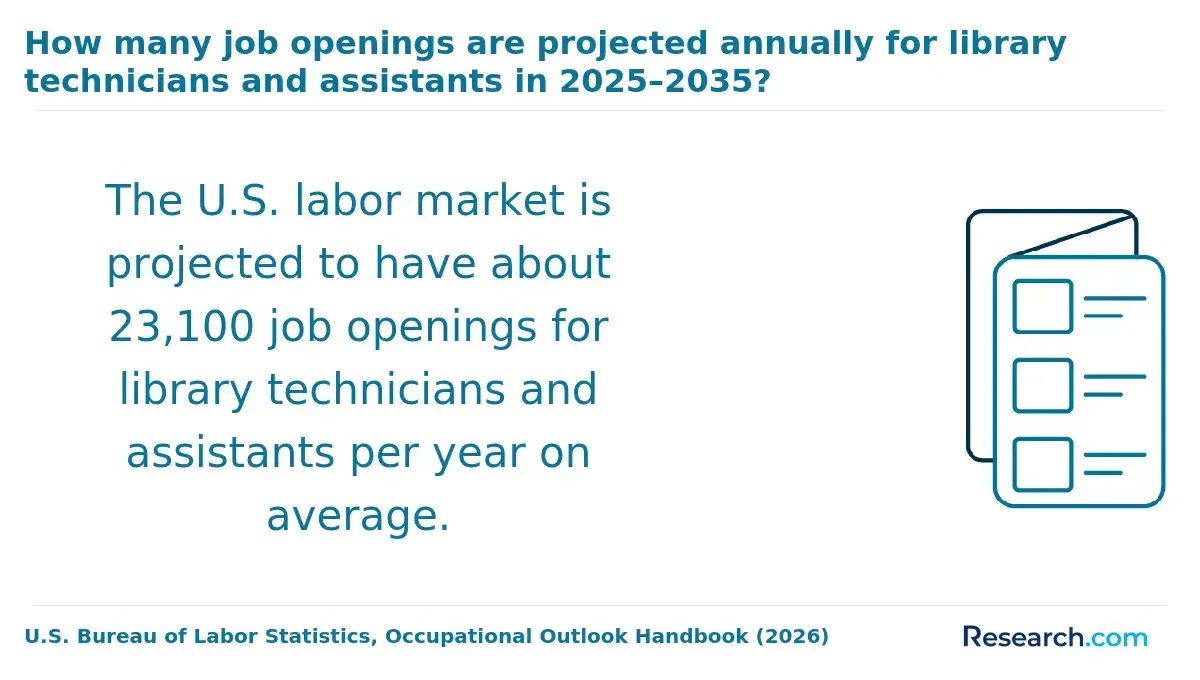
Library assistant and technician positions can offer exposure, but they are distinct from professional librarian roles and should not be treated as automatic promotions.
If the jobs that appeal to you primarily involve clinical informatics or patient-care operations rather than library services, compare their required credentials with an MLIS before enrolling. Your nursing background is valuable, but the best qualification depends on the work you want to perform.
How Much Do Health Sciences Librarians Earn?
The Bureau of Labor Statistics reports a May 2025 median annual salary of $68,270 for U.S. librarians and media collections specialists. That broad category is the most useful benchmark here, not a salary figure specific to nurses entering health sciences libraries.
Pay for a particular opening depends on its employer, location, responsibilities, and experience requirements.
Compare advertised compensation and benefits for positions you would realistically qualify for with your current nursing package, including shift differentials if applicable.
Also compare the type of work and schedule: a lower initial salary might still fit some career goals, while for others it could make an expensive degree impractical. Avoid treating a national occupational median as an entry-level offer or a program outcome.
Is AHIP Certification Required for Health Sciences Librarians?
No universal AHIP requirement applies to health sciences librarians. AHIP, the Academy of Health Information Professionals, is a professional credential associated with the Medical Library Association, not an ALA-accredited degree or a nursing license. An employer may value it, but applicants should check each posting rather than assume it is mandatory.
For a nurse just entering the field, the more immediate priorities are meeting a target job's degree requirements and gaining evidence-search and library-service experience.
If AHIP becomes relevant to your career plan, review the Medical Library Association's current eligibility and documentation rules before spending money or planning a credential timeline.
Other Things You Should Know About Library Science
Not for every library position. Check each employer's qualifications and your state nursing board's renewal rules before deciding whether to maintain it; letting a license lapse can affect your ability to return to nursing.
Do not assume so. Access depends on the job, employer policy, and the work being performed. Library projects and portfolio samples should avoid identifiable patient information unless its use is expressly authorized.
Expectations vary. Some academic positions include scholarship or promotion requirements, while hospital roles may emphasize services and instruction. Review the posting and ask how performance is evaluated.
Yes, potentially. Core LIS skills can transfer, but another setting may require different subject knowledge, experience, or credentials. A nurse who wants that flexibility should build broadly useful library skills alongside health-focused projects.
References
- Systematic Reviews | CDC Library https://www.cdc.gov/library/research-guides/systematic-reviews.html
- Developing Pathways to Health Sciences Librarianship with an Introductory Course and Mentoring Program - PMC https://pmc.ncbi.nlm.nih.gov/articles/PMC9698376/
- Cost of Attendance (Budget) | 2025-2026 Federal Student Aid Handbook https://fsapartners.ed.gov/knowledge-center/fsa-handbook/2025-2026/vol3/ch2-cost-attendance-budget
- iSchool Fees - SJSU | School of Information https://ischool.sjsu.edu/fees
- Learn with the Library: Welcome | mssm.edu https://libguides.mssm.edu/education
- MLIS Tuition & Financial Aid - UW Information School https://ischool.uw.edu/programs/mlis/tuition-financial-aid
- Tutorials in Health Sciences Research Skills | Rutgers University Libraries https://www.libraries.rutgers.edu/teaching-support/tutorials-health-sciences-research-skills
- Accreditation Frequently Asked Questions | ALA https://www.ala.org/educationcareers/accreditedprograms/faq