2027 Online MLIS Programs Compared by Metadata and Research Analytics Coursework

Co-Founder and Chief Data Scientist
Choosing an online MLIS for metadata or research analytics takes more than finding a course with a promising title. You need to know whether the program is ALA-accredited, whether relevant electives will run while you are enrolled, and whether you can build evidence of your skills.
The distinction matters for career planning. The U.S. Bureau of Labor Statistics projects 2.6% employment growth for librarians and media collections specialists from 2025 to 2035. This guide helps prospective students compare curricula, costs, formats, and career pathways without mistaking an elective for a guaranteed specialization.
Key Things You Should Know
- Compare programs at three levels. Verified ALA accreditation, published metadata and analytics courses, and access to applied projects or practica. A course listing does not guarantee a seat.
- Metadata coursework may cover description, schemas, and linked data. Research analytics coursework may cover bibliometrics and research impact. Check which courses are required and which are electives.
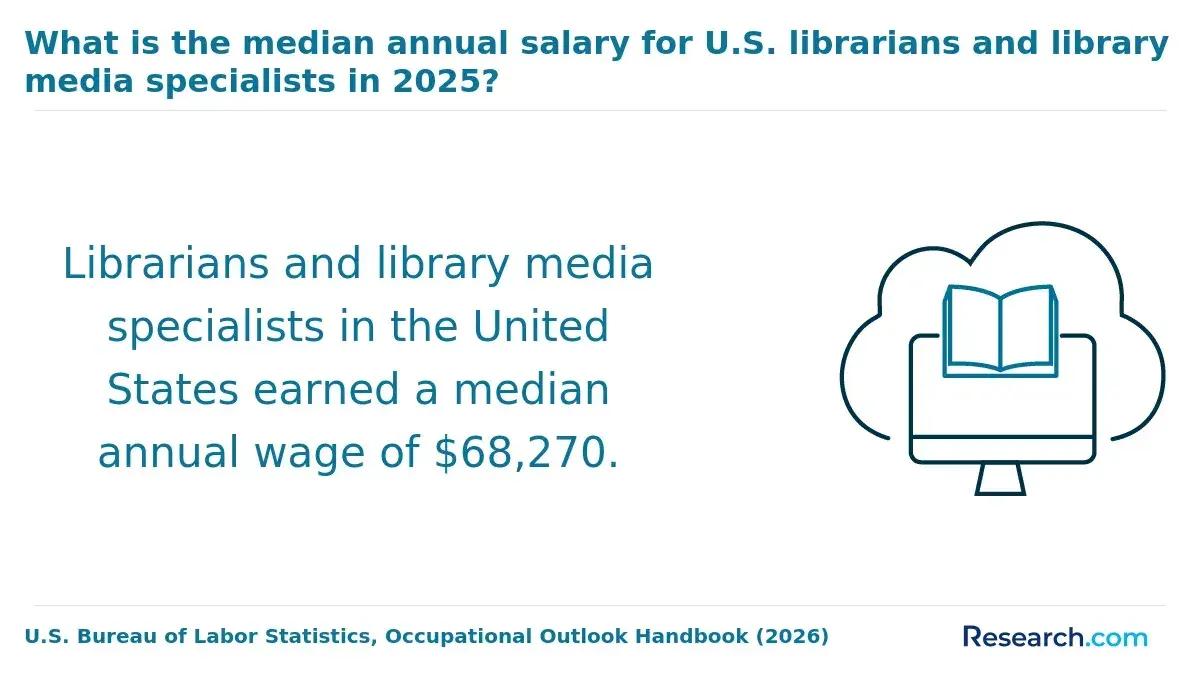
- The May 2025 median annual pay for librarians and media collections specialists was $68,270, but that occupational figure is not a salary forecast for MLIS graduates or specialized metadata roles.
What are online MLIS programs with metadata and research analytics coursework?
These are graduate library and information science programs delivered substantially online that let students study how information is described, connected, measured, and used. Metadata makes resources findable and manageable through structured descriptions. Research analytics examines research activity and outputs, often to support discovery, reporting, or decisions about scholarly communication.
The degree name is not always MLIS: schools may award an MLS, Master of Science in Library Science, Master of Information, or another institution-specific LIS degree. Compare the actual curriculum and the accreditation status of the specific master's program rather than assuming different degree names signal different career eligibility. For a broader comparison of degree titles, see library science credentials explained.
A formal concentration is a named, documented program pathway. A related elective or independently arranged project is not a concentration, although either may provide useful preparation. This distinction matters if you want a structured sequence rather than assembling your own course plan.
Which online MLIS programs are ALA-accredited?
The American Library Association accredits specific master's programs in library and information studies, not every degree offered by an accredited university.
To identify a qualifying online option, check the current ALA directory for the exact program, then check the university's current program page for its online delivery options. Neither source alone establishes both facts, and ALA accreditation does not verify a particular elective or concentration.
Make a shortlist only after confirming the degree name, its accreditation status, and whether you can complete your intended coursework in your delivery format. If a school offers multiple information degrees, ask which one appears in the directory.
If you hope to become a school librarian, also check the relevant state education authority: ALA accreditation and state certification are separate questions. Readers considering Illinois can use Illinois library certification options as a starting point, then verify current requirements with the state.
How do online MLIS programs compare with campus-based programs?
The important comparison is access to the courses, collaborators, and applied work you need, not an assumption that one format is inherently stronger. This table shows where delivery format can change the experience; individual program policies still need confirmation.
| Decision factor | Online program | Campus-based program |
| Schedule | May combine asynchronous work with scheduled meetings or deadlines | Usually requires attendance at set class times and locations |
| Applied work | May use remote datasets, repositories, or locally arranged placements | May offer easier access to nearby collections and campus research units |
| Course access | Some electives may have limited seats or delivery options | Some electives may still rotate or conflict with required courses |
| Living and travel costs | May avoid relocation, but could include campus visits or placement travel | May require relocation or commuting |
Online does not automatically mean self-paced. Ask whether required or specialized courses meet live, what time zone applies, whether campus visits are required, and how practica are approved. Those answers matter especially if you work full time or need a local placement.
What metadata and research analytics courses do online MLIS programs offer?
Course titles differ across schools, so compare learning outcomes and assignments rather than searching for an identical track name.
The following curriculum areas distinguish preparation for describing resources from preparation for analyzing research activity.
| Curriculum area | What to look for in a course description | Useful work product |
| Knowledge organization and cataloging | Classification, authority control, and descriptive practice, potentially including MARC or RDA | Described collection with documented decisions |
| Digital metadata and interoperability | Schema mapping, Dublin Core, linked data, or exchange between systems | Metadata crosswalk with a quality check |
| Research analytics | Bibliometrics, research impact measures, data interpretation, and limitations | Reproducible analysis with a methods note |
| Research support | Scholarly communication, institutional repositories, or research data management | Repository workflow or data-management guidance |
These are areas to investigate, not a claim that every online MLIS offers all of them. Check whether each course is required or elective, who may enroll, when it is expected to run, and whether prerequisites fit your timeline. For analytics courses, look for instruction on incomplete data and responsible interpretation: citation counts, for example, do not measure every dimension of research quality.
What are the admission requirements for online MLIS programs?
Applicants generally need a bachelor's degree, but document requirements and review practices vary by institution. Check each program's current admissions page for its transcript, statement, recommendation, language-proficiency, and deadline policies rather than assuming one school's checklist applies elsewhere.
A prior library science major is not necessarily required; relevant experience can strengthen an application without automatically replacing a formal requirement.
If your background does not match a published requirement, ask admissions staff for an individual assessment before paying an application fee. Identify the exact requirement, describe your relevant coursework or work, and ask whether an approved alternative exists.
The distinction between published eligibility and possible exceptions is also useful when exploring a library science masters without all prerequisites; never assume an exception will be granted.
How long do online MLIS programs take and what do they cost?
Completion time depends on required credits, course load, elective rotation, and any practicum or capstone. A faster advertised timeline may not accommodate a specialized elective that runs infrequently. If speed is essential, compare an accelerated accredited MLIS with the actual sequence of metadata and analytics courses you want, not just its minimum completion time.
There is no reliable single price for this comparison without a specific program and tuition year. Build a gross-cost estimate from the published tuition rate multiplied by required credits, then add mandatory fees, materials, and any travel or placement expenses.
Confirm whether online students pay by residency, whether tuition changes between terms, and whether taking longer adds fees. Employer support or scholarships may reduce your out-of-pocket cost; borrowing changes how you pay, not the underlying program price. Request a written estimate and current aid guidance from each school before committing.
What careers can metadata and research analytics coursework prepare you for?
Preparation depends on the combination of coursework and demonstrable work, not the degree title alone.
The table connects common roles with their work and the evidence an applicant could develop; job requirements vary by employer.
| Potential role | Typical work | Relevant preparation |
| Metadata librarian | Describe and improve access to collections; maintain metadata quality | Cataloging, schema mapping, authority work, and a documented project |
| Digital collections librarian | Support repositories and the description of digitized or born-digital material | Digital metadata, preservation workflows, and repository experience |
| Scholarly communication or research impact specialist | Support publication visibility and explain research metrics | Bibliometrics, data interpretation, and researcher-facing communication |
| Research data support specialist | Help researchers organize, describe, and share data appropriately | Data management, documentation, privacy awareness, and consultation |
An ALA-accredited LIS master's may be required or preferred for some librarian positions; adjacent analytics, repository, or information-management jobs may accept other degrees and substantial experience.
If you primarily want advanced statistical modeling rather than library or research-support work, compare an MLIS with a statistics or data-focused degree. For either route, a small project that explains your methods and limitations can be more informative to an employer than a course title alone.
How much can MLIS graduates earn in metadata and analytics roles?
The U.S. Bureau of Labor Statistics reports a $68,270 median annual wage in May 2025 for librarians and media collections specialists. This is a useful benchmark when considering librarian roles, but it combines workers across settings and experience levels; it is not a metadata-specialist starting salary, an MLIS graduate outcome, or an estimate for every analytics job.
For a realistic personal estimate, compare current job postings in your intended location and setting, checking whether the role requires an MLIS, prior systems experience, supervisory duties, or additional technical skills. Compare that likely pay with your current earnings and expected education costs before treating the degree as a financial investment.
What is the job outlook for MLIS graduates with analytics skills?
BLS projects 2.6% employment growth from 2025 to 2035 for librarians and media collections specialists. That projection describes a broad occupation, not demand for metadata or research analytics specialists specifically. It should temper expectations about a degree guaranteeing a job while encouraging applicants to build skills transferable across libraries, repositories, and research-support units.
Digital collections, metadata exchange between systems, and research data support make interoperability and careful data interpretation relevant areas to study. AI-assisted discovery also increases the importance of checking descriptions for errors, bias, privacy concerns, and accessibility.
None of these developments establishes how many specialist positions a particular school's graduates will secure. Review actual postings and speak with prospective placement sites to test whether your course choices match local demand.
How should you choose the best online MLIS program for your goals?
Start with the work you want to do. A prospective metadata librarian should prioritize descriptive practice and system interoperability; someone interested in research impact should prioritize methods, interpretation, and scholarly communication. Use the following checks to turn program descriptions into a comparable shortlist.
- Confirm the exact degree's current ALA accreditation status and the availability of its online format.
- Map required courses and relevant electives to your intended role; ask when each elective is expected to run and whether online students can enroll.
- Ask how you could complete a relevant project, capstone, or practicum, including any placement or travel restrictions.
- Compare total estimated costs under the same course-load assumptions, then test whether the resulting schedule fits your work and other commitments.
If you need an affordable, quick route into a broad LIS role, a short library science program that pays well may offer comparison points.
For this specialization, though, the cheapest or shortest option is not necessarily the best fit if it cannot accommodate the courses or applied work you need. Ask each finalist for a sample course plan covering your intended electives before making a deposit.
Other Things You Should Know About Library Science Programs
Bibliometrics commonly analyzes scholarly publications and citations. Altmetrics tracks other indicators of attention, such as mentions on online platforms. Neither should be treated as a standalone measure of research quality.
There is no universal metadata certification requirement. Read each job posting: employers may instead ask for demonstrated experience with particular standards, collections, or systems.
Yes, if the material can be shared and you explain what the tool produced, what you checked or corrected, and how you addressed rights and privacy. Do not present unreviewed output as finished professional work.
Possibly, but access depends on the project's approvals and the organization's rules. Ask for an authorized, de-identified, or synthetic dataset when building coursework or a public portfolio.
References
- Cost of Attendance (Budget) | 2025-2026 Federal Student Aid Handbook https://fsapartners.ed.gov/knowledge-center/fsa-handbook/2025-2026/vol3/ch2-cost-attendance-budget
- online Master of Library and Information Science | DEN-EDU https://morgridgeonline.du.edu/online-mlis-program/
- Online Master of Science in Library & Information Science | St. John's University Programs https://online.stjohns.edu/online-programs/online-master-science-library-information-science
- Information Organization - SJSU - School of Information https://ischool.sjsu.edu/information-organization
- Library Science Master's Online - UW Information School https://ischool.uw.edu/programs/mlis/degree-options/online
- ALA-Accredited Programs https://www.ala.org/educationcareers/accreditedprograms/directory