
2027 MLIS Programs for Municipal Records and Information Officers

Co-Founder and Chief Data Scientist
Choosing an MLIS for municipal records work means looking beyond library courses to public access, retention, archives, and digital information governance. The U.S. Bureau of Labor Statistics reports a May 2025 median annual salary of $64,550 for archivists - a related occupation, though not a salary benchmark for every city records officer.
For prospective students and municipal employees considering graduate study, this guide explains which skills to seek, how to evaluate programs and costs, and when experience or a different credential may be the better investment.
Key Things You Should Know
- Choose an MLIS by its documented records, archives, privacy, and applied-learning opportunities - not by assuming it has a municipal-records concentration.
- ALA accreditation matters for some librarian and archivist searches, but municipal records jobs may accept other degrees or substantial experience; check actual city job postings.
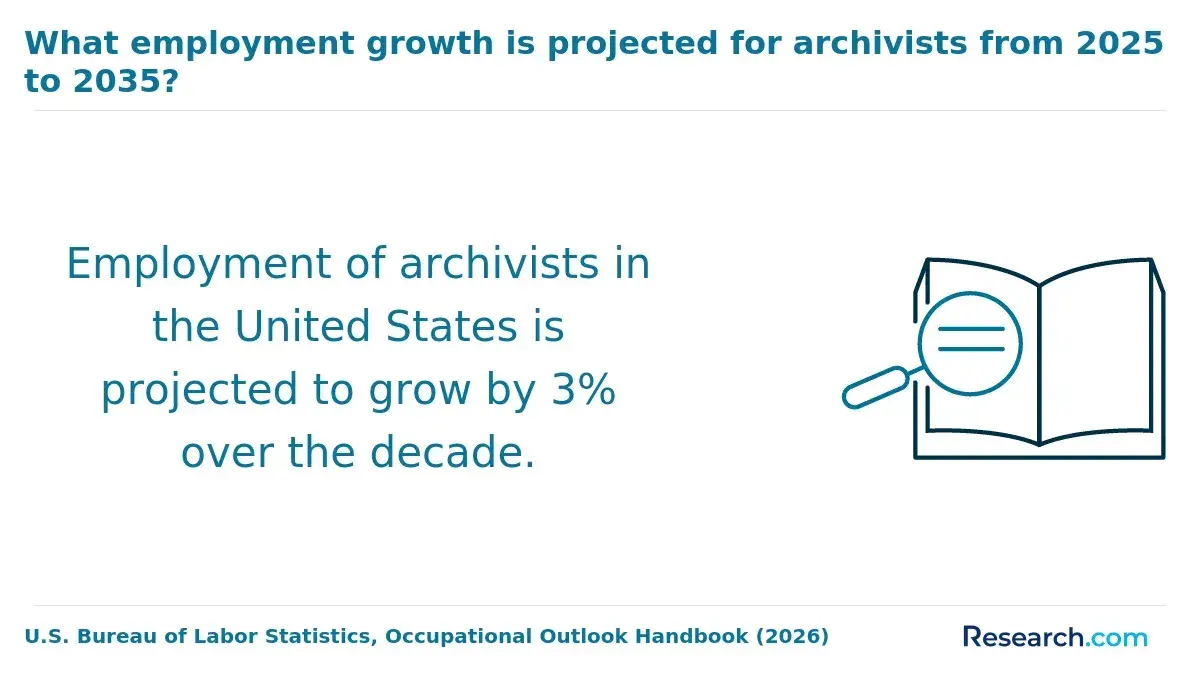
- The BLS projects 3.4% growth for archivists from 2025 to 2035. That broader outlook does not predict hiring by a particular municipality.
What is an MLIS program for municipal records and information officers?
An MLIS is a graduate library and information science degree that can be tailored toward managing the records a city creates and receives. Municipal records officers may maintain retention schedules, coordinate lawful disposition, organize electronic records, support public-records requests, and protect sensitive information. Historic records may eventually move into municipal archives, where appraisal, description, preservation, and researcher access become more prominent.
"MLIS program for municipal records" describes a career-directed course selection, not necessarily an officially named concentration. An institution might award an MLS, Master of Science in Library Science, or Master of Information instead. Compare the documented curriculum and degree requirements rather than treating those degree titles as interchangeable evidence of specialized training.
The work also crosses departmental boundaries. A records officer may need to coordinate with clerks, attorneys, IT staff, and agency employees who create records. A good educational fit develops both information-organization skills and the judgment to identify when a legal or policy question needs specialist review.
What education and accreditation do municipal records officers need?
There is no single U.S.-wide degree or license for municipal records officers. Requirements depend on the employer and position: a city clerk's office may value public-administration experience, while an archivist opening may emphasize graduate archival training. Some information-governance roles may favor legal, IT, or compliance experience over an MLIS.
If a job posting requires an ALA-accredited master's degree, check the specific degree program in the current ALA directory. Accreditation of the university itself does not establish ALA accreditation of its LIS program. Conversely, ALA accreditation does not verify that the program offers a records-management elective or a municipal internship.
Before enrolling, collect several postings for the job titles and jurisdictions that interest you. Separate required qualifications from preferred ones, then note where experience may matter more than the degree. That exercise is especially useful if you are weighing library science experience requirements against the time and expense of graduate study.
Which MLIS programs prepare graduates for municipal records careers?
No program should be labeled a municipal-records specialist option solely because it teaches archives or information organization. Without confirmed program-specific offerings, the most reliable comparison is between documented opportunities and the skills in your target job postings. The table distinguishes evidence that can otherwise be easy to confuse.
| Program evidence | What it establishes | What to verify before applying |
| Officially named concentration or track | The school has defined a structured area of study. | Whether its required courses address records governance as well as archives. |
| Relevant catalog electives | Students may be able to study applicable subjects. | How often courses run, prerequisites, and whether online students can take them. |
| Practicum, capstone, or independent project | There may be a route to applied work. | Placement rules, supervision, and permission to work with a local public agency. |
| General LIS curriculum | The degree may build transferable information skills. | Whether enough specialized study is possible for your intended role. |
Ask a program adviser for a feasible course sequence, not just a catalog link. For a records-heavy goal, an archives elective alone is less persuasive than a combination of retention, digital preservation, privacy, and an approved applied project. If your main objective is a short library science program that pays well, compare its actual credits, costs, and relevant job requirements rather than assuming a shorter degree produces a higher salary.
Are online MLIS programs suitable for municipal records management?
Yes, an online MLIS can be suitable if its courses and applied opportunities match the work. Online delivery does not, by itself, establish ALA accreditation, guarantee asynchronous classes, or ensure that a practicum can be completed remotely. Those details belong to the specific program and sometimes the individual course.
Municipal employees may be well placed to connect assignments to workplace problems, provided their employer authorizes the work and protects confidential material. A student might design a sample retention workflow or metadata plan without using restricted city records. For working applicants considering a library science program for busy adults, scheduling and permission for applied work can matter as much as delivery format.
Confirm whether required classes meet live, when specialized electives are offered, whether any campus visits apply, and who arranges practicum placements. A fully online class may still have fixed meetings or group deadlines that conflict with municipal office hours.
What coursework covers public records, archives, and information governance?
Look for courses that connect a record's creation, use, retention, and disposition - not just its eventual preservation. The strongest course mix depends on whether you want an operational records role, an archival role, or responsibility across both.
| Subject to look for | Municipal application | Useful evidence of learning |
| Records management and appraisal | Classifying records, applying retention schedules, and documenting disposition. | A defensible, hypothetical records-inventory or retention exercise. |
| Archives and digital preservation | Preserving records with lasting value and maintaining their usability. | A processing plan or preservation workflow. |
| Metadata and information organization | Making records findable across systems and through staff changes. | A metadata scheme with clear field definitions. |
| Privacy, access, and information policy | Supporting access while recognizing exemptions and sensitive information. | A scenario-based access and escalation procedure. |
State public-records and retention rules are essential to the job, but an MLIS course cannot substitute for learning the law and approved schedules in the jurisdiction where you work. Electronic records also make collaboration with IT important: a useful policy must account for how staff capture, retrieve, and preserve information in the systems they actually use.
What are the admission requirements for municipal records MLIS programs?
Graduate LIS programs generally assess an applicant's prior degree and application materials, but GPA thresholds, statements, references, and test policies vary by institution. Municipal work experience can strengthen an application when you explain what you did and what you still need to learn; it should not be assumed to replace a published degree requirement.
Use the statement of purpose to connect a specific goal - such as managing electronic retention or improving access to council records - to courses and applied work the school actually documents. If you already hold graduate credit, request a written review of its eligibility before counting on an online information science transfer pathway. Graduate transfer limits, course equivalencies, age limits, and the number of credits that must be earned at the new institution are school-specific; undergraduate transfer policies are not a substitute.
How long do MLIS programs take and how much do they cost?
Completion time depends on required credits, course sequencing, enrollment pace, and any applied requirement. Published tuition is not a reliable total by itself: compare the price per credit against the credits you must complete, then account for mandatory fees, materials, possible travel, and terms added while waiting for a required course.
A useful comparison starts with each institution's current tuition schedule and a proposed course plan. These cost categories show what to request in writing; no single amount applies to every program.
- Tuition: published rate per credit multiplied by the credits you must complete, using the rate that applies to your residency and delivery format.
- Additional costs: mandatory fees, materials, technology needs, and any travel or practicum expenses.
- Personal cost: total charges minus confirmed grants or employer support; borrowing covers costs now but creates a repayment obligation.
Ask whether the courses needed for your intended records pathway fit your target timeline before deciding to complete an MLIS in one year. A fast general degree is less useful if its relevant electives run after you graduate. Confirm financial-aid eligibility and current loan terms with the institution's aid office rather than assuming all enrollment schedules qualify equally.
What careers can an MLIS graduate pursue in municipal records management?
Potential titles include records officer, records manager, city archivist, municipal archivist, information governance analyst, and public-records coordinator. Titles are not standardized: one city may place retention under the clerk, another under an archives unit, and another within a broader compliance or IT team.
An MLIS is most directly relevant where the job calls for archival appraisal, description, preservation, access, or leadership of information practices. It may be one acceptable qualification rather than a requirement for operational records or public-administration roles. For an entry point, look at assistant-level records, archives, or clerk's-office work and build evidence of accurate inventories, documented workflows, and collaboration across departments.
If your target postings consistently seek public-sector administration, legal compliance, or enterprise systems experience instead, compare an MLIS with targeted records training, a certificate, or another relevant graduate degree. The best choice is the one that closes a demonstrated qualification gap.
How much do municipal records and information officers earn?
The BLS does not provide a single salary figure for every municipal records and information officer. As a related benchmark, its May 2025 median annual salary for archivists was $64,550. That figure covers archivists across employers, not just city governments, and should not be read as a starting salary or an MLIS graduate outcome.
For a decision about tuition or a career change, compare posted pay ranges for the exact city titles you could pursue with your current qualifications and with the degree. Location, bargaining arrangements, seniority, and whether the role is primarily archival, administrative, or technical can all change the comparison. Include your current earnings and likely borrowing costs before treating a higher-paid posting as evidence that an MLIS will pay for itself.
Which certifications and professional standards apply to municipal records officers?
Professional credentials in records management, archives, or information governance may help demonstrate specialized knowledge, but no optional certification should be treated as a universal legal requirement for city records jobs. Check each employer's posting for required qualifications and each credentialing body's current eligibility, examination, and renewal rules before paying for preparation.
In practice, the governing standards are often more immediate than a certificate: applicable state retention schedules, public-records laws, privacy requirements, and the municipality's approved procedures. The relevant rules vary by jurisdiction and record type. A graduate should know how to document decisions, identify a potential legal hold, and refer legal interpretations to authorized staff rather than independently deciding that a record can be destroyed or withheld.
Other Things You Should Know About Library Science
Generally, no. The federal Freedom of Information Act applies to federal agencies. Requests to municipalities are governed by applicable state law and local procedures.
Get your employer's permission first. Use public or fictionalized examples when necessary, and do not disclose confidential information merely to demonstrate a skill.
No universal rule applies. Access can depend on state law, the content of the recording, and applicable exemptions. Follow the jurisdiction's review and escalation process.
Some do. Even when a vendor performs scanning or system work, municipal staff still need to address contract terms, access controls, quality checks, retention, and custody of the records.
References
- Records Management Program | U.S. Department of the Interior https://www.doi.gov/ocio/policy-mgmt-support/information-and-records-management/records
- 5 FAM 410 RECORDS AND INFORMATION MANAGEMENT PROGRAM | state.gov https://fam.state.gov/fam/05fam/05fam0410.html
- HHS Policy for Records Management https://www.hhs.gov/digital/governance/it-policy-archive/hhs-ocio-policy-for-records-management.html
- Rule 3337-93-02 | Records management and archiving. https://codes.ohio.gov/ohio-administrative-code/rule-3337-93-02
- Chapter 3 - Courses and Enrollment, Full Course of Study, and Reduced Course Load | USCIS https://www.uscis.gov/policy-manual/volume-2-part-f-chapter-3
- Records Management Guidance | Oregon Secretary of State https://sos.oregon.gov/archives/records-management/pages/records-guidance.aspx
- Internships Overview - LAC Jobs - Start HERE - LA County https://hr.lacounty.gov/internships-overview/
- Program Eligibility, Written Arrangements, and Distance Education | 2024-2025 Federal Student Aid Handbook https://fsapartners.ed.gov/knowledge-center/fsa-handbook/2024-2025/vol2/ch2-program-eligibility-written-arrangements-and-distance-education
- Careers in the City: L.A. Interns Take the First Step | lacity.gov https://lacity.gov/news/careers-city-la-interns-take-first-step
- Records Basics | National Archives https://www.archives.gov/records-mgmt/scheduling/basics


