
2027 MLIS Programs for Records Retention and Disposition

Co-Founder and Chief Data Scientist
Choosing an MLIS for records retention means looking beyond a program's archives electives. You need preparation to decide how long records must be kept, document their disposal, and protect records that warrant permanent preservation. The U.S. Bureau of Labor Statistics reports a May 2025 median annual salary of $64,550 for archivists, one related occupation, but archives and records management are not the same career.
This guide helps prospective students compare curricula, applied experience, credentials, and costs so they can choose a program that fits the work they want to do.
Key Things You Should Know
- Look for records appraisal, retention scheduling, information governance, and defensible disposition, not just a general archives course.
- ALA accreditation applies to a specific master's program; it does not verify that records-management electives or internships are available.
- Archivist employment is projected to grow 3.4% from 2025 to 2035, but that projection does not measure demand for records managers specifically.
What are MLIS programs for records retention and disposition?
These are library and information science master's programs in which students can prepare to manage records across their life cycle. Retention determines how long records must be kept under applicable legal, regulatory, and operational requirements. Disposition is the authorized outcome when that period ends: secure destruction or transfer for continuing preservation. A retention schedule documents those decisions by record category.
Preparation may come through a formally named records-management track, a combination of electives, or an independently designed project. Those are different levels of commitment: a course listed in a catalog does not establish a formal specialization, and a course on archival description does not necessarily teach retention scheduling. An MLIS, MLS, or institution-specific Master of Information may be relevant; compare the actual program and curriculum rather than relying on its degree label.
The work also differs from archives. Archivists appraise and preserve records with enduring value; records managers help organizations control records that are still needed and authorize disposition when they are not. The functions overlap at appraisal and transfer, which makes a program combining both useful for some goals.
Which MLIS programs prepare students for records management careers?
The strongest fit is a program with documented records-management coursework and a way to apply it - not simply one that mentions archives in its marketing. Without a verified, current comparison of individual schools' course schedules and placements, a ranked list would imply more certainty than prospective students have. Use the distinctions below to build a shortlist from official program pages and catalogs.
This table separates types of program evidence so you can judge what each offering actually establishes.
| Evidence in program materials | What it establishes | Important limit |
| Officially named records-management concentration or track | A documented pathway with stated requirements | Confirm when required courses run |
| Records-management or information-governance electives | Relevant coursework is listed | Listings do not guarantee a seat or regular availability |
| Documented practicum or applied-project option | An opportunity to develop work samples | Placement, supervision, and remote eligibility may vary |
| General LIS or archives coursework | Potentially useful foundations | Not proof of specialized retention training |
Ask an adviser for recent syllabi, the next planned offering of each essential elective, and examples of eligible practicum sites. Then check online library degree admission requirements before spending time on an application to a program that may not fit your circumstances.
Is an ALA-accredited MLIS required for records retention jobs?
No universal rule requires an ALA-accredited MLIS for records retention jobs. Employers may accept an MLIS, a different relevant graduate degree, a bachelor's degree plus experience, or professional credentials, depending on the position. Public-sector and librarian-classified jobs can have more specific degree requirements than corporate records roles. Read the qualifications in actual postings for the settings you want.
ALA accreditation remains valuable when you want to preserve eligibility for jobs that specify an ALA-accredited library and information studies master's degree. Check the specific graduate program in the current ALA directory: institutional accreditation is separate, and ALA accreditation does not certify a records-management concentration, elective schedule, or internship. If your intended work is exclusively information governance outside libraries, compare an MLIS with records-management certificates and other relevant degrees before committing.
What courses cover records appraisal, retention, and disposition?
A useful curriculum connects policy decisions to records that exist in multiple formats and systems. Course titles differ, so examine descriptions and assignments rather than searching only for the phrase "records retention."
The following course areas show which skills to seek and what a practical assignment might demonstrate.
| Course area | Relevant skill | Useful project evidence |
| Records management and information governance | Classify records and develop retention schedules | A schedule with documented decision criteria |
| Archival appraisal | Identify records with enduring value | An appraisal recommendation and transfer rationale |
| Digital records and preservation | Maintain authenticity, access, and usable formats | A digital-records handling plan |
| Privacy, law, or organizational policy | Recognize holds, access limits, and disposal risks | A policy analysis showing when destruction must pause |
| Metadata and information systems | Make records findable and apply consistent categories | A classification or metadata design |
A legal hold - a direction to preserve potentially relevant information - can override an otherwise routine destruction date. Students should learn to identify when a schedule cannot be applied automatically and when legal or compliance specialists must be consulted. For broader context on how these subjects fit into a library science degree curriculum, compare core requirements with the electives you would still have room to take.
Are online MLIS programs suitable for records management students?
Yes, if the online format provides access to the courses and applied work you need. Online study can suit employed students who can examine records policies or systems at an approved workplace, but permission, confidentiality, and faculty supervision matter. A project based on restricted records may need a different scope or an approved substitute dataset.
Check whether essential electives are online, whether classes meet at fixed times, and whether the practicum can be completed near home. "Online program" does not by itself mean every specialization course is online, asynchronous, or available each term. Request a sample course sequence for your intended start date; a missed elective can affect graduation timing more than the advertised format suggests.
What are the admission requirements for records management MLIS programs?
Requirements vary by university, but applicants commonly need a bachelor's degree, transcripts, an application, and a statement explaining their goals. Some programs also request recommendations, a résumé, or evidence of readiness for graduate study. A prior LIS degree or records-management job is not necessarily required; check each program's published policy rather than assuming either is an advantage or a prerequisite.
In your statement, connect your experience to a concrete problem - such as inconsistent retention categories, digital-records access, or transfer to an archive - and identify the coursework you need. If your academic record does not meet a published threshold, ask admissions staff whether an individual review or another entry route exists. Policies differ, so guidance on online librarian masters admission exceptions is a starting point for questions, not a promise of admission.
How long do records retention MLIS programs take and cost?
The timeline depends on required credits, enrollment pace, course sequencing, and any practicum or project. Published completion examples may assume full-time study and prompt access to electives. For an accurate estimate, ask the program to map your planned enrollment against the terms when records courses are expected to run. A discussion of library science degree semesters can help you frame that scheduling conversation.
Compare costs using the same scope for every school: required credits multiplied by the tuition rate that applies to you, plus mandatory fees and likely project expenses. Published tuition alone is not the total cost, and online enrollment does not automatically qualify a student for in-state rates.
These cost categories help distinguish a program's published price from what you may pay or borrow.
| Cost category | What to confirm |
| Tuition | Required credits, applicable rate, and any rate changes |
| Mandatory fees | University, online, or program charges |
| Materials and technology | Books, software access, and equipment requirements |
| Applied experience | Travel, site requirements, or an additional enrollment term |
| Funding | Actual award terms, employer support, and remaining amount to finance |
Separate gross program cost from your out-of-pocket cost after confirmed funding and from the amount you would borrow. Ask the financial aid office which aid rules apply to your enrollment period and study load; do not base a decision on an assumed scholarship or loan amount.
What careers can an MLIS lead to in records retention?
Job titles include records manager, records analyst, information governance specialist, digital records archivist, and records-and-information-management coordinator. Work may involve interviewing departments about recordkeeping, creating classification rules, updating retention schedules, coordinating legal holds, overseeing secure destruction, and documenting transfers to an archive. Employers include government agencies, universities, health systems, law firms, and other organizations with substantial recordkeeping obligations.
For an entry point, seek a supervised project that produces a usable artifact: a retention-schedule proposal, a documented inventory, or a disposition procedure with review and approval steps. Remove confidential details before sharing work in a portfolio. An MLIS can be particularly useful where records work intersects with archives, access, or digital preservation; someone focused on corporate compliance may find a targeted credential and relevant work experience more direct. Comparing archives and digital library degrees can clarify which pathway best matches the roles you are finding.
What salary and job outlook can records management graduates expect?
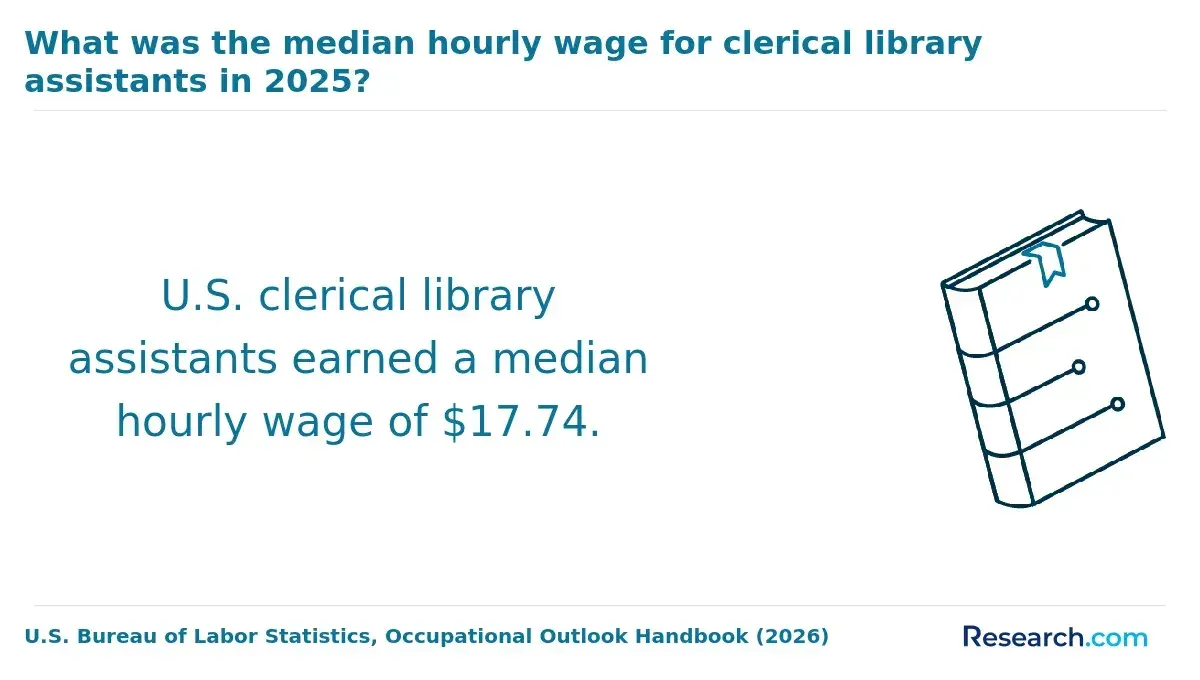
The Bureau of Labor Statistics reports a May 2025 median annual salary of $68,270 for librarians and media collections specialists. That figure provides context for some MLIS-qualified jobs, not an expected salary for a records manager or a program's graduates. Archivists have a separate occupational category, and records-management positions can fall under different job classifications.
BLS projects 3.4% employment growth for archivists from 2025 to 2035. Use that outlook as context only if archival work is among your goals; it is not a records-management hiring forecast. To judge a program's likely career value, compare local postings for your target titles, their stated qualifications and pay, your current earnings, and the amount you would need to finance.
Which certifications complement an MLIS in records and information management?
The Certified Records Manager (CRM) credential is a relevant option for professionals whose work centers on records and information management. It is a separate professional credential, not an MLIS concentration or an automatic result of graduating. Check the certifying organization's current eligibility, examinations, experience requirements, and maintenance rules before planning around it.
A certification can help demonstrate specialized knowledge, while an MLIS can provide broader preparation in information organization, archives, and access. Neither universally replaces the other. Students with limited work experience may gain more immediate value from a supervised retention project; established practitioners should compare the credential requirements with the qualifications repeatedly appearing in their target job postings.
Other Things You Should Know About Library Science
Often, if the instructor approves it and your employer permits it. Obtain permission before using internal policies or records, and present a redacted or hypothetical version when confidentiality rules prevent sharing the original.
An inventory identifies what records exist, where they are, and who controls them. A retention schedule sets approved rules for how long categories of records are kept and what happens afterward. An inventory can inform a schedule, but it does not authorize disposal.
Not automatically. Applicable retention rules, legal holds, organizational policy, and requirements for the reliability of the digital copy must be checked before the original is disposed of.
Learn the underlying tasks first: classification, access controls, retention rules, audit trails, and disposition documentation. Experience with a system used by your target employer can help, but transferable workflow knowledge is useful when software changes.
References
- Records Disposition (Destruction or Archival Transfer) | ca.gov https://www.sos.ca.gov/archives/records-management-and-appraisal/records-management-handbook/chapter-10
- State Agency Records Management | Colorado State Archives https://archives.colorado.gov/records-management/state-agency-records-management
- Cost of Attendance (Budget) | 2025-2026 Federal Student Aid Handbook https://fsapartners.ed.gov/knowledge-center/fsa-handbook/2025-2026/vol3/ch2-cost-attendance-budget
- Retention Schedules - Library of Virginia https://www.lva.virginia.gov/services/rm/schedules
- Scheduling and Disposition of Federal Records | fws.gov https://www.fws.gov/policy-library/283fw1
- Texas State Records Retention Schedule - 5th Edition http://www.tsl.texas.gov/slrm/rrs
- Scheduling Records | National Archives https://www.archives.gov/records-mgmt/scheduling/sch-records
- 6 Elements of an Effective Records Management Program | osu.edu http://library.osu.edu/osu-records-management/program-elements
- MLIS Curriculum, Specialties & Courses | University of Arizona College of Information Science https://infosci.arizona.edu/ma-library-information-science/curriculum-specialties-courses
- Estimated Cost of Attendance | UNCW https://uncw.edu/seahawk-life/money-matters/financial-aid/affording-your-education/cost-of-attendance


