2027 MLIS Programs for Digital Exhibit Production

Co-Founder and Chief Data Scientist
Choosing an MLIS for digital exhibit production means looking beyond a degree title: the right program must help you turn collections into accessible, well-described public experiences. That combination matters to libraries, archives, and museums, but relevant courses and hands-on opportunities vary by school.
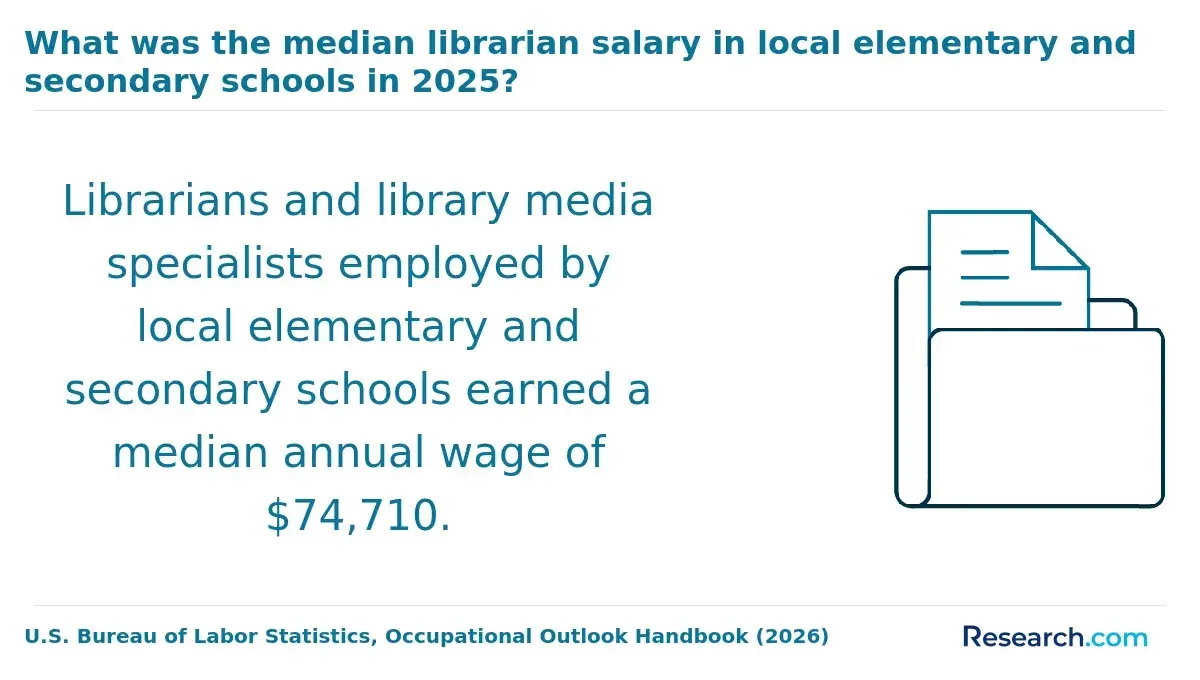
The U.S. Bureau of Labor Statistics reports a May 2025 median salary of $68,270 for librarians and media collections specialists; it is an occupational benchmark, not a graduate outcome. This guide shows prospective students how to evaluate curricula, costs, formats, and career fit before applying.
Key Things You Should Know
- Look for documented digital collections, metadata, accessibility, and exhibit-making coursework - not just a program description that mentions "digital skills."
- Confirm ALA accreditation for the specific master's program, then separately check whether relevant electives and applied projects will be available while you study.
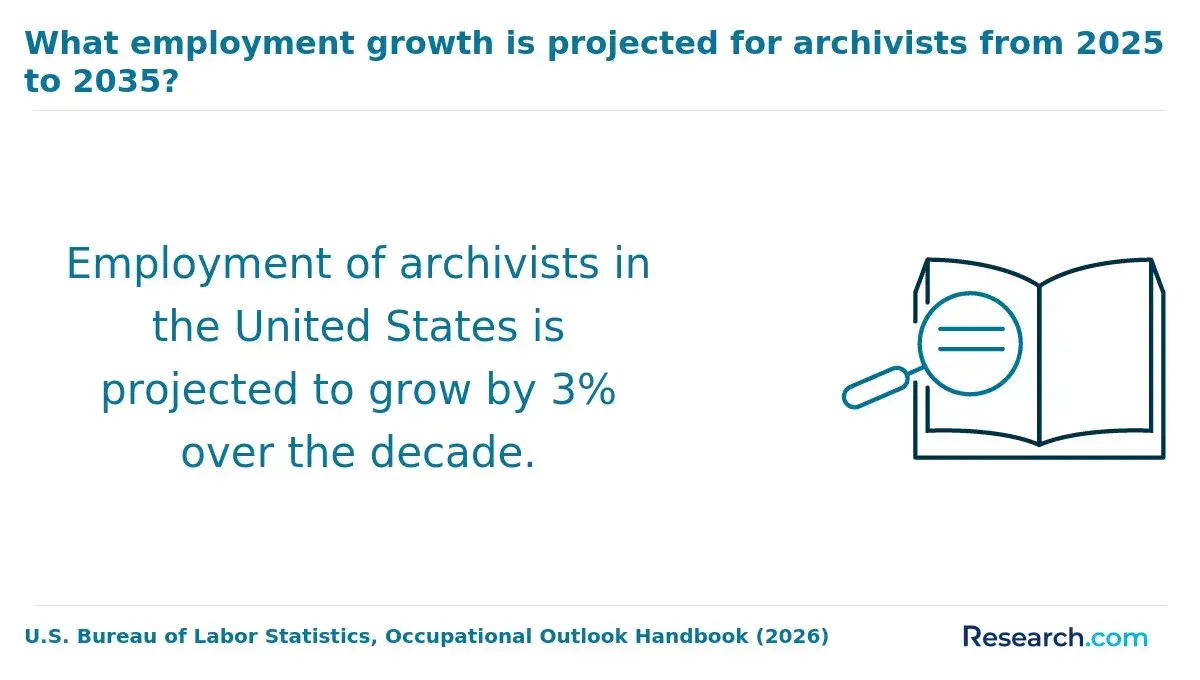
- Compare total costs and portfolio opportunities against your target job: the May 2025 median for archivists was $64,550, but an MLIS alone does not qualify someone for every exhibit role.
What are MLIS programs for digital exhibit production?
These are library and information science master's programs in which students can develop the skills to select collection materials, organize and describe them, obtain appropriate permissions, and present them through an online exhibition. "Digital exhibit production" is usually a career goal or combination of electives and projects, not necessarily the name of a formal concentration.
An exhibit team might pair an archivist's knowledge of a collection with a librarian's metadata work, a curator's interpretation, and a designer's web production. The strongest preparation connects those tasks: a compelling story is not enough if visitors cannot use the site, understand its sources, or access it with assistive technology.
A library science graduate degree can provide a foundation in information organization and public service. Degree names vary - MLIS, MLS, Master of Science in Library Science, and some Master of Information programs are not interchangeable labels for identical curricula. Evaluate the particular degree and its courses rather than assuming the title establishes exhibit expertise.
Which MLIS programs offer digital curation and exhibit courses?
There is no reliable shortcut from a school's marketing language to a current list of exhibit-production courses. An ALA-accredited program may offer relevant electives without a named exhibit track; conversely, a digital-curation concentration may emphasize preservation or data stewardship rather than public interpretation. Course catalogs establish that a course exists, but not that it will run during your enrollment.
Use top library science masters options as a starting point for identifying schools, then verify each candidate against its current catalog and published schedule. The comparison below separates evidence of a program feature from evidence that you can actually use it.
| Evidence to find | What it establishes | What to confirm next |
| Officially named concentration | A documented pathway with stated requirements | Whether its required courses address exhibit work |
| Catalog courses in digital libraries, curation, metadata, or exhibits | Relevant coursework is approved | Recent and expected offerings, prerequisites, and seat availability |
| Practicum, capstone, or independent study rules | A possible route to applied work | Whether an exhibit project and suitable supervisor are permitted |
| General digital-skills language | Potential alignment with your interests | Specific courses and projects; it does not prove a specialization |
Ask a program adviser for a feasible course sequence, not merely a list of electives. If an exhibit-related course is offered infrequently, a student close to graduation may not be able to take it.
How do you choose an accredited MLIS program for digital exhibits?
First, check the specific master's degree in the current American Library Association (ALA) directory of accredited programs. Institutional accreditation serves a different purpose; it does not establish ALA accreditation. ALA status also does not certify an exhibit concentration, a particular course, or an online format.
Next, compare what you could produce before graduation. A suitable program should let you connect collection research, rights assessment, descriptive metadata, accessible presentation, and audience evaluation in an applied assignment. Ask who supervises projects, whether you can partner with an archive or museum, and whether you may show the finished work to employers. Confirm any placement arrangements directly; an internship is not automatically remote or guaranteed.
If you have previous graduate coursework, use a library science program credit evaluation to frame questions about transfer policy. The receiving school decides whether particular credits count toward its degree and whether transferring them would displace electives you need for exhibit preparation.
What do digital exhibit production courses teach?
Relevant courses teach students to make defensible decisions about both a collection and its audience. A digital-libraries course may cover digitization workflows and collection platforms; metadata instruction explains how descriptive fields help people find, interpret, and reuse objects. Dublin Core, for example, is a set of descriptive terms that may be used to record information such as an item's title, creator, and date.
Exhibit work also calls for interpretive writing, source attribution, copyright and privacy review, accessible navigation, and usability testing. A preservation course adds a different perspective: the display copy visitors see is not necessarily the file an institution retains for long-term stewardship. Current workflows may use AI-assisted transcription or description, but students should learn to check outputs against original materials and document corrections rather than publish unverified text.
A valuable course project moves beyond a mock homepage. It should show why items were selected, how descriptions were created, what permissions or restrictions were considered, and how feedback changed the exhibit. That evidence helps an employer assess your judgment as well as your technical execution.
Are online MLIS programs suitable for digital exhibit careers?
Yes, if the online program provides relevant courses, meaningful feedback, and a workable route to applied experience. Digital exhibit research, metadata creation, writing, and web testing can often be completed remotely. Handling physical collections, photographing objects, or consulting restricted archival materials may require an on-site partner.
Online delivery does not necessarily mean asynchronous study or flexible deadlines. Before enrolling, check live-session times, group-work expectations, software access, and whether a practicum can be arranged where you live. Students who already work at a library, archive, or museum may be able to propose a supervised project there, subject to employer permission and program rules. Students without a local partner should ask how the school supports placements rather than assume one will be supplied.
What are the admission requirements for digital exhibit MLIS programs?
Applicants generally need to meet the university's published graduate-admission requirements, including an eligible bachelor's degree and required application materials. Schools may request transcripts, a statement of purpose, recommendations, a résumé, or other materials; requirements and deadlines vary. Digital exhibit experience is useful to discuss, but it should not be treated as a universal prerequisite.
Use the statement of purpose to connect your interests to specific, verified courses or project options. Relevant experience can include community-history work, collection description, accessible web content, digitization, or public-facing writing. If your academic history or professional background does not fit the standard application, ask admissions staff how it will be reviewed rather than assuming experience replaces a formal requirement.
How long do MLIS programs for digital exhibits take and cost?
Completion time depends on required credits, enrollment pace, prerequisites, and when key electives run. An accelerated schedule is useful only if it still leaves room for the courses and exhibit project you want. When reviewing the fastest route to an MLIS, ask whether your intended sequence includes the applied work that makes the degree worthwhile for this career.
Do not compare schools by per-credit tuition alone. This breakdown shows the costs to request from each institution so you can compare like with like; no single published tuition figure represents every student's total expense.
| Cost component | What to verify |
| Tuition | Your applicable rate multiplied by required credits, including any remaining credits after approved transfers |
| Mandatory fees | Program, university, technology, and term-based charges that apply to your format |
| Project expenses | Equipment, software, travel, or placement costs not covered by the school or host |
| Scheduling effects | Additional terms or fees if a necessary elective is not offered when expected |
Request an individualized estimate and ask about scholarships, assistantships, and employer support without assuming you will receive them. Separate the gross cost from what you would pay out of pocket and what you might borrow. If you plan to use federal aid, confirm eligibility and the rules applicable to your enrollment period with the school's financial aid office before making a borrowing decision.
What careers can you pursue after studying digital exhibit production?
Potential roles include digital collections librarian, digital archivist, exhibition coordinator, museum collections specialist, metadata librarian, and digital content producer. Job titles overlap, but duties differ: one position may focus on describing and preserving objects, while another emphasizes interpretation, partnerships, and public presentation.
An MLIS is often relevant to professional librarian jobs, but museums, archives, and web-content teams may accept or prefer other degrees and experience. Review actual postings for the settings you want to enter. The distinction matters especially for information science jobs with high qualifications: a specialized title can involve requirements that an MLIS elective alone will not satisfy.
For an entry-level search, build a portfolio that credits collaborators and explains your own contribution. A small exhibit with sound metadata, accessible captions, documented rights decisions, and evidence of user testing can communicate more than an attractive interface without that context. If your goal is primarily web design rather than stewardship of collections, relevant design training and work experience may be a more direct investment than an MLIS.
How much do digital exhibit and digital curation professionals earn?
The Bureau of Labor Statistics does not publish a single salary category for "digital exhibit producer." These May 2025 U.S. occupational medians and 2025-2035 employment projections provide context for several related paths, not predictions for a particular MLIS graduate or exhibit job.
| BLS occupation | Median annual salary, May 2025 | Projected job growth, 2025-2035 |
| Librarians and media collections specialists | $68,270 | +2.6% |
| Archivists | $64,550 | +3.4% |
| Curators | $63,420 | +4.9% |
| Museum technicians and conservators | $51,440 | +3.6% |
These categories encompass work far beyond digital exhibitions. The salary you could obtain depends on the position, employer, location, and experience. Use postings for roles you would realistically pursue when weighing program costs against your current earnings; occupational medians alone cannot establish a return on an MLIS.
What certifications and standards support digital exhibit careers?
There is no universal digital exhibit production license or certification. Employers may value demonstrated familiarity with standards more than an optional certificate, particularly when a portfolio shows how you applied them.
Dublin Core can support consistent item description; the Web Content Accessibility Guidelines (WCAG) provide a framework for accessible digital content. Depending on the collection, archival description practices, copyright analysis, and preservation procedures may also matter. Learn the standards your prospective employer actually uses, and be ready to explain your choices. A short course or certificate can fill a specific skills gap, but it does not replace an MLIS where an employer requires an accredited library degree.
Other Things You Should Know About Library Science
No. Owning a physical photograph does not necessarily mean the institution owns its copyright or has permission to publish it online. Review the gift agreement, rights information, and applicable institutional policy before posting.
Follow the institution's review or takedown procedure. Document the concern, restrict access temporarily if appropriate, and involve staff responsible for rights, privacy, and the collection before deciding what to change.
Only with permission to share the work and underlying materials. If public display is not allowed, ask whether you can present a private case study describing your decisions without exposing restricted content.
No. Check names, dates, descriptions, and interpretations against collection records and original objects. Human review is especially important when source material is ambiguous or sensitive.
References
- Cost of Attendance (Budget) | 2025-2026 Federal Student Aid Handbook https://fsapartners.ed.gov/knowledge-center/fsa-handbook/2025-2026/vol3/ch2-cost-attendance-budget
- Types of Financial Aid: Grants, Work-Study, and Loans | studentaid.gov https://studentaid.gov/understand-aid/types
- Online Master's in Library & Information Science (MLIS) | Drexel University Online https://www.online.drexel.edu/online-degrees/information-sciences-degrees/ms-di/index.aspx
- Roles and Responsibilities - Accessibility - NC State University https://accessibility.ncsu.edu/digital-accessibility/roles-and-responsibilities/
- Getting Started with Digital Accessibility in Teaching and Learning - UCLA Teaching & Learning Center https://teaching.ucla.edu/resources/teaching-guides/getting-started-with-digital-accessibility-in-teaching-and-learning/
- Teaching with Online Exhibits | princeton.edu https://mcgraw.princeton.edu/online-exhibits
- Capstone projects as opportunities for real-life applications | Trends and Issues in Higher Ed https://www.washington.edu/trends/capstone-projects-as-opportunities-for-real-life-applications/
- Master of Library Science | Luddy School of Informatics, Computing, and Engineering https://luddy.iu.edu/academics/masters/library-science.html
- Resources for Digital Humanities: Online Exhibitions | yale.edu https://guides.library.yale.edu/dh/exhibitions
- Master of Library and Information Science (MLIS) | umd.edu https://info.umd.edu/academics/masters-programs/master-of-library-and-information-science/