2027 MLIS Programs for Metadata Migration Projects

Co-Founder and Chief Data Scientist
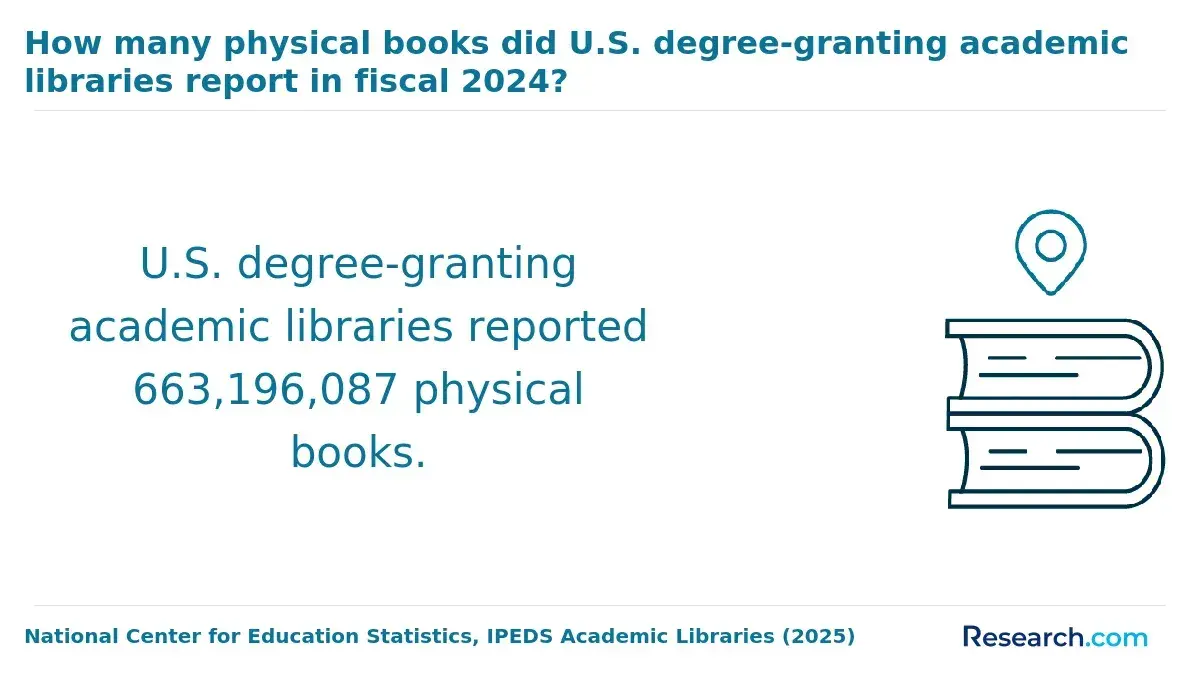
Choosing an MLIS for metadata migration means looking beyond a program's title: you need coursework and hands-on experience that prepare you to move, clean, and validate information across systems. The U.S. Bureau of Labor Statistics projects 2.6% employment growth for librarians and media collections specialists from 2025 to 2035. That modest outlook makes demonstrable technical skills especially valuable.
This guide helps prospective students and career changers evaluate programs, plan an affordable course of study, and decide whether an MLIS is the right credential for their target role.
Key Things You Should Know
- Look for metadata coursework paired with a supervised migration, repository, or cataloging project; a relevant elective alone is not evidence of a formal specialization.
- Verify the specific master's program in the current ALA accreditation directory, then confirm that the courses you need will be offered while you are enrolled.
- The BLS reports a May 2025 median annual salary of $68,270 for librarians and media collections specialists, not a salary forecast for metadata specialists or MLIS graduates.
What are MLIS programs for metadata migration projects?
They are library and information science master's programs that let students build the knowledge and applied experience needed to transfer descriptive information between catalogs, digital repositories, archives systems, or other platforms. Metadata describes resources so people and systems can find, identify, manage, and use them. A migration may involve mapping fields between schemas, cleaning inconsistent records, preserving relationships and identifiers, and checking the results after import.
"Metadata migration" is usually a career goal or project focus, not a named MLIS concentration. A suitable program might offer cataloging, metadata, digital libraries, databases, or information organization courses plus an independent project or practicum. Confirm whether each opportunity is a requirement, an elective, or an individually arranged experience. For a broader view of degree types and paths into the field, see this guide to a library information science degree.
An MLIS is particularly relevant when the intended job also calls for professional librarianship or stewardship of collections. Someone focused exclusively on data engineering or enterprise software migration may find a technical degree, certificate, or work-based training more directly aligned.
Which MLIS accreditation matters for metadata migration careers?
For U.S. professional librarian positions, American Library Association (ALA) accreditation of the specific master's program is an important credential to check. Search the current ALA directory for the exact degree and institution under consideration; a university's institutional accreditation does not establish that its MLIS, MLS, Master of Information, or other LIS degree is ALA-accredited.
ALA accreditation evaluates a program, not a metadata track. It does not confirm that a particular course runs regularly, that an internship is available remotely, or that graduates are qualified for every specialist opening. If you may later seek school librarian jobs, check the relevant state education authority separately: state certification or endorsement rules can differ from MLIS accreditation. For a primarily technical position, read actual job postings before treating an ALA-accredited degree as a universal requirement.
What coursework prepares students for metadata migration projects?
Prioritize a combination of descriptive standards, data handling, and project-based assessment. The table connects common course areas to the work a student should be able to demonstrate; course titles and availability vary by institution.
| Course area | Migration capability to develop | Evidence to seek in a program |
| Knowledge organization and cataloging | Interpret records, controlled vocabularies, and authority data | Assignments involving real or realistic catalog records |
| Metadata and digital libraries | Map schemas and describe digital objects consistently | Crosswalk or repository-based assignments |
| Databases and data management | Transform exports, handle relationships, and check data quality | Practical work with structured datasets |
| Digital preservation or archives | Maintain provenance and context through a system change | Projects addressing preservation or archival description |
Useful standards depend on the destination system: MARC and RDA are common in bibliographic work, while Dublin Core appears in many digital-collection workflows. BIBFRAME and linked data may matter when evaluating newer discovery and interoperability projects. Seek course descriptions and sample assignments rather than assuming that every program's "metadata" elective covers all of them. A library technology specialization can offer a useful comparison, but verify its documented requirements before calling it a migration pathway.
A strong capstone or independent project could document a small migration from source export through field mapping, transformation, test import, and quality review. Ask whether students may arrange such a project and who would supervise it.
Are online or campus-based MLIS programs better for metadata careers?
Neither format is inherently better for metadata migration. An online program may suit someone working in a library who can apply new skills to an approved workplace project. A campus-based option may make it easier to use local collections, labs, or partner institutions. The stronger choice is the one that provides accessible courses, appropriate supervision, and a feasible applied project within your schedule.
Before enrolling online, ask whether key electives are asynchronous or require live attendance, how often they run, and whether an internship can be completed locally or remotely. Before choosing a campus program, ask whether relevant project placements are available to students in your intended term. Published delivery format alone does not settle those questions. If speed matters, compare actual course sequencing - not just advertised completion time - when reviewing a fast track library information science degree.
What are the admission requirements for metadata-focused MLIS programs?
Requirements are set by each graduate program, not by the applicant's intended metadata specialty. Programs commonly ask applicants to document a completed bachelor's degree and submit academic records; other materials, prerequisites, and policies vary. Consult the current admissions page for each degree rather than assuming that library employment, coding experience, or a previous graduate qualification changes its requirements.
A prospective student can use a statement of purpose to explain a specific goal - such as improving legacy catalog records or moving a digital collection into a new repository - and connect it to documented courses or faculty-led opportunities. If you have an unusual academic history or want prior graduate credit evaluated, request an individual review and ask for the written policy. For help organizing a school-by-school comparison, see online library science programs tuition admissions.
How long do metadata-focused MLIS programs take and cost?
Completion time depends on required credits, enrollment pace, course sequencing, and whether an applied project adds a term. A catalog listing does not guarantee that a specialized elective will run when you need it. Ask an adviser to map your proposed metadata courses against the program's current schedule before relying on a projected graduation date.
To compare costs, multiply each program's published tuition rate by its required credits, then add mandatory fees and likely expenses for books, software, equipment, and any travel or practicum. Check the academic year of each price and whether residency or online-program rules change the rate. That calculation estimates gross program cost; scholarships and employer support may reduce your out-of-pocket cost, while borrowing determines how much you finance. These are different figures, and published tuition alone is not a total cost.
Ask financial aid offices which aid applies to your enrollment period and course load, and confirm award terms before making a budget. online librarian degree scholarship options are worth investigating, but eligibility and availability must be checked with each provider. Compare the resulting cost with jobs you could realistically pursue and your current earnings; neither an MLIS nor a migration project guarantees a financial return.
Which technical skills do metadata migration specialists need?
The core skill is turning a change in systems into a controlled, testable change in records. Specialists need to inspect source data, design a field-by-field crosswalk, transform values without losing meaning, and verify that imported records remain searchable and correctly linked. Familiarity with spreadsheets, structured exports, regular expressions, and scripting or query tools can help, but the tools required depend on the employer's systems.
Technical fluency must be paired with judgment. Authority control keeps names and subjects consistent; provenance records where information came from; and quality checks reveal missing fields, duplicates, or broken relationships. As libraries connect catalogs, repositories, and discovery tools, interoperability matters more than simply moving records into a new interface. AI-assisted cleanup may help flag patterns, but a specialist still needs to review mappings and errors against local policy and collection context.
For a portfolio, document the source and target schemas, explain mapping decisions, show a small permissible before-and-after sample, and report how you tested the result. A clear account of a corrected error is often more informative than a screenshot of a completed import.
What careers can an MLIS graduate pursue in metadata migration?
Potential titles include metadata librarian, cataloging librarian, digital collections librarian, systems librarian, and metadata or digital-projects specialist. Work may sit in an academic, public, special, medical, or law library, an archive, or an adjacent information-management team. Titles are not standardized: one "metadata specialist" may primarily clean records, while another manages standards, staff, vendors, and system transitions.
Professional librarian postings may require or prefer an ALA-accredited LIS master's degree. Technician and project-support roles may accept other qualifications; software- and data-intensive roles may favor demonstrated engineering experience or another degree. Compare the duties and stated requirements of openings you would actually apply for before choosing a credential. A cataloging, repository, or digitization role can also provide relevant experience before a dedicated migration position becomes available.
What salaries and job outlook apply to metadata migration careers?
The BLS does not provide a separate national salary series for "metadata migration specialist." Its broader librarians and media collections specialists occupation had a May 2025 median annual salary of $68,270, with projected employment growth of 2.6% from 2025 to 2035. These figures describe an occupation, not outcomes for a particular MLIS, specialization, or technical project role.
Use the BLS figures as context, then compare current job postings by location, employer type, responsibilities, and credential requirements. A temporary migration contract and an ongoing librarian position can differ substantially in duties and compensation. When assessing whether a degree is worth its cost, weigh those differences alongside your existing experience and opportunities to gain relevant work without another credential.
Which certifications and standards support metadata migration work?
Standards usually matter more than a generic certificate. Depending on the collection, an employer may work with MARC and RDA for bibliographic records, Dublin Core for digital resources, or local schemas and controlled vocabularies. Learn to read the applicable specifications and document local decisions rather than claiming proficiency in every standard.
A short course or certificate can help fill a specific gap - for example, data transformation or a repository platform - but it is not a universal requirement for migration work or a substitute for an MLIS when an employer requires one. Evaluate any credential by its assessed practical work, relevance to target postings, and cost. Ask employers which standards and systems their next migration will actually use.
Other Things You Should Know About Library Science
Only with permission and appropriate protections. Ask your employer what may be shared, remove restricted or personal information, and use a synthetic sample if the real records cannot be published.
They need an explicit preservation or redirection plan. Test whether identifiers still resolve to the intended resources after import; record counts alone will not reveal broken links.
Not automatically. Retaining source exports, mapping documentation, and decisions can support troubleshooting and provenance. Follow the institution's retention, privacy, and preservation policies.
Request a representative sample and documentation of its fields, formats, relationships, and identifiers. Test the sample against the destination system before committing to a full transfer.
References
- Partnering with Students to Develop a Capstone for a... - PMC https://pmc.ncbi.nlm.nih.gov/articles/PMC11732519/
- MLIS Program Requirements and Curriculum | umd.edu https://info.umd.edu/academics/masters-programs/master-of-library-and-information-science/curriculum-specializations/
- Crosswalk of Core Metadata | Emory University https://metadata.emory.edu/guidelines/descriptive/crosswalk.html
- online Master of Library and Information Science | DEN-EDU https://morgridgeonline.du.edu/online-mlis-program/
- Metadata Guide: Standards - CMU LibGuides https://guides.library.cmu.edu/c.php
- Efficient Data Migration Project - UW Information School https://ischool.uw.edu/capstone/projects/2019/efficient-data-migration-project
- Cross-Disciplinary Standards - Metadata Basics https://guides.lib.utexas.edu/metadata-basics/general-standards
- The Evolving Role of the Metadata Librarian | Han https://journals.ala.org/lrts/article/view/5557/6839
- Accreditation Frequently Asked Questions | ALA https://www.ala.org/educationcareers/accreditedprograms/faq
- DCMI: Metadata Basics https://www.dublincore.org/resources/metadata-basics/