
2027 Online MLIS Programs With Courses Offered Across Multiple Time Zones

Co-Founder and Chief Data Scientist
An online MLIS can let you study without relocating, but "online" does not mean every class fits your time zone. A live seminar scheduled for an East Coast evening may fall during a West Coast workday. The scheduling decision matters for a degree that can lead to professional roles: the U.S. Bureau of Labor Statistics reports a May 2025 median annual salary of $68,270 for librarians and media collections specialists.
This guide helps working adults and geographically distant applicants compare course formats, verify scheduling flexibility, and weigh accreditation, cost, and career fit before enrolling.
Key Things You Should Know
- Prioritize asynchronous courses or documented choices of live session times; an online label alone does not establish time-zone flexibility.
- Check the specific master's program's ALA accreditation and ask how often required courses run before committing to a schedule.
- BLS projects 2.6% employment growth for librarians and media collections specialists from 2025 to 2035; compare the degree's total cost with the jobs you actually want, not an assumed outcome.
What are online MLIS programs with courses across multiple time zones?
These are library and information science master's programs whose course delivery can accommodate students living in different time zones. The phrase does not describe a separate credential or guarantee that every course has several meeting times. Flexibility may come from asynchronous lessons, multiple live sections, recorded sessions, or a mix of these approaches.
The distinction matters most for required courses, which may have fewer scheduling options than electives. For example, a live class at 7 p.m. Eastern meets at 4 p.m. Pacific - potentially before a West Coast student finishes work. A recording may help, but it may not replace required live participation.
Before applying, make a schedule audit using the current timetable and written program policies:
- Convert the meeting times of required courses into your local time zone, including the time of year each course runs.
- Ask whether attendance is required live, whether recordings count, and whether multiple sections are routinely available.
- Check whether group projects, advising, exams, and any practicum have fixed-time obligations.
- Ask how often required courses run and what happens to your graduation plan if you cannot attend a scheduled section.
A comparison of online library science programs tuition admissions can help form an initial shortlist. Confirm each shortlisted program's actual course schedule directly; a general program description cannot establish that it fits your work hours.
Are online MLIS programs accredited by the American Library Association?
Some are, but online delivery alone says nothing about accreditation. The American Library Association (ALA) accredits qualifying master's programs in library and information studies, including programs with institution-specific degree names such as MLIS, MLS, or Master of Information. Check the specific program in the current ALA directory rather than relying on a university's institutional accreditation or the degree's initials.
ALA accreditation can matter for professional librarian hiring, but it does not certify that a program offers a particular elective, time-zone accommodation, or fully remote practicum. If a career goal involves school libraries, also check the relevant state education authority's preparation and licensure rules; ALA accreditation and state authorization answer different questions.
How do online MLIS programs compare with campus-based programs?
The principal trade-off is not academic versus less academic study. It is how each format organizes access to classes, peers, faculty, and applied experience. This comparison highlights the scheduling differences most likely to affect a student living away from a program's home time zone.
| Feature | Online program | Campus-based program |
| Class meetings | May be asynchronous, live at set times, or mixed | Typically meets at scheduled local campus times |
| Location | Usually permits remote coursework; individual activities may require travel or local placement | Regular travel to campus is generally expected |
| Peer collaboration | Often coordinated through digital tools across differing schedules | May be easier to arrange around shared campus hours |
| Applied experience | Placement options depend on program rules and available sites | Campus-area opportunities may be easier to access, depending on location |
A nearby campus program may be the simpler choice if its timetable fits and in-person mentoring matters to you. An online option may reduce relocation costs, but it can still impose inconvenient live hours. If geography and budget both shape your search, comparisons of affordable library information science South options can provide a starting point; compare residency rules and the full schedule rather than assuming a regional option is automatically cheaper or more convenient.
What courses do online MLIS programs typically offer?
Common foundations include information organization, reference and information services, research methods, collection development, and the social and ethical dimensions of information access. Depending on the institution, electives may address archives, digital preservation, metadata, information literacy, or research data services. A catalog listing establishes that a course exists, not that it will run in the term or time slot you need.
Choose courses backward from your intended work. An aspiring metadata librarian might seek practice describing resources using standards such as MARC or Dublin Core, while a prospective public librarian may benefit more from community services and programming. Check whether the relevant courses are required, electives, or part of a formally named concentration, and ask for recent and planned offering schedules. An applied project can strengthen a portfolio, but it is not a substitute for confirming that the needed instruction is available.
What are the admission requirements for online MLIS programs?
Applicants generally need a bachelor's degree and must submit the materials specified by the program, which may include transcripts, a statement of purpose, recommendations, and a résumé. Minimum grades, test policies, prerequisites, and deadlines vary. Prior library work can help explain your goals, but it should not be assumed to replace a published degree requirement.
If you are changing careers, use your statement to connect prior experience - such as teaching, research support, customer service, or data management - to the work you want to do after graduation. Ask admissions staff separately about part-time entry, transfer-credit limits, and whether your preferred first courses will be available in a workable time slot. For help identifying possible funding sources while planning a transition, review online librarian degree scholarship options; confirm eligibility and deadlines with each provider.
How long do online MLIS programs take to complete?
Completion time depends on required credits, how many courses you take each term, and the sequence in which required courses are offered. A part-time plan can be more manageable alongside work, but a course offered only periodically can extend the timeline if its sole live section conflicts with your local hours.
Request a term-by-term completion plan based on your intended course load and time zone. Have an adviser identify prerequisites, the expected timing of required courses, and any capstone or practicum deadlines. If the proposed plan depends on an elective running in a particular term, ask what alternative would keep you on track.
How much do online MLIS programs cost?
There is no reliable single price for an online MLIS. Calculate published tuition using the rate that applies to you and the program's required credits, then add mandatory fees, materials, and any travel or placement expenses. Check whether online students pay a distinct rate and whether residency changes the price. Tuition alone is not the total cost of attendance.
Scheduling can affect cost indirectly: an unavailable required course may mean another term of fees or a longer period before you can pursue your target role. Compare a proposed course plan alongside the bill, and distinguish the full program cost from what you would pay after any confirmed employer assistance or other funding. A comparison of cost effective library science masters can narrow your search, but verify current rates and mandatory charges with each institution before budgeting or borrowing.
What careers can you pursue with an online MLIS degree?
An MLIS can prepare students for professional roles in public, academic, school, or special libraries, as well as some positions in archives, metadata services, digital collections, and information management. The work differs: a public librarian may support community learning and reference needs, while a metadata specialist helps make digital and physical collections discoverable. Relevant experience, technical skills, and local employer requirements still matter.
Match the program's available courses and applied opportunities to actual job postings in your target area. School library roles may require state credentials; archives and adjacent technology roles may accept or favor other educational backgrounds. If you are comparing career directions, best paying jobs with library science degree offers additional possibilities to investigate - not a promise that any program leads to a particular salary. For roles that do not request an MLIS, relevant work experience or a narrower credential may be a less costly route.
What salaries and job outlook can MLIS graduates expect?
The U.S. Bureau of Labor Statistics projects 2.6% employment growth for librarians and media collections specialists from 2025 to 2035. That is an occupational projection, not a placement rate for online MLIS graduates. Openings, pay, and qualifications differ by employer, location, and specialty.
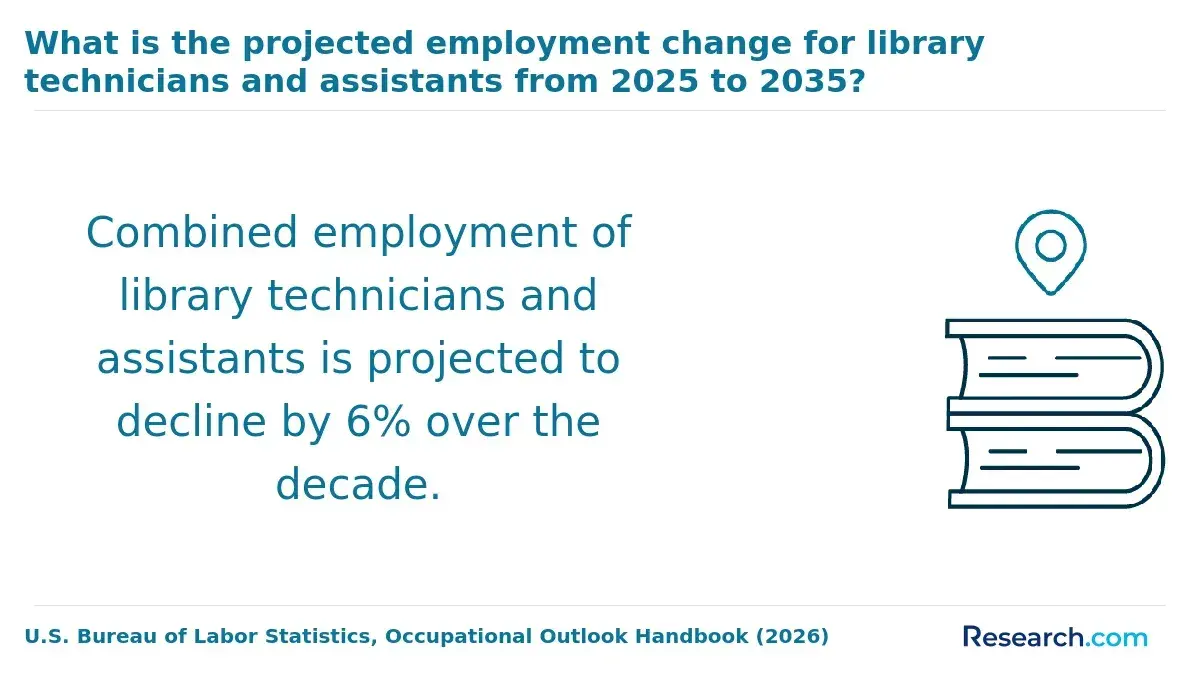
Use occupational figures as context rather than a return-on-investment forecast. Compare local job postings, their stated degree requirements, and their pay ranges with your current earnings and likely education costs. Also distinguish professional librarian positions from library technician jobs, which can have different qualification and pay expectations.
Do librarians need licenses or professional certifications after earning an MLIS?
Requirements depend on the job and jurisdiction; an MLIS does not create one universal librarian license. School librarian positions commonly involve state-specific certification, licensure, or endorsement requirements. Consult the education authority in the state where you intend to work before choosing a preparation pathway.
Other employers may specify additional subject expertise, experience, or preferred credentials for specialized positions, but those preferences are not universal legal requirements. If a posting names a credential you do not have, ask the employer whether it is required at hiring or can be completed afterward. That answer is more useful than assuming an online degree automatically qualifies you for every setting.
Other Things You Should Know About Library Science
They can, especially if you live somewhere that does not change clocks. Check whether the timetable states a named time zone, such as Eastern, and confirm your local meeting time for each term.
Possibly, but notify the program before moving. A new location can affect live-class hours, access to placement sites, and any institution-specific rules governing where students may enroll.
Ask for the program's technical requirements. Reliable internet, a computer compatible with its learning platform, and a way to participate in audio discussions are practical considerations, particularly if you will join from a shared workspace.
Universities commonly provide enrolled students with digital research resources, but borrowing, document delivery, and remote authentication services vary. Check the specific library's student-access policies before relying on a particular resource for coursework.
References
- Program Integrity Questions and Answers - Credit Hour http://www.ed.gov/laws-and-policy/higher-education-laws-and-policy/program-integrity-information-questions-and-12
- Synchronous vs. Asynchronous Learning | Saint Leo University https://www.saintleo.edu/about/stories/blog/synchronous-vs-asynchronous-learning-for-course-delivery
- online Master of Library and Information Science | DEN-EDU https://morgridgeonline.du.edu/online-mlis-program/
- Tuition & Fees - UF Online - University of Florida https://ufonline.ufl.edu/tuition/tuition-fees/
- Library Science Master's Online - UW Information School https://ischool.uw.edu/programs/mlis/degree-options/online
- What is a "LIVE ONLINE" Course? - Faculty & Staff Support https://staffsupport.spcollege.edu/hc/en-us/articles/15871336299547-What-is-a-LIVE-ONLINE-Course
- 2025-2026 Tuition and Fees - Student Account Services | University of Kentucky https://studentaccount.uky.edu/tuition-and-fees/past-tuition-and-fees/2025-2026-tuition-and-fees
- Modes of Instruction - Office of the Registrar https://registrar.berkeley.edu/modes-of-instruction/
- What's the Difference Between Asynchronous and Synchronous Learning? | Ohio State Online https://online.osu.edu/content-hub/blogs/whats-the-difference-between-asynchronous-and-synchronous-learning/
- ALA-Accredited Programs https://www.ala.org/educationcareers/accreditedprograms/directory


