
2027 MLIS Programs for Digital Collection Licensing and Access

Co-Founder and Chief Data Scientist
Choosing an MLIS for digital collections means looking beyond a program's name: you need preparation to license electronic resources, manage access, and explain users' rights. The work matters across libraries as collections and research services increasingly depend on digital content.
The U.S. Bureau of Labor Statistics reports a May 2025 median annual salary of $68,270 for librarians and media collections specialists, though that figure is not specific to licensing roles. This guide shows prospective students and career changers which courses, projects, credentials, and costs to compare before enrolling.
Key Things You Should Know
- Look for a documented combination of electronic-resource licensing, copyright, collection development, access systems, and applied work - not an assumed "digital collections" concentration.
- Check the specific master's program in the American Library Association's accreditation directory; institutional accreditation alone does not establish ALA accreditation.
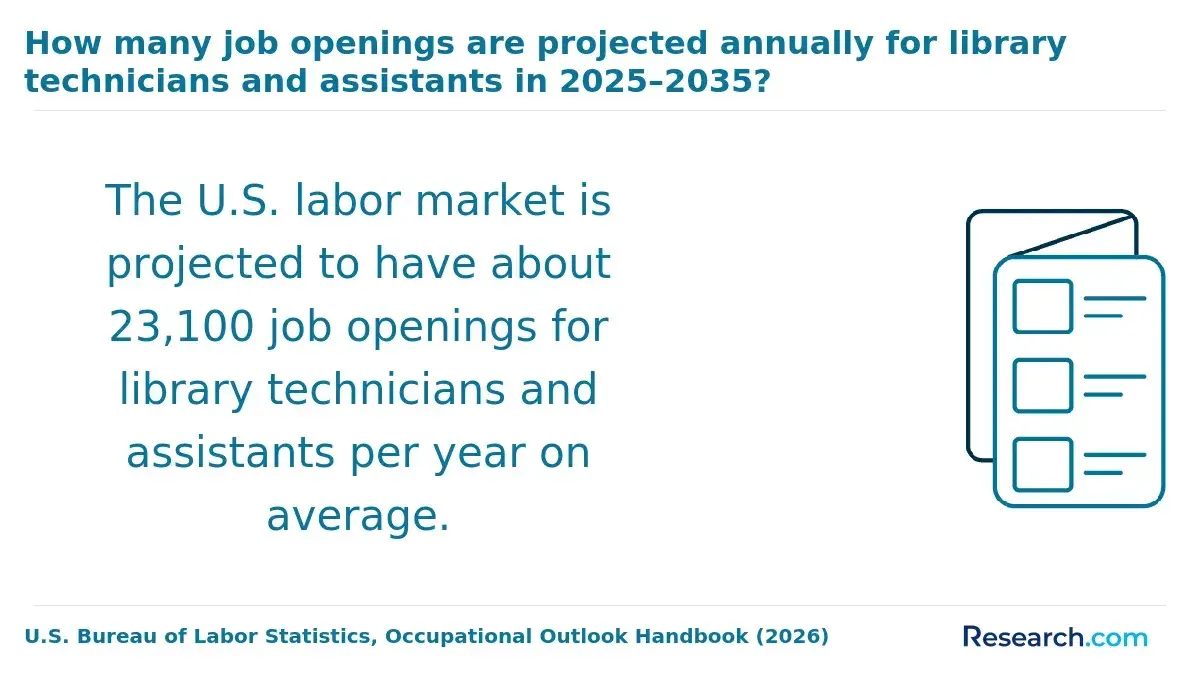
- Compare the full cost and scheduling of the courses you need. BLS projects 2.6% employment growth for librarians and media collections specialists from 2025 to 2035, not a guaranteed outcome for this specialty.
What are MLIS programs for digital collection licensing and access?
They are library and information science master's programs that students can use to prepare for selecting, licensing, delivering, and maintaining access to digital content. The degree may be called an MLIS, MLS, Master of Science in Library Science, or another institution-specific name. What matters most here is the documented curriculum and applied preparation, not the letters in the title.
Licensing work can include reviewing permitted uses of journals, ebooks, databases, and streaming media; explaining terms to colleagues; tracking renewals; and resolving access problems. Access work also involves discovery tools, authentication, accessibility, privacy, and the metadata that helps people find materials. Copyright and license terms are related but different: copyright law establishes underlying rights, while a contract may set additional conditions for a particular resource.
A school may offer a formal, named concentration, relevant electives, an independent project, or only general LIS coursework. Those are different levels of preparation. Ask for the current catalog and recent course schedule rather than treating a course title or marketing description as proof of a specialization.
Which MLIS accreditation should digital collections students look for?
For U.S. professional librarian roles, begin by checking whether the specific master's program appears in the American Library Association's current directory of accredited programs. A university's institutional accreditation is important, but it is not the same as ALA program accreditation. Verify the degree and campus or delivery arrangement you intend to enter, and confirm its status when you apply.
ALA accreditation evaluates a program as a whole. It does not certify a licensing concentration, guarantee that an elective will run, or establish that a practicum is available remotely. Some adjacent jobs accept other graduate degrees or equivalent experience, so compare accreditation with actual postings for your target roles rather than assuming every digital-content position has the same requirement.
What careers do MLIS graduates pursue in digital collections and access?
Job titles vary by employer, and licensing is often one responsibility within a broader position. Academic libraries may combine it with electronic-resource management or scholarly communication; public libraries may emphasize ebook platforms and vendor access; special, government, medical, and law libraries may have subject-specific resources and user restrictions.
The distinctions below can help you search job postings and identify the experience each path requires.
| Role or pathway | Typical work | Qualification consideration |
| Electronic resources librarian | Manage subscriptions, license terms, renewals, access problems, and usage information. | Professional librarian postings commonly merit close attention to MLIS requirements. |
| Digital collections librarian | Coordinate digitization, description, rights review, online delivery, and preservation planning. | Employers may value an MLIS plus demonstrable project and metadata experience. |
| Licensing or access specialist | Track agreements, troubleshoot platforms, or support procurement workflows. | Some positions accept relevant experience or other degrees; titles do not reliably indicate librarian status. |
Entry-level electronic-resource support, acquisitions, repository, or metadata work can build useful experience, but a paraprofessional job is not automatically a professional librarian role. For a broader look at employment-focused program features, compare MLIS programs with strong career support and then verify their relevance to your intended specialty.
What coursework covers digital collections, licensing, copyright, and access?
A strong course plan connects legal judgment with collections decisions and technical delivery. The table identifies useful subjects and the evidence of learning to seek in syllabi or project descriptions; it does not imply that every program offers each subject as a separate course.
| Subject | Why it matters for licensing and access | Useful applied evidence |
| Collection development and electronic resources | Connects selection, vendor relationships, renewal decisions, and resource evaluation. | A collection assessment or documented acquisition workflow. |
| Copyright and information policy | Helps distinguish legal permissions from contract terms and institutional policy. | A rights assessment that explains its assumptions and limits. |
| Metadata and discovery | Supports accurate descriptions and users' ability to find licensed or locally held content. | Metadata records or a discovery-improvement project. |
| Digital libraries, accessibility, and systems | Addresses delivery, usable interfaces, authentication, and ongoing access. | An accessibility review or access-troubleshooting case study. |
Ask whether these courses are required or elective, how often the electives have run recently, and whether prerequisites affect your sequence. A practicum with an electronic-resources unit or a supervised license-analysis project can turn coursework into portfolio evidence. Use a fictional or suitably redacted agreement if real vendor terms are confidential.
Are online or campus-based MLIS programs better for digital collections?
Neither format is inherently better for this work. Online study can suit someone employed at a library who can apply assignments locally; campus study may make it easier to use nearby collections and meet potential practicum supervisors. In either format, the decisive question is whether you can complete the right courses and supervised work on a workable schedule.
Confirm whether classes are asynchronous or require live attendance, whether specialized electives have limited seats, and whether a practicum can be completed near your home or workplace. An online course does not necessarily mean flexible deadlines or a remote internship. Working students comparing a part time online library science masters should pay particular attention to course rotation: a required elective offered infrequently can extend the timeline.
What are the admission requirements for digital collections MLIS programs?
Applicants generally need a bachelor's degree and must follow the institution's current graduate application rules. Programs may request transcripts, a statement of purpose, recommendations, and a résumé; test policies, prerequisite expectations, and application deadlines vary. A prior library job is useful context, not a universal admission requirement.
Use your statement to connect a specific goal - such as electronic-resource access or rights review - to courses and projects the program actually documents. Career changers can draw on procurement, contracts, web accessibility, technical support, or records work without claiming that those experiences are identical to librarian practice. If your background or transcripts are unusual, request an individual review from admissions rather than assuming experience waives a published requirement.
How long do digital collections MLIS programs take and cost?
Time to completion depends on required credits, enrollment pace, course sequencing, and any practicum or capstone. A student pursuing licensing electives may take longer than the advertised fastest path if those courses do not fit the standard sequence. An intensive online library science degree is worth considering only after confirming that its schedule leaves room for the relevant coursework and experience.
Because tuition varies by institution, residency rules, and enrollment period, calculate a program-specific estimate rather than relying on an unverified national price. Compare these cost components using each school's current published rates and your likely course plan:
- Required credits multiplied by the tuition rate that actually applies to you.
- Mandatory university and program fees, plus books, software, and equipment.
- Travel or lost work time for campus visits, practicum placements, or additional terms caused by course sequencing.
Separate the gross program cost from what scholarships or employer support might cover and from what you would borrow. Ask the financial aid office about aid eligibility for your intended enrollment period; do not assume that a scholarship, assistantship, or particular loan amount will be available. A reasonable return-on-investment decision also weighs your current earnings, target employers' degree requirements, and the uncertainty of securing a specialized position.
Do digital collections professionals need licenses or certifications?
There is no universal professional license specifically for managing digital collection licenses or access. Hiring requirements instead depend on the position: an employer may require an ALA-accredited library master's degree for a librarian role, while a systems or contract-support role may accept different education and experience. Training in copyright, accessibility, or a particular platform can strengthen an application, but an optional certificate should not be mistaken for legal authorization to practice.
School librarian positions are a separate case because state educator certification or endorsement rules may apply. An online MLIS or an ALA-accredited program does not, by itself, establish eligibility in every state. Check the relevant state education authority before choosing a school-focused pathway.
What salaries and job outlook can digital collections graduates expect?
There is no single BLS occupation for digital collection licensing. The closest broad category, librarians and media collections specialists, had a May 2025 median annual salary of $68,270 and projected employment growth of 2.6% from 2025 to 2035. These figures describe an occupation across specialties and employers - not starting pay, a program outcome, or a forecast for electronic-resource positions alone.
Some digital collections work also overlaps archives, systems, or technical-support jobs with different pay structures and degree expectations. Compare actual postings by location, job duties, required qualifications, and salary range before estimating the value of an MLIS. Readers weighing other credentials can use library degree levels and earnings as a starting point, then test those broad comparisons against the jobs they would realistically pursue.
How can students choose a reputable digital collections MLIS program?
Shortlist programs against the work you want to perform, not a generic ranking. Request the current catalog, recent schedules for relevant electives, practicum rules, and a complete cost estimate. Ask a program adviser which licensing, copyright, electronic-resource, and accessibility projects students can actually complete - and whether those opportunities depend on finding an external placement.
Then compare your finalists on the same terms: verified accreditation, required versus elective coursework, recent elective availability, applied experience, scheduling, total cost, and career support. For the budget side, online MLIS financial planning can help frame questions about funding, but confirm all awards and charges directly with each institution.
If your target postings require an MLIS for professional librarian work, prioritize a program that lets you produce evidence of licensing and access skills. If you already have a suitable degree and want narrower contract or systems skills, targeted training and relevant work experience may be a less costly first step. Neither path guarantees a specialized job; the stronger choice is the one that closes a documented qualification gap within your budget.
Other Things You Should Know About Library Science
It generally refers to continued access to specified content after a subscription ends. The covered years, hosting method, and possible ongoing fees depend on the agreement, so read the actual terms.
Sometimes. A license may permit on-site use by visitors or restrict access to defined authorized users. Library staff should check the agreement before promising access.
No. Content may be free to read while reuse still depends on copyright, an open license, or other applicable terms. Check the rights statement for the specific item.
Use a fictional license scenario or a publicly shareable rights assessment. Explain your analysis and decisions without uploading confidential agreements, patron information, or restricted usage data.
References
- U.S. Copyright Office Fair Use Index https://www.copyright.gov/fair-use/
- Licensing Info & FAQs | Wiley https://authors.wiley.com/author-resources/Journal-Authors/licensing/licensing-info-faqs.html
- MLIS Program Requirements and Curriculum | umd.edu https://info.umd.edu/academics/masters-programs/master-of-library-and-information-science/curriculum-specializations/
- Creative Commons Licenses - Open Educational Resources (OER) - Research Guides at Franklin University https://guides.franklin.edu/OER/creative_commons
- Institutional License Agreement | science.org https://www.science.org/content/page/institutional-license-agreement
- MLIS Curriculum, Specialties & Courses | University of Arizona College of Information Science https://infosci.arizona.edu/ma-library-information-science/curriculum-specialties-courses
- Licensing and Copyright | VCU Libraries https://pressbooks.library.vcu.edu/hscolldev/chapter/licensing-and-copyright/
- Internships | UNLV University Libraries http://www.library.unlv.edu/sca/projects-initiatives/internships
- Copyright & Fair Use: Interlibrary Loan & Licensing | ewu.edu https://research.ewu.edu/c.php
- MLIS Electives - SJSU - School of Information https://ischool.sjsu.edu/mlis-electives


