2027 MLIS Programs for Data Privacy in Information Services

Co-Founder and Chief Data Scientist
Choosing an MLIS for data privacy means looking beyond a program's title: the right preparation must connect patron confidentiality, digital systems, records policies, and access to information. The U.S. Bureau of Labor Statistics projects 2.6% employment growth for librarians and media collections specialists from 2025 to 2035, making specialized skills worth evaluating without assuming they guarantee a job. This guide helps prospective students compare curricula, applied experience, costs, and career paths - and decide whether an MLIS is the right credential for their goals.
Key Things You Should Know
- Seek an ALA-accredited master's program with documented privacy-related coursework and applied projects; a relevant elective is not the same as a formal concentration.
- Privacy work spans library services, records management, and information governance, but an MLIS is not required for every job in those fields.
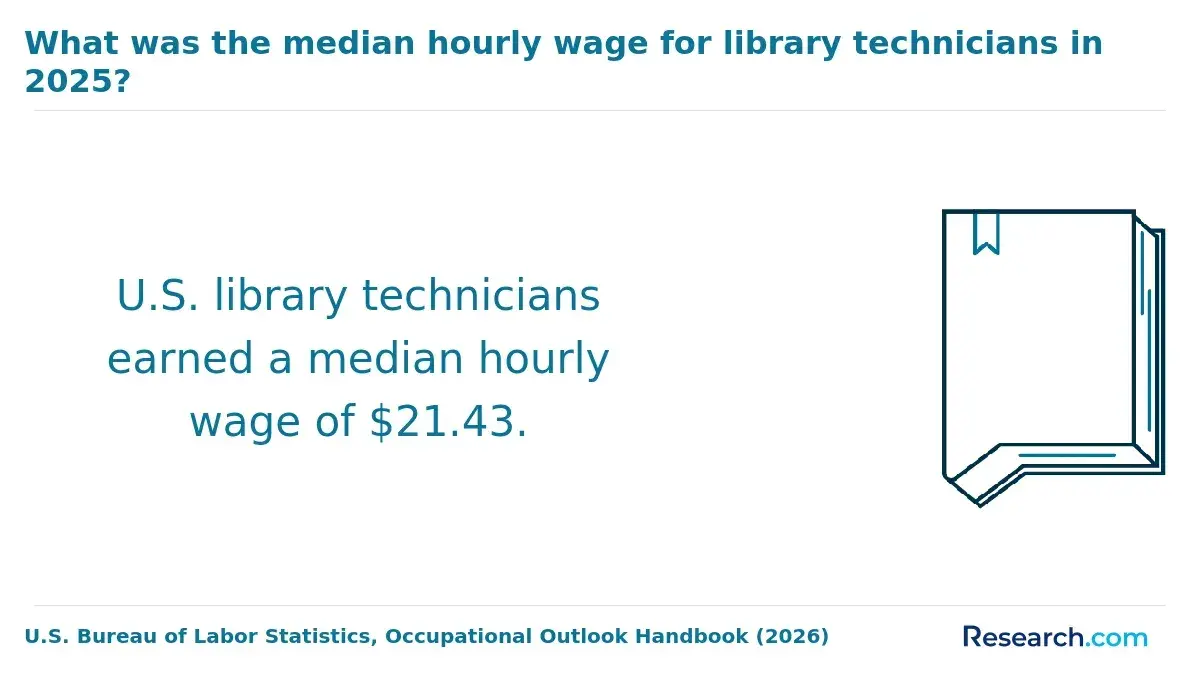
- The May 2025 median annual salary for librarians and media collections specialists was $68,270; that occupational figure is not a salary forecast for privacy-focused graduates.
What are MLIS programs for data privacy in information services?
These are Master of Library and Information Science programs that students can use to prepare for protecting personal information in libraries and related services. The work may involve limiting unnecessary data collection, setting retention rules, evaluating vendors, securing access to records, and explaining privacy choices to users. Protecting confidentiality while preserving useful, equitable access is central to the job.
"Data privacy" may be a student's career focus rather than an officially named MLIS concentration. One program might document a formal track; another might offer relevant electives and an independent project; a third might provide only broad alignment through its core curriculum. An MLS, Master of Science in Library Science, or Master of Information may also be relevant, but degree names alone do not establish equivalent coursework or accreditation.
For a prospective student, the question is not whether a catalog uses the word privacy. It is whether the program lets you practice decisions you would face at work: what information to collect, who can see it, how long to keep it, and what to do when a system or policy exposes it.
Which data privacy careers can an MLIS degree prepare you for?
An MLIS can be particularly useful where privacy decisions are intertwined with reference services, circulation, digital collections, research support, or institutional records. Employers use different titles for similar work, and some governance or security positions favor legal, technical, or compliance experience instead of - or alongside - an MLIS.
The table distinguishes roles where library training is directly relevant from adjacent careers with broader credential pathways. It describes possible work, not jobs guaranteed by a particular degree.
| Role or pathway | Privacy-related work | How an MLIS fits |
| Public or academic librarian | Protect borrowing and inquiry records; evaluate discovery tools and service practices. | Often relevant to professional librarian hiring; privacy may be one responsibility among many. |
| Systems or digital services librarian | Review authentication, analytics, vendor access, and data flows in library platforms. | Pairs LIS service knowledge with demonstrated technical and vendor-assessment skills. |
| Records or archives professional | Apply retention schedules, access restrictions, and appropriate handling of sensitive records. | Relevant when supported by records or archival coursework and experience; job requirements vary. |
| Information governance or privacy analyst | Inventory data, document controls, and coordinate policy across an organization. | One possible route; employers may instead prioritize compliance, legal, or security backgrounds. |
Entry-level applicants can strengthen their case with a documented policy review, a vendor privacy assessment, or a supervised project using synthetic rather than real patron data. If your primary goal is cybersecurity engineering or legal privacy compliance, compare the MLIS with credentials built around those fields before enrolling. For broader salary and role comparisons, see top paying library jobs.
How do you choose an accredited MLIS program for data privacy?
Start by checking the specific master's program in the current American Library Association accreditation directory. Institutional accreditation and ALA program accreditation answer different questions. ALA accreditation also does not verify that a privacy elective, internship, or online option is available to you.
Once you confirm accreditation, evaluate the parts of the program that would actually support your intended work. These checks help separate a documented opportunity from a promising catalog description:
- Find out which courses are required, which are electives, and when privacy-relevant electives are next expected to run.
- Ask whether you can complete a supervised project on data minimization, vendor contracts, records retention, or a library privacy policy.
- Check whether faculty or practicum supervisors have experience relevant to your target setting and whether a suitable placement is available locally or remotely.
- Compare required credits, fees, funding conditions, and course sequencing - not just the advertised tuition rate.
Request a recent degree plan and sample project expectations from each program. If affordability determines your shortlist, investigate library degree scholarships for professionals, then confirm eligibility and renewal terms with the school. Funding mentioned on a program page should not be treated as guaranteed.
What do MLIS data privacy programs teach?
Preparation usually comes from combining LIS foundations with privacy-relevant electives and applied work, not from a standard curriculum shared by every program. Strong choices connect policy to actual services and systems: a rule about retaining records matters only if staff can apply it to circulation software, vendor data, and user requests.
The table shows curriculum areas to look for and the kind of work each could help you demonstrate. These are selection criteria, not claims that every MLIS offers the listed courses or projects.
| Curriculum area | Privacy relevance | Potential evidence of skill |
| Information policy and ethics | Balances confidentiality, access, intellectual freedom, and institutional obligations. | A justified policy recommendation for a defined library setting. |
| Information systems and user services | Examines how accounts, discovery tools, analytics, and vendors handle user data. | A data-flow map and recommendations to reduce unnecessary collection. |
| Records management and archives | Addresses retention, disposal, access restrictions, and sensitive collections. | A proposed retention or access procedure with documented trade-offs. |
| Research methods and applied projects | Builds skill in evaluating practices and communicating changes to stakeholders. | A privacy review based on public documentation or appropriately de-identified data. |
Responsible AI is a useful test case: students should be able to examine what patron or research data an AI-enabled service sends to a vendor before recommending it. Because electives may have prerequisites or run infrequently, map a feasible course sequence early. A guide to library information science program duration can help frame scheduling questions, but the department must confirm its current timetable.
Are online or campus-based MLIS programs better for data privacy?
Neither format is inherently better for privacy preparation. Compare whether you can take the relevant courses, work with qualified instructors, and complete an applied project in your intended setting. Online study may allow a working librarian to examine privacy practices at their own institution; campus study may make local placements or in-person collaboration easier. Neither advantage is universal.
Ask how much work is asynchronous, whether live sessions are required, and how group projects are scheduled. Confirm whether a practicum must be completed at an approved site and whether any campus visits apply. "Online" does not by itself mean self-paced or entirely remote.
If you need to keep working while enrolled, use the schedules and cost questions in this flexible librarian degree for employees guide as a starting point, then verify the requirements of each MLIS you are considering.
What are the admission requirements for data privacy MLIS programs?
Applicants generally need to meet the master's program's published admissions requirements; there is not necessarily a separate application for a privacy focus. Review each school's rules for a bachelor's degree, transcripts, recommendations, a statement of purpose, and any additional materials. Test requirements, deadlines, and prerequisites vary, so the current program page and admissions office should settle questions about your eligibility.
You do not need to claim prior privacy expertise to make a focused application. Explain a concrete problem you want to learn to solve - for example, assessing how a library vendor uses patron data - and connect it to documented courses or projects. Experience in public service, records, IT, or policy can provide useful examples, but it does not automatically replace a formal admission requirement.
If you hope to transfer graduate credits or start in a certificate before applying, request an individual review. Ask which credits can count toward the specific degree, whether they must be recent, and how acceptance would affect your course sequence and total cost.
How long do MLIS data privacy programs take and cost?
Time to completion depends on the program's required credits, your course load, elective availability, and any practicum or capstone sequence. A privacy focus need not add credits if relevant electives satisfy degree requirements, but that must be confirmed against the current degree plan. Ask the department to map your intended courses through graduation, including a backup if a preferred elective is unavailable.
For a defensible cost comparison, multiply each program's required credits by the tuition rate that applies to you, then add mandatory fees and expected expenses. Published tuition is not the same as total cost of attendance, and online enrollment does not automatically confer an in-state rate.
The following categories help identify costs that a per-credit comparison can miss. Confirm amounts and applicable academic-year rates directly with each institution.
| Cost category | What to verify |
| Tuition and required fees | Credits needed, your residency or online rate, and mandatory charges. |
| Learning and project expenses | Books, software, equipment, and any required travel or campus attendance. |
| Scheduling-related costs | Whether an unavailable course could require another term of enrollment. |
| Funding and borrowing | Scholarship or employer-support conditions and your current federal aid eligibility. |
Compare the gross cost, what you expect to pay out of pocket, and any amount you would borrow as separate figures. For a shortlist organized around cost and completion time, consult best value short library science masters, then recalculate using current school charges and your own enrollment plan. Federal aid rules can change by enrollment period; confirm current eligibility and loan terms with the financial aid office before relying on borrowing.
Do data privacy information professionals need licenses or certifications?
There is no single license required for all data privacy work in libraries and information services. Employers may value optional privacy, records-management, or security credentials for particular jobs, but those credentials do not substitute for demonstrated ability to apply policy in a real service environment. Check individual job postings before paying for an additional certification.
School librarian roles are a separate case: state certification, licensure, or endorsement rules may apply regardless of an MLIS program's accreditation or delivery format. Confirm the requirements with the state education authority where you intend to work. Specialized law, medical, government, and archival employers may also set position-specific qualifications; do not assume one credential covers every setting.
What salaries can MLIS data privacy graduates expect?
The Bureau of Labor Statistics reports a May 2025 median annual salary of $68,270 for librarians and media collections specialists. This is a useful benchmark for librarian positions, not a privacy-specialist starting salary or an MLIS graduate outcome. Pay for a role with privacy duties depends on its broader responsibilities, employer, location, and required experience.
For an offer or career-change decision, compare the actual job description and salary range with your current earnings and likely education costs. A records or governance position may sit in a different occupational category, so applying the librarian median to every privacy-related job would be misleading.
What is the job outlook for data privacy information services careers?
BLS projects 2.6% employment growth for librarians and media collections specialists from 2025 to 2035. That projection covers the occupation as a whole; it does not measure openings specifically devoted to privacy. Some institutions may distribute privacy responsibilities among librarians, systems staff, records teams, and administrators rather than advertise a dedicated position.
For a realistic search, look beyond the phrase privacy librarian. Examine postings for systems librarians, digital services librarians, records professionals, and information governance staff, then note which duties and qualifications recur in your target location. If most appealing roles require hands-on systems or compliance experience, choose projects and work opportunities that build it alongside - or instead of - another credential.
Other Things You Should Know About Library Science
Do not assume you can. Ask the library and instructor for approval and follow applicable institutional rules. Public documentation, synthetic records, or properly de-identified information can often support a useful project without exposing patrons.
No. Security helps prevent unauthorized access, while privacy also addresses whether information should be collected, used, retained, or shared in the first place. Effective library practice needs both.
No. Vendors handle different data under different contracts and service arrangements. Identify what a particular tool receives and retains, then review its terms and your institution's obligations before recommending it.
No. It remains a library and information science degree. Your options depend on the program's preparation, your experience, and the requirements of the roles you pursue.
References
- Overview | Internships and Fellowships https://www.loc.gov/internships-and-fellowships/overview/
- Cost of Attendance (Budget) | 2025-2026 Federal Student Aid Handbook https://fsapartners.ed.gov/knowledge-center/fsa-handbook/2025-2026/vol3/ch2-cost-attendance-budget
- Privacy Impact Assessment - An Essential Tool for Data Protection | ASPE https://aspe.hhs.gov/privacy-impact-assessment-essential-tool-data-protection
- NCDS Data Internship | NNLM https://www.nnlm.gov/offices/ncds/internship
- Privacy Impact Assessments | Federal Trade Commission https://www.ftc.gov/policy-notices/privacy-policy/privacy-impact-assessments
- Library & Information Science, M.S. | St. John's University https://www.stjohns.edu/academics/programs/library-and-information-science-master-science
- Data Privacy Law and Ethics: How an M.L.S. Degree Prepares You | School of Law | University of Miami https://news.miami.edu/law/stories/2025/06/data-privacy-law-and-ethics-how-an-mls-degree-prepares-you.html
- MLIS Curriculum, Specialties & Courses | University of Arizona College of Information Science https://infosci.arizona.edu/ma-library-information-science/curriculum-specialties-courses
- MS Information Science | University at Albany https://www.albany.edu/cehc/programs/ms-information-science
- Cost of Attendance (COA) | fitnyc.edu https://www.fitnyc.edu/admissions/costs/cost-of-attendance.php