
2027 MLIS Programs for Nonprofit Staff Moving Into Library Leadership

Co-Founder and Chief Data Scientist
Moving from nonprofit work into library leadership means deciding whether an MLIS will build the skills and meet the hiring requirements for the role you want. The decision deserves care: the U.S. Bureau of Labor Statistics reports a May 2025 median annual wage of $68,270 for librarians and media collections specialists, but that figure does not predict an individual graduate's pay.
This guide helps nonprofit staff assess programs, translate existing experience into library practice, compare costs, and identify when a different credential may be the better investment.
Key Things You Should Know
- Choose an ALA-accredited master's program if your target librarian or director positions require one; verify the specific program's status, not just the university's accreditation.
- Prioritize management coursework and applied library experience over a concentration name. A nonprofit background is useful, but it does not replace training in collections, access, and library services.
- Use local job postings and your current earnings to test the investment: the May 2025 librarian and media collections specialist median was $68,270, while projected employment growth for 2025-2035 is 2.6%.
What is an MLIS degree, and how does it support nonprofit library leadership?
A Master of Library and Information Science (MLIS) is a graduate degree in organizing information, serving users, managing collections, and operating information services. Schools may use titles such as Master of Library Science (MLS), Master of Science in Library Science, or Master of Information. Evaluate the actual curriculum and accreditation rather than assuming those titles describe identical degrees.
Nonprofit staff may already manage budgets, supervise volunteers, write grants, or build community partnerships. An MLIS can add the library-specific judgment needed to turn those strengths into service decisions: selecting and evaluating collections, protecting patron privacy, planning accessible programs, and measuring whether services meet community needs. In a small nonprofit library, one leader may handle several of these functions at once.
Start with the job, not the degree name. Compare the qualifications in director and librarian postings from organizations you would consider, then examine library science masters degree options against those requirements. If your goal is primarily nonprofit executive management rather than professional librarianship, an MPA, nonprofit-management degree, or targeted professional development may fit better.
Why does ALA accreditation matter for nonprofit library leadership careers?
American Library Association (ALA) accreditation applies to specific master's programs, not automatically to every degree a university awards. It matters because some employers require an ALA-accredited library degree for professional librarian or leadership positions. Other employers may accept equivalent preparation, so the requirements in your target job market remain important.
Check the current ALA directory for the specific program and confirm that its accreditation covers the degree you intend to pursue. Separately confirm the institution's accreditation. Neither check establishes that a management elective, internship, or online format is available to you; those are program questions.
For nonprofit staff who might later move into a public or academic library, ALA accreditation can preserve access to postings that specify it. It does not guarantee a director role: employers may also expect supervisory experience, public-service experience, or knowledge of their particular library setting.
What career paths can nonprofit staff pursue with an MLIS degree?
The strongest transition usually connects work you already do with a library function you can demonstrate. This comparison shows where nonprofit experience transfers - and what additional evidence a hiring manager may need.
| Potential path | Relevant nonprofit experience | Library-specific preparation to build |
| Public or community library manager | Outreach, budgets, partnerships, staff supervision | Reference services, collection decisions, patron privacy, library operations |
| Special library or information center lead | Subject expertise, stakeholder service, research support | Information retrieval, licensing, knowledge organization |
| Archives or digital collections manager | Stewardship of organizational records and history | Archival appraisal and description, digital preservation |
| Library development or engagement leader | Fundraising, communications, volunteer coordination | Library service goals, assessment, community access |
These paths have different entry points. A development position may value nonprofit fundraising more than an MLIS, while a professional librarian posting may require the degree. For an eventual director role, look for opportunities to own a service budget, supervise people, document outcomes, and collaborate with librarians - not just to collect credentials.
How do online and campus-based MLIS programs compare for working professionals?
Online delivery can make graduate study possible alongside nonprofit work, but it does not automatically mean self-paced study. The distinctions below affect whether you can keep your current schedule and gain relevant experience.
| Format | Potential advantage | Constraint to verify |
| Asynchronous online | Coursework may fit around variable work hours | Weekly deadlines, group work, and any required live meetings |
| Synchronous online | Scheduled discussion with classmates and instructors | Meeting times and time-zone conflicts |
| Campus-based or hybrid | In-person access to local libraries and peers | Commute, campus attendance, and daytime course availability |
Ask whether required courses and leadership electives are offered often enough for your intended pace, and whether a practicum can be completed near home or at your workplace. Do not assume an online internship is available because the classes are online. If speed is a priority, compare the documented course sequence and workload - not just advertised completion times - when considering the fastest route to an MLIS.
What courses do MLIS programs offer for library management and nonprofit leadership?
For a leadership goal, look for a foundation in reference and user services, collection development, information organization, and information ethics, followed by opportunities to study management, budgeting, assessment, and community engagement. Course names and requirements differ by program. A catalog listing establishes that a course exists; it does not prove that the course will run during your enrollment.
Choose electives to close gaps in your existing experience. A fundraiser moving toward a library director role may need deeper preparation in access services and collections. Someone who already supervises a nonprofit resource center might benefit more from digital collections, records management, or evaluation methods. A metadata and cataloging concentration is worth considering if the intended job involves making collections findable, but do not confuse a single relevant elective with a formally designated concentration.
Applied work can make this preparation visible. A supervised project might produce a collection assessment, an accessible service plan, or a digital-collections workflow. Before enrolling, ask who can supervise such work, whether it earns credit, and what you may show employers without exposing patron or organizational information.
What are the admission requirements for MLIS programs?
Applicants generally need a bachelor's degree, but schools set their own academic thresholds and document requirements. Review each program's current admissions page for transcript, statement, résumé, recommendation, test, and deadline policies rather than assuming a common MLIS standard.
Use your application to explain the transition precisely. Describe the community you serve, the resources or people you manage, a problem you have solved, and the library work you want to learn. Grant writing alone does not demonstrate reference or collection-management experience; naming that gap shows why graduate study is relevant. If your academic record needs context, ask admissions staff how to provide it and whether an individual review is possible. Professional experience should not be assumed to waive a published degree requirement.
Ask about funding early enough to compare offers, especially if leaving full-time work is not feasible. Scholarships for nontraditional MLIS students may be worth investigating, but eligibility, award availability, and renewal terms need to be confirmed with each provider or institution.
How long do MLIS programs take, and how much do they cost?
Completion time depends on required credits, course sequencing, and how many courses you can take while working. A published accelerated path may assume a heavier workload than a nonprofit manager can sustain. Ask for a term-by-term plan showing when required courses and desired electives are actually scheduled.
For cost, calculate required credits multiplied by the tuition rate that applies to you, then add mandatory fees, materials, travel, and any practicum expenses. Compare programs using the same assumptions. Published tuition is not a total attendance cost, and online enrollment does not necessarily qualify an out-of-state student for an in-state rate. A library science degree low cost and fast comparison can help generate options, but confirm current charges and completion conditions directly with each school.
Separate the program's gross cost from your out-of-pocket cost after any confirmed employer support or aid, and from the amount you would borrow. Ask financial aid staff about eligibility and loan terms for your enrollment period before making a borrowing decision. To judge the investment, compare that personal cost with your current earnings and the qualifications and pay in jobs you could realistically pursue; a national salary median cannot establish your payback period.
What jobs can graduates pursue in libraries, archives, and information services?
Graduates may seek librarian, branch manager, library director, outreach librarian, archivist, digital collections specialist, or information-services positions. The work differs: a branch manager coordinates staff and public services, an archivist appraises and describes records, and a digital collections specialist helps preserve and make materials discoverable. Titles alone do not reveal whether a position requires an MLIS, another graduate degree, or substantial experience.
Nonprofit employers may also hire for knowledge management, records, research, and digital asset roles without requiring a library degree. If those are your main targets, compare their job descriptions against your existing skills before committing to an MLIS. Conversely, if postings consistently require professional librarian qualifications, volunteering or a short certificate may strengthen an application but may not meet the stated education requirement.
Build evidence for the setting you want to enter. A prospective public library leader could document a community program and its assessment; an archives candidate could seek supervised experience describing a collection. Respect confidentiality and obtain permission before including workplace materials in a portfolio.
What salaries and job outlook can MLIS graduates expect?
U.S. Bureau of Labor Statistics figures provide occupational context, not MLIS graduate outcomes or nonprofit-specific pay. The May 2025 medians and 2025-2035 employment projections below show why the intended job matters more than the degree title when comparing career prospects.
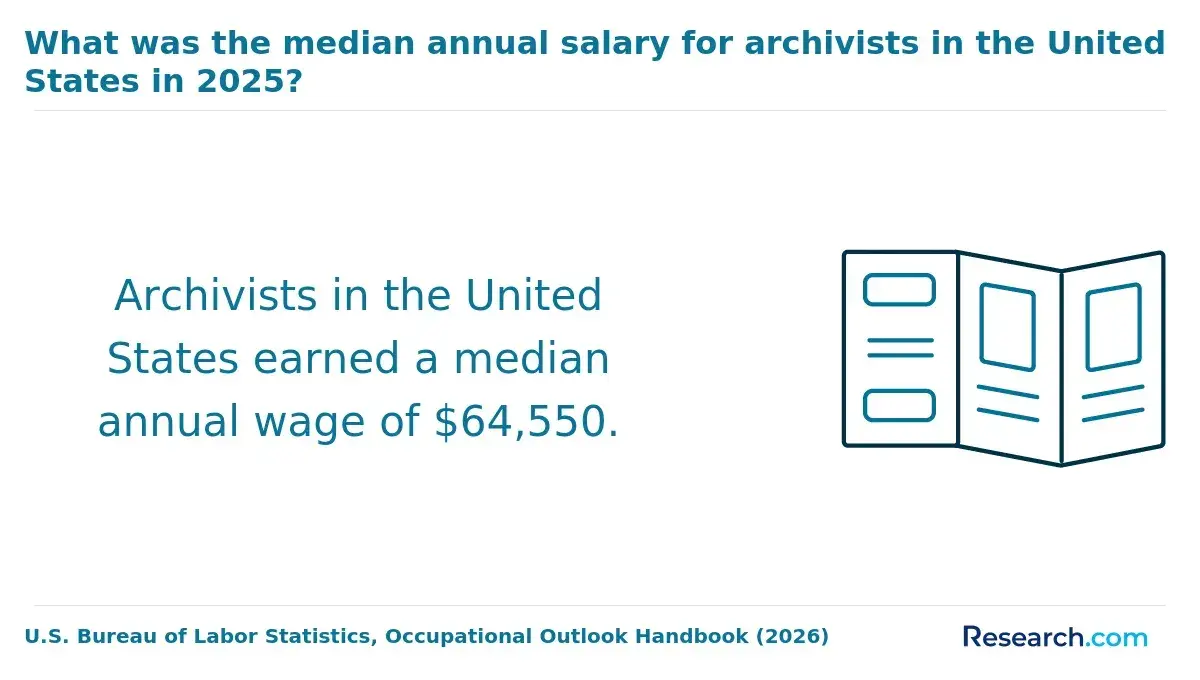
| U.S. occupation | Median annual salary, May 2025 | Projected job growth, 2025-2035 |
| Librarians and media collections specialists | $68,270 | 2.6% |
| Archivists | $64,550 | 3.4% |
| Library technicians | $44,580 | −6.4% |
The librarian median includes workers across settings and experience levels; it is not an expected starting salary or a director salary. Library technician positions are also distinct from professional librarian roles, even though they can provide useful experience. Compare local postings by title, employer type, required credentials, and pay before estimating what a move would mean for your household finances.
Do nonprofit library leaders need state licenses or professional certifications?
There is no single license that all nonprofit library leaders must hold. Requirements depend on the position and jurisdiction. Some public library systems or states specify credentials for certain roles; a nonprofit's own hiring standards may differ. Confirm the rule with the relevant authority and employer rather than relying on a program's general career description.
School librarianship requires particular caution. State education authorities set certification or endorsement rules, which are separate from ALA accreditation of a master's program. An online MLIS does not, by itself, establish eligibility to work as a school librarian in every state. Archives and specialized libraries may prefer additional subject knowledge or experience, but do not assume an optional professional certificate is a legal requirement.
Other Things You Should Know About Library Science
Yes. Seek duties that expose you to patron service, collections, or programming rather than assuming any volunteer assignment resembles professional work. Ask staff what training and paid qualifications their roles require.
Clarify who sets policy, approves budgets, supervises staff, and handles facilities or technology. A director title can involve very different authority and support from one organization to another.
Possibly. Obtain organizational permission, remove confidential details, and confirm the course instructor's rules. You can often explain your methods and results without sharing protected records.
Speak with hiring managers or working librarians in your intended setting, and review recent local postings. Their answers can reveal whether your main gap is a degree, supervised library experience, or a particular management skill.
References
- Eligibility Criteria | Institute of Museum and Library Services https://www.imls.gov/find-funding/how-to-apply/eligibility-criteria
- Development of a leadership and management module... - PMC https://pmc.ncbi.nlm.nih.gov/articles/PMC11566415/
- Price of Attending an Undergraduate Institution - COE https://nces.ed.gov/programs/coe/indicator/cua/price-of-attending-an-undergraduate-institution
- Types of Financial Aid: Grants, Work-Study, and Loans | studentaid.gov https://studentaid.gov/understand-aid/types
- Leadership Development | U.S. Office of Personnel Management https://www.opm.gov/policy-data-oversight/training-and-development/leadership-development/
- Nonprofit Leadership and Management (MNLM) | Metro State University https://www.metrostate.edu/academics/programs/master-of-nonprofit-leadership
- Admissions requirements for graduate students | La Follette School of Public Affairs https://lafollette.wisc.edu/graduate/admissions/graduate-admissions-requirements/
- Master's in Nonprofit Leadership | The University of Olivet https://www.uolivet.edu/academics/masters-in-nonprofit-leadership/
- Public and Nonprofit Management | Linfield University https://linfield.edu/programs/public-nonprofit-management/
- Nonprofit Management | School of Public and International Affairs https://spia.chass.ncsu.edu/graduate/nonprofit-management-certificate/


