2027 MLIS Admissions When Your Bachelor's Degree Is From an Unaccredited Institution

Co-Founder and Chief Data Scientist
An unaccredited bachelor's degree can complicate MLIS admission before an admissions committee ever considers your grades or library experience. That distinction matters when weighing the cost of another degree: the U.S. Bureau of Labor Statistics reports a May 2025 median annual wage of $68,270 for librarians and media collections specialists, but that figure is not a graduate earnings guarantee.
This guide is for applicants who need to establish whether their degree meets entry requirements. It explains how to get a written eligibility decision, compare workable alternatives, and avoid paying application fees for programs that cannot consider their credential.
Key Things You Should Know
- You can ask an MLIS program to review an unaccredited bachelor's degree, but acceptance depends on its university's graduate-admission policy; library experience does not automatically waive the degree requirement.
- ALA accreditation applies to the master's program, not your bachelor's institution. Check both the graduate program's ALA status and the university's rules for recognizing your prior degree.
- Before paying application fees, request a written determination using your institution's name, accreditation history, degree date, and transcript. If the answer is no, compare degree-completion options with programs that explicitly permit individual review.
Can you apply to an MLIS program with an unaccredited bachelor's degree?
Sometimes, but being allowed to submit an application is not the same as being eligible for admission. Many U.S. graduate schools require a bachelor's degree from an institution whose accreditation they recognize. Others may provide a documented process for reviewing unusual credentials. The controlling policy may belong to the university's graduate school rather than its MLIS department.
First determine what "unaccredited" describes. A U.S. institution with no recognized institutional accreditation presents a different question from a school whose accreditation began after you graduated, a school that later closed, or a foreign institution evaluated under international-credential rules. Do not assume that an unfamiliar accreditor is recognized.
Before applying, send graduate admissions the institution's full name, campus or location, dates attended, degree award date, transcript, and any information you have about its accreditation at the time. Ask whether the degree satisfies the bachelor's requirement, whether an individual review is available, and who issues a binding eligibility decision. Request the answer in writing; an informal assurance that you are "welcome to apply" may not resolve the requirement.
How does an unaccredited bachelor's degree affect MLIS admission requirements?
The immediate obstacle is usually recognition of the degree, not the applicant's choice of undergraduate major. MLIS programs commonly consider transcripts, academic preparation, a statement of purpose, references, and relevant experience, but strong supporting materials may not overcome a university-wide degree-eligibility rule. Specific document and test requirements vary by program.
Use this sequence to identify the obstacle before spending time on a full application:
- Obtain an official transcript and documentation showing the institution's accreditation status when your degree was awarded.
- Read both the MLIS admission page and the graduate school's definition of an acceptable bachelor's degree.
- Ask whether credential evaluation, an individual exception, or another documented review process applies to your circumstances.
- Confirm in writing which materials are needed, who decides eligibility, and whether a decision can be made before you pay an application fee.
Relevant library work can strengthen an otherwise eligible application, but it is not ordinarily a substitute for a required bachelor's degree. Some schools describe online library science application flexibility; check whether any stated flexibility actually covers degree recognition, rather than a missing reference or prerequisite.
Will ALA-accredited MLIS programs accept degrees from unaccredited institutions?
ALA accreditation does not create a universal admissions exception - or a universal admissions ban - for applicants with unaccredited bachelor's degrees. The American Library Association accredits qualifying master's programs in library and information studies. It does not accredit an applicant's undergraduate degree. Each university sets and administers its graduate-entry requirements.
Ask two separate questions: "Is this specific master's program currently ALA-accredited?" and "Will your graduate school recognize my bachelor's degree for admission to it?" A positive answer to the first does not answer the second. Conversely, a university's willingness to consider your bachelor's degree does not establish that its MLIS, MLS, or differently titled LIS master's program is ALA-accredited.
If a program offers discretionary review, ask whether the graduate school must approve it before the MLIS department evaluates your application. Do not interpret a faculty member's interest in your experience as a formal waiver unless the authorized admissions office confirms it.
What alternatives exist if an MLIS program rejects your bachelor's degree?
Choose an alternative based on the reason for rejection. If the school cannot recognize the credential under its graduate policy, another statement of purpose will not fix the problem. These routes address different constraints:
- Seek an eligible program with a documented review process. This makes sense if your credential has a credible academic record but the first university's policy is inflexible. Obtain an eligibility decision before applying.
- Complete a bachelor's degree at an appropriately accredited institution. Ask that institution to evaluate prior coursework for undergraduate transfer credit. Acceptance is course-by-course and is not the same as transferring credits into an MLIS.
- Use another qualifying bachelor's degree, if you already hold one. Tell admissions about every institution attended and submit all required transcripts; the eligible degree may resolve entry requirements even if the other transcript remains part of your record.
- Build experience while resolving eligibility. Library assistant or technician work can help you test your career goals, although it does not replace a required undergraduate credential.
A graduate certificate or nondegree courses may build skills, but neither should be treated as a guaranteed workaround for graduate admission. If earning another bachelor's degree is necessary, compare its full cost and time with your intended career requirements before selecting an affordable librarian degree online afterward. A low-priced MLIS is not an affordable route if you cannot enter it yet.
How can you verify whether an MLIS program is properly accredited?
Check accreditation at two levels. Use the current ALA directory of accredited master's programs to find the specific LIS degree, and verify the university's institutional accreditation through the accreditor or an authoritative U.S. Department of Education or CHEA listing. A university's institutional accreditation alone does not make its MLIS ALA-accredited.
Match the directory entry to the degree you intend to earn; institutions can award several information-related master's degrees. Confirm the program's current status for your planned enrollment and ask the university how the accreditation applies to your delivery format if its website is unclear. A course title, an online option, or a university's general accreditation statement is not proof that a particular degree appears in the ALA directory.
If school librarianship is your goal, make a third check with the state education authority. ALA accreditation and eligibility for a state school librarian license or endorsement are separate questions.
Do online MLIS programs have different admission rules than campus programs?
Online delivery does not, by itself, relax bachelor's-degree requirements. An online and a campus option within the same degree may share graduate-school eligibility rules, while different universities can apply different policies. Confirm the requirements for the exact program and format you plan to enter rather than relying on a general description of online study.
Scheduling deserves a separate check once you establish eligibility. Ask whether required courses meet live or asynchronously, whether any campus visits are required, and whether a practicum must be completed at an approved site. Working applicants comparing an affordable part time MLIS degree should also ask how often required courses run; online access does not guarantee that every course fits a work schedule.
What coursework and prerequisites do MLIS programs typically require?
An undergraduate library science major is generally not the point of entry; applicants come from many disciplines. The admission question is whether your bachelor's degree meets the university's credential requirements, plus any program-specific academic or language requirements. Check the current catalog rather than assuming a prerequisite applies everywhere.
Once admitted, students commonly study information organization, reference or information services, research methods, and management or technology topics, with electives shaped by their goals. Someone interested in digital collections might look for documented coursework in metadata - the structured descriptions that help people find and manage resources - and digital preservation. A listed elective is not necessarily a formal concentration or a course offered every term.
If you are considering undergraduate courses to improve your admission prospects, ask the prospective MLIS program what deficiency they would address. Additional classes may demonstrate preparation, but they will not necessarily change how the graduate school classifies an unaccredited degree.
How much do MLIS programs cost and how long do they take?
There is no useful single price or completion time for applicants in this situation. Published tuition varies by university, residency classification, enrollment format, and academic year. More importantly, a degree-completion route taken to establish eligibility adds time and expense before MLIS study begins. Get a written eligibility answer before comparing tuition in earnest.
For each viable option, calculate tuition using the published rate and required credits, then add mandatory fees, books and equipment, and any travel or practicum costs. Ask for the likely course sequence at your planned pace; a required course offered infrequently can extend enrollment. Separate the gross cost from what an employer might reimburse, what you would pay directly, and what you would borrow.
A comparison of a low tuition information science graduate degree is useful only after confirming the exact degree's accreditation, your admission eligibility, its required credits, and its fees. Check financial-aid eligibility and loan terms with each school's aid office for your enrollment period; do not assume that admission, federal aid, or employer support will be available.
What careers can you pursue with an ALA-accredited MLIS degree?
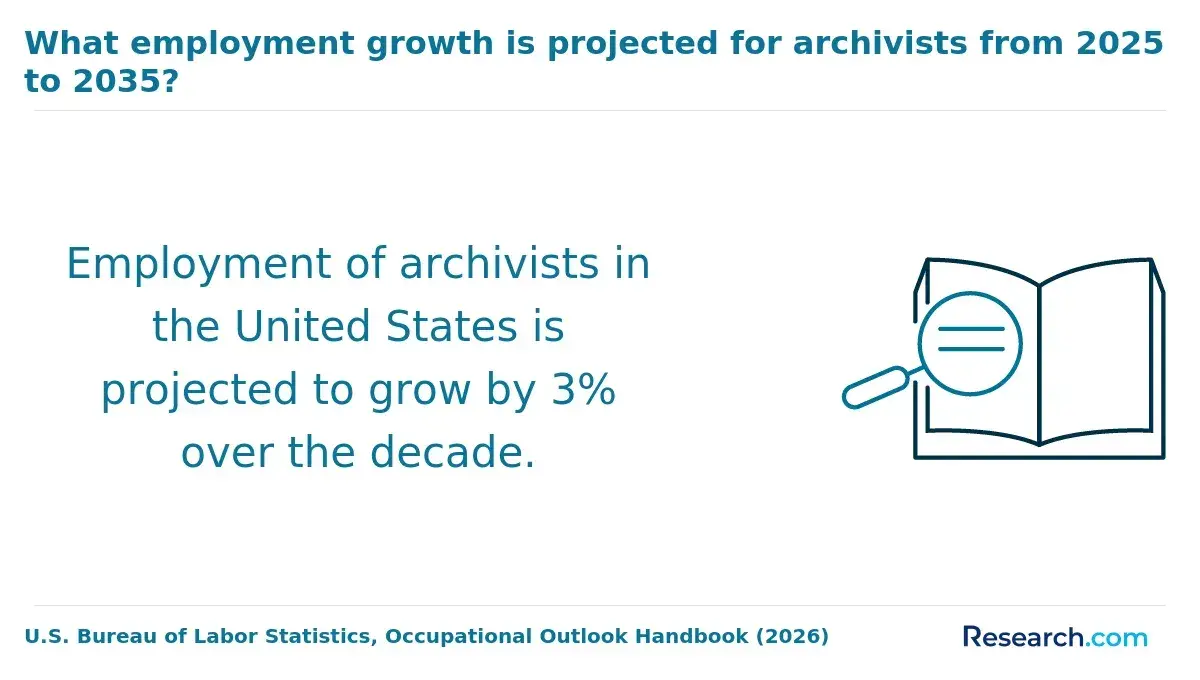
An ALA-accredited MLIS can prepare you for professional roles in public and academic libraries and for some positions in special, government, medical, or law libraries. Responsibilities may include reference service, information literacy instruction, collection development, and managing digital resources. Archives, records management, and metadata roles are also possible pathways, but employers may prefer different experience or qualifications.
The Bureau of Labor Statistics projects 2.6% U.S. employment growth for librarians and media collections specialists from 2025 to 2035. That occupation-wide projection is not a placement rate for any MLIS program. Use it as context while examining local job postings for degree requirements, relevant experience, and specialized skills.
If you are still deciding whether to resolve a difficult admissions barrier, compare the jobs you actually want. Some professional librarian postings specify an ALA-accredited master's degree; paraprofessional library work and some adjacent information roles may not. Consider overcoming barriers to library careers in light of those distinctions rather than assuming every library job requires an MLIS.
Do librarians need state certification or additional professional credentials?
Requirements depend on the position and jurisdiction. Public or academic librarian roles may have employer-set qualifications, while school librarian positions can require a state teaching license, school library endorsement, approved preparation, or other state-specific steps. An ALA-accredited MLIS - even one completed online - does not automatically qualify its holder for school librarian certification everywhere.
Before enrolling for a school-library career, ask the relevant state education authority whether your intended program and any required field experience satisfy its rules. For specialized medical, law, archival, or technical roles, review actual job postings for subject knowledge or experience; do not mistake a preferred additional credential for a universal legal requirement.
Other Things You Should Know About Library Science
Yes. Assistant, technician, and other support roles can provide experience and help you assess the work. Check each posting's qualifications; these positions are distinct from professional librarian roles.
Ask the relevant state higher education agency or the school's designated records custodian where official transcripts are held. A transcript establishes your academic record, but the MLIS university must still decide whether it recognizes the degree.
Usually the practical issue is matching records. Follow the application's instructions for previous names and ask admissions what documentation it needs to connect the transcript to your current identity.
Some graduate schools allow applications from students completing an eligible degree, subject to a final transcript and deadline. Ask when the degree must be conferred and whether your prior college records must also be reviewed.
References
- Recognition of Foreign Qualifications | ed.gov http://www.ed.gov/about/initiatives/international-affairs/recognition-of-foreign-qualifications
- DAPIP | Homepage - Office of Postsecondary Education (OPE) https://ope.ed.gov/dapip/
- Eligibility Requirements | Federal Student Aid https://studentaid.gov/understand-aid/eligibility/requirements
- School-Determined Requirements - FSA Partner Connect https://fsapartners.ed.gov/knowledge-center/fsa-handbook/2026-2027/vol1/ch1-school-determined-requirements
- Academic Documents and Credential Evaluations | Georgia Tech Catalog https://catalog.gatech.edu/admissions/grad/academic-documents-evaluations/
- Admissions - Master of Library and Information Science (MLIS) https://info.umd.edu/academics/masters-programs/master-of-library-and-information-science/admissions/
- MSIS Frequently Asked Questions | Wayne State University https://sis.wayne.edu/msis/msis-faq
- Master of Library and Information Science | pitt.edu https://www.sci.pitt.edu/academics/masters-degrees/library-and-information-science-mlis
- Learning Design & Development How to apply | missouri.edu https://online.missouri.edu/degrees-programs/mu/education/learning-design-development/mlis/admissions
- MLIS Admissions Frequently Asked Questions | missouri.edu https://cehd.missouri.edu/information-science-learning-technologies/mlis-admissions-frequently-asked-questions/