2027 MLIS Programs for University Library Partnerships and Grants

Co-Founder and Chief Data Scientist
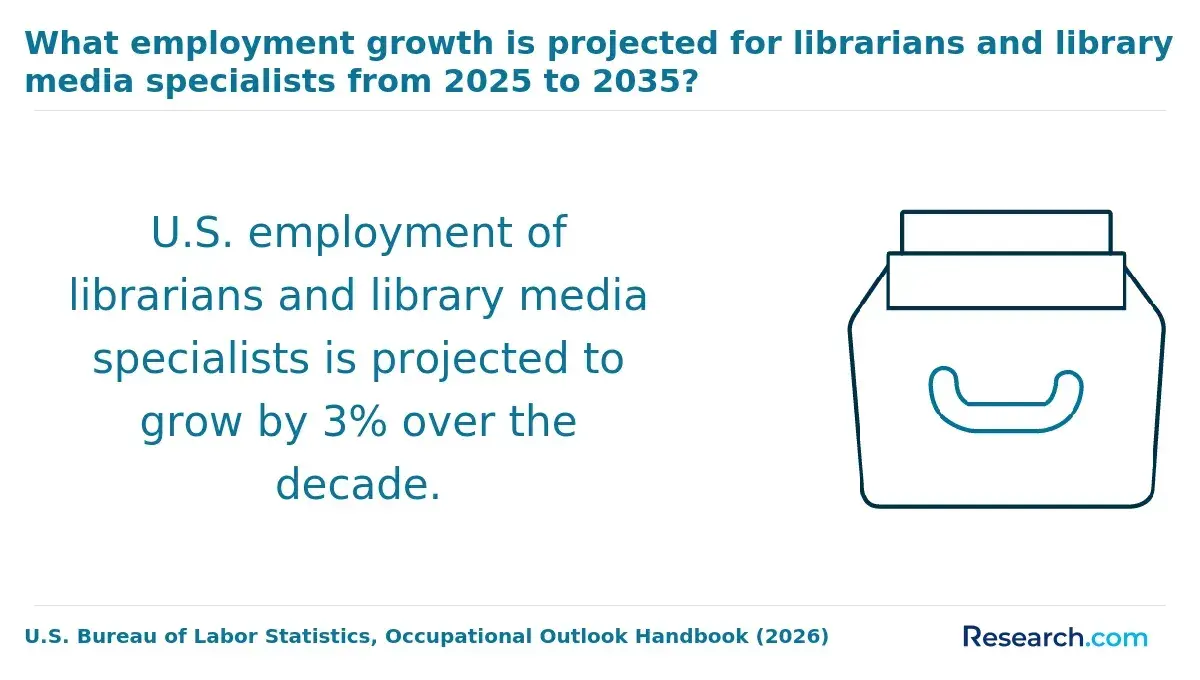
Choosing an MLIS for university library work means looking beyond a program's name. Partnership and grant roles call for skills in research support, project planning, budgeting, and collaboration across campus. The U.S. Bureau of Labor Statistics projects 2.6% employment growth for librarians and media collections specialists from 2025 to 2035, making preparation for specific responsibilities more useful than relying on the degree alone. This guide shows prospective students how to assess curricula, applied opportunities, costs, and career fit before choosing a program.
Key Things You Should Know
- Look for documented coursework and applied projects in outreach, assessment, research support, and grant development; a relevant elective is not necessarily a formal concentration.
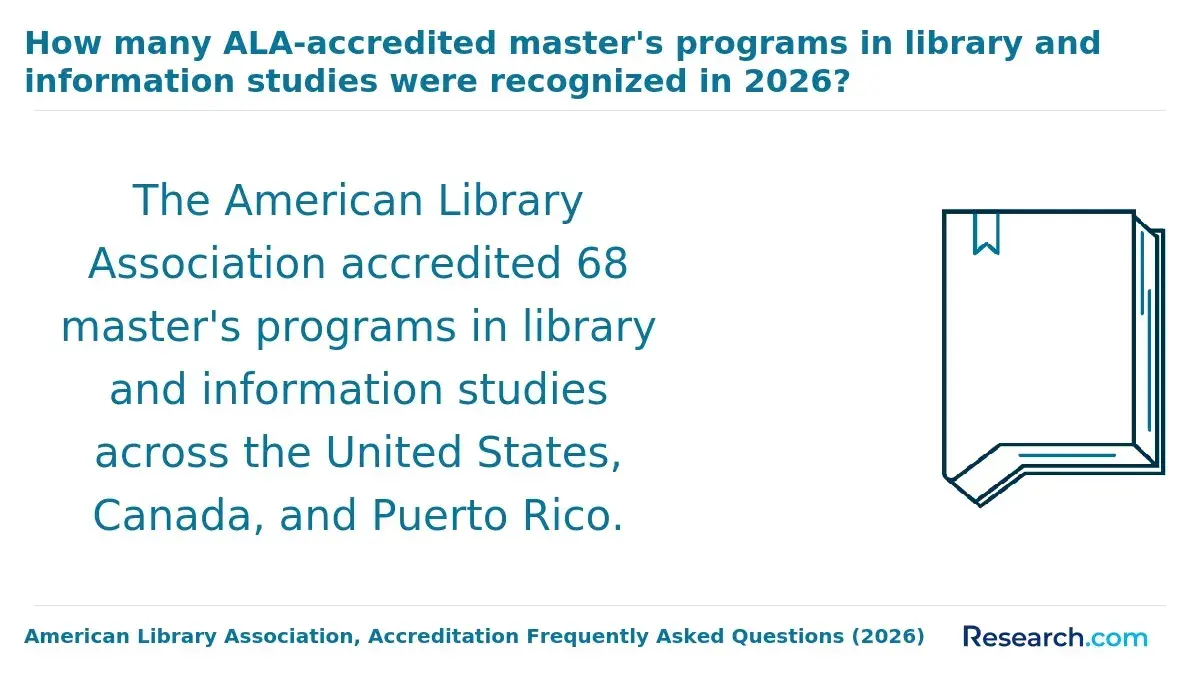
- Check the specific master's program in the American Library Association's accreditation directory. Institutional accreditation alone does not establish ALA accreditation.
- The May 2025 median annual pay for librarians and media collections specialists was $68,270, according to the BLS; that occupation-wide figure is not a salary forecast for grant-focused MLIS graduates.
What are MLIS programs for university library partnerships and grants?
These are master's programs in library and information science that students use to prepare for collaborative work in academic libraries. A university library might partner with faculty, a research office, community organizations, or other libraries to improve access to collections, teach research skills, preserve materials, or support a funded project.
"Partnerships and grants" describes a career goal, not a standard MLIS concentration title. A school may offer a formally named academic librarianship track, relevant electives, an independent study, or only broad coursework that students can apply to this work. Check the catalog to distinguish those possibilities.
Grant work also extends beyond writing proposals. Library staff may help identify a suitable funding opportunity, define partner responsibilities, develop a project budget, plan evaluation, deliver services, and report results. At a university, the sponsored-research office typically has its own rules for approvals and submission; an MLIS does not by itself authorize someone to submit a proposal or serve as its principal investigator.
Why does ALA accreditation matter for university library careers?
American Library Association accreditation applies to an eligible master's program, not automatically to every degree offered by its university. Many academic librarian job postings request or prefer a master's degree from an ALA-accredited program, so accreditation can affect which positions a graduate can pursue. Requirements still vary by employer and job.
Search the current ALA directory for the specific program and degree you are considering, including an institution-specific title such as Master of Information or Master of Science in Library Science. Then read relevant job postings to see how employers state their degree requirements. ALA accreditation is a meaningful credential check, but it does not verify that a program offers grant-writing courses, a partnership practicum, or a particular online format.
How do MLIS programs prepare students for library partnerships and grants?
Strong preparation connects library services to a partner's needs and to a project that can be managed and evaluated. The table shows the work students should be able to practice, rather than promising that every MLIS includes a dedicated grants course.
| Project stage | Useful preparation | Possible student work sample |
| Identify a need | Community assessment, user research, and consultation with campus partners | A concise needs assessment with evidence and stakeholder input |
| Design the partnership | Scope-setting, shared responsibilities, inclusive access, and communication | A project plan identifying partners, deliverables, and decision points |
| Develop a proposal | Funder fit, objectives, budget justification, and evaluation planning | A supervised proposal draft or project budget |
| Deliver and report | Project management, privacy-aware data collection, assessment, and sustainability | An evaluation plan or outcomes report |
Ask whether students can complete a practicum, capstone, or supervised project with an academic library or campus office. A draft proposal developed in class can demonstrate skill, but it is different from an approved institutional submission or an awarded grant. Confirm who supervises the work and whether the opportunity is available to online and part-time students.
What courses do university-focused MLIS programs typically include?
Core LIS study commonly addresses information organization, reference or information services, research methods, and management. For partnership-focused work, the most useful electives depend on the projects a student hopes to support. Course titles alone reveal less than syllabi, assignments, and recent schedules.
An aspiring scholarly-communication librarian might prioritize copyright, open access, and institutional repositories. Someone interested in digitization partnerships may need metadata, digital preservation, and collection management; a research-data project may call for data management, privacy, and researcher support. Outreach, instructional design, assessment, and project management can serve several of these paths.
Compare what is required with what is merely listed as an elective. Ask when relevant courses last ran, how often they are expected to run, whether prerequisites restrict access, and whether an independent project can fill a gap. An academic librarianship label is less useful if the courses needed for your intended work cannot fit your schedule.
Are online or campus-based MLIS programs better for university libraries?
Neither format is inherently better preparation. An online program can let a working student stay employed and build a project with a local university library. A campus-based program may make it easier to pursue nearby assistantships, attend partner meetings, or use university facilities. The deciding factor is access to relevant work and supervision, not the delivery label.
Online classes may be live or asynchronous, and a practicum may still require set hours or an approved site. Before applying, confirm meeting times, campus-visit requirements, how placements are arranged, and whether remote students can join grant-related projects. Compare library science degree options online against those same practical requirements rather than assuming online delivery guarantees flexibility.
What are the admission requirements for MLIS programs?
Applicants generally need a bachelor's degree and must submit materials specified by each school, which may include transcripts, a statement of purpose, references, and a résumé. Programs set their own academic, language-proficiency, and document requirements; applicants should use the current admissions page for the exact degree and entry term.
A useful statement explains the work you want to do with university partners and shows evidence of relevant experience, whether from a library, research project, community organization, or another field. Prior grant experience is not necessarily required. If your academic record or eligibility is unusual, ask admissions staff how it will be reviewed rather than assuming experience substitutes for a published requirement. Guidance on MLIS programs for nontraditional students can help frame questions for an individual review, but the school's policy controls the decision.
How long do MLIS programs take and how much do they cost?
Completion time depends on required credits, course load, sequencing, and whether a practicum or project must fit a partner's calendar. Part-time study can make continued employment possible, but an infrequently offered elective may extend the timeline. When comparing plans, use the school's actual course rotation and your proposed enrollment pattern; information about part time MLIS completion time is a starting point, not a substitute for a degree plan.
No single tuition figure represents all MLIS programs. To estimate gross program cost, multiply the tuition charged to you per credit by the credits required, then add mandatory fees and likely books, technology, travel, and practicum expenses. Confirm whether online students pay a different rate and whether taking extra terms adds fees. Ask for an estimate tied to your residency and enrollment status.
Keep that total separate from your out-of-pocket cost after any confirmed employer support or award, and from the amount you would finance. Scholarships, assistantships, and federal aid have eligibility conditions; ask the financial aid office which rules apply to your enrollment period. Compare the likely cost with the qualifications in jobs you would actually pursue, not with an occupation-wide median salary.
What careers can you pursue with a university-focused MLIS degree?
Partnership and grant skills can support several academic-library paths, but job titles do not map neatly to one degree or concentration. These examples show where the work appears and what to check in postings.
| Potential role | Partnership or project work | Qualification consideration |
| Academic librarian or liaison librarian | Works with departments on instruction, collections, and researcher needs | Many professional librarian postings request or prefer an ALA-accredited master's degree |
| Scholarly communication or research support librarian | Collaborates on publishing, open access, research data, or repository services | Employers may seek subject knowledge or specialized experience alongside an LIS degree |
| Digital collections or archives professional | Coordinates digitization, description, preservation, and access projects | Requirements vary; archives or technical experience may be especially important |
| Grants or project coordinator | Tracks deliverables, budgets, partners, and reports | An MLIS may help in a library setting but is not universally required |
An assistantship or entry-level library position can provide evidence of collaboration before graduation. Keep a portfolio that explains your contribution, methods, and results without disclosing confidential budgets or partner information. If your goal is primarily university-wide grants administration rather than library services, relevant work experience or another graduate path may be a better investment than an MLIS.
What salaries and job outlook can MLIS graduates expect?
The BLS reports a $68,270 median annual salary in May 2025 for librarians and media collections specialists and projects 2.6% employment growth from 2025 to 2035. These figures cover an occupation across settings, not just university libraries or staff working on grants. They cannot predict a new graduate's offer, local hiring conditions, or the financial return from a particular program.
Pay and qualifications can differ substantially among liaison librarians, archives staff, and project coordinators. Use current postings in your target region to compare required credentials, responsibilities, and salary ranges when disclosed. Lists of highest paying library science jobs may suggest paths to investigate, but the better comparison is between roles you qualify for and the full cost of reaching them.
Which MLIS program features help students choose a reputable school?
Start with verified accreditation, then look for evidence that the program can support your intended project work. A reputable choice is one whose current curriculum, schedule, applied opportunities, and cost fit your circumstances - not simply one that advertises an academic-library focus.
Use the same questions with each school so the answers are comparable:
- Is the specific master's program currently ALA-accredited, and which relevant courses are required rather than elective?
- When did the partnership, assessment, or grant-related electives last run, and can students complete them within their planned schedule?
- Can students undertake a supervised project with a university library, and who is responsible for finding and approving the site?
- What is the estimated total cost for my residency, format, and pace, including mandatory fees and any project travel?
- Can the program show examples of suitable student projects or career support without implying that those opportunities or outcomes are guaranteed?
Price comparisons can uncover viable options: a list of low tuition library degree Southern states programs may provide leads. Verify each school's current tuition and fees yourself, then weigh savings against elective access and supervised experience. The strongest shortlist contains programs you can afford and use to produce credible evidence of the work you hope to do.
Other Things You Should Know About Library Science
Do not assume so. Universities and funders set eligibility and approval rules. Ask the sponsored-research office whether a student can hold that role or must work under an eligible faculty or staff member.
Potentially, with the project team's agreement and institutional review. A proposal submitted to a funder must follow its rules and the university's approval process; a classroom draft is not automatically ready to submit.
Usually only to the extent your supervisor and partner permit. Remove private data, unpublished budgets, and restricted materials, and describe your own contribution accurately.
Not automatically. A funded project may support eligible student work, but whether it can pay tuition depends on its budget, sponsor terms, university policies, and your role. Confirm the details before counting it as education funding.
References
- Cost of Attendance (Budget) | 2025-2026 Federal Student Aid Handbook https://fsapartners.ed.gov/knowledge-center/fsa-handbook/2025-2026/vol3/ch2-cost-attendance-budget
- Funding at NSF | NSF - U.S. National Science Foundation https://www.nsf.gov/funding
- Evaluation Basics | Institute of Museum and Library Services https://www.imls.gov/find-funding/how-to-apply/evaluation-basics
- Grants Training and Management Resources, Online Grants Training Courses | U.S. Department of Education http://www.ed.gov/grants-and-programs/manage-your-grant/grant-training-and-risk-management/grants-training-and-management-resources-online-grants-training-courses
- Career and Internship Opportunities | Share and Distribute https://www.loc.gov/library-of-congress-resources/share-and-distribute/career-and-internship-opportunities/
- College Internships & Library Practicum | nashville.gov https://library.nashville.gov/support/internships
- California Public Library Staff Education Program | California State Library https://www.library.ca.gov/grants/public-library-staff-education-program/
- Library and Information Science, M.L.I.S. | UNC Greensboro https://www.uncg.edu/academics-support/degrees-programs/online-degrees/library-and-information-science-m-l-i-s/
- MLIS Tuition & Financial Aid - University of Denver | DEN-EDU https://morgridgeonline.du.edu/online-mlis-program/tuition-financial-aid/
- Library Science Master's - MLIS - UW Information School https://ischool.uw.edu/programs/mlis