
2027 MLIS Programs for Information Security Policy Support

Co-Founder and Chief Data Scientist
Choosing an MLIS for information security policy support means looking beyond a program's title: you need coursework and experience that connect access to information with privacy, records retention, and risk. The U.S. Bureau of Labor Statistics reports a May 2025 median annual wage of $68,270 for librarians and media collections specialists, but that broad figure is not a salary forecast for policy-support jobs.
This guide helps prospective students and career changers identify relevant programs, compare costs and credentials, and decide whether an MLIS fits the work they want to do.
Key Things You Should Know
- Look for documented privacy, records-management, and information-governance learning opportunities, a relevant elective is not the same as a formal security-policy concentration.
- Verify ALA accreditation for the specific master's program, then separately confirm course availability, applied projects, and total cost.
- The BLS projects 2.6% employment growth for librarians and media collections specialists from 2025 to 2035; that occupation is a useful reference point, not a forecast for information security policy roles.
What Are MLIS Programs for Information Security Policy Support?
These are library and information science master's programs that students can use to prepare for work at the intersection of information access, privacy, records, and organizational policy. "Information security policy support" describes a career goal, not necessarily an officially named MLIS concentration. An MLIS may provide relevant electives or an applied project even when its catalog lists no security-policy track.
In this work, a professional might help classify sensitive records, document who may access them, support retention schedules, or make policies understandable to staff. The work is distinct from configuring security systems or responding to cyberattacks. It requires balancing appropriate access with confidentiality, preservation obligations, and institutional requirements.
Start with the job description you hope to qualify for. If it emphasizes records lifecycle decisions, privacy procedures, and documentation, an MLIS may fit. If it requires security engineering or hands-on incident response, a cybersecurity degree or technical experience may be a more direct route.
Which Accreditation Should an Information Security Policy MLIS Program Have?
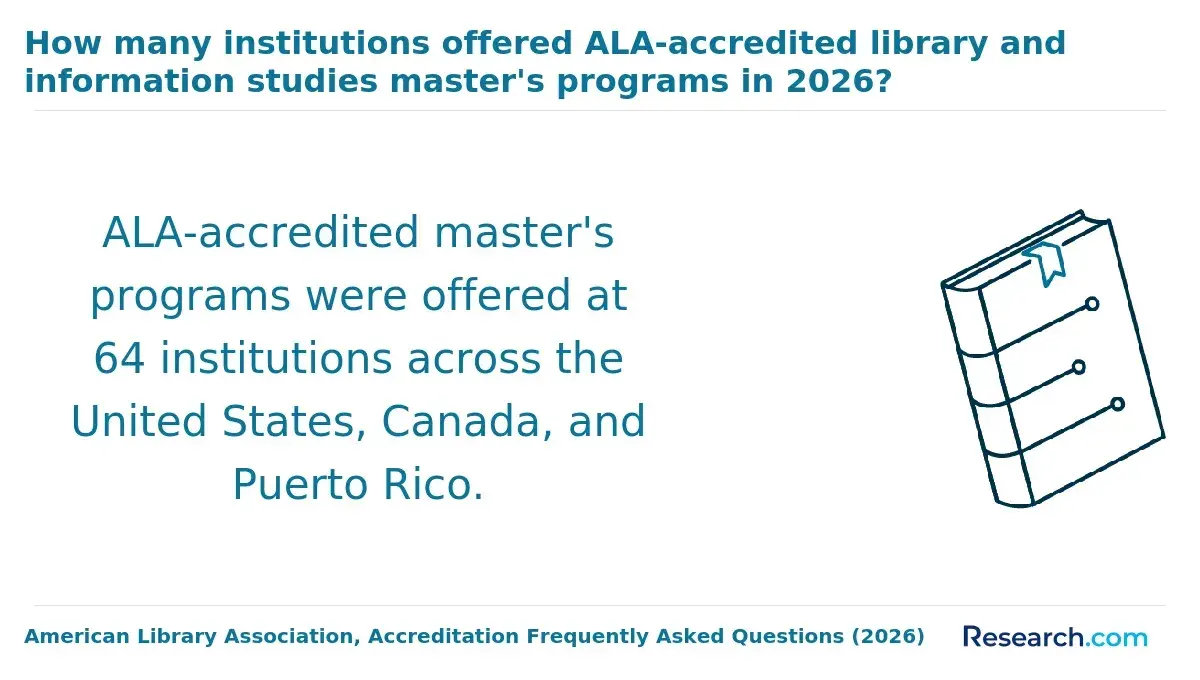
For a professional librarian pathway, check whether the specific master's program appears in the American Library Association's current directory of accredited programs. A university's institutional accreditation is important, but it does not establish ALA accreditation for its MLIS, MLS, Master of Information, or differently titled LIS degree.
ALA accreditation does not certify a security-policy concentration, guarantee that an elective will run when you need it, or establish eligibility for every job. When comparing top accredited library information science degrees, check the official program directory first, then use the university catalog and recent course schedule to assess specialization fit. For adjacent information-governance roles that do not require an MLIS, weigh accreditation alongside the employer's stated qualifications and the skills you can demonstrate.
How Can an MLIS Degree Prepare You for Information Security Policy Careers?
An MLIS can teach students to organize information, assess access needs, design retrieval practices, and manage records across their lifecycle. Those foundations matter when a policy must protect sensitive material without making legitimate work impossible. Relevant preparation also includes writing clear procedures, consulting stakeholders, and explaining trade-offs to people who do not specialize in information management.
Applied work is especially valuable. A supervised project could produce a sample records-retention rationale, an access-control decision framework, or a privacy review for a digital collection. Use fictional or approved records rather than confidential institutional data, and document your reasoning and limitations in a portfolio.
Compare library degree specialization options against your intended role. An archives pathway may emphasize appraisal and long-term stewardship; an information-management pathway may better support policy documentation and organizational workflows. Neither label proves that a program teaches security policy, so examine the actual assignments and available courses.
What Courses Cover Information Security, Privacy, and Records Management?
Relevant courses may sit in an LIS department or, where permitted, in another graduate department. The table connects course topics to policy-support work; use it to evaluate catalog descriptions and sample syllabi, not as a claim that every MLIS offers these subjects.
| Course area | Connection to policy-support work | Useful evidence of learning |
| Records management and archives | Retention, disposition, appraisal, and handling of restricted records | A documented retention or access recommendation |
| Information privacy and ethics | Responsible collection, use, sharing, and disclosure of information | A privacy assessment with clearly stated assumptions |
| Information governance or systems | Ownership, classification, permissions, and policy implementation | A workflow or policy draft tested against a realistic scenario |
Ask whether promising courses are required or elective, when they were last offered, and whether students can take approved courses outside the MLIS. An archives library science concentration can be useful for records-focused goals, but archival description or preservation alone does not replace privacy and governance training.
Are Online MLIS Programs Effective for Information Security Policy Careers?
They can be, if the program offers relevant coursework, substantive feedback on policy writing, and a feasible way to complete applied work. Online delivery does not establish that classes are asynchronous, electives run regularly, or an internship can be completed remotely. Confirm meeting times, group-work expectations, practicum rules, and access to courses outside the department before enrolling.
For working adults, the strongest format is one they can sustain while building relevant experience. Ask whether a current workplace project can meet capstone or practicum requirements and what permissions are needed to use workplace materials. If financing affects that decision, compare institutional aid and employer support rather than assuming a published scholarship applies to you; guidance on library science masters funding for adults can help frame that comparison.
What Are the Admission Requirements for MLIS Programs?
MLIS programs generally ask for a bachelor's degree and an application that may include transcripts, a statement of purpose, recommendations, and a résumé. Minimum grades, testing policies, deadlines, and rules for international credentials vary by institution; check the current admissions page for each program.
Use your statement to connect specific experience - such as handling restricted files, documenting a workflow, or applying a retention rule - to the program's verified curriculum. Applicants need not claim to be cybersecurity specialists. If you hope to take technical electives in another department or apply previous graduate coursework, ask for an individual review of prerequisites and transfer-credit limits before treating those options as part of your plan.
How Long Do MLIS Programs Take and What Do They Cost?
Completion time depends on required credits, enrollment pace, course sequencing, and any practicum or capstone. A faster published timeline may require a heavier course load or electives that do not match your goal. When reviewing fast online masters for librarians, ask for a term-by-term plan that includes the privacy or records courses you actually want.
No single tuition figure describes MLIS programs generally. To compare offers on the same basis, calculate required credits multiplied by your applicable per-credit tuition, then account for the following costs:
- Mandatory university and program fees, including any online or technology charges.
- Books, software, equipment, and possible travel or practicum expenses.
- Additional terms if required courses or chosen electives are not available on your planned schedule.
Separate the full program cost from what you expect to pay after confirmed aid or employer reimbursement, and from any amount you would borrow. Request the current tuition schedule and financial-aid information for your enrollment period; do not assume online study qualifies you for in-state rates or that a scholarship is guaranteed. Compare the resulting cost with jobs you are realistically eligible to seek, rather than calculating a payback period from a broad occupational salary.
Which Jobs Can You Get With an MLIS Focused on Security Policy?
Potential roles include records manager, information-governance analyst, privacy program coordinator, digital archivist handling restricted collections, and librarian responsible for access policies or sensitive data services. Titles overlap, but duties differ: one employer may need policy drafting and staff guidance, while another expects technical security administration.
An MLIS can be particularly relevant where records context, discoverability, preservation, and appropriate access are central. Employers may instead accept or prefer degrees in law, public administration, information systems, or cybersecurity for other policy roles. Read each posting for its required qualification, applicable regulatory knowledge, and level of experience; do not assume an MLIS is either universally required or sufficient.
For an entry point, seek work that lets you document decisions about records, permissions, privacy, or retention. A portfolio showing a carefully scoped policy and its implementation workflow can demonstrate judgment more clearly than a list of course titles.
What Salaries and Job Outlook Can MLIS Security Policy Graduates Expect?
The BLS reports a May 2025 median annual wage of $68,270 for librarians and media collections specialists and projects 2.6% employment growth for that occupation from 2025 to 2035. These figures describe a broad occupation, not MLIS graduates, information-governance analysts, or security-policy specialists specifically. They are most useful as context when considering librarian positions with policy duties.
Pay for adjacent roles depends on the employer, location, responsibilities, and experience. Compare salary ranges in postings for the jobs you could plausibly hold after graduation, alongside their credential requirements. That gives a sounder basis for weighing tuition and potential borrowing than applying a librarian median to every security-policy career.
Which Certifications Complement an MLIS in Information Security Policy?
Choose a certification for the responsibilities in your target postings, not as a substitute for relevant work. The Certified Records Manager credential aligns with records-program responsibilities; the Certified Information Privacy Professional/United States credential may fit roles centered on U.S. privacy requirements. A technical security credential may be more useful when a position expects knowledge of security controls than when its primary work is records policy.
Check each credential issuer's current eligibility, exam content, renewal rules, and fees before committing. None is a universal legal requirement for information security policy support. If entry-level postings prioritize demonstrated policy writing or records experience, an applied project may be a better immediate investment than an exam.
Other Things You Should Know About Library Science
Only with the organization's permission and appropriate safeguards. A fictionalized or fully approved example can show your decision-making without exposing sensitive information.
Some positions do; many do not. Check the individual posting for citizenship, background-investigation, or clearance requirements rather than assuming they apply to all government records jobs.
Start with the laws and policies named in your target job postings. Requirements vary by setting, and an MLIS course may introduce privacy principles without providing specialized legal training.
Not necessarily. The ability to understand how systems store, restrict, and retrieve information can matter more than writing code, although technical expectations vary by position.
References
- EEOC INFORMATION SECURITY PROGRAM https://www.eeoc.gov/privacy-act/eeoc-information-security-program
- Students and Internships | intelligencecareers.gov https://www.intelligencecareers.gov/dhsia/students-and-internships
- Professional Studies Cybersecurity Risk Management (MPCR) | Georgetown University Bulletin https://bulletin.georgetown.edu/courses/mpcr/
- MLIS Curriculum, Specialties & Courses | University of Arizona College of Information Science https://infosci.arizona.edu/ma-library-information-science/curriculum-specialties-courses
- Program: Library and Information Science, MLIS - Pitt Catalog https://catalog.upp.pitt.edu/preview_program.php
- Master of Library and Information Science - Luddy Indianapolis | Luddy School of Informatics, Computing, and Engineering https://luddy.indianapolis.iu.edu/academics/masters/mlis/index.html
- MLIS Master of Library and Information Studies - UA Online https://online.ua.edu/degrees/mlis-master-of-library-and-information-studies/
- Master of Library & Information Science (MLIS) | UCLA School of Education & Information Studies https://seis.ucla.edu/academics/department-of-information-studies/master-of-library-information-science-mlis/
- Library and Information Science - MLIS - Kent State Online https://onlinedegrees.kent.edu/degrees/master-of-library-and-information-science
- EN.650 (Information Security Institute) - JHU catalogue https://e-catalogue.jhu.edu/course-descriptions/information_security_institute/


