
2027 Online MLIS Programs Compared by Archives and School Library Options

Co-Founder and Chief Data Scientist
An online MLIS can prepare you for archives or school library work, but the same degree does not necessarily provide the right courses, field experience, or state credential for both. The distinction matters as archives work increasingly includes digital collections and preservation: the U.S. Bureau of Labor Statistics projects 3.4% employment growth for archivists from 2025 to 2035.
If you are comparing programs while working or planning a career change, this guide shows what to verify in each pathway - and how to avoid paying for a degree that misses a requirement for your intended job.
Key Things You Should Know
- Compare documented archives coursework and applied projects with school library coursework and state-approved preparation; an elective is not the same as a formal track.
- Check the specific master's program in the ALA accreditation directory, then check school librarian credential rules with the state where you intend to work.
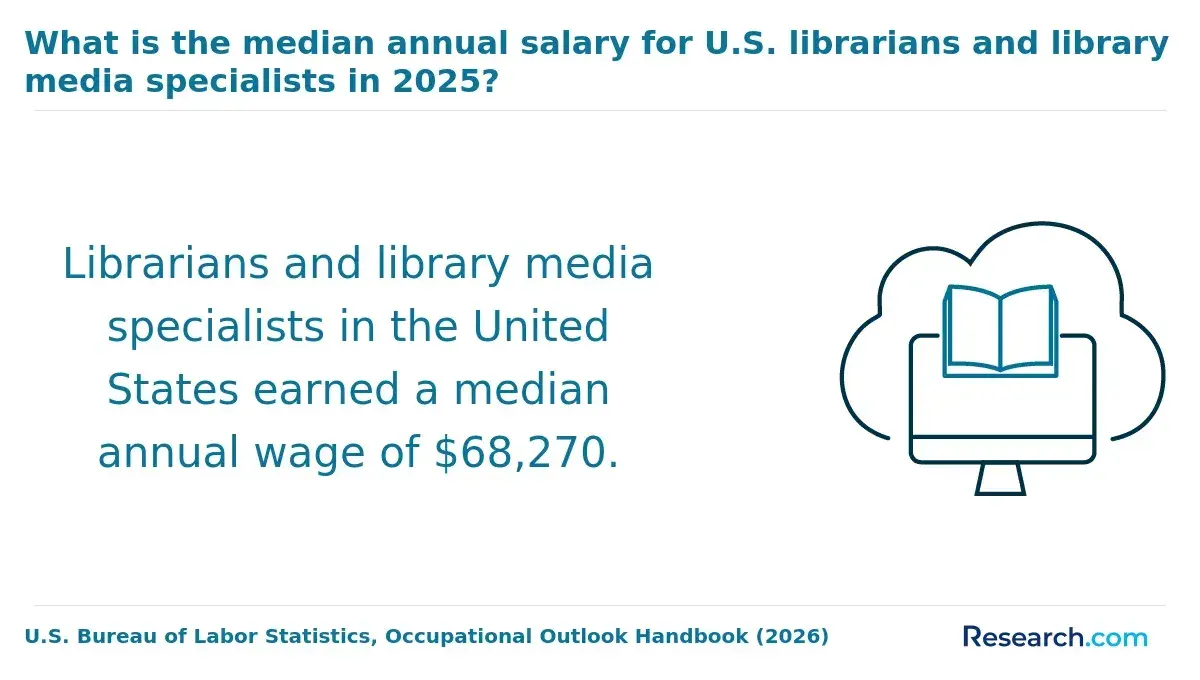
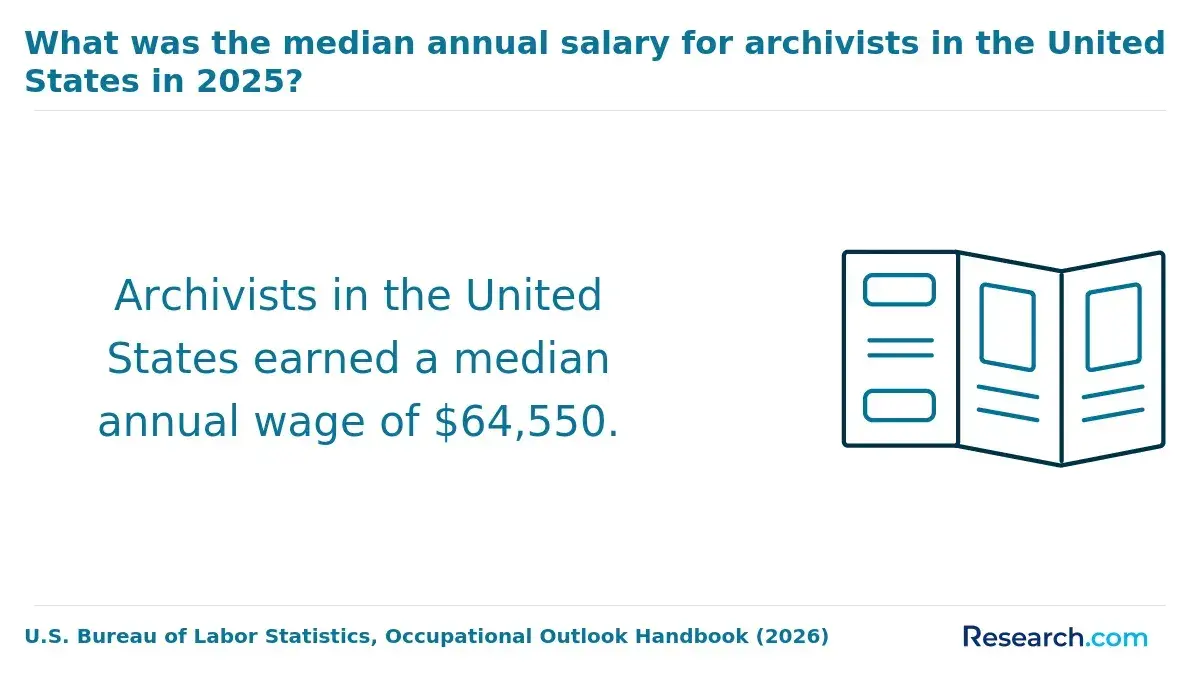
- For salary context, the May 2025 U.S. median was $64,550 for archivists and $68,270 for librarians and media collections specialists; neither figure predicts an individual graduate's pay.
What are online MLIS programs, and who are they best suited for?
An online Master of Library and Information Science (MLIS) is a graduate program in organizing, preserving, finding, and providing access to information. Related degrees may be called an MLS, Master of Science in Library Science, or Master of Information. The degree name alone does not tell you whether its curriculum supports archives work or school librarian certification.
Online study can suit working adults and students who cannot relocate, particularly when they can arrange required fieldwork near home. Archives-focused applicants should look for archival theory, description, digital preservation, and experience with collections. Prospective school librarians should prioritize preparation tied to the state where they hope to work. If you are still choosing among settings, an online librarian degree guide can help you compare broader LIS pathways before narrowing your shortlist.
Which online MLIS programs offer archives and school library options?
Online MLIS programs do not label these options consistently. A university may document a formal archives concentration, a school librarian pathway, relevant electives, or only a general degree that permits an independent project. Without checking the current catalog and delivery schedule for each institution, those descriptions cannot responsibly be turned into a named list of confirmed online options.
The comparison below separates the types of offerings you are likely to encounter. Use it to classify each program on your shortlist rather than treating a course title as proof of a specialization.
| Published option | Evidence to look for | Main decision point |
| Formal archives concentration | Named requirements in the current graduate catalog | Are archival electives and applied opportunities accessible to online students? |
| Archives elective pathway | Relevant courses without a formally named concentration | Can you take enough of them, and how often are they offered? |
| School librarian preparation pathway | Documented school-focused curriculum and state-credential guidance | Does it meet requirements in your intended state? |
| General MLIS with individual projects | Broad LIS courses and permission to shape a project or portfolio | Will you need outside experience to build specialized skills? |
For a usable comparison, ask each university for its current degree plan, recent course rotation, online fieldwork rules, and written guidance on school librarian eligibility. If both careers interest you, ask whether pursuing one pathway leaves room for the other's electives; a published catalog does not guarantee that every course runs when you need it.
How do you choose an ALA-accredited online MLIS program?
Start by checking the specific master's program in the American Library Association's current directory of accredited programs. Institutional accreditation is a separate matter, and ALA accreditation does not certify an archives concentration, guarantee an internship, or establish school librarian licensure eligibility.
Next, match the curriculum to the work you want to do. An archives applicant should inspect archival description, records management, preservation, and digital collections offerings, then ask about hands-on access to collections. A school library applicant should ask which state credential the pathway is designed to support and whether any supervised placement must occur in a school. Compare the written answers alongside total cost; an online library degree with low tuition is only a good value if it also meets your career requirements.
What is the difference between online and campus-based MLIS programs?
The central difference is how you attend classes, not necessarily what appears on the diploma. Online courses may be asynchronous, require live meetings, or combine both. Campus programs provide in-person access to classmates and local collections, while online students may need to arrange comparable experience with a nearby archive, library, or school.
Check the timetable rather than assuming online means self-paced. Live sessions, group work, sequential electives, and supervised placements can constrain a working student's schedule. Campus-based study may be a better fit if you need regular access to collections or a local professional network; online study may be more practical if relocation is not possible. Compare any advertised faster route against actual course sequencing and placement requirements, not just an accelerated MLIS admissions timeline.
What courses do archives and school library MLIS tracks include?
Archives preparation commonly emphasizes appraisal - deciding what records to retain - arrangement and description, finding aids, records management, and digital preservation. School library preparation emphasizes information literacy instruction, children's and young adult resources, collection development, collaboration with teachers, and equitable access for students. Both may include reference, information organization, ethics, accessibility, and privacy.
Look beyond course titles for an applied assignment you could discuss with an employer: an archival finding aid or preservation plan, for example, or a school library lesson and collection-development rationale. Digital collections also make metadata and technology choices relevant to either pathway. A library technology specialization may complement those goals, but it should not replace required archival or school-preparation courses.
What are the admission requirements for online MLIS programs?
Programs generally expect a bachelor's degree and an application with academic transcripts; schools may also request a statement of purpose, recommendations, a résumé, or evidence of relevant experience. Minimum grades, testing policies, prerequisites, deadlines, and treatment of international credentials vary, so use each program's current admissions page rather than a general checklist as the final authority.
You do not necessarily need to have worked in a library before applying, but relevant experience can help you explain your career goal. If you fall short of a published requirement, ask whether individual review or conditional admission is available; MLIS programs with flexible admissions still set their own conditions and do not promise acceptance. Applicants seeking school librarian preparation should also ask whether a teaching credential or prior education coursework affects entry into that particular pathway.
How long do online MLIS programs take and what do they cost?
Completion time depends on required credits, how many courses you take at once, when specialized electives run, and whether fieldwork has prerequisites. Ask for a term-by-term plan based on your intended enrollment load; a program's shortest advertised timeline may not fit a student who can study only part time.
To compare prices, multiply required credits by the tuition rate that applies to you, then add mandatory fees. Budget separately for books, equipment, travel, and possible unpaid fieldwork. Published tuition is not the same as total attendance cost, and an online student should not assume eligibility for in-state rates. Ask the financial aid office about aid available for your enrollment period and compare any borrowing with your likely career options and current earnings. Employer reimbursement or a scholarship can reduce personal cost, but neither should be assumed in an initial budget.
What careers can you pursue with an archives or school library MLIS?
An archives-focused graduate may seek archivist, digital collections, records management, or special collections roles. The work can involve evaluating records, describing collections, managing access, and preserving digital materials. Employers may also value subject expertise, technical skills, or substantial collections experience; an MLIS is not the only qualification accepted for every archives position.
A school library pathway is aimed more directly at school librarian or school library media specialist positions, which combine reading support, research instruction, collection management, and collaboration with teachers. Requirements depend on the school system and state. If you are undecided, obtain experience in both settings before committing scarce electives. A portfolio can show what you can do, but neither a concentration nor a practicum guarantees a job.
How much do archivists and school librarians earn?
According to the U.S. Bureau of Labor Statistics, the median annual salary for archivists was $64,550 in May 2025. The median for the broader "librarians and media collections specialists" occupation was $68,270. The latter is not a school-librarian-only figure, so it should not be treated as a prediction for a particular school district.
Pay can differ by location, employer, experience, and responsibilities. When weighing tuition against earnings, look at postings in the area where you intend to work and distinguish entry-level requirements from salaries reported across an entire occupation.
What certification or licensing do archivists and school librarians need?
Archivists do not have a universal state license for the occupation. An employer may prefer particular archival training or a professional certification, but that preference is not the same as a legal requirement for every archives job.
School librarian roles can require a state-issued certificate, license, or endorsement. Rules may differ on teacher preparation, examinations, supervised experience, and whether an out-of-state credential transfers. Before enrolling, check the education agency in the state where you intend to work and ask the MLIS program to identify exactly which requirements its pathway addresses. ALA accreditation alone does not establish eligibility for that state credential.
Other Things You Should Know About Library Science
Potentially. Ask whether your program permits electives in both areas after you complete any required pathway courses. If school certification is your goal, protect those requirements first.
Archives generally preserve records created through a person's or organization's activities. Special collections can include rare books and other distinctive materials; some departments manage both.
Yes, if your site permits it. Seek approval before sharing descriptions or images, or use a public collection or a redacted example that demonstrates your process without exposing restricted information.
No. Digitization does not by itself remove copyright, privacy restrictions, or conditions of access. Check the holding institution's rights statement before publishing or reusing material.
References
- Cost of Attendance | Cal State LA https://www.calstatela.edu/financialaid/cost-attendance
- Practicum - School of Information Science & Learning Technologies https://cehd.missouri.edu/information-science-learning-technologies/practicum/
- MLIS Internships - College of Information Science https://infosci.arizona.edu/ma-library-information-science/internships
- What's the Difference Between Asynchronous and Synchronous Learning? | Ohio State Online https://online.osu.edu/content-hub/blogs/whats-the-difference-between-asynchronous-and-synchronous-learning/
- Tuition in Detail - One Stop Student Services https://onestop.utk.edu/billing-payments/tuition-detail/
- School Library Media Program | Dominican University https://www.dom.edu/academics/grad-phd/library-and-information-science/school-library-media-program
- MLIS Specialization Archival Studies | UCLA School of Education & Information Studies https://seis.ucla.edu/academics/department-of-information-studies/mlis-specialization-archival-studies/
- MLIS Program Requirements and Curriculum | umd.edu https://info.umd.edu/academics/masters-programs/master-of-library-and-information-science/curriculum-specializations/
- Library and Information Science: Archives Concentration, Online - School of Information Studies | Academic Affairs https://uwm.edu/informationstudies/academics/library-and-information-science-archives-concentration-online/
- Asynchronous vs Synchronous Classes: Finding the Right Fit | Northern Virginia Community College https://www.nvcc.edu/discover/asynchronous-vs-synchronous-classes-find-the-right-fit-for-you.html


