2027 MLIS Programs for Data Analysts Moving Into Library Analytics

Co-Founder and Chief Data Scientist
Data analysts considering library work need to decide whether an MLIS will add something their technical experience cannot: expertise in library services, information ethics, and the systems behind collections and research support.
The U.S. Bureau of Labor Statistics reports a May 2025 median annual wage of $68,270 for librarians and media collections specialists, but that broad figure is not a salary forecast for analytics roles. This guide shows how to assess programs, build relevant experience, compare costs, and decide whether an MLIS - or a shorter route - fits your career goal.
Key Things You Should Know
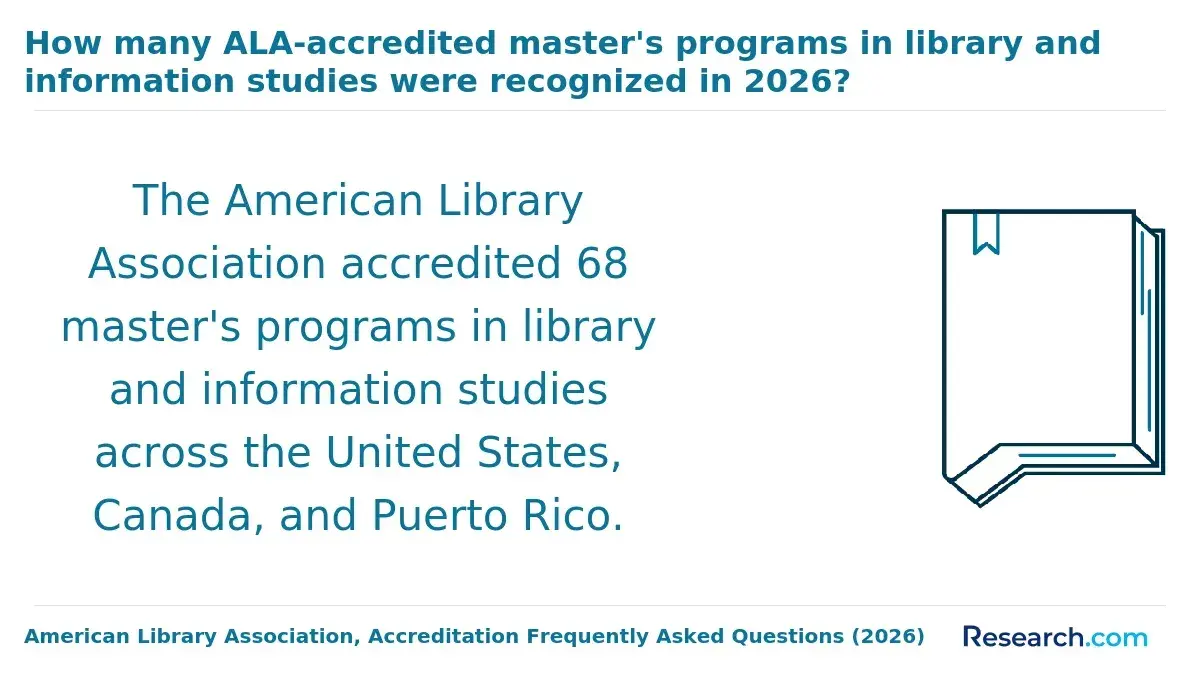
- For professional librarian roles, check the specific master's program in the ALA accreditation directory; university-level accreditation is not the same credential.
- Prioritize coursework in assessment, research methods, metadata, and privacy, plus a project using library-relevant data. A course listing alone does not establish a formal analytics concentration or guarantee the course will run. An MLIS is not required for every analytics job.
- For comparison, the May 2025 median wage for library technicians was $44,580, illustrating why job level matters when assessing the cost of a degree.
What Is an MLIS Degree for Library Analytics Careers?
A Master of Library and Information Science (MLIS) prepares students to organize information and serve people who need it. For a data analyst, its value lies in learning what library measures mean: a circulation count, for example, captures a different kind of use from a research consultation or access to an electronic journal. Sound analysis depends on understanding the service, its users, and the limitations of the data.
Library analytics work can include evaluating collections, studying service demand, improving discovery systems, assessing instruction, or supporting research data services. It also requires care with patron privacy and accessibility. Programs may award an MLIS, MLS, Master of Science in Library Science, or another institution-specific information degree. Judge the specific program and its curriculum rather than assuming the degree title establishes an analytics specialization.
Why Is ALA Accreditation Important for MLIS Programs?
American Library Association (ALA) accreditation is a program-level quality review and an important hiring consideration for many professional librarian positions. It does not certify an individual graduate's analytics skills. Nor does accreditation establish that a program offers a particular elective, internship, concentration, or online format.
Check the current ALA directory for the exact degree and institution before applying, then read job postings in your target setting. A university's institutional accreditation does not substitute for ALA accreditation. If your goal is school librarianship, separately check the state education authority's certification or endorsement requirements; an online MLIS does not automatically meet every state's rules.
Which MLIS Programs Best Prepare Data Analysts for Library Analytics?
There is no defensible universal "best" program for this transition. The strongest choice is an ALA-accredited program - when that credential matters for your target jobs - in which you can combine LIS foundations with verified analytics-related learning and a substantial applied project. Compare each candidate using the same evidence, rather than relying on a program's broad technology branding.
This comparison separates features that are often conflated. Use it to identify what a catalog establishes and what still needs confirmation.
| Feature | Evidence to look for | Why it matters |
| Professional foundation | Required courses in information organization, services, research, and ethics | Helps an analyst interpret library data in context |
| Relevant electives | Published descriptions for assessment, statistics, metadata, data management, or information systems | Shows potential skill-building, not guaranteed enrollment |
| Formal specialization | An officially named and documented track with requirements | Distinguishes a credentialed pathway from a self-selected group of courses |
| Applied preparation | Documented project, practicum, internship, or capstone options | Creates an opportunity to demonstrate work, subject to placement and project availability |
| Feasibility | Current schedule, delivery rules, required credits, tuition, and fees | Determines whether the pathway fits your time and budget |
Ask a program adviser when relevant electives last ran, whether non-LIS graduate courses count toward the degree, and whether an analytics-focused capstone can use data from an employer or community partner. Someone targeting an academic library should look for assessment or scholarly communication opportunities; someone targeting a public library should examine community needs assessment and service evaluation. You can compare library science curriculum as a starting point, but verify each shortlisted program's current catalog and schedule directly.
Should You Choose an Online or Campus-Based MLIS Program?
Choose the format that lets you complete the right courses and project, not simply the format that sounds more convenient. Online delivery can reduce commuting, but it does not necessarily mean asynchronous classes, unrestricted elective access, or a remote practicum. Campus study may make it easier to use local library partnerships, though those opportunities depend on the institution and your availability.
For a working analyst, the decisive questions are whether required courses conflict with work hours, whether electives can be taken in the needed sequence, and where applied work must occur. Request a sample course rotation and ask specifically about live sessions, time zones, campus visits, and internship-site approval. Confirm accessibility and technology requirements if they affect your participation. A format that delays a crucial elective may cost more time than a less convenient format with a workable schedule.
What Courses Should Library Analytics Students Take?
Build a course plan around both sides of the transition: understanding library decisions and producing trustworthy evidence for them. An analyst with strong SQL or visualization skills may gain more from assessment and information policy than from repeating introductory technical material.
Look for the following subjects in course descriptions, and distinguish required courses from electives before planning your degree:
- Research methods and assessment: survey design, qualitative evidence, sampling, and evaluation of services or instruction.
- Information organization and metadata: how records and descriptions shape collection, discovery, and usage data.
- Information policy and ethics: patron privacy, accessibility, responsible data use, and the limits of measuring people's behavior.
- Applied analytics: database work, visualization, or a project that turns a library question into a defensible measure and recommendation.
A useful capstone might investigate whether a change to discovery improves access, while documenting missing data and avoiding identifiable patron records. If you need help distinguishing an official track from a custom elective pathway, consider how to choose an MLIS concentration; then confirm which courses actually fit your target program's degree requirements.
What Are the Admission Requirements for MLIS Programs?
MLIS applications commonly require a completed bachelor's degree, academic transcripts, and materials explaining academic and professional goals. Schools set their own rules for recommendations, statements, minimum academic standing, and other requirements, so use each program's current admissions page rather than a general checklist.
In your statement, connect a specific analytics accomplishment to a library problem you want to learn to solve. Explain both what you already bring - such as data cleaning or communicating findings - and what you need from LIS study, such as assessing library services or protecting patron privacy. A data portfolio can support that case if the program accepts supplemental work; it does not automatically replace a published admission requirement. If part of your record does not fit a program's standard criteria, seek an individual answer from admissions. Guidance on library science masters eligibility can help frame your questions, but only the school can determine your eligibility.
How Long Do MLIS Programs Take and What Do They Cost?
Time and price depend on required credits, course sequencing, enrollment pace, residency rules, and fees. Without a current, program-specific tuition schedule, a single MLIS price would be misleading. Compare programs using the same enrollment assumptions and the academic year in which you expect to study.
Calculate the gross cost as required credits multiplied by the tuition rate that applies to you, then add mandatory fees, books or software, and any travel or practicum expenses. Separately estimate your out-of-pocket cost after confirmed employer support or awards; borrowing changes how you pay, not the program's price. Use published rates and credits when reviewing low tuition information science graduate degree options, and ask each school whether its quoted online rate varies by residency or term.
Request a term-by-term plan before committing. A required course offered infrequently could extend your enrollment and add living or fee costs. Ask the financial aid office which graduate aid options and borrowing rules apply to your enrollment period; do not assume an award, reimbursement, or loan will cover the difference. For return on investment, compare that likely personal cost with your current earnings and the qualifications in jobs you would actually pursue - not a broad occupational median.
What Careers Can Data Analysts Pursue With an MLIS?
The best fit depends on whether you want to be a professional librarian who uses analytics or an analyst who works for a library. The distinction affects both the value of an MLIS and the jobs you should seek while studying.
These pathways differ in day-to-day work and in how employers may evaluate the degree:
- Library assessment or evaluation: analyze service, collection, and user-experience evidence to help leaders make decisions; qualifications vary by employer.
- Collections or electronic-resources analysis: examine acquisitions, usage, and access data while working with librarians and vendors; library systems knowledge is particularly useful.
- Research data services: help researchers organize, document, share, or preserve data; some positions favor subject expertise or research experience alongside an MLIS.
- Professional librarian with assessment duties: combine direct library responsibilities with measurement and reporting; check postings for an ALA-accredited degree and other requirements.
For a practical entry point, seek a project with a library, repository, or information-services team and show how your findings changed a decision - or explain why the evidence was inconclusive. If you are pursuing public-library librarian positions in a particular location, check that jurisdiction's rules and employer postings; an Illinois librarian credential timeline is one example of why location-specific research matters. If your goal is primarily business intelligence outside libraries, targeted experience or another analytics qualification may offer a more direct route than an MLIS.
How Much Do Library Analytics Professionals Earn?
There is no single national wage figure for "library analytics professional." Titles, responsibilities, employers, and required credentials differ. The Bureau of Labor Statistics figures below provide context for two broader U.S. occupations, not outcomes for MLIS graduates or estimates for a dedicated analytics position.
| U.S. occupation | Median annual wage, May 2025 | Projected employment change, 2025-2035 |
| Librarians and media collections specialists | $68,270 | +2.6% |
| Library technicians | $44,580 | −6.4% |
The gap is a reminder to compare job level and duties, not just whether a posting mentions data. Neither occupation captures every analyst employed by a library. For a useful personal estimate, collect current salary ranges from positions you would qualify for in your preferred region and compare them with your present compensation and projected education costs.
What Certifications and Skills Strengthen Library Analytics Careers?
For most library analytics paths, demonstrated work is more informative than a generic analytics certificate. Employers may value database querying, clear visualizations, research design, and the ability to explain uncertainty - but the differentiator for an experienced analyst is applying those skills responsibly to library questions.
Build a portfolio around a defined decision: describe the question, data definitions, cleaning choices, limitations, and recommendation. A collection-use analysis, accessible dashboard, or evaluation of a service change can show this process. Use public, authorized, or properly de-identified data; do not assume workplace access permits sharing records in a portfolio. A short course or certificate can fill a specific gap, such as survey design or metadata, but check target job postings before paying for another credential. For professional librarian roles, a certificate generally does not substitute for an MLIS when the employer requires one.
Other Things You Should Know About Library Science
Only if the library authorizes that use and you follow its privacy, access, and retention rules. Even records without names may reveal sensitive behavior when combined with other details. Ask for aggregated or otherwise appropriately protected data instead.
Start with publicly released library reports and datasets from government agencies or library systems. Read the definitions and permitted-use terms before analysis, and state what the data cannot tell you. Public data is useful for demonstrating judgment without exposing patron records.
No. Bibliometrics examines patterns in scholarly publications and citations. It can inform some academic-library decisions, but library analytics also covers services, collections, access, instruction, and other operations.
Counts such as visits, downloads, or loans lack context when used alone. A change might reflect altered opening hours, platform reporting, or access barriers rather than a change in a service's value. Define each measure and pair it with relevant qualitative evidence before drawing conclusions.
References
- Ethical Guidelines for Research Using Pervasive Data | Federal Register https://www.federalregister.gov/documents/2024/12/11/2024-29064/ethical-guidelines-for-research-using-pervasive-data
- NCDS Data Internship | NNLM https://www.nnlm.gov/offices/ncds/internship
- Data and Evaluation - State Library of North Carolina - NC.gov https://library.nc.gov/services-libraries/resources-library-staff/data-and-evaluation
- Research Data Analysis Librarian - UK Jobs https://ukjobs.uky.edu/postings/643224
- Capstone projects as opportunities for real-life applications | Trends and Issues in Higher Ed https://www.washington.edu/trends/capstone-projects-as-opportunities-for-real-life-applications/
- Laws, Policies, and Guidelines - Data Ethics - Libraries | Research at Boston University https://library.bu.edu/data-ethics/law
- online Master of Library and Information Science | DEN-EDU https://morgridgeonline.du.edu/online-mlis-program/
- Master of Library & Information Science (MLIS) | UCLA School of Education & Information Studies https://seis.ucla.edu/academics/department-of-information-studies/master-of-library-information-science-mlis/
- MLIS Curriculum, Specialties & Courses | University of Arizona College of Information Science https://infosci.arizona.edu/ma-library-information-science/curriculum-specialties-courses
- Assessment of Public Services in Academic Libraries | CARLI https://www.carli.illinois.edu/products-services/pub-serv/assessment-public-services-academic-libraries