
2027 MLIS Programs for Community Broadband and Digital Equity Work

Co-Founder and Chief Data Scientist
Choosing an MLIS for digital equity work means looking beyond a program's technology electives. Community broadband projects also need people who can teach digital skills, protect patron privacy, build partnerships, and evaluate whether services reach residents.
The U.S. Bureau of Labor Statistics reports a May 2025 median annual salary of $68,270 for librarians and media collections specialists, but that broad figure is not a forecast for digital equity jobs. This guide helps prospective students identify useful training, compare programs and costs, and decide whether an MLIS fits their intended role.
Key Things You Should Know
- Look for verified coursework in digital inclusion, community outreach, instruction, accessibility, and evaluation - not an assumed "broadband" concentration.
- ALA accreditation matters most when you want to preserve eligibility for professional librarian positions; many broadband and digital equity roles accept other qualifications.
- The 2025-2035 BLS projection for librarians and media collections specialists is 2.6% growth. Use that broad occupational outlook as context, not a prediction of openings in digital equity.
What is an MLIS degree for community broadband and digital equity work?
An MLIS - Master of Library and Information Science - can prepare someone to help residents use digital services effectively and safely. In this specialty, the work may include teaching device and internet skills, connecting people with low-cost connectivity resources, making online information accessible, and assessing who remains underserved. Broadband infrastructure planning itself generally requires different technical or policy expertise; an MLIS is most directly relevant to the people, information, and service-delivery side of digital equity.
Programs may instead award an MLS, a Master of Science in Library Science, or another LIS degree. The degree title alone does not establish what students learn. Likewise, a course about technology is not necessarily training in community broadband work. Examine its assignments and learning outcomes for instruction, outreach, accessibility, privacy, and evaluation.
Which MLIS programs prepare students for digital equity careers?
There is no reliable shortcut from a program name to digital equity readiness. The strongest candidates let students combine relevant courses with a documented opportunity to apply them in a community setting. This comparison separates types of program evidence so you can assess schools without mistaking an elective for a formal specialization.
| Evidence to look for | What it establishes | What to verify next |
| Officially named concentration or track | The school documents a structured pathway | Whether its requirements address digital inclusion and community work |
| Published relevant electives | Related subjects appear in the curriculum | When they are offered and whether you can enroll |
| Documented practicum, internship, or capstone | Applied work is part of the program or an available option | Whether a suitable local or remote placement is permitted |
| Broad public-library or information-services curriculum | Foundational skills may transfer to this work | How you would build specialized experience outside class |
Compare current catalogs, recent course schedules, and placement rules before treating any program as a good fit. A useful question for a program adviser is: "Could I complete an applied project with a public library or community partner focused on digital inclusion?"
Is an ALA-accredited MLIS required for digital equity jobs?
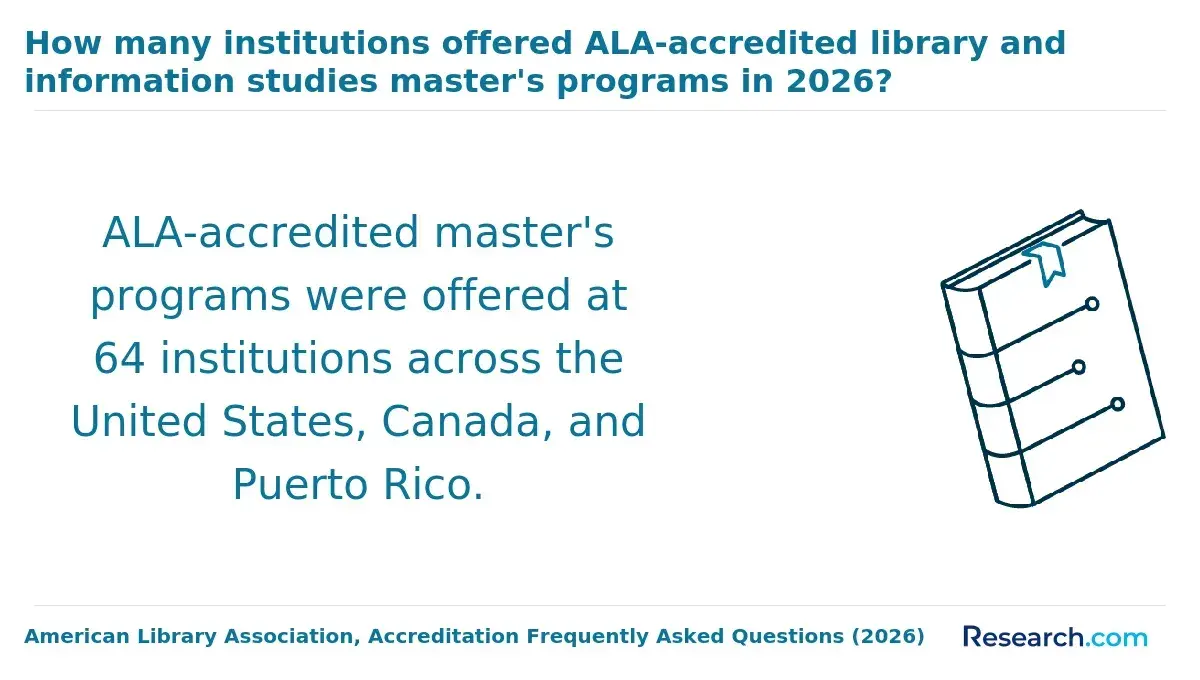
Not universally. ALA accreditation applies to specific master's programs, not automatically to every graduate degree at an institution. It is an important consideration for applicants seeking professional librarian positions, particularly where employers specify a degree from an ALA-accredited program. Check the current ALA directory for the exact program rather than relying on institutional accreditation or a school's general description.
Community broadband coordinators, digital navigators, outreach staff, and policy or evaluation specialists may instead be hired on the basis of experience or other degrees. Read actual job postings in your intended location to see which qualifications are required and which are preferred. If school librarianship is also an option, ask the relevant state education authority about certification requirements; ALA accreditation and state licensure are separate matters. This distinction is especially useful when overcoming barriers to library careers.
What coursework do MLIS programs offer for broadband and digital inclusion?
Relevant preparation usually spans several subjects rather than one course. Public library services and community engagement support partnership-building; information literacy and instructional design support digital-skills teaching. Accessibility, privacy, and information policy help students design services that people can use without surrendering unnecessary personal information. Research methods and program evaluation help distinguish attendance counts from evidence that a service met community needs.
Choose assignments that produce work you can show an employer, such as an accessible workshop plan, a multilingual resource guide developed with community input, or an evaluation plan for a device-lending service. Check prerequisites and the recent schedule before building your degree around an elective: a catalog listing does not mean it runs every term. If course sequencing affects your timeline, compare the actual library science degree semesters needed to take your chosen courses.
Are online MLIS programs effective for community broadband careers?
They can be, if the program's schedule and applied-work rules let you practice with real communities. Online study may allow a student to work with a nearby library or nonprofit while completing coursework elsewhere. It does not, by itself, guarantee asynchronous classes, remote internships, or freedom from campus visits.
Ask whether required classes have live meetings, whether desired electives are offered online, who arranges placements, and whether the school approves projects with a local broadband or digital inclusion partner. For working students, a library masters with flexible schedule is valuable only if required courses and applied experiences also fit the hours they can realistically protect.
What are the admission requirements for community-focused MLIS programs?
Applicants should expect to document a completed bachelor's degree and follow each program's published application instructions. Schools may also request transcripts, a statement of purpose, recommendations, a résumé, or other materials; requirements and deadlines vary. Prior library employment is not necessarily required, and community organizing, adult education, technology support, and public-service experience can help explain your goals without substituting for formal eligibility requirements.
In your statement, connect a specific community need to the skills you want to gain and the work you hope to do. Ask admissions staff how an unusual academic history will be reviewed rather than assuming experience overrides a requirement. If affordability will determine whether you enroll, investigate affordable library masters scholarships early enough to meet any separate funding deadlines.
How long and how much do MLIS programs for digital equity cost?
Duration depends on required credits, enrollment pace, course sequencing, and any applied-work requirement. To estimate cost, multiply the program's required credits by the tuition rate that applies to you, then add mandatory fees and likely expenses such as books, equipment, travel, or an unpaid placement. Published tuition is not the same as total attendance cost, and online enrollment does not automatically confer an in-state rate.
Compare the same academic year and cost categories across schools. A quick cheap online masters library science option may be attractive, but confirm that the courses you need are offered on a timeline you can follow. Ask the financial aid office about current eligibility and loan terms for your enrollment period, then separate gross cost from employer support, your out-of-pocket expense, and any amount you would borrow. An MLIS is a weaker financial choice if your target jobs do not value the credential enough to justify its cost relative to experience or shorter training.
What jobs can MLIS graduates pursue in broadband and digital equity?
Job titles differ across libraries, nonprofits, and government agencies. The table shows how several common functions relate to the degree; individual postings, not the title alone, determine eligibility.
| Role or function | Typical work | How an MLIS may fit |
| Public librarian focused on digital services | Teaches skills, supports access to online information, and develops patron services | Often directly relevant; check the employer's degree requirement |
| Digital navigator or technology trainer | Provides one-to-one device, connectivity, and online-service support | Useful preparation, but practical teaching experience may matter more |
| Digital equity program coordinator | Builds partnerships, manages services, and assesses participation and outcomes | One possible route alongside public administration, education, or community experience |
| Broadband outreach or policy specialist | Engages residents and communicates about access initiatives | Helpful for community research and communication; policy experience may be more central |
For entry-level experience, seek supervised instruction, outreach, or evaluation work and retain nonconfidential examples for a portfolio. If your preferred positions focus mainly on network engineering or infrastructure finance, compare the MLIS with training tailored to those fields before enrolling.
How much do digital equity and community broadband professionals earn?
There is no single salary for this cross-sector specialty. The BLS librarian and media collections specialist median cited above describes an occupation, not graduates of a particular MLIS program or everyone working in broadband access. Digital navigators, coordinators, and policy staff may fall under different job classifications, so that figure should not be used as an offer estimate.
For a realistic comparison, collect current postings for the roles and locations you would accept, noting pay, benefits, degree requirements, and whether positions are full-time or grant-funded. Weigh those findings against your existing earnings and the amount you would need to finance. A program's claimed career fit is more useful when its graduates' likely job requirements match your target postings than when it relies on a broad occupational median.
How should you choose an MLIS program for digital equity work?
Start with the job, then work backward to the credential. If you want to be a professional public librarian who leads digital inclusion services, prioritize a currently ALA-accredited program with relevant instruction and outreach coursework. If you want to coordinate community programs outside libraries, compare that route with public policy or education study and direct field experience.
For each shortlisted program, confirm the courses you can actually take, the permitted applied-work setting, scheduling constraints, and the full cost under your tuition classification. Ask a potential community partner what service gap needs attention; that conversation can guide a meaningful practicum or portfolio project. Choose the program that supports your intended work within your budget, rather than assuming a technology-related course or concentration label will do so.
Other Things You Should Know About Library Science
You need enough technical fluency to teach and troubleshoot the services you support, plus the judgment to know when to refer a problem to a specialist. Patient instruction and clear communication are equally important.
Yes. Some libraries participate in device-lending or referral efforts. Responsibilities vary by organization, so ask how devices are supplied, supported, and maintained rather than assuming every library operates such a service.
Use your organization's procedures, explain what you can and cannot help with, and avoid collecting or retaining passwords and sensitive account information unnecessarily. Seek supervision when a request exceeds your role.
Yes. Asking intended users about language, accessibility, location, and practical barriers can reveal needs that a course assignment or attendance count alone would miss. Build feedback into the project before settling on a service.
References
- 3. Current State of Broadband and Digital Equity | Broadband for All https://broadbandforall.cdt.ca.gov/draft-state-digital-equity-plan/3-current-state-of-broadband-and-digital-equity/
- Digital Equity in New York State | NYSL https://nysl.nysed.gov/digitalequity
- Purpose & Priorities of LSTA | Institute of Museum and Library Services https://www.imls.gov/find-funding/funding-opportunities/grants-to-states/purpose-and-priorities-of-lsta
- Library Science Master's Online - UW Information School https://ischool.uw.edu/programs/mlis/degree-options/online
- MLIS Career Outcomes | College of Information Science https://infosci.arizona.edu/ma-library-information-science/career-outcomes
- America Has a Digital Skills Gap. Libraries Can Help Fix It. | theatlantic.com https://www.theatlantic.com/sponsored/grow-google-2019/america-has-digital-skills-gap-libraries-can-help/3091/
- 2026 Best Online MLIS Programs that are ALA Accredited | Library Science Degrees https://www.librarysciencedegrees.org/programs/online/best-mlis-ala-accredited
- Non-traditional jobs for librarians | American Library Association https://www.ala.org/educationcareers/careers/paths/jobtypes/privatesector
- Best Online Master's in Library Science Degrees | bestcolleges.com https://www.bestcolleges.com/education/masters/library-science/
- Public libraries for community building | countyhealthrankings.org https://www.countyhealthrankings.org/strategies-and-solutions/what-works-for-health/strategies/public-libraries-for-community-building


